

Esther 1:10-22, Part 2


A Drunken King Divorces his Sober Wife Part 2
Narrator: Shalom. Holy Scriptures and Israel is a ministry designed to share with the Jewish people the good news of the Lord Jesus, Yeshua the Messiah, and to instruct Christians on the Jewish roots of their faith. And now, teaching God's word from a Hebrew Messianic perspective, here is Gideon Levytam.
Gideon Levytam: We are continuing the study of Esther chapter one. We are taught in scripture that we are to honor our wives and to respect them, to recognize them, and to seek to be a blessing to them. Ephesians chapter five tells us, "Husbands, love your wives, as the Messiah loved the assembly, the church, and gave himself for her." Peter says in 1 Peter 3:7, "Treat them with honor as a weaker vessel. Recognize that they are to be honored by you, the husbands." As long as we do so, there are blessings from the Lord.
But here is a drunken king expecting his wife to be displayed in such a humiliating way before people who came from all over the world who are merely drunk by the seventh day of their feast. So, these are great lessons for us as believers in Yeshua the Messiah, that we are to behave exactly the opposite. That's what happened. That's why in Ephesians 5, it says, "Be not drunk with wine, wherein there is excess, but be controlled by the Spirit of God." Because when we are not in control, we do foolish things, we say foolish things, and we practice foolish things. We don't honor the Lord, neither do we honor our very own wives whom the Lord had given unto us.
What a sad state. King Ahasuerus is expecting to have his wife coming before him. So, in verse 12, we have the refusal of Queen Vashti. That would cost her, beloved brothers and sisters. Here she took a stand. We don't hear of her being a disobedient wife or disobedient queen, but she understood that for her to come and to be placed in a center of all these men that have been under the control of wine and drunken, this for her would be a humiliating experience.
So, what we read in verse 12 is, "But the queen Vashti refused to come at the king's commandment by his chamberlains, these eunuchs: therefore was the king very wroth, and his anger burned in him." See now what happens. When he doesn't get his way as a drunken man, what does he do? He gets angry. He gets upset. Can you imagine the people who were around him saw that he went to call his wife and his wife doesn't come? Those immediate circles would understand that the wife doesn't listen to her husband.
The queen doesn't listen to King Ahasuerus, who is a ruler over 127 provinces. In a sense, you might say his pride and his ego were affected. Of course, the natural reaction when you don't get your way is that you are, as it says here, angry and wroth. As it says here in verse 12b, the word in Hebrew is "vayiktzof." The wrath is almost like foam came out of his mouth. He was so angry that this expectation from his wife to come in a time such as this did not happen. So, he was so angry and it says here, "and his anger burned within him." "Chamatoh baarah." The anger was like burning fire within him.
Again, I would like to say, beloved brothers and sisters, when a man is under the control of alcohol or under control of anything else, he simply doesn't think logically anymore. He does the wrong things. He says the wrong things. And then when he has been even challenged and corrected, he even gets angry and carries on and does things that are not proper. So, the refusal of the queen to come because the crowd was drunk and she would be humiliated before everyone else made the king angry because he did not get his own way. After all, whatever he says goes. Whatever he wants comes to pass. And here Queen Vashti stood and then she says, "No, I am not going to come."
Now we know in a moment we will find out that it will cost her. There is a price. Now, you know, we never read anything negative in the book of Esther about Vashti. We do read in verse nine that Vashti also made a feast to all the women in the royal house which belonged to King Ahasuerus, but we don't read that they all got drunk and they did things that were not right. We just read that she was a beautiful woman according to this passage. She was fair to look on. He wanted to present her beauty, but we don't read anything negative about her except one single thing, and that was the refusal to come to the king's party, who was a drunk king, and the multitude of people there who were being drunk under the influence of the alcohol.
That is a lesson for us as believers in Yeshua the Messiah, a twofold lesson. Lesson number one is let us not allow ourselves to be controlled by wine, because wine is a mocker, strong drink is raging, and whosoever is enticed by this is not wise. Also, we learn from Ephesians 5:18, "Be not drunk with wine, but be ye controlled by the Spirit of God." Let us be led by the Spirit of God. So, that's the first verses, 10, 11, and 12. Well, when the king does not get his own way, he's making an additional decision. Those decisions are ultimately made because he was not thinking right. He was not sober.
Then you can see in verse 13 to verse 20 that a drunken, angry king receives advice from his counselors that was really unwise, which led him ultimately to divorce his wife. See, we read verse 13. It says, "Then the king said unto the wise men, which knew the times: for so was the king's manner towards all that knew law and judgment." Well, the king is drunk. The king is angry. We have already read that in the previous verses. So, now what does he do? He's asking for counsel. He is calling the wise men of Media and Persia.
We have a list of them. You notice that the first seven men in verse 10, they were eunuchs. They were servants. But in the next verse, verse 14, we have another seven, but these ones are wise men of Persia and Media. We have the names in verse 14. It says here: Carshena, Shethar, Admatha, Tarshish, Meres, Marsena, and Memucan, seven. He calls them here in verse 13, wise men of Media and Persia. So, he's calling them to come to get counsel from them. What do we do in a case like this?
"I'm calling my wife and she doesn't come." You know, it's funny that sometimes, instead of going to the wife and talking to the wife, we go to everybody else and we tell them private matters that I should speak with my wife. So, he needs seven wise men of all Media and Persia to give him counsel of something foolish that he have done with his very own wife. If he would approach her and talk with her, she would say, "King, what do you want me to do? Do you want me to present myself and parade myself before you drunken, and all the many of them, hundreds and thousands who came from 127 provinces drunk under the control of the alcohol? That's what you want your wife to be? And that's what you want your wife to do?"
You know how differently I was talking to my wife today and I said, "Honey, where is it in the Bible that you have a husband that treated his wife in a right way?" We were thinking about that and, beloved brothers and sisters, all of us fail. We always fail in treating our wife. There is one that never failed in treating his wife and his bride, and this is Yeshua the Messiah. He treated his wife, Israel, in such a special way. He loved the nation of Israel and he treated our people Israel in such a gracious way, but Israel failed and have gone astray.
The Messiah, in the B’rit Hadashah, that we learn in the New Covenant, the Messiah loved the assembly, the church, and gave himself for her. But we who are part of the church have gone astray also. When we look at the history, I was just saying maybe it was Abraham. He really treated his wife well. Abraham was a godly man, but he also failed in relationship to his wife. Maybe David. Well, David didn't necessarily deal with his wife the way he should have. He had more than one wife anyway. Maybe Solomon. Well, no, I don't think Solomon treated his wife well because he had 700 wives and 300 concubines.
We were looking throughout the biblical account and really, really we have to say as husbands that we had failed in many, many ways. But nevertheless, we are exhorted in the scriptures to love our wives, to treat them well, to honor them as a weaker vessel. When there are problems, personal problems, we should talk with each other and not go to seven other people and tell them, "Give me a counsel. What should I do to the wife who disobeyed me because I was drunk and I asked for her to do something that was not right for her?"
You see, there are lessons to learn from scripture. What the Lord is expecting from His own. Though we fail Him, we confess that in many, many ways. So, we find out, beloved brothers and sisters, that the king is calling the closest princes of Persia. They are called here in verse 13, wise men. You know, I was thinking also in Egypt, Pharaoh had his wise men according to Exodus 7:11. The king of Babylon, Nebuchadnezzar, has his wise men according to Daniel chapter 2 and verse 12. And we know of the wise men who came from the east to say, "Where is he that was born the King of the Jews?" according to Matthew chapter 2 and verse 7.
But we also have the wise men that Moshe called to give them instruction on how to lead a people of Israel according to Deuteronomy chapter 1 and verse 15. There are many, many wise men that we find in the scripture. But sometimes we have to distinguish which men we are speaking about. The wise men of Egypt, the wise men of Babylon, the wise men of Persia, or the wise men of Israel, or the people of God, the wise men that really want the mind of the Lord. You remember we read in Matthew chapter 7 that God taught us about the wise man who builds his house upon the rock.
And when the rain descend, and when the flood rise up, the house is standing firm because they build their house upon a rock. The rock is the Mashiach, the Messiah Yeshua. But the foolish man builds his house upon the sand. And when the rain descend and the flood rises up, the house that is built upon the sand ultimately is being destroyed. And here you can see that these are wise men that are really not wise men. They are not the wise men which God had intended. God's people were to be wise men and wise women who love the Lord, learn from the Lord, and learning from His word.
So, look at the kind of wise men that these were. They didn't come to him and say, "You know, King Ahasuerus, let us tell you the truth. You were not sober. You were under the control of wine. You were not thinking right what you have done to your very own wife. You really wanted her to be presenting herself in such a humiliating way before the people that came from 127 provinces. Is that what you wanted, King Ahasuerus, from the very wife that your God had given unto you?" That would have been a wise counsel. But look at the counsel that they give to the king.
It's rather sad in the advice. It's such a foolish advice. In fact, they are leading him to divorce his wife. They are leading him to justify his wrongdoing and then ultimately do an additional wrongdoing by divorcing his wife and setting her aside. But again, remember, brothers and sisters, that the book of Esther teaches us the providence of God. God is behind the scene. What is the providence of God? It is the means whereby God directs all things to do His very own will. In other words, God is using this occasion to bring about another queen of His own choosing in order to lead her to save His own people Israel, the Jewish people, who are being set up for destruction by Haman, the enemy of the Jews.
But God is in control. He allowed these things to happen in the providence of God. You can see that even this, the Lord is using to have His own purposes come to fruition. And so we read, notice verse 13, the angry king called the wise men. In verse 14, the names of his closest princes of Persia. By the way, it says in verse 14, "And the next unto him was..." That expression, "next unto him was," that means those were the immediate individuals, you might say his counselors, his advisors. It's like a president today or a prime minister today will have an advisor, or many advisors. They will give him counsel what to do in a situation like this, how to conduct in a situation like this.
But he was unwise to ask this counsel from the wise men of Persia instead of going to his wife and saying, "Honey, I apologize. I know I'm the king and you're the queen and I was wrong by expecting from you to come to this party when all of us are drunk with wine. I'm sorry." That was the wisest thing that the King Ahasuerus should have been doing, but he didn't. So, notice verse 15, the king is questioning his wise men. Notice what he says here. He says, "What shall we do unto queen Vashti according to the law, because she has not performed the commandments of the king Ahasuerus by the chamberlains?"
Now, here one thing is immediately unwise, that he asked them, "What shall we do?" It's not their business. What do you mean, "What shall we do?" You need to talk to your wife and you can deal with it and everything will be fine. But you see, what did he do? He went and he asked, "What shall we do?" In other words, including them in his relationship with his wife, and he made a wrong decision already here by asking for their counsel. You know, you make sometimes foolish mistakes when you are under the control of wine.
I want to read two verses for you in the prophet Isaiah for a moment, chapter 28, verse one and verse seven. Look what the scripture shows us. It says in verse one, "Woe to the crown of pride to the drunkards of Ephraim, whose glorious beauty is a fading flower, which are on the head of the fat valleys of them that are overcome with wine." God is speaking about Ephraim, this is the people of Israel, the northern kingdom. And He says, "Listen, woe unto you, Ephraim. You were so beautiful. Your glorious beauty is now fading like a fading flower. Why? Because instead of submitting to me, Ephraim, Israel, you have allowed yourself to be overcome with wine and you end up to be drunk and not led by the God of Israel."
Notice verse seven of Isaiah chapter 28. "But they also have erred through wine, and through strong drink are out of the way. The priest and the prophet have erred through strong drink. They are swallowed up of wine. They are out of the way through strong drink. They err in vision, they stumble in judgment." You see, you can't see right when you are under the control of a strong drink. You can't have a right judgment anymore when you are under the control of wine. You see what happened here to Ephraim that God is accusing Ephraim. You were so beautiful. You were so right and walking with Me and enjoying fellowship with Me.
But Ephraim, listen, this glorious beauty, it will slowly, slowly fade like a flower that was once pretty and nice and ultimately fades away. That's what happened to Ephraim. That's what happened to our people when they are away from the Lord. And by the way, that's what happens to us when we are not right with God. We are not enjoying that fellowship that the Lord is intending for us to enjoy when we walk with Him. Now, of course, he was not a godly man. He was a pagan king. Yes, granted. But nevertheless, he was still supposed to be sober and right and to have some common sense in his relationship. At a time, unfortunately, we are no different than him.
So, now in Esther chapter one, verses 13, 14, and 15, we find out that he's approaching the wise men of Persia to give him counsel about a private matter that could have been dealt with if he would have only done the right things. So, now I want you to notice from verse 16 to verse 20, we have four advices that the counselors gave King Ahasuerus. You can see that no good counsel whatsoever was given to the king. You can see also that there must be a reason behind it that brought about their advice to the king. Maybe there was a friction between the queen and the counselors and they used this opportunity to do away with Queen Vashti.
So, notice, brothers and sisters, in the four advices that they give to King Ahasuerus. The first one is found in verse 16. They accuse Vashti of something wrong. Let me read verse 16. "And Memucan," Memucan was the chief spokesman there out of the seven, "he answered before the king and the princes and he says, 'Vashti the queen has not done wrong to the king only, but also to all the princes and to all the people which are in all the provinces of king Ahasuerus.'" First thing that they are telling him, "You know, King Ahasuerus, what Vashti did was not only that she did it to you, but she did it to us."
"She did wrong us too because we are the princes, and also all the people of the 127 provinces. She had done wrong to everybody else." In other words, can you imagine where the counselors give a wrong advice such as this to the king and saying to him, "Listen, your wife did something wrong not only to you, she did it to me, she did it to him, she did it to them, and she did it to all the provinces of Persia." That's the first thing. You can see behind the scene here, they should have told him, "Don't you know that we all were under such a condition that it's the right thing that she did by not coming? King Ahasuerus, go to Vashti and speak with her and deal with it privately and it will be all over."
But no, apparently, there must have been some kind of underline motive that these counselors must have have a reason for that. Secondly, in verse 17, they claim now that all the women will despise their husbands. You see, notice that. "For this deed," in other words, what she did, "this deed of the queen shall come abroad unto all women so that they shall despise their husbands in their eyes when it shall be reported: The king Ahasuerus commanded Vashti the queen to be brought before him, but she came not." See, here we also notice another interesting thing, that apparently it was not yet publicized everywhere because it says, "when it shall be reported."
It was a private matter. It was just the immediate circle of the king that knew that he called her and she didn't come. So, apparently, they gave him the counsel, "Oh, you see, king, wow, wow, you know, by Vashti's action, we all gonna suffer. See what's gonna happen. According to verse 17, all the women of the provinces will despise their husband in their own eyes when it shall be reported the king Ahasuerus called Vashti and she didn't come." Now, you see, we learn from this, apparently, that in those days, the relationship between the husbands and the wives was much different than what we are taught in the word of God.
In the word of God, the husband is the head and the wife is the heart, and they are to work together. You can't have a body without the head functioning properly. You can't have a body without the heart functioning properly. We are to complement each other. We are to help each other. We are to support each other. You see, this is what the Bible teaches us about headship, that the man is the head, but the woman is the heart. And they are to work together and they are to live and enjoy the things of God together.
But here, we can see the counselors say, "Oh, King Ahasuerus, the moment everybody will know that, what's going to happen? All the wives, all the women will despise their husbands in their eyes when this thing will be made known to the 127 provinces of Persia and Media." So, this is the second wrong advice that they have given to King Ahasuerus. In fact, can you just imagine this is happening in the same time? He is drunk, the party is going on, it's the seventh day of the party, everybody's under the control of wine, he's calling his wife Vashti, she doesn't come to him, he's sending his eunuchs to call her, she doesn't come, then he called the advisors and he says, "Listen, give me advice."
You know, usually when you make a decision on divorce, maybe stop and think before you are doing something like that. But what he does, he doesn't think right. And so he's getting ready now to divorce his wife because he get advice from those that are his counselors. Notice the third thing that they are saying about her. Notice they didn't have a lot of love towards her because they should have just turned it all around and done the right thing. Then notice what he says in verse 18. They wrongfully advise him that even the princesses, that means their own wives, of the Persian Empire, they will bring about contempt and wrath.
Narrator: You have been listening to Holy Scriptures and Israel with Gideon Levytam. Gideon teaches God's word from a Hebrew Messianic perspective. For more information about this ministry, write to Holy Scriptures and Israel, Box 1411, Niagara-on-the-Lake, Ontario, L0S 1J0. Or visit our website at holyscripturesandisrael.org. You are also invited to Gideon's weekly Bible teaching on Fridays at 11:00 AM and 7:00 PM, and Saturdays at 1:00 PM at Willowdale Christian Assembly Hall, 28 Martin Ross Avenue in Toronto. Holy Scriptures and Israel is made possible by your prayers and financial support. If you would like to support the program, visit holyscripturesandisrael.org. God bless you. Shalom, shalom.
Featured Offer
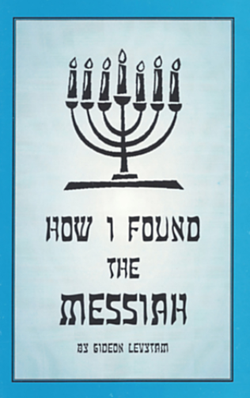
Follow Gideon Levytam's journey and discover how he was led by God, through a series of exciting circumstances, to find the One his people are still waiting for.
Past Episodes

Featured Offer
Follow Gideon Levytam's journey and discover how he was led by God, through a series of exciting circumstances, to find the One his people are still waiting for.
About Holy Scriptures and Israel
As time passed by, the Lord Yeshua took dear brother John Van Stormbroek to himself. The ministry of Holy Scriptures and Israel continued with additional development. In the early 1990’s, a weekly morning Bible class began which brother Gideon Levytam led regularly in the City of Toronto. This weekly open Bible class was held in the Willowdale assembly meeting hall. Eventually, a second mid-week evening Bible class was added. In April 2002, the need for an additional outreach Bible teaching meeting arose. We begun a Saturday (Shabbat) ministry meeting in which a systematic teaching of God’s word is presented to all who attend. Together we learn God’s Word, pray for each need and the salvation of Israel, and sing songs of worship unto our God, praising Him and our Lord Yeshua the Messiah.
In Mid 2004 we started to air on Joy 1250 Radio station a 15 minute Bible teaching program called "The Holy Scriptures and Israel" with Gideon Levytam. The broadcast teaches God’s word from a Hebrew Messianic perspective and has proved to be a blessing to many. It's now aired seven days a week. Our prayer is that many more of our Israeli people will have a clear understanding of who Yeshua is, why we all need him, and come to know him as their Lord and Messiah.
About Gideon Levytam
Contact Holy Scriptures and Israel with Gideon Levytam
426 Simcoe Street
Niagara-on-The-Lake
Ontario L0S 1J0
Canada
(905) 325-1234