
Ephesians 5:1-17, Part 2


Walk in Love, Light and Carefulness Part 2
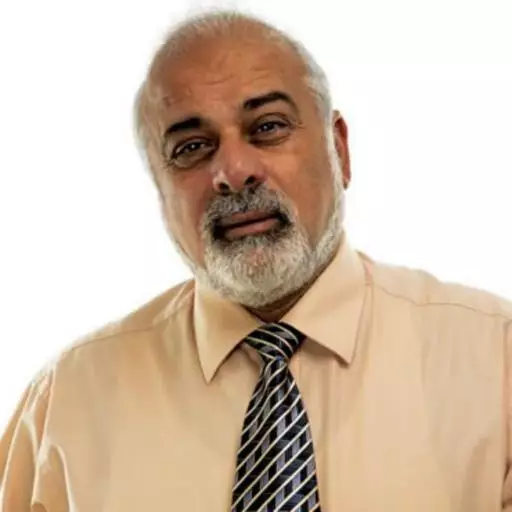
Guest (Male): Shalom. Holy Scriptures and Israel is a ministry designed to share with the Jewish people the good news of the Lord Jesus, Yeshua the Messiah, and to instruct Christians on the Jewish roots of their faith. And now, teaching God’s word from a Hebrew Messianic perspective, here is Gideon Levytam.
Gideon Levytam: The study of Ephesians chapter five and chapter ten of course of John and verse 17. He says, "Therefore doth my Father love me because I lay down my life that I might take it again." The Father found joy in the Son. Ha-Abba found joy in ha-Ben, in the Son, because he always did the will of the Father in his life.
So walk in love, brothers and sisters of the Ephesians. Walk in love, dear brothers and sisters, he is saying to us, as the Messiah loved us, gave himself for us as a sweet-smelling savor unto God. And if you and I are going to do so in some small measure, we are going to give pleasure to the Father and blessing to ourselves.
And now, in the next verses, verses three and four, he is telling the brothers and sisters there that they are to separate from immorality, from covetousness, and from foolish talking. To separate. That is it. They have got to be a cut because we now belong to Yeshua the Messiah.
So in verses three and four, he says, "But fornication and all uncleanness or covetousness, let it not be once named among you as becomes saints. Neither filthiness nor foolish talking nor jesting, which are not convenient, but rather giving of thanks." You see, the Ephesians, there was so much immorality at the city of Ephesus. They were worshipping idols. There was immorality existing abundantly in that city of Ephesus.
So he is now telling the brothers and sisters, "Listen, you have to separate from that. That is the way you used to live. That was your past. You are to separate from immorality, to separate from covetousness, and to separate also from the way you speak, the manner in which we speak." Now why? Because again, we are children of the Father.
And if we are children of the Father, we are now to walk in love and therefore to separate from fornication, uncleanness, covetousness, foolish talking, filthiness, jesting, and on and on. the sins of immorality and even in the way that we speak. Those three are very interesting. Specifically, you notice that he linked together in verse three fornication and uncleanness with the word covetousness.
And if you will notice, covetousness comes from Exodus chapter 20 and verse 17. It is the last commandment of the ten that God had given our forefathers, the people of Israel in Sinai, in Mount Sinai. Now covetousness is something that is really coming out of the heart. It is not so much something that we do, well we ultimately do it, but it comes out of the heart.
And that is why he is saying if we will not covet, we will also not do certain things that come out of covetousness. You know, most of the time when we sin, we sin because out of the heart we have certain desires in our hearts which come down into certain failures and sins in our own lives. So he links that together.
He says fornication, sexual immorality, uncleanness, or covetousness. "Let it not be once named among you as becomes saints." And he used the word saints, Kedoshim in Hebrew, set apart because we are children of the Father. We are saints and saints are to be set apart to the Lord. Now a saint may fall and may stumble and need to be repenting and be restored, but he says, "Listen, don't let this be practiced as part of your life. Be separated from this."
But not only from physical and sexual immorality, but also look at this in verse four. "Neither filthiness nor foolish talking nor jesting, which are not convenient." The word for not convenient, it is not fitting. "But rather giving of thanks." Even the way we speak. The word for jesting is that bad humor. You know, sometimes we make jokes. We make all sorts of dirty jokes and we listen to them or we make them and we say them.
And God is saying even dirty jokes, even they are only jokes, don't speak like this anymore. Foolish talking, which is not fitting, it is not convenient, it is not suitable for the people of God. There has got to be a change even with the way that we speak with each other. You heard about these stories that we hear of unbelievers that used to curse and swear and talk all sorts of dirty talk.
But things have changed because of the manner in which that particular person was communicating. They stopped the swearing. They stopped the dirty jokes. There was a stop to it because he was an impact upon those with whom he was communicating. And therefore, the Apostle Paul is saying separate yourself from immorality, separate yourself from covetousness, which is coming out of the heart, and separate yourself from foolish talking.
And when something like this has happened for a believer, he or she are to repent before the Lord and to confess it to the Lord and to be restored so he or she will continue to live a life that is pleasing to the Lord. So it is important for us to see what Paul is saying. To walk in love and therefore we are to follow the Messiah, to separate from immorality, and to separate from covetousness, to separate from foolish talking.
And then verses five, six, and seven: know that no person who deliberately lives in this type of sin will ever enter into the kingdom of God. Look at this, verse five. "For this you know, that no whoremonger, nor unclean person, nor covetous man, who is an idolater, has any inheritance in the kingdom of the Messiah and of God. Let no man deceive you with vain words, for because of these things comes the wrath of God upon the children of disobedience. Be not ye therefore partakers with them."
In other words, what he is really saying here in verses five, six, and seven, that because we now have been redeemed and have been brought into a relationship with the Father as sons and daughters, we have to realize that this kind of ongoing lifestyle proves that a person is really not part of the kingdom of God.
Notice and repeating. "For this you know that no whoremonger, nor unclean person, nor covetous, who is an idolater, has any inheritance in the kingdom of the Messiah and of God. Let no man deceive you with vain words, for because of these things comes the wrath of God upon the children of disobedience." This expression "the kingdom of the Messiah and the kingdom of God" has been borrowed, you might say, from the Hebrew Tanakh.
Because God promised a kingdom. God promised to our people of old Israel, there is a day coming in which the Messiah will establish a kingdom here in this world. But the Messiah was rejected. And when the Messiah Yeshua was rejected, then the kingdom took a mystery form. What does that mean, a mystery form?
Every believer who is part of the family of God today, we have a king, but the king is absent. He is in heaven. Yeshua is in heaven. So we are a part of what you call a mystery kingdom in which only believers are part of this kingdom. And to enter into this kingdom or to have inheritance in this kingdom, one has to be born again.
And if a person is not born again, he does not have an inheritance in this kingdom that belong to the Messiah. Let me show you this for a moment. If you turn back to John chapter three and verse three, we read there where Yeshua talked to Nicodemus, Nakdimon. He answered to Nicodemus and he said to him, "I say to you, verily, verily, I say unto thee, except a man be born again, he cannot see the kingdom of God."
Verse five, Yeshua answered and he says, "Verily, verily, I say unto thee, except a man be born of water and of a Spirit, he cannot enter into the kingdom of God." In verse three he cannot see. In verse five he cannot enter. In other words, there is a need of new birth, of new life, in order for a person to be entering and enjoying to be part of the kingdom of God.
And so, in our verses in which we read in verses five, six, and seven, he is telling the believers that no people, no one who is habitually, continually living in this lifestyle willfully, he cannot enter, he cannot inherit, he cannot enjoy that kingdom of God, as it says here in verse five. "No whoremonger, no unclean person, no covetous, who is an idolater, has any inheritance in the kingdom of the Messiah and the kingdom of God."
And then he tells them, if you are part of the kingdom of God and you are a believer, you cannot live this kind of lifestyle on an ongoing basis. You have got to confess it when you fall into sin, repent, turn back to the Lord and live a life that is honoring and that is pleasing to the Lord. And then you notice that brothers and sisters, why do you think judgment came upon this world?
Verse six says, "Let no man deceive you with vain words, because for these things the wrath of God came upon the children of disobedience." You know that is why such a judgment fell upon this world in which we live in. Diseases. All sort of things that are going on they will bring the judgment of God just the same like it was brought in the past.
Look at the condition of Sodom and Gomorrah, in Hebrew Sdom v'Amora, the book of Genesis chapter 19, where God has come down to see what is going on in Sodom and Gomorrah. And then he judged the whole city. Why did he judge the whole city? Didn't he love mankind? He surely does love mankind. But when man is persisting and continually going in their own way, God will bring judgment.
And that is why he says the wrath of God had fallen upon the children of disobedience. In the context here, the children of disobedience are the unregenerate individuals. The wrath of God. You know, it is a fearful thing to fall unto the hand of God when God is going to come in judgment upon this world. Think about not only Sodom and Gomorrah, go back a few years earlier, think about the flood in the time of Noah.
Where we read in Genesis chapter six and verse five that when God saw the wickedness of man was great in this earth and that every imagination of the thoughts of his heart was evil continually, kol ha-yom, continually, all the day long. Well, God brought the judgment of the flood. And when God came in judgment upon this world, then the world had to learn righteousness because God judged the world with the flood.
Only eight souls remained. The rest, even if they wanted to, "open the door" and they wanted probably that Noah will open the door, but it was too late. The judgment of God came upon the face of this world. So he is saying that is why the wrath of God came upon the children of men. God's righteous indignation against sin fell upon this world because the children of disobedience did not subject themselves to the will of God.
And so here we can learn that no one who is living this kind of lifestyle without repentance and turning to the Lord and turning around and seeking to live a life that is pleasing to him, no one will enter into the kingdom of God. Let me read another verse in 1 Corinthians chapter six and verses nine and ten. Listen. Paul writes to the brothers and sisters in Corinth and he said, "Know ye not that the unrighteous shall not inherit the kingdom of God?"
Here he uses the same expression. "Be not deceived. Neither the fornicators nor the idolaters nor the adulterers nor the effeminate nor the abusers of themselves with mankind nor thieves nor covetous nor drunkards nor revilers nor extortioners shall inherit the kingdom of God." He doesn't say that a person who had been like that and have lived like that and have repented will not inherit the kingdom of God. What he is saying is that no one who lived this kind of lifestyle persistently, willfully, without repentance, no one will enter into the kingdom of God.
A believer may fall into one of those sins, one or more, but repentance is demanded in order to be restored fellowship with the Lord. But a believer ought not to live like that on an ongoing basis. That will be an evident that he or she are really not belong to the Lord. We need to really realize this.
Notice the other verse in Galatians chapter five and verse 19. "Now the works of the flesh are manifest, which are these: adultery, fornication, uncleanness, lasciviousness, idolatry, witchcraft, hatred, variance, emulations, wrath, strife, seditions, heresies, envyings, murders, drunkenness, reviling and such like, of the which I tell you before as I have also told you in time past, that they which do such things shall not inherit the kingdom of God."
See what he is really saying. Those who live in this lifestyle without repentance and turning back to the Lord. And he is always gracious. Praise God for his goodness and graciousness because we were in that condition before we became a believer. And at times we fall as believers into this condition when we are not careful. And God says you repent, you turn back to me and I will restore you and I will bless you and you will enjoy the kingdom of God which you are part of if you are a believer in Yeshua the Messiah.
Now let me read you one more verse at the end of the Book of Revelation in the eternal order. Look at this. Revelation chapter 22 and verse 15. Who is going to be without? Who is not going to enter into the eternal order? Verse 15: "Without are dogs, sorcerers, whoremongers, murderers, and idolaters, and whosoever loveth and maketh a lie."
In other words, those that will not enter into this wonderful eternal order are those that really haven't been born again and have persistently on a willful way continued to reject the offer of salvation that Yeshua have offered them and continue in this type of lifestyle. And how ought we be grateful to the Lord because we are no different.
We are sinners by nature. We are able to fall into all kind of condition. If we have fallen and repented, God forgave us. And if we haven't fallen, we are capable because of our sin nature. We are just the same as any other person. And it is the grace of God that we have to be thankful for and every day that he preserve us from any such lifestyle, it is totally the grace of God.
And so in verses one and verses two to seven, Paul encourages the Ephesian believers to walk in love. If we will walk in love, it will make a different in our lives because we will learn from Yeshua our Mashiach who walked in love and gave himself as a sweet savor unto the Lord. Well, now from verse eight, here is the second thing that the Apostle pointing out. Walking in love, verses two to seven. Now walk in light, verses eight to 14.
And so he is saying now in verse eight, walk as the children of light because you were darkness in the past. See? And you know, this is so nice from the Apostle Paul. He says he is not ashamed to tell the brethren who they were before they became a believer. And he is not ashamed to speak about himself. He says, "I know I am the chief of sinners," Paul is saying, speaking about himself.
"I was myself. I would not sin except knowing that God says you shall not covet." Paul was honest enough about his own self. He knew. He says, "O wretched man that I am," Romans chapter seven, "who shall deliver me from this body of humiliation?" He was not priding himself at all, but he was telling it as it is.
And so in verse eight he says, "You were sometime darkness, but now you are light in the Lord. Walk as children of light." Now you notice he didn't say you used to walk in darkness. No, he says you were darkness. Not only that you walked in darkness, but you yourself, brothers and sisters of the Ephesians, you were darkness.
You came from where? You were sinners of the nations of the world. You were without God. You had no hope in this world. You were darkness yourself, never mind what you did, but that's where you yourself were blinded to the truth of God. Sinners without any hope. You were darkness. But look what happened now. But now you are light. Therefore walk as children of light.
You know the difference between darkness and light, the difference between day and night is completely different. God distinguish for us in Scripture. And there was evening and there was morning, the first day. Evening and morning. God distinguish the light from the darkness. And really, there is a change happened to us when we became believers.
We now receive the light of the Gospel of the glory of God in the face of Yeshua the Messiah. And therefore the Ephesians are no more darkness. They are light. And therefore, they are now to walk as children of light. You notice by the way that he distinguish the word "children of disobedience" in verse six and "children of light" in verse eight.
See, in this world, there is no one who is on the fence. You know what the four Gospels teach us? Matthew says, you are either wise or you are foolish. Mark says, you are either in or you are out. Luke says, you are either a believer or you are an unbeliever. And John says, you are either going to heaven or you are going to hell.
There is no in-between. There is nobody sitting on the fence. And that is why he is really saying that now you are the children of light and therefore you are to walk as the children of light. Now there is much to be said about this verse and I want to elaborate because this is important to focus on. Look at the 2 Corinthians chapter six and verse 14.
It says, "Be ye not unequally yoked together with unbelievers." And then he asks the question, "What fellowship has righteousness with unrighteousness? What communion has light with darkness? What concord has the Messiah with Belial? What part has he that believeth with an infidel? What agreement has the temple of God with idols? For ye are the temple of the living God as God has said, I will dwell in them and I will walk in them and I will be their God and they shall be my people. Wherefore come out from among them and be separate says the Lord."
See, light and darkness simply doesn't fit. And that is why he says, "Listen, what has light to do with darkness? What have unrighteousness to do with righteousness?" There got to be a change in the life of the believer when he or she become children of the Father. So therefore he is saying in our chapter in verse eight, you were darkness in a time past, but now you are light in the Lord, in Yeshua, and therefore walk as the children of light.
And what a beautiful thing is to walk as children of light. You know, when we are representing the Lord, how beautiful it is to be light in this world that is in darkness. We can share the Gospel with a world that is blinded by Satan. We can share about Yeshua the Messiah who said, "I am the way, the truth, and the life. No one come to the Father but by me."
We are to be a light here in this dark, dark world that is heading to a day of judgment. Yeshua himself said in John 8, "I am the light of this world." And he commanded the disciples and the Ephesians and you and I to walk in light in this world in which we live in. And then he says in verses nine and ten why we are to walk as children of light. Because only the fruit of the Spirit of God is acceptable with God.
Anything that is not of the fruit of the Spirit of God is not acceptable with God. And that is why he says in verse nine, "the fruit of the Spirit is in all goodness and righteousness and truth, proving what is acceptable unto the Lord." You know, when the Spirit of God works in the life of the believer, then there is fruit for God.
And that fruit is acceptable. You know it is like bringing an offering to the Lord and he is accepting it and he says, "Wow, I have accepted the fruit of the Spirit of God that he produced in your life. It is acceptable with God." But when it is not the fruit of the Spirit, when it is of the flesh and the works of the flesh, God is not accepting this, not at all, not whatsoever.
Remind me of Cain and Abel. Cain came to God and Abel came to God. Abel was accepted by God because he brought him the sacrifice of a blood sacrifice and he is accepted Abel and his offering. But Cain brought the fruit of the flesh you might say, what he has done. Even though he have worked very hard and he brought his own flesh, his own activity, you might say his own produce, God did not accept him.
It was not acceptable with God. And only what comes from Christ, from the Mashiach, from Yeshua is acceptable. God found pleasure in his beloved Son, the Messiah himself. Then notice what he says now in verses 11, 12, and 13, that the believer is to have no fellowship with the unfruitful works of darkness. Now, if we became believers, if we belong to Yeshua the Messiah, how can we have fellowship with that which is of darkness, the works of darkness? And so he says in verse 11, and I am reading of chapter five, "and have no fellowship with the unfruitful works of darkness, but rather reprove them."
Guest (Male): You have been listening to Holy Scriptures and Israel with Gideon Levytam. Gideon teaches God’s word from a Hebrew Messianic perspective. For more information about this ministry, write to Holy Scriptures and Israel, Box 1411, Niagara-on-the-Lake, Ontario, L0S 1J0 or visit our website at holyscripturesandisrael.com.
You are also invited to Gideon’s weekly Bible teaching on Fridays at 11:00 AM and 7:00 PM and Saturdays at 1:00 PM at Willowdale Christian Assembly Hall, 28 Martin Ross Avenue in Toronto. Holy Scriptures and Israel is made possible by your prayers and financial support. If you would like to support the program, visit holyscripturesandisrael.com. God bless you. Shalom, shalom.
Featured Offer
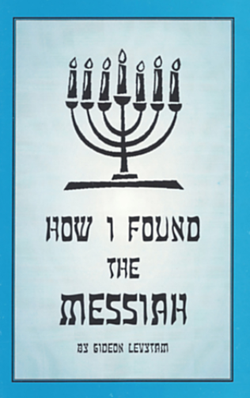
Follow Gideon Levytam's journey and discover how he was led by God, through a series of exciting circumstances, to find the One his people are still waiting for.
Past Episodes

Featured Offer
Follow Gideon Levytam's journey and discover how he was led by God, through a series of exciting circumstances, to find the One his people are still waiting for.
About Holy Scriptures and Israel
As time passed by, the Lord Yeshua took dear brother John Van Stormbroek to himself. The ministry of Holy Scriptures and Israel continued with additional development. In the early 1990’s, a weekly morning Bible class began which brother Gideon Levytam led regularly in the City of Toronto. This weekly open Bible class was held in the Willowdale assembly meeting hall. Eventually, a second mid-week evening Bible class was added. In April 2002, the need for an additional outreach Bible teaching meeting arose. We begun a Saturday (Shabbat) ministry meeting in which a systematic teaching of God’s word is presented to all who attend. Together we learn God’s Word, pray for each need and the salvation of Israel, and sing songs of worship unto our God, praising Him and our Lord Yeshua the Messiah.
In Mid 2004 we started to air on Joy 1250 Radio station a 15 minute Bible teaching program called "The Holy Scriptures and Israel" with Gideon Levytam. The broadcast teaches God’s word from a Hebrew Messianic perspective and has proved to be a blessing to many. It's now aired seven days a week. Our prayer is that many more of our Israeli people will have a clear understanding of who Yeshua is, why we all need him, and come to know him as their Lord and Messiah.
About Gideon Levytam
Contact Holy Scriptures and Israel with Gideon Levytam
426 Simcoe Street
Niagara-on-The-Lake
Ontario L0S 1J0
Canada
(905) 325-1234