
Ephesians 4:11-16, Part 2


The Gifted Men and the Purposes of the Gifts Part 2
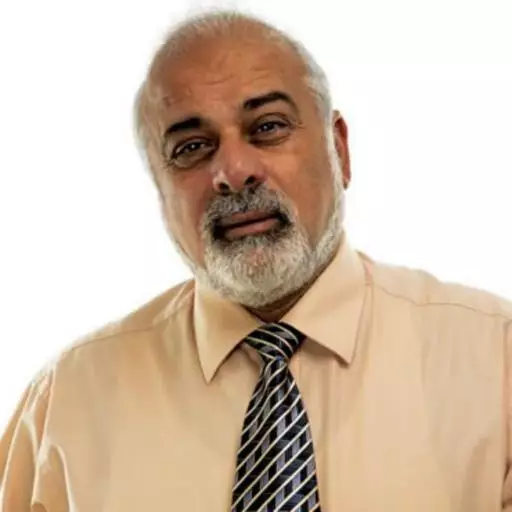
Guest (Male): Shalom. Holy Scriptures and Israel is a ministry designed to share with the Jewish people the good news of the Lord Jesus, Yeshua the Messiah, and to instruct Christians on the Jewish roots of their faith. And now, teaching God's word from a Hebrew Messianic perspective, here is Gideon Levytam.
Gideon Levytam: The study of Ephesians chapter 4. Antioch was in Syria, the central assembly or church that was formed in Syria. And so we find out that those prophets came from Jerusalem. They went unto Antioch and look what it says: that here is a man by the name of Agabus who was a prophet, what we call New Testament, B'rit Hadashah prophet.
It says in verse 28, "There stood up one of them by the name of Agabus, and he signified by the Spirit that there should be a great dearth throughout all the world, which came to pass in the days of Claudius Caesar." Here's a prophet of the present day dispensation by the name of Agabus. He spoke in the power of the Spirit of God. He proclaimed the word of God that there will be a dearth throughout the whole world and it truly came to pass.
The disciples, every man according to his ability, determined to send relief unto the brethren which dwelt in Judea. Because of what he spoke, there was a response of the people at that time. Now, who do we call a prophet today? Remember, these were early foundational prophets. They were the ones that were uniquely given to the body of Messiah for the early foundation of the church, as we read it in chapter 2 and verse 20.
Even today, when one is prophesying or speaking forth the word of God, whether it is in a personal context or whether it is this brother specifically speaking publicly, he would speak forth the existing word of God that which is already in our hands. He will take the word of God and he will present before the local church the word of God. He is not so much speaking about the future, but he is speaking forth what we have already written down in the scripture in the Bible.
Those early prophets were speaking about what was going to happen in the future. But today, for you and I, a prophet is a person who speaks forth that which we already have in our hands. We have to realize that the prophets and the apostles were foundational gifted men that God had given to the church in the early days. In chapter 3 of Ephesians, in verse 5, it says again, "Which in other ages was not made known unto the sons of men, as it is now revealed unto his holy apostles and prophets by the Spirit."
We distinguish the New Testament prophets from Old Testament prophets. Here we are talking about prophets that had been given for the edification of the body of the Messiah in a present day dispensation. Thirdly, you notice the third group that we have here in verse 11. He's talking about evangelists. Notice, "and some evangelists." Now, evangelists have been always with us and are still with us, even today as we are living closer to the end of the church age.
The ministry of the evangelist is to bear the gospel message and share this with the world around. Remember, this is a gift of evangelist. This is not only evangelizing in which we are all responsible to do, but these are gifted men that the Lord Jesus, the Messiah, gave them the gift of evangelists. Not all of us are able to capture the hearts of individuals through the preaching of the message of the gospel. We had many gifted men that we hear of them, whether on the radio or television, that they had the gift of evangelism.
They knew how to reach men and women where they were. They knew how to share the message of the gospel in such a convicting way by the power of the Spirit of God. They are capable individuals that were given to the body of Messiah, but they were responsible for the preaching of the message of the gospel. One of these men in biblical time was a man by the name of Philip. We read about him in Acts chapter 21; he is called an evangelist. He was the one that in Acts chapter 8, the Spirit of God called him to go to preach the message of the gospel to this Ethiopian eunuch.
He ran after him as he was on his chariot. He climbed upon the chariot and he began to share the gospel with this man who was reading the prophet Isaiah. This evangelist, such as Philip, was used by the Lord Jesus, the Messiah, to reach many of the people in Samaria, in the Shomron, and many have come to faith in Yeshua the Messiah, even at the time when Philip was preaching. He's called in the Bible an evangelist, Philip the evangelist, in Acts chapter 21 and verse 8.
I would like to distinguish between the gift of an evangelist and the fact that we all have to do the work of the evangelist. In other words, all of us are to share the message of the gospel, whether it is at work, whether it is at school, whether it is when we go away or we are traveling or meeting people. Even on the street, we are able to share the message of the love of God through Yeshua the Messiah. I know some of us do so even today. They are able to share the message of the messiahship of Jesus with many.
The gift of an evangelist is much more than just doing evangelization. It is a special gift that was given to some individuals in order to use it for the benefit of the body of Messiah. Look at a verse in 2nd Timothy chapter 4 and verse 5. Paul wrote to Timothy and he said to him, "Watch thou in all things, endure affliction, do the work of an evangelist." Timothy may have not been an evangelist, but he says, "do the work of an evangelist."
Timothy must have been the kind of a person that ministered to the people of God wherever they were. He cared for them. He was the one that was left behind after Paul was doing his ministry and Timothy was the one who was building people up. But he was called to do the work of an evangelist. You and I are called to do witnessing wherever we are. So the apostles are ones that are sent by the Lord himself. The prophets are ones who proclaim the word of God.
The evangelist is one that bears good news and shares the message of the gospel. He brings the glad tidings to those that are without so they will become believers in Yeshua the Messiah. Now, fourthly, in verse 11, notice that it says, "and he gave some pastors and teachers." Most believe that this is a gift that was given together: pastors that are able to teach, or teachers that have a pastoral heart, a shepherd's heart.
You notice that it doesn't say here that he sent them to school to become pastors. No, it says that he gave pastors and teachers. In other words, you don't learn that by going to school. You may go to school and learn the Bible and get a little bit more information about the things of the Lord, but pastoral ministry or pastors and teachers is a gift. It's a gift that has been given by the glorified Messiah in order to use among the people of God.
How much we need pastoral care. The apostles gave us the written word of God. The early prophets spoke in the earlier part of the church age. We have the apostles and prophets to give us what we have in our hands today. But the evangelist, he goes out to the streets, to the highways and the byways, and he shares the message of the gospel and he brings people into the assembly, leads them to the knowledge of the Savior. It is the responsibility of the pastors and the teachers to care for the flock and to teach them the word.
This is a great responsibility where we read here in this verse 11, pastors and teachers. Another word for a pastor is simply shepherd. How much we need shepherds in our midst today. Most of the time the flocks are scattered. The people of God are all over. They need those that will care for them and bring them and watch over them, just like the ordinary shepherd in the Middle East will lead his flock.
We read, "He leadeth us by still water," Psalm 23. Where does the Lord lead his own people? He leads them to a place where they can feed, where they can be ministered unto, where they can grow spiritually, where they can be nourished and be taken care of. How many times God warned the shepherds of our own people, Israel, who led the flock astray? We can say it concerning the church age: God will hold responsible the shepherds of the body of Christ who lead the flock astray and are not ministering to them and encouraging them and building them up spiritually.
How much we need those shepherds, those pastors who care for the flock. Notice the last words here: he says pastors and teachers. Teaching the word is so important. How many times when we come to a church meeting or assembly meeting or the congregational meeting and we hear the word of God, we hear sound teaching, ministry concerning the person of Yeshua the Messiah, and it refreshes our hearts. It ministers to our soul.
Just like any sheep in the Middle East who is looking for some food, green pastures, looking for some water where he or she can nourish themselves, it is very similar among the people of God. The pastors and teachers were given to the people of God in order to feed them and to minister unto them. Turn to John chapter 21 for a moment. Yeshua said to Peter in John 21:15, when they had dined, Jesus says unto Simon Peter, "Simon, son of Jonah, lovest thou me more than these?" He says unto him, "Yes, Lord, you know that I love thee." And he said unto him, "Feed my lambs."
In verse 16, he says unto him again the second time, "Simon, Shimon Bar-Yonah, lovest thou me?" he said unto him. And he says unto him, "Yes, Lord, thou knowest that I love thee." And look what he said again. He said unto him, "Feed my sheep." Thirdly, in verse 17 of John 21, he says unto him the third time, "Simon, son of Jonah, Shimon Bar-Yonah, lovest thou me? Do you really like me?" The Greek word here is not agape, but phileo in verse 17.
Peter was grieved because he says unto him the third time, lovest thou me? And he said unto him, "Lord, thou knowest all things. Thou knowest that I love thee." And Yeshua said to him, "Feed my sheep." The responsibility of the shepherd, of the pastors, is to feed the flock, to minister to the flock so they will eat spiritual food that is healthy for them spiritually so they will grow. The reason that these gifted men were given to the assembly, the Ro'im, the pastors, the shepherd, is that they will feed the flock, the people of God.
This very Peter that was in a sense offended when the Lord challenged him, "Do you really love me more than these? Feed my lamb. Do you really love me? Feed my sheep or my flock." And then he says, "Do you really like me?" He says, "Feed my flock, feed my sheep." Peter himself, when he later on in his life was writing to the shepherds, he said to them in 1st Peter chapter 5 and verse 1, "The elder which is among you I exhort, who am also an elder and a witness of the sufferings of the Messiah, and also partaker of the glory that shall be revealed, feed the flock of God which is among you, taking oversight therefore not by constraint but willingly, not for filthy lucre but as a ready mind. Neither as being lords over God's heritage, but being an example to the flock. And when the chief shepherd shall appear, ye shall receive a crown of glory that fadeth not away."
Peter, who received the responsibility from Yeshua the Messiah to feed the lamb, to feed the flock, later on in his life when he was an elder and ready to depart, he charged the shepherds. He charged those that are pastors among the believers to feed the flock of God. God's people need to be fed. God's people need to be taught. And that's why the gifts were given unto the body of Messiah.
The Shlichim and Nevi'im, meaning the apostles and the prophets, they were the foundation. The foundation cannot be rebuilt again and put together again. That was for the earlier part of the church. But what we do have today is evangelists, pastors, and teachers whom the Lord uses today, giving them as a gift to the body of Messiah. And thank God for everyone that seeks to do faithfully the service to which the Lord had given him to do. They are not perfect men, they are failing men, but they need the grace of God to continue to do the service that the Lord had given them to do.
In Ephesians chapter 4, we have the gifted men that Yeshua had given to the church, to the assembly, to the congregation. And we have specifically four gifts: apostles, prophets, evangelists, pastors and teachers. From verses 12 to 16, we see what was the purpose that Yeshua gave those gifted men or those gifts to the body of Messiah. Look what it says in verse 12. Gifted men were given to the church for a reason.
Not to exalt themselves, not to pride themselves, not to elevate themselves or to be separated from the people of God. There is not a clergy-laity that we have here; in fact, they are part of the body of Messiah. They are to be used by the Lord to minister to the people of God. In verse 12 it tells us three things why the gifted men were given. First of all, it says in verse 12, "For the perfecting of the saints." Secondly, it says, "For the work of the ministry." Thirdly, it says, "For the edifying of the body of Messiah."
Notice three times the word "for". Sometimes we make the mistake and we think, oh, we have this brother is a pastor, we put him somewhere there, we'll put a note above his door says "pastor", and he is going to be the one who's doing all the job and we are going to sit around. We are going to be spectators. See, he's the pastor, I'm only just a brother. Well, it's not found in the Bible, such a thing. There is no such a thing as clergy and laity in the New Testament present day dispensation.
The Bible does teach us that all of us are members of one body. We all have gifts and we all are responsible to function among the people of God. So those gifted men that were given with their gifts to the body of Messiah, it says here for the three reasons. Number one, for the perfecting of the saints. The word for "perfecting" is the Greek word for "equipping." Those early brothers, the apostles we might say, and those brothers and sisters who are evangelists and pastors and teachers, the reason that they are ministering is in order that the saints will be equipped.
When you go out to fight a war, you need to be able to put the equipment upon you so you will be able to fight that fight. So the equipping of the saints, the maturing of the saints. The saints are every true believer in Yeshua the Messiah, brother or sister, they are saints. And the responsibility of the pastors, teachers, and those gifted men were really to mature the people of God.
It is so sad when a person is hearing the message and hearing the word, and then you ask them, "Have you learned anything? What did you learn from the ministering of the word of God?" and they don't remember or they don't know anything. And then somebody comes and tells them a certain view and they have no answer to be able to answer to that person. It is really sad because the saints, the church, the believers need to mature, to grow up, to develop spiritually, to understand who they are in Messiah.
The gifted men were given for the perfecting of the saints. And the word for "perfecting" here, as I mentioned before, it doesn't mean to make them perfect. They are already positionally perfect. But to mature them, that they will be mature saints that are able to answer questions. They know the word. In some small way they grow and mature and develop as believers in Yeshua the Messiah.
But notice another thing that is interesting here in verse 12. It says "for the work of the ministry." In other words, the work of the ministry is not really the pastor's job only. The work of the ministry is for all the saints to do the work of the ministry. How often time we think that the responsibility of the work of the Lord is the pastor. He's going to be the one to do all the visitations, he's going to make phone calls, he's going to pray for the sick, he's going to do all these things.
I'm just a member of the church. I'm going to come, I'm going to sit down, and I'm going to go every Shabbat or every Sunday. We're going to come, we're going to listen, he's going to do the job, and I'm going to just carry on, I'm just a member. But the Bible doesn't teach that. The Bible says that the gifted men were given for the equipping of the believers so that they in turn will do the work of the ministry. You want to see a healthy local church? You will see the brothers and sisters doing the work of the ministry.
I don't need to wait for so-called brother so-and-so to make that phone call for a discouraged sister. I don't need to wait for another person so I will make a visit. If I am a healthy believer that is growing and equipped with the things of the Lord, I myself take the initiative to take the responsibility. Can you imagine that the right hand on your body will say, "You know what, I'm not doing anything until I get some instruction"? Can you imagine? Try to do everything with the left hand. Same thing with your legs. Try to go places without your legs functioning properly.
No wonder many places the assembly is breaking down. Why? Because we depend on one man to do everything. And this is a mistake. It's not what the scripture teaches. The scripture teaches in verse 12 for the maturing of the saints, so that they in turn will do the work of the ministry. And the ministry is so large. Who can fathom the needs that exist among the people of God? So many discouragements, so many things that are going on among the people of God, so many breakdowns existing.
The people of God need to be built and edified. Can you imagine if the Lord can use us all in that work of the ministry, so we will be members that are moving and used by the Lord? Notice Peter wrote in 1st Peter chapter 4, verse 10, "As every man has received the gift, even so minister the same one to another as good stewards of the manifold grace of God." We all received gifts. We all are to use our gifts, being faithful, good stewards of the manifold grace of God, ministering the same one to another.
It is sad when in certain places you only can pray when you go to this clergy somewhere and he is the one who's going to pray for me, otherwise we can't pray or we can't move. That's not what the Bible teaches. The Bible teaches us that we are to do the work of the ministry after we have been edified and built up by the gifted men that God had raised among his own people. Now notice that it's not only for the perfecting of the saint, it's not only that the saints will do the work of the ministry, but thirdly it says in verse 12, it is for the edification of the body of Messiah.
The word "edification" is encouraging to stir us up to ask ourselves the question. When I serve the Lord in one area or another, is the purpose of my heart to edify others? If somebody leaves me after a conversation, are they edified? Are they built up? Or are they torn down?
Guest (Male): You have been listening to the Holy Scriptures and Israel with Gideon Levytam. Gideon teaches God's word from a Hebrew Messianic perspective. For more information about this ministry, write to Holy Scriptures and Israel, Box 1411, Niagara-on-the-Lake, Ontario, L0S 1J0. Or visit our website at HolyScripturesandIsrael.com. You are also invited to Gideon's weekly Bible teaching on Fridays at 11:00 AM and 7:00 PM, and Saturdays at 1:00 PM at Willowdale Christian Assembly Hall, 28 Martin Ross Avenue in Toronto. Holy Scriptures and Israel is made possible by your prayers and financial support. If you would like to support the program, visit HolyScripturesandIsrael.com. God bless you. Shalom shalom.
Featured Offer
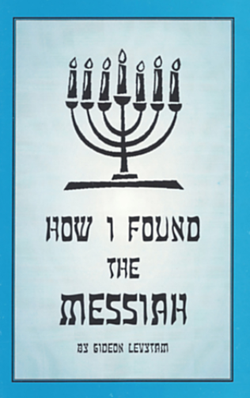
Follow Gideon Levytam's journey and discover how he was led by God, through a series of exciting circumstances, to find the One his people are still waiting for.
Past Episodes

Featured Offer
Follow Gideon Levytam's journey and discover how he was led by God, through a series of exciting circumstances, to find the One his people are still waiting for.
About Holy Scriptures and Israel
As time passed by, the Lord Yeshua took dear brother John Van Stormbroek to himself. The ministry of Holy Scriptures and Israel continued with additional development. In the early 1990’s, a weekly morning Bible class began which brother Gideon Levytam led regularly in the City of Toronto. This weekly open Bible class was held in the Willowdale assembly meeting hall. Eventually, a second mid-week evening Bible class was added. In April 2002, the need for an additional outreach Bible teaching meeting arose. We begun a Saturday (Shabbat) ministry meeting in which a systematic teaching of God’s word is presented to all who attend. Together we learn God’s Word, pray for each need and the salvation of Israel, and sing songs of worship unto our God, praising Him and our Lord Yeshua the Messiah.
In Mid 2004 we started to air on Joy 1250 Radio station a 15 minute Bible teaching program called "The Holy Scriptures and Israel" with Gideon Levytam. The broadcast teaches God’s word from a Hebrew Messianic perspective and has proved to be a blessing to many. It's now aired seven days a week. Our prayer is that many more of our Israeli people will have a clear understanding of who Yeshua is, why we all need him, and come to know him as their Lord and Messiah.
About Gideon Levytam
Contact Holy Scriptures and Israel with Gideon Levytam
426 Simcoe Street
Niagara-on-The-Lake
Ontario L0S 1J0
Canada
(905) 325-1234