
Ephesians 3:1-13, Part 1


The Mystery of the Church Part 1
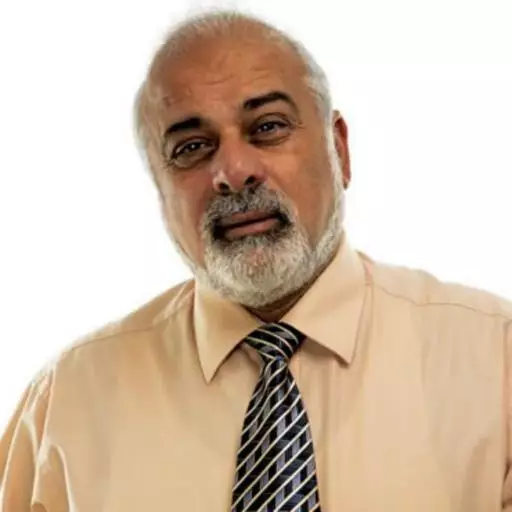
Narrator (Female): Shalom. Holy Scriptures and Israel is a ministry designed to share with the Jewish people the good news of the Lord Jesus, Yeshua the Messiah, and to instruct Christians on the Jewish roots of their faith. And now, teaching God's word from a Hebrew Messianic perspective, here is Gideon Levytam.
Gideon Levytam: Shalom everyone. Please open your Bibles today. We are going to read today the first part of Ephesians Chapter 3. This third chapter of the letter to the Ephesians really is going to conclude the first half of the book of Ephesians, which has to do with doctrine, with teaching. From Chapter 4 on, the Apostle Paul is shifting from teaching to practice, from doctrine to duty. But we are still in the first portion of the letter to the Ephesians, and Chapter 3 is an extremely important chapter for us to understand.
I'm going to read actually only the first 13 verses, and in the will of the Lord, we'll conclude the third chapter next ministry meeting. Let's follow with me with the third chapter, the first 13 verses. Paul is writing and he says, "For this cause I, Paul, the prisoner of Jesus Christ for you Gentiles, if ye have heard of the dispensation of the grace of God which is given me to you-ward: How that by revelation he made known unto me the mystery; (as I wrote afore in few words, Whereby, when ye read, ye may understand my knowledge in the mystery of Christ) Which in other ages was not made known unto the sons of men, as it is now revealed unto his holy apostles and prophets by the Spirit; That the Gentiles should be fellowheirs, and of the same body, and partakers of his promise in Christ by the gospel: Whereof I was made a minister, according to the gift of the grace of God given unto me by the effectual working of his power.
Unto me, who am less than the least of all saints, is this grace given, that I should preach among the Gentiles the unsearchable riches of Christ; And to make all men see what is the fellowship of the mystery, which from the beginning of the world hath been hid in God, who created all things by Jesus Christ: To the intent that now unto the principalities and powers in heavenly places might be known by the church the manifold wisdom of God, According to the eternal purpose which he purposed in Christ Jesus our Lord: In whom we have boldness and access with confidence by the faith of him. Wherefore I desire that ye faint not at my tribulations for you, which is your glory."
Now this is a very important chapter to understand in order for us to be in tune with the plans and the purposes of God. Number one, for the church. Number two, for the nation of Israel. Number three, for the world in which we're living. As I mentioned many times, and it is very unfortunate, that in the body of Christ, in the body of Messiah, oftentimes we make what you call a salad. We are mixing verses that apply to Israel, the nation, or verses that apply to the body of Messiah, or verses that apply to the world, and we are not rightly dividing the word of truth.
And here the Apostle Paul, here Sha'ul, continuing now to write doctrine, teaching to the believers at Ephesus, and he arrived now to Chapter 3 after he had shared with them in the previous two chapters the great privilege that the Goyim, the Gentile believers, have been brought into because of the gospel. He's now ready, beloved brothers and sisters, to go into a time of prayer. But as he was ready to go into a time of prayer, something happened. And the Apostle Paul, instead of going into a time of prayer, he gives us this what some call parenthesis, which he gives us an additional information that he wants the believers to grasp.
And that information is including the mystery of the Messiah and the believers, the church, the mystery of Christ, of the Mashiach. In fact, that word mystery, I want to highlight this before you. Notice the word mystery is mentioned three times in these verses that we read. First of all, in verse 3, he said that by revelation he made known unto me the mystery. Notice in verse 4, he says whereby when ye read, ye may understand my knowledge in the mystery of Mashiach, of Christ. And then a little bit further down in verse 9, he says and to make all men see what is the fellowship of the mystery, which from the beginning of the world has been hid in God.
Now this is a very interesting word because the word here for mystery comes from the Greek word mysterion. In Hebrew, we call it Sod. It's a mystery. But when God, in the present day dispensation, talks about mystery, He doesn't talk about mystery that happened somewhere there and nobody knows what happened. It is very mysterious. But here the mystery, it is simply, in the context of where we are now in the book of Ephesians, mystery is simply truth that was hidden in God in past time, but now is revealed to His own people through the word of God. That is what the Apostle Paul is presenting here in the third chapter.
So we are going to talk a little bit today in this ministry meeting about the mystery of the Mashiach, Christ, and His believers, His body, the body of Messiah. We can call it simply, as the Apostle Paul mentioned it here in this chapter, the mystery of the Mashiach, of Christ, of Christos. So we're going to talk about this, and I want us to see how he developed this truth here in this third chapter. I want you immediately, just before I'm going to go on, you notice he uses the word in verse 1 of Chapter 3, "for this cause I". Notice those words. Paul, what are you really saying?
Paul just, in the previous chapters, spoke about the Goyim, the believers from among the nations, the privilege that they have been brought into. You remember in Chapter 2 and verse 1, time past, he says in verse 2, you walked according to the course of this world, according to the prince of the power of the air, the spirit that now worketh in the children of disobedience. And he said to them in Chapter 2 that they were in the flesh, fulfilling the desires of the flesh. That's what they were in the past. But then verse 4 of Chapter 2, he says but now God was rich in mercy towards you Gentiles.
Then we also mentioned in verse 11 of Chapter 2, remember that in time past you were Gentiles in the flesh who were called uncircumcision. You had not the Messiah. You had not a citizenship. You had not a covenant. You had no hope. You were without God in this world. But now, because of what Yeshua has done, you have been brought nigh. So after he shared this with those Gentile believers and he was impressing this upon their souls, now he was ready to give thanks. That's why in Chapter 3 he says, "for this cause I". Now if you notice, if you jump to verse 14, it says, "for this cause I bow my knees".
He was now ready to go to a time of prayer. He says, because of what the Messiah has done for you Gentiles who became believers, I'm ready now to give thanks and praise to Him. But something happened. The Holy Spirit of God seems to take the Apostle Paul and to say to him, "Paul"—we don't read how it happened—but it says, "Paul, just a minute. Before you go into a time of prayer, I want you to give to those brethren additional information concerning the privilege they have been brought into." And that's why the Apostle Paul, instead of going immediately into prayer, which he will do in verse 14—"for this cause I, Paul, bow my knees"—he gives them those 13 verses, and he shared with them about that great mystery of the Messiah, Christ, and His church, the assembly.
And so he began to develop this, and I want you to notice that how in four ways he's presenting this mystery. First of all, in verses 1 to 5, the mystery of the church in relationship to the life of Paul himself. Secondly, the mystery of the church in relationship to the Gentile believers from among the Gentiles. This is verses 6, 7, and 8. Thirdly, in verses 9 and 10, the mystery of the church of Christ and His body in relationship to angels, to the heavenly beings. And finally, verses 11 to 13, it is the mystery of the church in relationship to you and I as believers in our Lord Yeshua the Messiah.
Paul is a very systematic Bible teacher. He was a man that when he gives doctrine, he gives teaching first of all, then later on he is moving into practice. You'll notice that in Chapters 4, 5, and 6. But now he's dealing with teaching, with doctrine, with, we say in Hebrew, Limud, Limudim, the truth concerning the position of all believers in the body of Messiah. So now let's look at this passage systematically, verse by verse. First of all, verses 1 to 5: the mystery of the Messiah and His believers and His church in relationship to the person of the Apostle Paul individually.
He began to share, notice in verse 1, that Paul calls himself a prisoner for the sake of our Lord Jesus the Messiah. "For this cause I, Paul, the prisoner of Jesus the Messiah for you Gentiles." Now remember that Paul, Sha'ul, was in prison when he's writing this letter. He was actually in the city of Rome. He was chained there, though he had liberty to speak to many people who came to hear from him the word of God. But he was actually a prisoner. And as he's been a prisoner, he doesn't say, "I'm a prisoner of Rome." He doesn't say, "I'm a prisoner of this person in this home." He says, "I'm a prisoner of our Lord Yeshua the Messiah." He was a prisoner, but he was a prisoner for Yeshua's sake.
A very interesting word for prisoner, it's desmios in the Greek. It comes from the word to be bound. In other words, Paul is saying, "I'm bound, but not necessarily with those chains. But I'm bound in my heart and my conscience to be a servant of our Lord Yeshua the Messiah." His main focus was to realize that the reason that he's in jail in Rome is not because of anything wrong that he had done, but because of the sake of the gospel and because of the sake of the Gentiles whom he was called to serve as the apostle to the nations of the world.
And so he's telling them in verse 1, he called himself, "I am the one that is in prison, I'm a prisoner of Yeshua HaMashiach for you, beloved brothers and sisters from the nations of the world." "I'm committed to do the things that the Lord had called me to do." It's not the only time he called himself a prisoner. Notice in Chapter 4 and verse 1, he says, "I therefore the prisoner of the Lord." Again he mentioned the word the fact that he's a prisoner. Notice in Chapter 6 and verse 20, he says, "for which I'm an ambassador in bonds." It's not the first time that he's calling himself a prisoner.
He was a prisoner for Yeshua the Messiah on behalf of the Goyim, of the nations, because he was preaching the message of the gospel. And he became that prisoner for the sake of the nations. How did the Apostle Paul, Sha'ul, become a prisoner? You remember he went to Jerusalem, Acts Chapter 21. The conservative Jewish people, the Pharisees, the Sadducees, when they found out that this Paul who was preaching to the Gentile world that Yeshua is the Messiah and that they can be fellowheirs in the gospel with all believers, the religious leaders of Israel did not like it at all.
So they captured him, Acts Chapter 21. They bound him and they took him eventually to the city of Rome. And so the Apostle Paul had this long journey from Chapter 21 all the way to the end of the chapter of the book of Acts where he found himself in prison in Rome. And now you see he became a prisoner, but it is for the sake of the preaching of the gospel. Now I don't know about you and I. Will somebody capture you and I, put us in jail because of the preaching of the gospel? Are we willing to take such a sacrifice to be placed in jail because I shared that Yeshua is the Messiah and the only answer for sin is through Yeshua the Messiah?
Most of us will say, "No, I don't want to be in such a condition." But Paul was called for this ministry. He was called to serve the Gentile world. He was called to be a minister of the gospel to the Gentiles. Yeshua Himself said in Acts Chapter 9, "He is a chosen vessel unto Me, to bear My name before the Goyim, the Gentiles, before kings, and the children of Israel. For I will show him, this is Paul, how great things he must suffer for My name's sake." That's what Yeshua told him when he was on the way to Damascus and he got saved, he accepted the Messiah. He became a prisoner of Yeshua the Messiah, but it was for the Goyim, for the nations of the world, that they will hear the message of the gospel.
So this is a very important verse to remember. And so now in verse 2, he using a very interesting word, "If ye have heard of the dispensation of the grace of God which is given me to you-ward." Now again, here's another hard word, dispensation. The word dispensation come from the Greek word oikonomia. It comes from the English word economy or administration. You see, God is administrating His ways in various different dispensation differently. It is the same message, it is the same grace and provision of God, but He administrate this in a different dispensation in a different way.
Those of us that have been with us yesterday for our Bible classes, we said that there are seven dispensation or seven economies or seven administrations in which God is dealing with men throughout the history of mankind. Let me quickly give them to you. There is the dispensation of innocence. That was before sin came into the world in the Garden of Eden. There is the dispensation of conscience. When Adam fell into sin, he received that conscience, the Matzpun, we say in Hebrew. Thirdly, we have the dispensation of human government. When Noah came out of the ark and he began the new world, it was a new dispensation of human government.
And the leader of the government failed the moment he came out, he got drunk. And he began the new dispensation of human government by failing, and the rest of us have failed under human government. Then we have the dispensation of the promise, where God called our father Abraham and gave him a promise, Genesis Chapter 12. "Get thee out of thy house, out of thy country, out of thy kindred, into a land which I will show you." And God gave the dispensation of promise to one nation, one people, the descendants of Abraham, Isaac, and Jacob. Then we have the next dispensation called the dispensation of the law.
When Israel, our people of old, came out of Egypt and been brought to Mount Sinai, to Har Sinai, and God gave our people the law. And then we live today in the dispensation, in the economy called the dispensation of the grace of God. John Chapter 1 verse 17 says, "For the law was given by Moses, Moshe, but grace and truth came by Yeshua the Messiah." And yet there is another dispensation that is awaiting this human race, and that is the dispensation of the Messianic kingdom, where God is going to restore Israel. The Mashiach Yeshua going to reign and rule over the nation of Israel and all the nations of the world. That's called the dispensation of the Messianic kingdom.
But we don't live under the dispensation of innocency or conscience or human government or even not under the dispensation of promise or even not under the dispensation of law. We live under the dispensation of the grace of God, and that's what the Apostle Paul is emphasizing here in this third chapter, and I want you to see that as we are moving along. So notice what he says in Chapter 3 and verse 2, "since or if ye have heard of the dispensation of the grace of God which is given me to you-ward". So Paul received a special revelation in order to minister the truth concerning that present-day dispensation of the church age, which Jew, Gentile, believers in Yeshua are united to one body called the church, the Ecclesia.
The head is in heaven, the body is on earth, waiting the day that we are going to be taken to be with Him. For 2,000 years, we live already under the church age, the dispensation of the grace of God. And even our very own family, who are Jewish born in the land of Israel, if they are not saved, they are not part of this dispensation of the grace of God, the Chesed Elohim. They need to be part of the body of Messiah, to accept Yeshua as their Lord and Savior. So Paul had received a special revelation himself. That's why he called himself many times, "I am the apostle of the Gentiles."
He received special revelation from the Lord. You can read it in various passages, including Romans Chapter 11, when he was writing to the Gentile believers at Rome. He says, "I am an apostle of the Gentiles." So we see in verse 1 that he was calling himself a prisoner of Yeshua. In verse 2, Paul receive a call to teach the Gentiles concerning the dispensation of this grace of God in which we live here today in this present age. Then you notice now in verses 3 and verse 4 that Paul receive a very special revelation. Notice he says now in verse 3, "How that by revelation".
The word revelation means apocalypse. The very same word is being used here in that verse 3. "I receive an apocalypsis. I receive a special revelation from the glorified Mashiach concerning this present day of the church age." So in verse 3, "that by revelation he", this is Yeshua, "made known unto me the mystery; (as I wrote afore in few words, Whereby, when ye read, ye may understand my knowledge in the mystery of Christ)", Sod HaMashiach. Now notice that Paul received a special revelation from the glorified Messiah. Now we do not know exactly when he received that revelation.
What we do know is that he received truths that were beyond his grasp. First of all, he received the revelation from the Messiah on the way to Damascus in Acts Chapter 9. But in additional to that, the Apostle Paul receive more information. I want to read this. Turn to 2nd Corinthians Chapter 12. Paul said in verse 2, "I knew a man in Messiah above fourteen years ago, (whether in the body, I cannot tell; or whether out of the body, I cannot tell: God knoweth;) such an one was caught up to the third heaven." And then he says in verse 3, "And I knew such a man, (whether in the body, or out of the body, I cannot tell: God knoweth;) How that he", this man—and he's really speaking about himself—"he was caught up into paradise, and heard unspeakable words, which it is not lawful for a man to utter."
You see, apparently Paul had been taken up and received specific revelation concerning the church age in which you and I live in today. And so he's quoting this, he mentioning this to the Corinthians. And now he is telling this to the Ephesians. He says, "Listen, beloved brothers and sisters, I don't give you what I'm giving you out of my sleeves. It's not something that I provide with my own ideas and my own thinking or my own ingenuity. No," he says. "I received this revelation by the Messiah, or from the Messiah, about this mystery. And I'm writing to you about this mystery in a few words, whereby when you read that, I want you to make sure that you understand why I have this knowledge concerning the mystery of that Messiah."
And you know when you use the word Messiah, he linking the Messiah, who is the head, with the body on this earth. Christ, the Mashiach, the head is in heaven, the body is here on earth. And he's telling them, "Listen, what I'm telling you about this wonderful mystery, it's a revelation that I have received from the glorified Messiah." Again, I want to emphasize that in Hebrew it's called Sod. Sod is like a secret. A sacred secret. But it's not a secret that we don't know anymore, but it is a secret that is now revealed to present-day dispensation believers, while it was hid from them in past history. Let me read one more verse, if you may, please turn to 1st Corinthians Chapter 12. Again in connection with this, what is the mystery of Christ, the Messiah and the church, the Ecclesia? In 1st Corinthians Chapter 12, he says there in verse 12, 13, and 14, "For as the body is one, and has many members..."
Narrator (Female): You have been listening to Holy Scriptures and Israel with Gideon Levytam. Gideon teaches God's word from a Hebrew Messianic perspective. For more information about this ministry, write to Holy Scriptures and Israel, Box 1411, Niagara-on-the-Lake, Ontario, L0S 1J0, or visit our website at holyscripturesandisrael.com. You are also invited to Gideon's weekly Bible teaching on Fridays at 11:00 AM and 7:00 PM, and Saturdays at 1:00 PM at Willowdale Christian Assembly Hall, 28 Martin Ross Avenue in Toronto. Holy Scriptures and Israel is made possible by your prayers and financial support. If you would like to support the program, visit holyscripturesandisrael.com. God bless you. Shalom, shalom.
Featured Offer
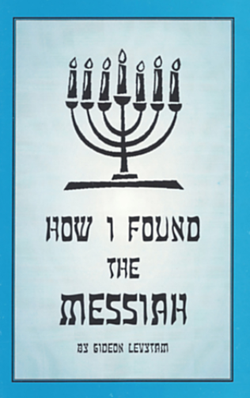
Follow Gideon Levytam's journey and discover how he was led by God, through a series of exciting circumstances, to find the One his people are still waiting for.
Past Episodes

Featured Offer
Follow Gideon Levytam's journey and discover how he was led by God, through a series of exciting circumstances, to find the One his people are still waiting for.
About Holy Scriptures and Israel
As time passed by, the Lord Yeshua took dear brother John Van Stormbroek to himself. The ministry of Holy Scriptures and Israel continued with additional development. In the early 1990’s, a weekly morning Bible class began which brother Gideon Levytam led regularly in the City of Toronto. This weekly open Bible class was held in the Willowdale assembly meeting hall. Eventually, a second mid-week evening Bible class was added. In April 2002, the need for an additional outreach Bible teaching meeting arose. We begun a Saturday (Shabbat) ministry meeting in which a systematic teaching of God’s word is presented to all who attend. Together we learn God’s Word, pray for each need and the salvation of Israel, and sing songs of worship unto our God, praising Him and our Lord Yeshua the Messiah.
In Mid 2004 we started to air on Joy 1250 Radio station a 15 minute Bible teaching program called "The Holy Scriptures and Israel" with Gideon Levytam. The broadcast teaches God’s word from a Hebrew Messianic perspective and has proved to be a blessing to many. It's now aired seven days a week. Our prayer is that many more of our Israeli people will have a clear understanding of who Yeshua is, why we all need him, and come to know him as their Lord and Messiah.
About Gideon Levytam
Contact Holy Scriptures and Israel with Gideon Levytam
426 Simcoe Street
Niagara-on-The-Lake
Ontario L0S 1J0
Canada
(905) 325-1234