
Ephesians 2:11-22, Part 3


God’s Provision of Peace Part 3
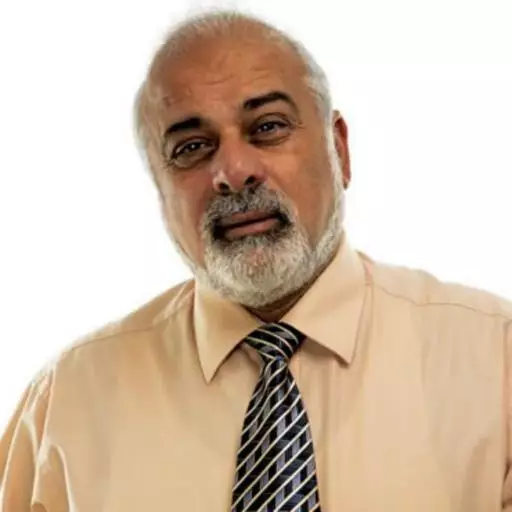
Gideon Levytam: The study of Ephesians chapter 2 continues with verse 15, "Having abolished in his flesh the enmity, even the law of commandments contained in ordinances; for to make in himself of twain one new man, so making peace." How did he make this peace? Yeshua made eternal peace between God and between man, only when he died for us on the tree. He abolished this enmity in his flesh. What does he mean here? God entered humanity in the person of Yeshua the Messiah.
When he was born in Bethlehem to the Jewish Virgin Miriam, he became a man, spirit, soul, and body, a sinless man. He lived here upon the face of this earth for 33 and a half years. He went to the Roman cross where there he was placed in order to be punished for the sin of this world. On the cross, he bore the sin question once and for all. He bore the judgment that you and I deserve to receive when he in his flesh bore our sins in his body on the tree.
He literally became sin for us that we will become the righteousness of God. In Mark chapter 15, it is interesting to see how the writers of the New Covenant place this before us. In Mark 15:25, "And it was the third hour, and they crucified him." This is Yeshua the Messiah who was crucified on the tree. Mark 15:33 says, "And when the sixth hour was come, there was darkness over the whole land until the ninth hour."
Here you have the third hour, the sixth hour, and the ninth hour. Six hours our Lord Yeshua was hanging on that Roman cross. The first three hours, Yeshua suffered by the hands of man. Men mocked him and laughed at him, the leaders of Israel, the passersby, the Gentile nations, even the malefactors, the soldiers, everybody mocked him the first three hours. But the second three hours, he suffered by the hand of a righteous God.
This is why we read in Mark 15:33 that there was darkness over the whole land from the sixth hour to the ninth hour. The second three hours of the six that Yeshua was on the tree, God laid upon him the whole question of sin. In verse 34, "And at the ninth hour Yeshua cried with a loud voice saying, Eloi, Eloi, lama sabachthani?" which is interpreted, "My God, my God, why hast thou forsaken me?"
You see, beloved brothers and sisters, what happened here. God laid upon his son as man the sin question. All the enmity that we had against God, all the sin question that men have committed from Adam until today, all was laid upon Yeshua the Messiah. The sin, the root, and sins, the fruit. This is because God hates sin. Yeshua, the son of God, the Messiah of Israel, bore it on our behalf when he was there on the cross.
God now as a judge had to separate from him for these three hours. He was judged by God. And at the ninth hour, he cried, "Eloi, Eloi, lama sabachthani? Why did you forsake me?" Immediately in verses 37 and 38, we see that Yeshua Jesus cried with a loud voice and gave up the spirit. The veil of the temple was rent in twain from the top to the bottom. Remember, the veil that stood between the holy and the holy of holies, the Kodesh and Kodesh ha-Kodashim, was a very thick veil.
The veil was ripped from the top to the bottom. It doesn't say from the bottom to the top. This is because God himself from the top have opened and ripped this veil. It's almost like a sign of mourning to tear the veil. Like when we mourn, we tear our clothes, God tore the veil. He opened the door to make a possibility for everyone who trusted in Yeshua the Messiah to draw near. Our Lord Jesus the Messiah was penalized, the just one for the unjust one, to bring us to God.
God tore apart the veil from the top to the bottom. We must understand that he have done it because of the work of the Messiah. Turning to Hebrews chapter 10, verse 19 and 20, you will see the connection here. It says, "Having therefore, brethren, boldness to enter into the holiest," in Hebrew, Kodesh ha-Kodashim, "by the blood of Yeshua, by a new and living way, which he has consecrated for us through the veil, that is to say, his flesh."
Beloved, the veil of the temple typified the flesh of the Messiah. In other words, when he died and bore our sins, the veil was opened and enabled us now to enter into the immediate presence of God. This is why Paul says in Ephesians 2:15 that he abolished in his flesh the enmity, even the law of commandments contained in ordinances, to make in himself of twain one new man, so making shalom.
He abolished the law and commandments contained in ordinances. Some might say they can get forgiveness of sin on a basis of keeping the law. But here we learn very quickly that the basis and the ground upon which one can be drawn near to God is not on a basis of keeping the law. Though the law is holy, none can keep it. The basis to draw near is on the ground of the blood of our Lord Yeshua the Messiah.
God's law never changed, but the ground upon which we draw near is not on the basis of keeping the law, commandments, and ordinances, but on the basis of the finished work of Yeshua the Messiah. Notice that he says he made in himself of the two one new man, ish chadash. One new man, he doesn't talk about the individual man. He is talking about the union between Jewish people and Gentile people who became believers, one in the body of Messiah, the Ecclesia.
Jewish people and Gentile people uniting together in Messiah making what is called today one new man, meaning one company. You notice that in many other verses that we can read about the church, we have talked about this. Notice verse 23 of chapter 1 of Ephesians. He said, "And has put all things under his feet and gave him to be head over all things to the church which is his body, the fullness of him that filleth all in all."
He is the head, and we are the body, the assembly, the Ecclesia. The body is here on earth, and the head is in heaven. Jewish people and non-Jewish people are now united together and become one assembly. There is not one church for the Jews and one church for the Gentile. No, there is one congregation for both. There is only one body that is for both Jews and Gentiles alike.
We have to confess that we fail in our expression of that unity many times. But positionally, there is only one new man, namely the Ecclesia, the body of Messiah, which is a composition of all believers in the church. God now removed that enmity between the descendants of Abraham and the nations of the world. All this is on the basis of the finished work of our Lord Yeshua the Messiah. He is our shalom. He made that peace.
Ephesians chapter 2, verse 16 says, "And that he might reconcile both unto God in one body by the cross, having slain the enmity thereby." This is also very important, the word reconciliation. For me as a Hebrew person, I had a very hard time to learn some of these difficult English words: propitiation, reconciliation, justification. These words are not easy for us to understand. By the grace of God, we understand reconciliation.
What happened since sin came into this world, man was at a distance from the Lord. And God wanted to reconcile man to himself. Adam and Eve could not look at God because of sin. God, on a basis of the sacrifice, could look at them and reach for them to be drawn back to himself because blood was shed and atonement was made. Adam and Eve turned to him on a basis of the sacrifice and God accepted them.
Adam and Eve turned their faces from God after they strayed from him, and now they were reconciled to God. But it was always on a basis of the shed blood of an animal. God had to kill an animal to shed its blood, to cover the skin of Adam and Eve but to cover their sins through the blood of that animal. This is why we read the story of Cain and Abel in Genesis chapter 4.
Cain did not come to God on a basis of the blood and he ended up further from God. But Abel came on the basis of the shed blood. John 3:19 says, "And this is the condemnation, that light is come into the world, but men love darkness rather than light because their deeds were evil." God loves man so much that he wanted to bring him back to himself and therefore he sent his son, the Messiah, in order to restore man unto himself.
Proverbs 8:31 says, "Rejoicing in the habitable part of the earth and my delight is with the sons of men." What God was going to do, he provided a way of salvation for mankind. All on the basis of the cross and the finished work of Yeshua the Messiah, we have been brought back to God. Yeshua cried, "My God, my God, Eloi, Eloi, lama sabachthani," because God had to forsake this sinless man in order that sin will be judged.
In Psalm 22, there is an answer to the cry of our Lord Yeshua. Verse 3 says, "But thou art holy, thou that inhabitest the praises of Israel." God is holy. He cannot look upon sin. He must judge sin and therefore he judged his son as man upon that cross. What a privilege it is for us as brothers and sisters in the Messiah to be brought nigh on a basis of the finished work of our Lord Yeshua the Messiah.
Romans 5:10 says, "For if when we were enemies, we were reconciled to God by the death of his son, much more being reconciled, we shall be saved by his life." Notice verse 16. Jewish and non-Jewish believers were reconciled through the Messiah on the basis of his death. Messiah came now and he preached shalom. Not only that he is shalom, verse 14, and not only that he made shalom, verse 15, but now he is preaching peace through his servants to mankind.
Verse 17 says, "And came and preached peace to you which were afar off and to them which were nigh." Paul distinguished between those that were afar off, the Gentiles, and those that were nigh, the Jewish people, the descendants of Abraham, Isaac, and Jacob. Now, it is preached the very same message of peace, of shalom, to all around. It was preached in the past by the coming of the Messiah and it is preached through the apostles, and we also can preach that message today.
Matthew 11:28 says, "Come unto me all ye that labor and are heavy laden and I will give you rest." I will give you rest, I will give you life, and I will bless you. This is the invitation of God to mankind. God made peace through the blood of the cross. Notice what it says in verse 18, "For through him we both have access by one Spirit unto the Father."
We see here the tri-unity of the Godhead in one verse: through him, God the Son; we have both access by one Spirit, God the Holy Spirit; unto the Father, God the Father. One God, three persons: Abba Father, Ben Son, and Ruach Holy Spirit. And we both have an access to the Father in the power of the Spirit of God on the basis of the finished work of the Son, Yeshua.
Every believer can draw near to God through the blood of Yeshua the Messiah. Each and every one of us can draw near to God through the blood of Yeshua the Messiah. Paul reminds the Gentile brothers that they are in Messiah, in Christ. Verse 19 says believers are fellow citizens in God's household right now. "Therefore ye are no more strangers and foreigners but fellow citizens with the saints and of the household of God."
Gentile believers now became fellow citizens with the Jewish saints. He distinguishes but he doesn't separate. In the body of Messiah, there are always Jewish individuals and non-Jewish individuals. There are all sort of nations and languages. Positionally, there is one body and only one company. Imagine how they must have felt when they were strangers, but now they are in. They are no longer strangers.
Every believer is a fellow citizen with the saints and of the household of God. Household of God now does not speak about the temple in Jerusalem, it speaks about the household of every person, no longer physical bricks but living stones. This household is not a physical temple or a physical tabernacle, but it is a spiritual household. It is a house like a temple that is a composition of all believers. It is a spiritual house.
Ephesians 2:20 says, "And you are built upon the foundation of the apostles and prophets, Yeshua the Messiah himself being the chief cornerstone." This house is built upon the apostles and prophet, but the chief cornerstone is none else but our Lord Yeshua the Messiah himself. Beautiful to know this fact. In Acts chapter 2 and verse 42, we read that they continued steadfastly in the apostles' doctrine and the fellowship and the breaking of the bread and in prayer.
The apostles were the foundation of the church, of the assembly, of the house of God. The rest of the believers continued to follow the teaching of the apostles and of the prophets, of the first-century church saints. They were the foundation, but the chief cornerstone, Even HaPinah, is none else but our Lord Yeshua the Messiah. Matthew 16:18 says, "I say unto thee, that thou art Peter and upon this rock I will build my assembly, and the gates of Hades shall not prevail against it."
Peter's confession is that which we are to build upon. And Peter's confession is, "You are the Messiah, the Son of the living God." Ephesians chapter 2, verses 21 and 22 says, "In whom all the building fitly framed together groweth unto an holy temple in the Lord." Assembly is like a building and it is growing into a holy temple. This is the spiritual temple in the Lord. We are fitly put together and we are to grow together as a holy temple in the Lord.
Israel have built the temple, it had been said there was various story that they were looking for the cornerstone. The cornerstone was already cast down from the mountain and it was missing. They were trying to fit all sort of stone together but they could not. There was one missing stone, and that stone was the cornerstone. Someone was calling, "Hey, bring that missing stone."
They remember they cast this away earlier when they were building the temple in Jerusalem. Psalm 118:22 says, "The stone which the builders refused is become the head of the corner." We need the Messiah as the one upon which the whole building will fit together. But every believer is a member of that body of the Messiah. Ephesians 2:22 says, "In whom ye also are builded together for an habitation of God through the Spirit."
Again, he is speaking about the Gentile believers. Habitation is a place where God inhabits. He does not inhabit now in temples made with hands, but he inhabits in the power of the Spirit of God among his own people. Matthew 18:20 says, "For where two or three are gathered together in my name, there am I in the midst of them." I always wonder when I read this verse and I was thinking, we don't see God, how can he be among his own people?
He promised to be by the Spirit in the midst of his own people who gather together. We are builded together for an habitation of God through the Spirit. Holy Spirit of God enabled himself to abide in the midst of his own people because of the person of the Holy Spirit of God. Positionally, it is the Spirit of God who now put together and allow God to be in the midst of his own people because of the finished work of our Lord Yeshua the Messiah.
Brothers and sisters, this is the conclusion of this portion. May the Lord help us to understand all this and to help us to grow and to appreciate what Yeshua the Messiah have done for us. May God bless you and keep you. Shalom.
Featured Offer
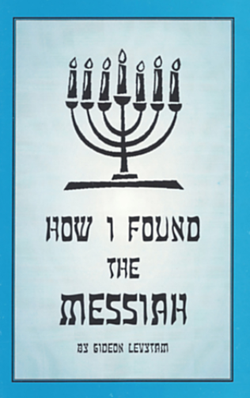
Follow Gideon Levytam's journey and discover how he was led by God, through a series of exciting circumstances, to find the One his people are still waiting for.
Past Episodes

Featured Offer
Follow Gideon Levytam's journey and discover how he was led by God, through a series of exciting circumstances, to find the One his people are still waiting for.
About Holy Scriptures and Israel
As time passed by, the Lord Yeshua took dear brother John Van Stormbroek to himself. The ministry of Holy Scriptures and Israel continued with additional development. In the early 1990’s, a weekly morning Bible class began which brother Gideon Levytam led regularly in the City of Toronto. This weekly open Bible class was held in the Willowdale assembly meeting hall. Eventually, a second mid-week evening Bible class was added. In April 2002, the need for an additional outreach Bible teaching meeting arose. We begun a Saturday (Shabbat) ministry meeting in which a systematic teaching of God’s word is presented to all who attend. Together we learn God’s Word, pray for each need and the salvation of Israel, and sing songs of worship unto our God, praising Him and our Lord Yeshua the Messiah.
In Mid 2004 we started to air on Joy 1250 Radio station a 15 minute Bible teaching program called "The Holy Scriptures and Israel" with Gideon Levytam. The broadcast teaches God’s word from a Hebrew Messianic perspective and has proved to be a blessing to many. It's now aired seven days a week. Our prayer is that many more of our Israeli people will have a clear understanding of who Yeshua is, why we all need him, and come to know him as their Lord and Messiah.
About Gideon Levytam
Contact Holy Scriptures and Israel with Gideon Levytam
426 Simcoe Street
Niagara-on-The-Lake
Ontario L0S 1J0
Canada
(905) 325-1234