
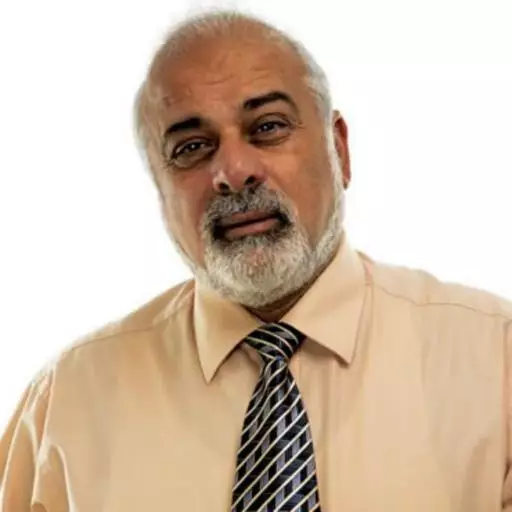
Ephesians 2:11-22, Part 2


God’s Provision of Peace Part 2
Guest (Male): Shalom! Holy Scriptures and Israel is a ministry designed to share with the Jewish people the good news of the Lord Jesus, Yeshua the Messiah, and to instruct Christians on the Jewish roots of their faith. And now, teaching God's word from a Hebrew Messianic perspective, here is Gideon Levytam.
Gideon Levytam: The study of Ephesians chapter 2. The hope of the return of the Messiah, the establish of the Messianic kingdom, the rule of God through the Messiah over the nation of Israel and over the nations of the whole world. What a beautiful hope Israel had. But these non-Jewish believers, before they became believers in Yeshua the Messiah, they had no hope. All those who are not believers in Jesus the Messiah today still have no hope. What a sad condition.
They cannot look to anything in the future because they are without hope. Our hope is found in the person of our Lord Yeshua the Messiah. Many times when we speak to individuals and we ask them what is going to happen when you're going to die, where will you spend eternity? Then some say, "I don't know. Six feet under the ground, and it is all over." No hope.
Well, we can thank God already now that for us there is hope. There is hope for all believers, but there was no hope for those non-Jewish individuals before they became part of the body of Messiah. So without Messiah, without citizenship, without covenant, without hope, and finally in verse 12, we read, and without God in the world. Without God? Oh, yes, they had made all sort of idols, their own gods, but without the true and living Elohim God, the God of Abraham, Isaac, and Jacob, the creator God, the lover of their soul, the one who provided for us, for mankind, a way of salvation.
The psalmist of Israel said it this way in Psalm 115 verses 1 to 8: "Not unto us, O Lord, not unto us, but unto thy name give glory for thy mercy and for thy truth's sake. Wherefore should the heathen say where is now their God? But our God is in the heavens. He has done whatsoever he has pleased. Their idols are silver and gold, and the work of men's hands. They have mouth, but they speak not. Eyes have they, but they see not. They have ears, but they hear not. Noses have they, but they smell not. They have hands, but they handle not. Feet have they, but they walk not. Neither speak they through their throat. They that made them are like unto them, so is everyone that trusteth in them."
Can you imagine what a condition for the unbelievers in this world today? Oh, there were many, many gods the unbelievers had. With a small "g" idols they had, but they didn't have the true and living God in this world. So the Apostle Paul, when he came to Greece and he was there preaching the message of the Gospel, it had been said that in Athens you could find more idols than people at the time when Apostle Paul went to preach the message of the messiahship of Yeshua in the city of Athens. And he preached about this living God who sent the Messiah.
Paul emphasizes the fact that the Gentile believers, before they became part of the body of Messiah, they were uncircumcised, without Messiah, without citizenship, without covenant, without hope, without God in this world. What a state they had been before. Now remember, we are talking about 2,000 years ago today at the end of the church age. We believe that Paul was speaking to them at about 64 AD, long before things have changed direction in the spiritual state of the church age, which is today is rather sad. But in the beginning of the church age, things were different. The church, the believers among the body of Messiah, was growing and developing.
He reminded them that those things that they had been without and now they have, they've been brought closer to the Lord Yeshua the Messiah. They became now part of the body of Christ. Now, I want to mention one more thing. Israel was a favored nation, but Israel was not chosen in order to pride itself. Israel, the nation, was not chosen in order they will think that they were superior than other nations of this world. God forbid. Israel has the responsibility to be a priestly nation, to represent God in this world.
So it was just what we read in Deuteronomy chapter 7 where God said to Israel in verse 6, "For thou art a holy people unto the Lord thy God. The Lord thy God has chosen thee to be a special people unto himself above all the people that are upon the face of the earth." Then look what God says in verses 7, 8, and 9: "The Lord did not set his love upon you, nor choose you because ye were more in number than any people, for ye were the fewest of all people, but because the Lord loved you and because he would keep his oath which he had sworn unto your fathers, hath the Lord brought you out with a mighty hand and redeemed you out of the house of bondage from the hand of Pharaoh, king of Egypt. Know therefore that the Lord thy God, he is God, the faithful God which keepeth covenant and mercy with them that love him and keep his commandments to a thousand generation."
So in other words, Israel was chosen because God set his love upon the nation, not because Israel was superior, but it is totally the grace of God. Israel was responsible to reach the world with the message of the true and living God. Our nation, as a nation, had failed to fulfill that which God had given them to do throughout the ages. And so Israel did not fulfill what God had in mind for them, but it will come to pass in the Messianic age when Israel, as a nation, will accept the Messiah. Then Israel will fully fulfill what God had in mind for them.
But I also want to remind you that those of us who are believers in Yeshua, Jesus the Messiah, who are part of the church today, we have also been chosen before the foundation of the world, but we, the church, also had failed just the same as Israel the nation has failed. And that's why we are so thankful for the grace of God and verses such as this is so precious to our hearts to realize that everyone have been brought in by the grace of God.
So now, after the Apostle Paul pointed to these two verses, then from verse 13 to 18, Paul reminds the brethren from among the Gentiles what God had done for them. And this is really refreshing to the heart of everyone who read this passage. Notice in verses 13 to 15, Paul speaks about what God had done and what the Messiah had done between Jews and Gentiles, believers from among the Jewish people, our own nation, and believers from among the Gentiles. Between Israel and the nations of the world, he points to this wonderful relationship that he have brought between those two.
Then in verses 16 to 18, he shows what God have done for all through the person and the work of Yeshua the Messiah. So let's look over those verses together. First of all, notice Ephesians 2 verses 13, 14, and 15. God now remove the enmity between the descendants of Abraham, Isaac, and Jacob and the Gentile world. He says first of all in verse 13: "But now in Christ Jesus, in a Messiah Yeshua, ye who sometime were far off are made nigh by the blood of the Messiah, by the blood of Christ." Notice the word "but now", very similar to what Paul said in verse 4, "But God". It is all from God. What God had done on behalf of those believers from among the Gentile is now presented here.
He says: "But now in Christ, in a Mashiach, in the Messiah, ye who sometime were far off are made nigh by the blood of the Messiah of Christ." He is telling them in verse 13 that in the Messiah Yeshua, those Gentile believers are made nigh. How they can become nigh? Because the Lord Jesus, the Messiah, shed his blood. That word for "nigh" is the word for "near". That's why when we read the hymn as we have read earlier, we can never be to God as near as we are now because of the work of our Lord Jesus the Messiah.
He uses the word "had been made nigh by the blood of the Messiah". He doesn't use the word "by the death of the Messiah" or "by the resurrection of the Messiah", but he uses the word "by the blood of the Messiah". Why does he use the word "blood"? Because Yeshua, the Messiah, had to shed his precious, precious blood. You remember what the writer to the Hebrew said in Hebrews 9 verse 22? He says, "Almost all things are by the law purged with blood, and without shedding of blood there is no remission." In other words, there is no forgiveness without the shedding of blood.
Under the law, we read in Leviticus chapter 17 and verse 11: "For the life of the flesh is in the blood, and I have given it to you upon the altar to make an atonement for your soul, for it is the blood that maketh an atonement for the soul." Beloved brothers and sisters, without bloodshed of the Messiah, there is no forgiveness of sin. Atonement is made through a shed blood of an innocent animal, and the removal of sin is made through the shed blood of the Mashiach Yeshua, Jesus the Messiah himself. We could never be brought near to God unless our Lord Yeshua the Messiah shed his precious blood.
And so he is saying to these brethren, says now, right now, every believer in Yeshua the Messiah made nigh by the precious blood of the Messiah. He is emphasizing the blood. That blood in Hebrew, the word is "dam", makes an atonement for the soul. His blood was shed, and now it's made possible for one who trust him and accept him to be brought near to the presence of God. Imagine what it meant for our blessed Lord Jesus the Messiah to give his life a ransom for many.
Peter was writing to Hebrew believers, and he said to them in 1 Peter 1:18 and 19: "Forasmuch as ye know that ye were not redeemed with corruptible things as silver and gold from your vain conversation received by traditions from your fathers, but with the precious blood of Mashiach, of Messiah, as of a lamb without blemish and without spot." What shall wash away my sin? Nothing but the blood of our Lord Jesus the Messiah. The blood must be shed, and this is why he says in this passage, you who were from among the nations of the world, you were far off, now you become so near, and it was on a basis of the blood of our Lord Jesus Yeshua the Messiah.
Imagine, he is showing them what the Messiah had done for them. There are many verses that can be presented before us like Colossians chapter 1 and verse 12 to 14, where Paul said: "Giving thanks unto the father, which has made us meet to be partakers of the inheritance of the saints in light, who hath delivered us from the power of darkness and has translated us into the kingdom of his dear son," and listen to this, "in whom we have redemption through his blood, even the forgiveness of sins." The blood of an innocent one must be shed. The life of the flesh is in the blood.
God made us suitable to meet for his presence, and it is only because the blood of Yeshua the Messiah was shed on the tree. This is why it is so important to emphasize again and again that it is the blood that Yeshua the Messiah shed as a sacrifice that made us near. The Hebrew word for sacrifice is "korban". This word mean to draw near, "lehitkarev" means to be able to draw near. The sacrifice of the Messiah made it possible for the Gentiles to draw near to God, for all of us to draw near to each other, but it is on the basis of the blood that the Messiah Yeshua, Jesus, have shed on the tree.
Now notice secondly in verse 14 of Ephesians chapter 2, he is saying now that the Messiah is our peace. In Hebrew, "Shalom". Verse 14: "For he is our Shalom, our peace, who has made both one and has broken down the middle wall of partition between us." There was a distance that was between the descendants of Abraham, Isaac, and Jacob, our nation, the nation of Israel, and the goyim, the nations of the world. And there was separation. There was not that privilege that you and I have today as believers in Jesus the Messiah to draw nigh to each other as brothers and sisters in the Messiah, close to each other.
Before the Messiah gave himself a ransom for many, there was always a separation. There was that middle wall of partition that was between the descendants of Abraham, Isaac, and Jacob and the rest of the nations of the world. This wall of separation always distinguished Israel from the nations of the world. But now, what happened when Yeshua came? When Yeshua Jesus came, the wall that was between us had to be torn down, had to be broken down.
Can you imagine when Paul wrote to the Ephesians at about 64 AD, the temple stood? At that time, the temple existed in the city of Jerusalem, waiting the day of destruction when the Romans came and destroyed the temple in Jerusalem and burn it and destroyed the whole city of Jerusalem in 70 AD. So when Paul wrote in 64 AD, the temple still stood. There were various courts in the temple, and not everyone could enter into every court. In fact, the fifth court was further out. That court was called the court of the Gentiles.
The priest could pass through the court of the Gentile, then there was another court called the court of the women. The priest could pass through the court of the women. And then there was another court called the court of the men, Israeli men. Then the priest could pass through the court of Israeli men. And then there was another court called the priestly court, and the priest could get all the way up to the priestly court. But finally, there was the first court, you might say, and that was the Holy of Holies, where the High Priest could enter in the day of atonement, Yom Kippur, once a year.
So the Gentile was so far away, he couldn't draw nigh before. In fact, archeologists found and discovered that there was an inscript on one of the walls between the Gentile court and the women court that says there, "No foreigner may enter within the barricade which surrounded the sanctuary and the enclosure. Anyone who is caught doing so will have himself to blame for his ensuing death." No Gentile could come closer at that time. Even at the time when the temple stood, the Gentile could never get in.
There was a wall that was separating between the court of the Gentile and the Jewish people. And therefore the priest could enter all the way to the court of the priest and the high priest all the way to the Holy of Holies once a year, but the Gentile had to stay far away. Can you imagine, beloved brothers and sisters, being so far from the privileges, so far from the presence of God? But Shaul Paul is encouraging and reminding the believers of Ephesus the Messiah Yeshua had made peace, he made Shalom now between the two. Who has made both of us one.
Now you see, brothers and sisters, he took Jewish believers and Gentile believers and united them together into one body. He is saying now that by the Messiah Yeshua, there is Shalom. He broken down this middle wall of partition that is between us. Even the law itself became a wall of separation between Israel and the nations of the world. Let me remind you what we read in Deuteronomy chapter 7. It says in verse 1 and 2: "When the Lord thy God shall bring thee into the land whither thou goest to possess it and has cast out many nations before thee, the Hittite and the Girgashite and the Amorite and the Canaanite and the Perizzite and the Hivite and the Jebusite, seven nations greater and mightier than thou." This is what he is saying to Israel.
And when the Lord thy God shall deliver them before thee, thou shalt smite them and utterly destroy them. Thou shalt make no covenant with them, nor show mercy unto them. Now notice what it says in verses 3 and 4 of Deuteronomy chapter 7: "Neither shalt thou make marriage with them. Thy daughters thou shalt not give unto his son, nor his daughter shalt thou take unto thy son. For they will turn away thy son from following me, that they may serve other gods. So will the anger of the Lord be kindled against you and destroy you suddenly."
You see, we may blame Israel in failing to obey God and live for God, but this was what God set before the people of Israel. It was God who set up that wall. It is God who distinguish between Israel and the nations. It was according to his purposes. But Israel sought to live like the nations of the world and therefore they were drawn away from God. Unfortunately, Israel failed in following God. And this is why the Messiah came in his first coming so he will pay for the price of sin.
His blood made it possible now for a person to receive forgiveness of sins and to bring both Jewish and Gentile into nearness to him and into making one body, one union, Shalom between the two. In order that we can draw near to each other. So the expression "He is our Shalom", according to Isaiah chapter 9 and verse 6, the one who came to bring peace. In a future, soon and very soon, he will bring peace between the whole world and God. But now everyone that have trusted in him, he now made peace, made Shalom.
We have peace with God through our Lord Yeshua the Messiah, but also peace with each other, each one of us who have trusted that Yeshua is the Messiah. Look what we read in Isaiah chapter 9 and verse 6 and 7: "For unto us a child is born, unto us a son is given, and the government shall be upon his shoulder, and his name should be called Wonderful, Counselor, The Mighty God, The Everlasting Father, The Prince of Peace. Of the increase of his government and peace and Shalom, there shall be no end upon the throne of David and upon his kingdom, to order it and to establish it with judgment and with justice from henceforth even forever. The zeal of the Lord of Hosts will perform it."
You see, God promised one day there will be peace in this world and the Prince of Peace, namely Yeshua the Messiah, will rule and reign. But in a meanwhile, in the time of his rejection, he made peace through his blood for all those who have trusted in him, but also he have made Shalom, made peace between us Jewish and those from the nations and he brought us together. God the Son, Yeshua the Messiah, the Prince of Peace, Sar Shalom, he is our peace and he is the one who have broken down the middle wall of partition between us.
And this is so amazing. Those of us that are Jewish believers who has wife who are not Jewish, but God had blessed us to be united together, Jew and Gentile together in the Messiah Yeshua. It only can be possible because of our faith in Yeshua the Messiah, otherwise it's not the same. The Lord has brought us by his grace together and why it is so unique? It is because here is Gentile and here's Jew united together, able to live with each other and worshiping the person of the God of Israel through the Lord Jesus the Messiah.
Now notice in verse 15, not only that he is the Shalom, but now he made Shalom for us by his finished work on the cross, on the tree. We read in verse 15: "Having abolished in his flesh the enmity, even the law of commandment contained in ordinances for to make in himself of the twain one new man, so making peace." Now notice, this is an amazing verse, this verse 15. Not only that he is our Shalom, but he made Shalom. People today trying to make peace, trying to make Shalom with each other. It had been said that thousands of peace treaties have been arrange but broken over the many years by many, many nations.
Nations trying to make Shalom today in the Middle East, but it doesn't work. Every time we move toward peace, then something happened. So what is Shalom? The Hebrew word Shalom means "shalem", wholeness, complete. Shalom is not an absence of war, but Shalom is a complete peace. And every time this world in which we live in today make Shalom, it's most likely not necessarily true wholeness or true completeness. It is simply an absence of war. Absence of war is not Shalom. There is still hatred between nations, animosity between nations, never true peace.
The only true peace is made by our Lord Yeshua the Messiah. That's the only true Shalom that we have in reality in the world today. This is why he abolished the enmity that we had. How many time we made agreements with people to stop to be their enemies, but it didn't take too long and we break it. Or it is animosity that we have in the back of our mind. But here we have this assurance from the Lord that he became our Shalom between us and God. He broken not only the middle wall of partition, but he made peace between us and himself, God and mankind. He put away the enmity positionally. He made peace. He abolished it in his flesh, even the law of commandments contained in ordinances.
Guest (Male): You have been listening to Holy Scriptures and Israel with Gideon Levytam. Gideon teaches God's word from a Hebrew Messianic perspective. For more information about this ministry, write to Holy Scriptures and Israel, Box 1411 Niagara-on-the-Lake Ontario, L0S 1J0 or visit our website at holyscripturesandisrael.com. You are also invited to Gideon's weekly Bible teaching on Fridays at 11:00 am and 7:00 pm and Saturdays at 1:00 pm at Willowdale Christian Assembly Hall, 28 Martin Ross Avenue in Toronto. Holy Scriptures and Israel is made possible by your prayers and financial support. If you would like to support the program, visit holyscripturesandisrael.com. God bless you. Shalom! Shalom!
Featured Offer
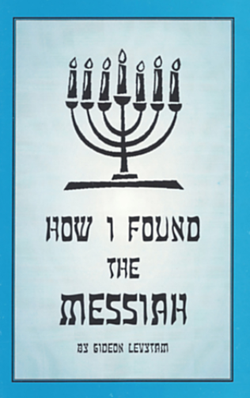
Follow Gideon Levytam's journey and discover how he was led by God, through a series of exciting circumstances, to find the One his people are still waiting for.
Past Episodes

Featured Offer
Follow Gideon Levytam's journey and discover how he was led by God, through a series of exciting circumstances, to find the One his people are still waiting for.
About Holy Scriptures and Israel
As time passed by, the Lord Yeshua took dear brother John Van Stormbroek to himself. The ministry of Holy Scriptures and Israel continued with additional development. In the early 1990’s, a weekly morning Bible class began which brother Gideon Levytam led regularly in the City of Toronto. This weekly open Bible class was held in the Willowdale assembly meeting hall. Eventually, a second mid-week evening Bible class was added. In April 2002, the need for an additional outreach Bible teaching meeting arose. We begun a Saturday (Shabbat) ministry meeting in which a systematic teaching of God’s word is presented to all who attend. Together we learn God’s Word, pray for each need and the salvation of Israel, and sing songs of worship unto our God, praising Him and our Lord Yeshua the Messiah.
In Mid 2004 we started to air on Joy 1250 Radio station a 15 minute Bible teaching program called "The Holy Scriptures and Israel" with Gideon Levytam. The broadcast teaches God’s word from a Hebrew Messianic perspective and has proved to be a blessing to many. It's now aired seven days a week. Our prayer is that many more of our Israeli people will have a clear understanding of who Yeshua is, why we all need him, and come to know him as their Lord and Messiah.
About Gideon Levytam
Contact Holy Scriptures and Israel with Gideon Levytam
426 Simcoe Street
Niagara-on-The-Lake
Ontario L0S 1J0
Canada
(905) 325-1234