
Ephesians 2:1-10, Part 2


God’s Grace towards Sinful Humanity Part 2
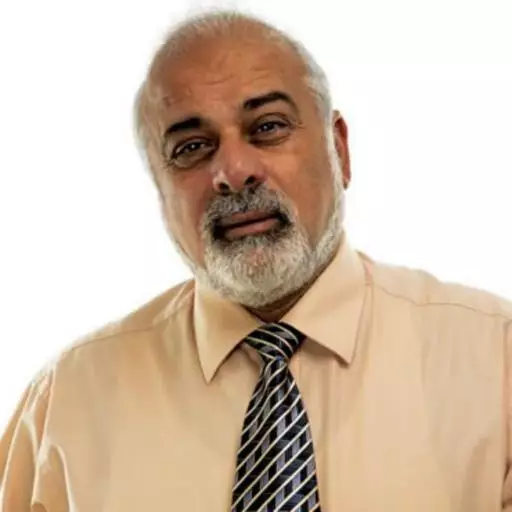
Guest (Female): Shalom. Holy Scriptures and Israel is a ministry designed to share with the Jewish people the good news of the Lord Jesus Yeshua the Messiah and to instruct Christians on the Jewish roots of their faith. And now, teaching God's word from a Hebrew Messianic perspective, here is Gideon Levytam.
Gideon Levytam: The study of Ephesians chapter 2. Secondly, according to the prince of the power of the air. Who is the prince of the power of the air? None other than Satan himself. He is the prince of the power of the air. This is the atmospheric heavens. All those angels who followed after him, he's the prince of the power of the air.
So we see the world and its ways. We see the prince of the power of the air, namely Satan, here in verse 2. And he is called at the end of verse 2, the spirit that now worketh in the children of disobedience. Satan influences the children of disobedience, in other words, the unbelieving world.
We don't realize, beloved brothers and sisters, what is going on in the world in which we live. We don't see things, but the satanic activities in this world definitely influence many to carry on in a godless life, in a life without Messiah, without Christ. That's what Satan does all the time.
He does it by sowing doubts in the lives of people, in the mind of people. Remember when he came to Eve in the Garden of Eden and he asked her this very simple question: "Has God said?" Did God really say that you should not eat of the fruit of the tree of the knowledge of good and evil? And Eve said, "Maybe God after all didn't mean it that way."
He sowed doubts. He sowed all kinds of seeds of desire to turn away from the things of God rather than to be brought closer to the Lord, to Yeshua the Messiah. That's what he does. And he causes man to be blinded. Second Corinthians 4 says the god of this world have blinded the mind of them that believe not.
The god, small G, of this world, namely Satan, had blinded the mind of those that do not believe in Yeshua the Messiah. That's where we came from. That's what Paul said to the non-Hebrew believers at Ephesus. He says that is where you were in the past. You have been influenced by the world and its system.
You have been influenced by the prince of the power of the air, which is the spirit that working now in the children of disobedience. Notice that he talked about the world in verse 2A, he talked about Satan in verse 2B, and now in verse 3A, he is talking about the flesh, the old nature.
He says in verse 3, "Among also we," and now he identifies himself as a Jewish person. You will notice how many times he says "ye" and "we." "Ye" is the Gentile believers; "we" are the Jewish believers. He wants to show how we are all guilty. We are all under the same condition. That is why he says in verse 3, "Among whom also we, Jewish believers, we all had our conversation in time past in the lusts of our flesh."
The flesh is this old nature. When we talk about the flesh, we are not talking about the skin upon the bones. When the Bible talks about the flesh, it is talking about the human nature, the old nature which all of us possess the moment that we were born to our mothers and our fathers.
We all have this flesh, the old nature, a sin nature. That is why even a nice baby, when a baby is being born, those of us who had children know how beautiful when you held your little boy, little son, or little girl, and you embraced them and you loved them, but this little baby has a sin nature. He or she needs to come to know Yeshua the Messiah before they leave this world because they have the same nature that their mom and dad have.
Their mom and dad had the same nature that their mom and dad had. All of us have the same nature that Adam had received the moment he violated the word of God. Now look with me for a moment in Psalm 51. Look at what David said about himself, the King of Israel, who was the beloved psalmist of our Jewish people, the people of Israel.
He was honest enough to say about himself in Psalm 51 and verse 5, "I was shapen in iniquity, and in sin did my mother conceive me." David, the King of our people Israel, the one that was the beloved psalmist of Israel, could say such words about himself? Yes, because he knew his heart. He knew his failure. He knew his condition.
He is confessing. He said to God, "Have mercy upon me, oh God, according to your lovingkindness. I need your mercy. And I am telling you, God, I know that behold, I was shapen in iniquity, and in sin did my mother conceive me. I am a sinner." Paul said in Romans 7, "Oh wretched man that I am." When you look throughout the history of our people Israel, Old Testament, New Testament, the men and women of God all confess their own sinful nature.
All of them without exception had to recognize their condition before a living God. Remember what Isaiah himself said? "Woe is me, for I am a man with unclean lips and I dwell in the midst of a people with unclean lips, for mine eyes have seen the king, the Lord of hosts."
David confessed. Shaul confessed. And the Apostle Paul, writing to the Ephesians to remind them where they came from. Brothers and sisters, we have to realize this in ourselves because that is applied to us. We fail as believers recognizing this old sin nature that rises again and again in our very own lives.
Even today as believers in Yeshua the Messiah. And so he is pointing to the disobedience of man towards God, choosing to follow Satan rather than the Lord himself. In time past, ye walked according to the course of this world, according to the prince of the power of the air, the spirit that worketh now in the children of disobedience.
Among whom also we, Jewish believers, had our conversation in time past in the lusts of our flesh, fulfilling the desires of the flesh. There are so many verses that can be read in scripture concerning these things. Let me just read you one verse, apply it to every one of those statements. Turn with me to First John chapter 2, verses 15, 16, and 17.
First, the world and its system. The Apostle John wrote in First John chapter 2. He did not write to unbelievers. He wrote to believers like you and I. He says in verse 15, "Love not the world, neither the things which are in the world. If any man love the world, the love of the Father is not in him."
"For all that is in the world is the lust of the flesh, the lust of the eyes, and the pride of life. It is not of the Father, but it is of the world. And the world passes away, and the lust thereof, but he that doeth the will of God abideth forever." When he says love not the world, it does not mean do not love the trees and do not love people.
Do not love the enjoyment of God's provision, whatever he had given to us. He is talking about the system. Do not love the system of this world that is headed up by Satan, denying the Messiahship of our Lord Jesus Yeshua. He is telling to believers, do not love this system in this world which deny that God sent his son and that Yeshua is the Messiah.
Love not the world, First John 2:15-17. Look at First Peter now in connection with the devil. First Peter chapter 5, and here is in connection with Satan and what does Satan do all the time. He does it even today. He is seeking to attack mankind, specifically to attack the people of God. Notice in First Peter chapter 5 and verse 8.
"Be sober, be vigilant, because your adversary the devil, as a roaring lion, walking about, seeking whom he may devour." Here is another enemy. Not only that the world is our enemy, but Satan. He is walking like a roaring lion seeking to devour everyone. He is searching to try to find us and our weakness, in our shortcoming.
In a time where we are not sober, not thinking through and in communion with God with our Lord Yeshua the Messiah, he is walking about seeking to find out whom he may devour. So Peter is saying to them, be sober and be vigilant. Watch it. Because every time when we are not watching it, Satan is finding the fault in us and finding weakness in us and desiring to destroy our relationship with the Lord.
One more in connection now with the flesh, if you may please turn with me to Romans chapter 7, and here is Paul speaking now. John talks about the world, Peter talks about Satan, and Paul speaks about the flesh in Romans chapter 7, verse 18: "For I know that is in me, that is in my flesh, dwelleth no good thing."
If I would write this passage, I would say, brethren, I know that in myself there is some bad thing, but quite a few good things. Paul did not say it because he knew very well: "I know that is in me, in my flesh, dwelleth no good thing." That is why many people have a problem. They say, "How can you say that I am that bad? I have not murdered anybody."
"I have not done anything that is really, really bad. A few things here and there, but I am pretty decent." The Bible said no. The Bible said there is no good in man by nature. "We all have sinned," Romans 3:23, "and come short of the glory of God." We miss the mark. That is why the Messiah Yeshua had to be sent to this world to deliver us from the need and the condition that we have.
If I will go now to Ephesians chapter 2 at the end of verse 3, here is where we find out that man by nature is totally depraved. It says, "And we were by nature the children of wrath, even as others." That is what he says. We were just the same like others.
Do not think for a moment that you and I have been brought into the relationship with the Lord because there is something good in us. Like God looked at us and said, "Wow, you have been so great and I decided because of your goodness, because of your greatness, or because of your family relationship, because of where you came from, I decided that you will be the approved one and you receive because of something that you have done." No.
Paul is saying we were just the same like everyone else, like children of wrath. You know what children of wrath mean? Children that are going to be judged. God have to judge sin and all have sinned and all deserve the judgment of God. That is where we came from. It is totally the grace of God. So Paul in verses 1, 2, and 3 describes before the believers at Ephesus the condition of the human nature.
Where we all came from. Brothers and sisters, that is where we all came from, Jewish and non-Jewish, Jew and Gentile. We all came from a condition of what is described here: dead in trespasses and sins. We were spiritually dead. Now he is moving on in verses 4 to 9. Now he describes something that is really so precious because he is not describing the condition of the human race and the human nature.
In verses 4 to 9, he describes what God have done for us. It is so precious to the heart of every one of us, and we are going to revel throughout eternity in what the Lord have done for us. Look at this: there are at least a few things that God have done for us that we can lift up from these verses. The first thing that we find out in verse 4: God loved us.
It says, "But God." Notice the word "but." In spite of where we came from, in spite of our history and our background, in spite of who we were by nature, God have done something about it. That is why he says, "But God. But God, who is rich in mercy, for his great love wherewith he loved us."
"Even where we were dead in sins, has he quicken us together with the Messiah, by grace are ye saved." Notice what he is saying. He is completely turning now the whole thought here from man to God himself. And I want you to notice that in verse 4, it was God who was rich in mercy because of his great love wherewith he loved us.
The Bible tells us that God is light and that God is love. First John chapter 1 tells us God is light. First John chapter 4 tells us that God is love. This is his attributes. God simply is a God of light and light speaks about his holiness. But also God is love. That is the character of God.
If there was no person here in the world to save, it would not change for a moment the fact that God is still a God of love. Love has to express itself. God desires to express himself. He longed to lavish his love upon the human race. But he is also light. He is holy, so his holiness demands justice, and his love demands mercy to be shown.
Because he is holy, justice must be made. And because he is love, mercy and grace has to be expressed. So what did he do? That is why it says here in verse 4, "But God, who is rich in mercy for his great love wherewith he hath loved us." I have in my mind so many verses in the Bible that talk about the love of God.
A love of God towards our people Israel. The love of God towards the world. The love of God towards the body of Messiah, the church, the ecclesia. The love of God towards each and every one of us in his own personal relationship with God. It was God who said in Jeremiah chapter 31 concerning the people of Israel, "I have loved you with an everlasting love," Jeremiah 31 and verse 3.
God said to our nation Israel, "Listen, Israel, I love you, and my love towards you is eternal love. I've loved you with an everlasting love." One of the verses that we love to quote and most of us know by heart, John chapter 3:16, "For God so loved the world that he gave his only begotten son." The love of God towards a world who were dead in trespasses and sins.
Paul said in Ephesians chapter 5, verse 25, he is talking to the husbands and wives: "Husbands, love your wives." And then he says how you are to love your wife: as the Messiah, Christ, loved the church, loved the assembly, loved the congregation, loved the ecclesia. Husbands, love your wife as the Messiah loved the body of Messiah, the church, and gave himself for her.
Here is a love towards the body of Messiah. This is all of us here together and all believers united in the body of Christ, the body of Messiah. Then another one that I love very much is when the Apostle Paul says in Galatians 2: "The son of God who loved me and gave himself for me." Paul said it in Galatians. Can you imagine God loves you individually, me individually?
He does not only love Israel as a nation. He does not only love the whole body of believers, the church, the ecclesia. He does not only love the whole world collectively, but he loves us individually. He loves you. Sometimes we feel so much unloved by the world in which we live. There are so many children, so many people that have nobody care for them. They are alone and they feel so discouraged.
Yet we know very well that God loves them individually. None of us can say the words, "Nobody loves me," even though we have to admit many times we feel like that. Nobody cares. And yet the Bible says to us in verse 4, "But God who is rich in mercy for his great love wherewith he had loved us." Love expresses itself through mercy. The Hebrew word mercy is *rachamim*, or grace is *chen* or *chesed*.
God in his grace have loved us so much. Love must express itself in mercy and in grace. The truth that we learn in verse 4 of this chapter is that God is love. And his love for us is eternal. His love towards us is not temporary; it is unconditional love. We fail him; yet his love is unchangeable. It is amazing to get hold of it.
That is why Paul is emphasizing this when he is writing to the Ephesians. He wanted to remind them that first of all, God loved them. Do not forget it, brothers and sisters. I need to say it to myself: Brother Gideon, do not forget it. Sometimes we forget that, that God love us. Do not forget it. Verse 5, now he is moving on. Not only that God loves us, but he made us alive spiritually.
See what it says in verse 5: "Even when we were dead in sins, he has quicken us together with Christ, by grace I saved." What does that mean? Even when we were spiritually dead, we did not want God in our lives. What did he do? He says, "I want you. I will raise you." Now he does not talk here about physical resurrection.
The word for "quicken us" has to do with a spiritual resurrection. In other words, he had quicken us, made us alive. Not yet physically in a sense of raised our bodies, when we are going to be at the resurrection and our ascension, but he made us alive spiritually. He raised us. As it says here in verse 5, "When we were dead in sins, he had quicken us." And notice it said, "He quicken us together with the Messiah, together with Christ."
In other words, God had raised us. As far that he have taken the Messiah, as far as we know that he have taken Yeshua the Messiah and have already placed him at the pinnacle of the universe at his right hand, as far as God is concerned, every believer in our Lord Yeshua the Messiah is seen by God as if we are already in the presence of the Lord Yeshua the Messiah in glory.
While we are actually still here. We are walking here. I am standing before you. We are going to get up in a moment. We are going to go to the kitchen. We are going to have a time of fellowship. We just came from our various homes to the meeting together. We are only temporarily now still here in this world, but have made us alive spiritually. Positionally, we are seen as we are seated with our Lord Yeshua the Messiah in heaven.
This is an incredible thing to understand. This does not talk about the physical resurrection. He is talking about here of spiritual resurrection in verse 5 of our chapter. Now, how does he do that spiritually to resurrect us, to make us alive? He is using his word. He is using the power of the spirit of God to wake us up.
For example, Romans chapter 10 and verse 17, it says, "Faith cometh by hearing, and hearing by the word of God." How did we come to be spiritually awakened and resurrected? Well, we heard the word of God. The spirit of God impressed upon our hearts God's word, and we have been awakening. We woke up spiritually and we became alert and awakened to the truth of the word of God. Look at the verse in John 5. Yeshua spoke in those earlier verses of this chapter.
He said in verse 24, "Verily, verily, I say unto you, he that heareth my word, and believeth on him that sent me, hath everlasting life, and shall not come into condemnation but is passed from death unto life." You see what Yeshua said? He that hears my word. Faith cometh by hearing, hearing by the word of God.
He that heareth my word and believeth on him that sent me hath everlasting life. In other words, he was quickened, was made alive spiritually, and will not come into condemnation. This is what we have here in John chapter 5 and verse 24.
In this chapter 2 in verse 5 where it says "we are quicken us together with Christ, with the Messiah," notice what it says in chapter 1, just go back to the previous chapter. In chapter 1, verse 19, look at what he did with the Messiah: "And what is the exceeding greatness of his power to us-ward who believe, according to the working of his mighty power, which he wrought in Christ, in Messiah, when he raised him from the dead and set him at his own right hand in heavenly places."
God raised the Messiah physically from the dead and placed him at his right hand in heaven. Now you and I are looked upon as if we are seated with Yeshua the Messiah in heaven. That is why verse 5 of our second chapter: "When we were dead in sins, he had quicken us together with Messiah, with Christ." And then we have in brackets these words, "by grace I save." We are going to talk about it as we are going to go down at the next few verses.
Let us move on now to verse 6. Notice that God loved us, verse 4. God quicken us, verse 5. Now verse 6, God have exalted us or set us on high. As it says in verse 6: "He has raised us up together and made us to sit together in heavenly places in Messiah Yeshua, in Messiah Jesus, in Christ Jesus."
Notice he used the word here twice, the word "together." Here the thought here, and I like the thought because Paul, as a Jewish believer, talking to the non-Jewish believers, says to them, "You in time past walked according to this world..."
Guest (Female): You have been listening to Holy Scriptures and Israel with Gideon Levytam. Gideon teaches God's word from a Hebrew Messianic perspective. For more information about this ministry, write to Holy Scriptures and Israel, Box 1411, Niagara on the Lake, Ontario, L0S 1J0. Or visit our website at HolyScripturesandIsrael.com.
You are also invited to Gideon's weekly Bible teaching on Fridays at 11 a.m. and 7 p.m. and Saturdays at 1 p.m. at Willowdale Christian Assembly Hall, 28 Martin Ross Avenue in Toronto. Holy Scriptures and Israel is made possible by your prayers and financial support. If you would like to support the program, visit HolyScripturesandIsrael.com. God bless you, Shalom, Shalom.
Featured Offer
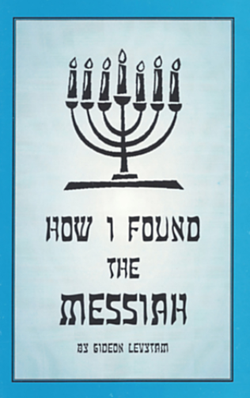
Follow Gideon Levytam's journey and discover how he was led by God, through a series of exciting circumstances, to find the One his people are still waiting for.
Past Episodes

Featured Offer
Follow Gideon Levytam's journey and discover how he was led by God, through a series of exciting circumstances, to find the One his people are still waiting for.
About Holy Scriptures and Israel
As time passed by, the Lord Yeshua took dear brother John Van Stormbroek to himself. The ministry of Holy Scriptures and Israel continued with additional development. In the early 1990’s, a weekly morning Bible class began which brother Gideon Levytam led regularly in the City of Toronto. This weekly open Bible class was held in the Willowdale assembly meeting hall. Eventually, a second mid-week evening Bible class was added. In April 2002, the need for an additional outreach Bible teaching meeting arose. We begun a Saturday (Shabbat) ministry meeting in which a systematic teaching of God’s word is presented to all who attend. Together we learn God’s Word, pray for each need and the salvation of Israel, and sing songs of worship unto our God, praising Him and our Lord Yeshua the Messiah.
In Mid 2004 we started to air on Joy 1250 Radio station a 15 minute Bible teaching program called "The Holy Scriptures and Israel" with Gideon Levytam. The broadcast teaches God’s word from a Hebrew Messianic perspective and has proved to be a blessing to many. It's now aired seven days a week. Our prayer is that many more of our Israeli people will have a clear understanding of who Yeshua is, why we all need him, and come to know him as their Lord and Messiah.
About Gideon Levytam
Contact Holy Scriptures and Israel with Gideon Levytam
426 Simcoe Street
Niagara-on-The-Lake
Ontario L0S 1J0
Canada
(905) 325-1234