
Ephesians 1:15-23, Part 3


Paul’s Prayer for the Ephesians Part 3
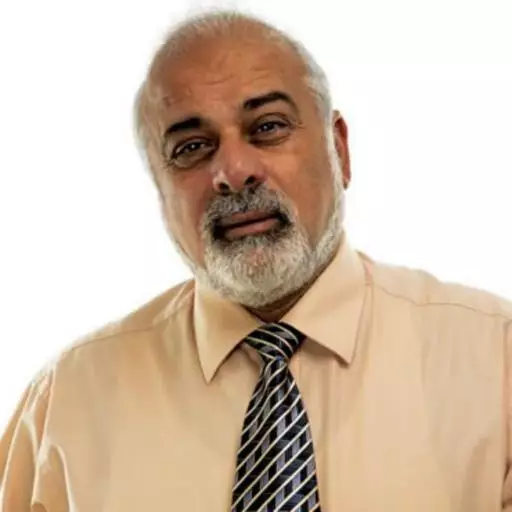
Gideon Levytam: The study of Ephesians chapter 1. Paul was called to be a child of God but a servant of our Lord Yeshua the Messiah. Now, did he know that? He was born to a Jewish family. He grew up among our people Israel. He didn't want to hear about Yeshua the Messiah whatsoever. But God called him from his mother's womb. He couldn't say a word yet. He had no idea as a baby being held by his mom that the future that God has for him is to be a servant of our Lord Yeshua the Messiah.
And when he became a mature man studying under the feet of Gamaliel, he opposed the message of the gospel and took many of our Jewish brethren and brought them to Jerusalem to be punished because they believed that Yeshua was the Messiah. But later on, he realized and he mentions it in Galatians 1:15 that it pleased God to separate him from his mother's womb and he called him by grace. You notice the grace of God? There is nothing that we have done. It is totally the grace of God that brought us to be part of the family of God. We have nothing to boast except to humble ourselves before the Lord and say, "Lord, I thank you for calling me and for saving me, and I want you to use me for your glory."
Brothers and sisters, I'm speaking to the younger ones here especially, those of you that came to know Yeshua the Messiah already. You ask God what he has for you and pray sincerely. "Lord, what do you want me to do? I believe I've accepted Yeshua, but I want to serve you. I want to be part of the ministry of God's ministry here in this world. Use me. Make me a vessel that is suitable for ministry here in this world." It's so beautiful to see how God had called the apostle Paul and he called you and me.
Notice also in this verse that I want to emphasize in chapter 1 and verse 18. He says that the eyes of your heart or your eyes of understanding being enlightened that you may know what is the hope of his calling. Now, I want to speak a little bit about the word hope. You know, sometimes we say, "I hope so that something is going to happen to me. I hope that we are going to receive this or to have that." But that is not at all what the Scripture is presenting before us. Paul did not hope, maybe yes or maybe no. No, this was a living hope, a sure hope.
He understood that the hope of the believer is eternal, is a sure hope. It's not if and but and maybe. No, it is a sure hope. And I emphasize this. Listen to this in Hebrews chapter 6 if you turn there. The writer to the Hebrews, some believe that it may be the apostle Paul, says in verses 18 and 19. Maybe I'll read from verse 17. Hebrews 6:17: "Wherein God, willing more abundantly to show unto the heirs of promise the immutability of his counsel, confirmed it with an oath: Verse 18: That by two immutable things, in which it was impossible for God to lie, we might have a strong consolation, who have fled for refuge to lay hold upon the hope that is set before us."
Now notice verse 19: "Which hope we have as an anchor of our soul, both sure and steadfast, and which entereth into that within the veil." The writer to the Hebrews says in verse 18 and 19 that this hope is as an anchor to the soul. It is a sure hope. It is a steadfast hope. We are not hoping maybe we're going to go to heaven or maybe not. We know that we are going to heaven. We know that we belong to Yeshua. This is the living hope that every believer has, not because of our performance, but only because of the finished work that Yeshua the Messiah has done for us.
So we have to realize, beloved brothers and sisters, it is not something that we maybe are going to receive but we know that it is a sure hope. And the apostle Paul said it in Ephesians chapter 1 and verse 18a. He prayed that the believers at Ephesus may know God's calling and that they will know that living hope and sure hope that they have because they belong to our Lord Jesus, to our Lord Yeshua the Messiah.
So in verse 17, he prayed that they may know God. In verse 18a, he prayed that they may know God's calling. But now notice in verse 18b, he's praying that they will know God's riches, God's wealth. He says after he said that the eye of your understanding being enlightened that you may know what is the hope of your calling, and then here's another "what"—"that ye may know what is the riches of the glory of his inheritance in the saints."
Now, this is as well a very important point here that the apostle Paul is praying. He wanted that the believers will know the wealth that they are—that you and I are—to God. Not the wealth or the inheritance that we will receive from God one day. First Peter chapter 1 tells us that our inheritance is incorruptible, undefiled, reserved for us in heaven. Yes, we are going to receive an inheritance. But here in this verse 18b, he's saying that you and I, the Ephesians, are God's heritage. Every one of us, we might not look like this, every one of us is a trophy that God gave to his son. We are God's heritage.
And if we belong to God and if we are his trophies, if we actually link with him in such a way that we are his heritage, don't you think that he wants to take care of this heritage and to stimulate this heritage that it will be more and more for his own glory and honor? And that's why he's saying in verse 18 that you may know what is the riches of the glory of his, God's, inheritance in the saints. You know, when we gather together, for example, God is approved of the saints gathered together and he says, "You know what? This group of people, this is my heritage. They belong to me. I'm going to bring them to be into my presence one of these days, and they will enjoy me forever. They are for my glory," God is saying.
You remember what he said about Israel, our nation, as well in Isaiah 46 and verse 13? You see, Israel also is God's heritage. "I bring near my righteousness; it shall not be far off, and my salvation shall not tarry: and I will place salvation in Zion for Israel my glory." Do you know that the nation of Israel had been called and chosen for the glory of God? And Israel, her elected people, chosen nation, as we mention as we have it in Deuteronomy chapter 7 verses 6, 7, and 8. But Israel failed to represent God. We failed as well as the body of Messiah. The body of Messiah failed in that. But nevertheless, the people of God are God's heritage, God's glory.
And he intends to see them built up and having a good testimony for him here in this world. And that's why God has his own heritage in the believers because God has a future for his own people. When we're going to go to heaven, we are going to be with him forever. We are his heritage. When the Messiah will present us before the Father, he says in John chapter 17 and verse 24—Yeshua said in his prayer to the Father before he went to the cross to die—he says, "Father, I will that they also whom thou hast given me be with me where I am; that they may behold my glory which thou hast given me: for thou lovedst me before the foundation of the world."
He was praying to the Father and he said, "Abba, I want the people that you have given to me that they will be with me, that when you're going to take me to be with you, I want them to be with me, that they will behold my glory." We are going to see the glory of Yeshua the Messiah and be with him because we are his heritage. We are God's heritage. We are Messiah's heritage. And therefore, beloved brothers and sisters, we are prayed for. Paul is praying for the Ephesians and he says, "I want you to know God. I want you to know God's calling upon you. But I also want you to know God's wealth that he found in you."
Now, if you would ask me and I will ask you, what kind of wealth he found in us? We are a group of sinners who came out of darkness, who have rebelled against God. How does he find wealth in us? But every one of us have been redeemed by the precious blood of his Son. The price has been paid. We are like jewels, though we are not always acting like jewels, we are like jewels that have been purchased by the blood of the Lamb in order to be part of the family.
In Matthew chapter 13, the parables there, in verse 44, he says, "The kingdom of heaven is like unto a treasure hid in a field; the which when a man hath found, he hideth, and for joy thereof he goeth and selleth all that he hath, and buyeth that field." This parable speaks of the Messiah who found treasure in a field, and that treasure is the people of Israel of whom we read that they are a treasure, a peculiar people. They belong to God. And God, in the person of the Messiah, found this treasure in a field. He hides this treasure until he pays everything and he buys that field for himself so he can take that treasure.
We are his heritage. Israel is his heritage. Now, here's the church in verse 45 and 46: "Again, the kingdom of heaven is like unto a merchant man, seeking goodly pearls: Who, when he had found one pearl of great price, went and sold all that he had, and bought it." Again, it is Yeshua the Messiah who found, as it says, he's looking for goodly pearls. And then he found one pearl. And the assembly, the church, is called that pearl, that unique—you sisters, you ladies, at time you might have a pearl, a ring or a necklace or so, which is very, very expensive.
And here is Yeshua the Messiah found one pearl, and then he sold all that he had. He went to the cross and he sold everything. He gave his life in order to get this one pearl and the treasure that he left in the field. We are his heritage. Israel is his heritage. And we have to learn that I belong, you belong to him. And if we belong to him, we ought to appreciate and know it more and seek to live for him here in this world. That's what Paul is praying: to know God, to know God's calling upon you, to know God's wealth, God's riches that he found in you in verse 18.
And finally, the last prayer request is in verses 19 to 23. He is praying that the Ephesians will know God's power. Let's look over this quickly in verse 19. God has a power for us in order to enable us to use our life in a way that will be pleasing to him. And I'm reading verse 19: "To know what is the exceeding greatness of his power to us-ward who believe, according to the working of his mighty power." The word for power in verse 19, the first part, is the word in the Greek is very similar to the word dynamite. It's called *dynamis*, which is really dynamite.
He speaks about power that God has towards the believers, to enable the believer to live the Messianic, the Christian life for God here in this world. God has this power to give to us. And it is the power of the Holy Spirit of God. You remember what Yeshua said to the early disciples: "Ye shall receive power." Acts chapter 1 verse 8. And with this power, you're going to be a testimony for me here in this world. So God has this power, this dynamite, in order to give to us to be able to give us strength, ability, power to live a spiritual life here for him in this world.
In verse 20, God proved this power by raising Yeshua the Messiah from among the dead. It says in verse 20, "Which he wrought" or he showed forth "in the Messiah, when he raised him from the dead, and set him at his own right hand in the heavenly places." You see that power of God that is willing and able and wants to give to you and I, to the Ephesians, to live with this power the life of the believer here in this world. With the very same power, he proved this to us by raising Yeshua the Messiah from among the dead. He wrought, as it says in verse 20, in the Messiah. The word for wrought means "showed forth." He proved it. He showed this power by raising Yeshua the Messiah from the dead.
Now, who can raise the dead? When somebody dies, no one has power to raise him except God. That's the kind of power God has. He can raise up the dead. You remember when Yeshua was speaking, was going to the house of Miriam and Martha and El'azar, Lazarus, when Lazarus died? Do you remember? And when he had this word that he spoke, he said, "Lazarus, come forth!" If he wouldn't say "Lazarus" and only "come forth," everyone would come forth. But he said, "Lazarus, El'azar, come forth." And only El'azar came out. And you remember what we read in John 11? He came bound, hand and foot. He came out. He rose.
Now, how can a person who was dead coming out of the grave and yet bound? It's amazing, the power of God. And God had this power to raise and he did raise Yeshua the Messiah from among the dead. But this power not only raised him from among the dead, but also set him at his right hand in the heavenlies. You know, God took this man that once died on the tree and he was buried. He raised him and he placed him at the pinnacle of the universe to fulfill what David said of old in Psalm 110 and verse 1: "Jehovah said unto my Adonai, Sit thou on my right hand, until I make thine enemies thy footstool."
God raised Yeshua and he placed him at his right hand. And you know today, brothers and sisters, we have a living Savior who is right now seated at God's right hand, interceding on our behalf. Now he is a High Priest at God's right hand, but he's not standing; he is sitting. You know, the Old Testament high priest never sat down. You don't find a seat, a chair, a *kisseh*, in the tabernacle. You don't find a seat, a chair, a *kisseh* in the temple. The priest always served, always stood, always worked and worked and worked, and again, offering after offering after offering, never sitting down.
But Yeshua is seated because he finished the work. He says, "Sit down on my right hand until I make thine enemies thy footstool." Very important verse. So please bear with me. Go to Hebrews chapter 1. And the writer is saying as he wrote to those early Hebrew believers, he says to them, "Listen to that" in verse 4. Hebrews 1:4: "Being made so much better than the angels, as he hath by inheritance obtained a more excellent name than they. For unto which of the angels said he at any time, Thou art my Son, this day have I begotten thee? And again, I will be to him a Father, and he shall be to me a Son? And again, when he bringeth in the firstbegotten into the world, he saith, And let all the angels of God worship him."
Verse 7: "And of the angels he saith, Who maketh his angels spirits, and his ministers a flame of fire. But unto the Son," verse 8, "he saith, Thy throne, O God, is for ever and ever." And then verse 13: "But to which of the angels said he at any time, Sit on my right hand, until I make thine enemies thy footstool?" He never said it to the angels, but he said it to his Son, to Yeshua the Messiah. He placed him at his right hand and he says, "Now you can sit. Your work is over. Redemption had been completed. Now I'm able to bring people to myself on the basis of your finished work on the tree. The blood had been shed. The price had been paid. Now you can sit down because your work had been completed."
He raised him from among the dead, he set him at his right hand up there in the heavenlies, in heaven, in this place that is honor is being deserved by him. And now notice in the last verses of Ephesians chapter 1, where did he place him? Notice Ephesians 1:21. God set his Son in a high place. Listen to that: "Far above all principality, and power, and might, and dominion, and every name that is named, not only in this world, but also in that which is to come." God placed him, notice, far above all principalities. All power, that word for power has to do with those that have authority. All might, those who have strength. And all dominions, these are all those who are lords, have lordship. He is above all of them.
God have placed him in this pinnacle of the universe. And then it says, "And every name that is named, not only in this world, but also in the world which is to come." You know, Jesus the Messiah, Yeshua HaMashiach, is a name that is so precious to God the Father. He gave him a name. Notice that above every name. You remember what Paul said, Philippians chapter 2 and verse 9 on? "Wherefore God also hath highly exalted him, and given him a name which is above every name: That at the name of Yeshua every knee should bow, of things in heaven, and things in earth, and things under the earth; And that every tongue should confess that Yeshua the Messiah is Lord, to the glory of God the Father."
God has placed him at that high place above everything. And he said in verse 22 that he had put all things under his feet. You know, the feet is the lowest part of the body. And when everything in this world is being placed under his feet, that means that he has the supreme authority over everything. And then in connection with you and I, with the believers, it says that he gave him to be the head over all things to the church, to the assembly, to the called-out ones. He is the head. You and I, the body. The head is in heaven. The body is here on earth. He's not talking about his physical body, but it is the mystical, the spiritual body of Messiah.
He is the head and we are the body. And God have given him to be the head over all things to the assembly, to the church. You know, if we don't have a head, how will we get instruction and direction? How will we know what to do? And that's why it is very important to realize that our head is in heaven. Our head is not the Pope. Our head was not Peter. The head of the assembly, the head of the body of Messiah, is not a mere man, but it is the Messiah Yeshua himself, who finished the work on the tree. And right now, he is seated at the right hand of the Father. He become the head over all things to the church, to the assembly.
And that's why when we gather together, we have always to acknowledge the head. The head is not the Bible teacher. The head is not the pastor, if you call him a pastor. The head is not the president. The head is the Messiah Yeshua himself, who is the head over all things unto the body. And you notice now in verse 23, and this is the conclusion: "Which is," this assembly, is the body of the Messiah, the body of Christ, the fullness of him that filleth all in all. And that is the last words that the apostle Paul is mentioning here in these verses.
Now turn to Colossians 1:18. There he says the very same thing, but it's a little bit different. In Ephesians 1:22, he is the head over all things to the church, to the assembly. But in Colossians chapter 1 and verse 18, it says, "He is the head of the body, the church: who is the beginning, the firstborn from the dead." The assembly, the ecclesia. So you notice in Colossians, he is the head of the body. In Ephesians, he is a head to the body. It's another aspect of the ministry of the Messiah in the life of the people of God. He's the head to the body, but he's also the head of that body, as it says Colossians 1:18.
Well, brothers and sisters, Paul is praying. So nice how we can see this man praying. Praying for the believers at Ephesus, praying for you and I, those four requests that I mentioned here in this list. Praying that we will know God. Praying that we will know God's calling. Praying that we will know God's wealth that we are for him. And finally, praying that we will know God's power in our lives so we will be able to live a life that is pleasing to the Lord in this world. May the Lord just help us and challenge us on this, and help us to be instructed in the things of the Lord so we will be used and serving him here until he will come to take us home.
Featured Offer
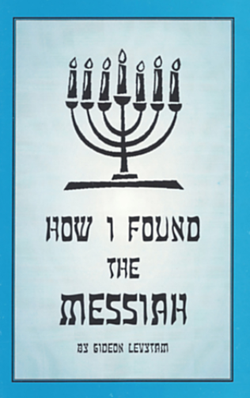
Follow Gideon Levytam's journey and discover how he was led by God, through a series of exciting circumstances, to find the One his people are still waiting for.
Past Episodes

Featured Offer
Follow Gideon Levytam's journey and discover how he was led by God, through a series of exciting circumstances, to find the One his people are still waiting for.
About Holy Scriptures and Israel
As time passed by, the Lord Yeshua took dear brother John Van Stormbroek to himself. The ministry of Holy Scriptures and Israel continued with additional development. In the early 1990’s, a weekly morning Bible class began which brother Gideon Levytam led regularly in the City of Toronto. This weekly open Bible class was held in the Willowdale assembly meeting hall. Eventually, a second mid-week evening Bible class was added. In April 2002, the need for an additional outreach Bible teaching meeting arose. We begun a Saturday (Shabbat) ministry meeting in which a systematic teaching of God’s word is presented to all who attend. Together we learn God’s Word, pray for each need and the salvation of Israel, and sing songs of worship unto our God, praising Him and our Lord Yeshua the Messiah.
In Mid 2004 we started to air on Joy 1250 Radio station a 15 minute Bible teaching program called "The Holy Scriptures and Israel" with Gideon Levytam. The broadcast teaches God’s word from a Hebrew Messianic perspective and has proved to be a blessing to many. It's now aired seven days a week. Our prayer is that many more of our Israeli people will have a clear understanding of who Yeshua is, why we all need him, and come to know him as their Lord and Messiah.
About Gideon Levytam
Contact Holy Scriptures and Israel with Gideon Levytam
426 Simcoe Street
Niagara-on-The-Lake
Ontario L0S 1J0
Canada
(905) 325-1234