
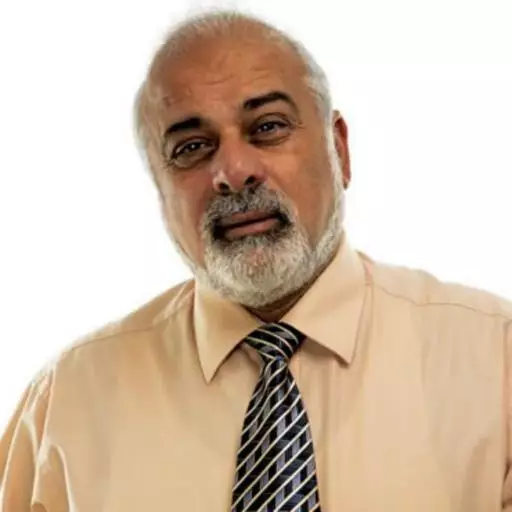
Ephesians 1:1-2, Part 3


Introduction Part 3
Guest (Female): Shalom. Holy Scriptures and Israel is a ministry designed to share with the Jewish people the good news of the Lord Jesus Yeshua the Messiah and to instruct Christians on the Jewish roots of their faith. And now, teaching God's word from a Hebrew Messianic perspective, here is Gideon Levytam.
Gideon Levytam: The study of Ephesians introduction. You've turned your pages from Bereshit to Malachi. From Genesis to the second book of Chronicles in Hebrew—that's the last book of the Tanakh—you will not find a church in the Tanakh. The Tanakh has to do with Israel and Israel's first coming of the Messiah and the rejection, second coming of the Messiah and the acceptance, and then the Messianic Kingdom. You don't find a church in the Old Testament. Look as much as you want; you won't find it.
The church was something that Yeshua said, "I will build my church," in Matthew chapter 16. It is in the future as far as he was concerned. And so we have to understand the church, the ecclesia, is a composition of Jew and Gentile in the time in which we live today, after the finished work of the Messiah on the cross. Now people may try to put the church into the Old Testament, and that's where you get replacement theology. That's why many today say all the blessings that God gave to Israel now move to us, the church.
But they leave the cursing on Israel. The cursing they don't want, the judgment they don't want, but only the blessings will take for ourselves. No. When God said that he's going to judge Israel, he judged them. When God said that he's going to restore Israel, he will restore the people of Israel. So we have to distinguish between Israel the nation and the ecclesia, the body of Messiah of this present day dispensation.
Finally, the fifth thing why the apostle Paul wrote this epistle is to help believers to walk in a way that is pleasing, that is fit to where and who they are. Turn to Ephesians chapter four and verse one. Paul says, "I therefore, a prisoner of the Lord, beseech you that ye walk worthy of the vocation wherewith ye are called." You have been called to be part of the assembly of the church, of the Kehilah, the body of Messiah.
Well, if you have been called to be part of the Messiah's body, then he's saying to us, "I beseech you that you walk, that you live your life worthy of the vocation wherewith you have been called." You have been called to be part of this body of Messiah; well, your walk ought to be consistent with the place in which you have been brought into. We are not always so, beloved brothers and sisters. We know that.
But nevertheless, that is the reason why the apostle Paul have given us this book of the letter to the Ephesians. He wrote it because he wanted the believers to walk in a special way, in a godly way. And we know how amazing, when you think about church history and how we as believers failed in our walk worthy of the vocation wherewith we have been called. We failed. And I'm saying we because we as well had failed, not only them. But we, that's why the apostle Paul beseeches you, I beg you, I challenge you, that you walk here in this world worthy of the vocation wherewith you have been called.
You have been called to such a special relationship with the Messiah. Well, walk in the light of this. Walk in a way that is pleasing to the Lord. And when believers are not walking right with the Lord, what do you think it does? It hurts the testimony. When we sin and we live a life carelessly, it hurts the heart of God. The testimony to the person of the Lord, he is grieved by that.
So we have the author, we have the date, we have the theme, we have the purpose. Now, what is an outline? You know, Paul is a Bible teacher. You know a Bible teacher usually gives an outline to be able to understand what we have been receiving from the Lord. So what is the outline of the book of Ephesians? It really divides itself into two sections. Ephesians chapter one, two, and three has to do with doctrine. Ephesians chapter four, five, and six has to do with duty.
Some people say, "Brother Gideon, why do we need to know doctrine? Ah, don't give me doctrine." Well, beloved brothers and sisters, if we don't have doctrine, we haven't got foundation at all. Doctrine is essential. Teaching is essential. Don't say all what we need is love. That's what the Beatles say. Remember that? All we need is love. Remember that? We don't need only love, but we need also light. We need instruction.
How can a man stand right unless he know what is given to him? And then he can now continue to walk. So there is doctrine and there is duty. Chapter one, two, and three, doctrine. Chapter four, five, and six, duty. Chapter one, two, and three, believer's riches, and you're going to see in the three chapters that we're going to study the wealth of the believers. Chapter four, five, and six, believer's responsibility.
We have riches and wealth in the Messiah, but we have responsibility here in this world. The riches were given to us by the Messiah. The responsibility is a response that the believer, the child of God, responding to the Lord. Here we fail much. When it comes to the wealth and the riches that have been given to us positionally because of what the Lord Yeshua have done for us.
So this was important, beloved brothers and sisters, to give by way of introduction because if we don't have this, we will not understand the book of Ephesians, the letter to the believers at Ephesus. Now, first of all, I want you to notice in verse one, not only that we talked about Paul, but I want you to notice that he says here in verse one, "Paul, an apostle of Yeshua the Messiah by the will of God to the saints which are at Ephesus and to the faithful in Christ Jesus, in Messiah Yeshua."
You learn immediately when you read this verse that Paul was an apostle. The Greek word here for an apostle is apostolos, which simply means one that is sent by the Lord or a sent one. Of course, we are all sent by the Lord to serve him in one way or another, but the word apostle is a person that was sent by the Lord for a special mission in order for him to minister the truth that the Lord had given unto him here in this world.
Now, there are not more than 12 apostles plus the one that the apostle Paul was the 13th one. And I said many times before that there are many who claim to be apostles with a capital A in many places today in the professing church. But as far as the Bible is concerned, the Lord Yeshua the Messiah have elected and chosen and took to himself only those 12 apostles.
We know that Judas, or Yehuda as we call him in Hebrew, though he was chosen, but yet the Lord revealed the reality of who he was. He was the one who betrayed the Lord and sold him for those 30 pieces of silver. He is the one that we read of him that he went and he hanged himself after he sold Yeshua the Messiah for 30 pieces of silver. He was among the apostles, but he was not chosen in order to be sent as an apostle.
He was chosen to show us how Satan could even in the midst of God's people have influence upon individuals such as this man by the name of Yehuda. That's why it says that Satan entered into him when he was in the upper room with Yeshua the Messiah. When Judas died, they replaced Yehuda by a man by the name of Matatiyahu, Matthias, in Acts chapter one.
But the qualification of one to be an apostle, and it gives us to us in Acts chapter one, one had to be one that saw the Lord, the risen Messiah. While Paul was not there when the Messiah was here on earth, he was not there to see the risen Messiah because he revealed himself only to his own people. Sha'ul, Paul, have seen the risen Messiah on the way to Damascus first of all, but also as we read in Second Corinthians chapter 12, he was taken to the third heaven and he have heard and received revelation from the glorified Messiah.
But I want us to see that he did claim to see the glorified Messiah. It's not that we say what we think. It says in First Corinthians chapter nine verse one, "Am I not an apostle? Am I not free?" And then he says—notice this—"Have I not seen Yeshua the Messiah our Lord?" In other words, he's saying to the Corinthians, "You don't acknowledge me as an apostle, but I want to tell you, am I not an apostle?"
Acts chapter one shows us who was qualified to be an apostle. That's why he's emphasized the fact that he has seen the Lord. Have I not seen Yeshua Jesus Christ, Yeshua HaMashiach? The qualification to become an apostle was one that have seen the Lord not only in his life but also in his resurrection. And that's why if you read Acts chapter one, verses 21 and 22, to be qualified to be an apostle, one must see the resurrected Messiah.
And that's why Paul is qualified to say, "I'm an apostle." You see, not every one of us who speak or teach the Bible have the authority of an apostle. We have to be very careful. There are many great Bible teachers who teach the Bible and we appreciate them, but they don't have the authority of an apostle. There are good teachers; thank God for them. There are faithful teachers; praise God for them.
And we respect them and love the fact that they teach and minister to us the word of God, but they are not apostles. They are servants of the Lord. There are only those selected apostles who were actually called by Yeshua himself to go and to minister the word of God in such a way they had an authority of an apostle. They had the gifts of an apostle. They could do things by divine inspiration allowed by the Lord that others today cannot do.
And we have to be very careful not to listen to one who claim today to be an apostle. Now notice in the same verse 1a that it's not only that he is the Jewish Paul who loved the Gentile believers, who served them and ministered to them. He was also an apostle sent by the Lord. But notice it says "by the will of God." Now, you know, in the earlier part of the church, people challenged Paul. Are you an apostle of Yeshua the Messiah?
Isn't it your own will? Didn't you the one that kind of instigated your position as an apostle? Paul says, "No, I did not promote myself to be an apostle. I was placed there to be an apostle by the will of God. It's not my will; it is God's will." And I want you to see—turn to Galatians chapter one, verse one. He wrote this to the Galatians as well when he instructed them. He added there something that is very important.
"Paul, an apostle, not of men, neither by man, but by Yeshua the Messiah and God the Father." Interesting, eh? You know, someone might say, "Oh yes, we have designated you to be an apostle." He says nobody called me to be an apostle, no man. It says here, "not of men, neither by man." Nobody just selected for me the ministry of apostleship and says, "Listen, apostle Paul, we're going to make you an apostle. We're going to give you a salary and we're going to make you an apostle."
Paul says, "No, I was not of men, neither was I made an apostle by men." It was totally divinely arranged for him by Yeshua the Messiah and by God the Father, according to Galatians chapter one and verse one. This is a very important verse. And since you're in Galatians chapter one, turn to verse 15. We are talking about Paul an apostle. In verse 15, he says, "But when it pleased God, who separated me from my mother's womb..."
You know, Paul was born from his mother's womb. Already then he was separated to the ministry of Yeshua the Messiah. He didn't believe in the Messiah yet. He didn't know how to speak. He didn't know how to do anything. He couldn't walk. He couldn't do anything. He was just a little baby that was born out of his mother's womb. And Paul is saying, as it pleased God who had separated me from my mother's womb and called me by his grace.
I want to suggest that every one of us, of course, who are a believer, the Lord has a purpose for us. From the time that we were born, the Lord has a plan for us. All what we need to do is to submit to his plan. You know, we talked about those of us who are going to go for a mission field. God has a plan and a purpose for us. It is for his own pleasure, as it pleased God.
God had a purpose for all of us. God had a purpose for this man by the name of Sha'ul who was born in the land of Israel to a Jewish family. He had a plan for him that he will minister the message of the gospel to the nations of the world. That he will be a vessel to be used for the nations of the world. Notice it says, "God called me by his grace." The Greek and the Hebrew, of course, has to do with the Chesed, the grace, the Chen, the grace of God.
And then he says in verse 16, "to reveal his Son in me, that I might preach among the heathen." Now, you know, Paul didn't go to a place that everybody was very nice, you know, put together type of thing. He went to the heathen, to people who worship idols. To an area—Ephesus was a pagan city, totally saturated by idolatry, saturated by Diana, this Queen Diana, that "Great is the Diana of the Ephesians," they were shouting when he preached the gospel.
They were pagans and he went to the heathen and he said, "I didn't confer with flesh and blood. I didn't go and ask somebody, hey, could you please approve of my call?" He said in verse 17, "Neither I went to Jerusalem to them which are the apostles there before me." I didn't go to the city of Jerusalem and I got the approval by the rest of the apostles. It says in verse 17b, "but I went into Arabia and I returned again to Damascus."
"Then after three years, I went up to Jerusalem to see Peter and abode there for fifteen days. But other of the apostles I saw not, except James, the Lord's brother." He's telling them, "Listen, I went to Arabia." He was for three years. He probably had in Arabia something similar that Moses, Moshe, had in Sinai. A lesson from the Lord. He went through the school of God to learn in Arabia to realize how he need to depend upon the Lord.
He went through the school of God in Arabia. Moses had to go to Sinai to go through the school of God. God called him to serve. God called Moses, Moshe. God called Sha'ul, Paul, to go to become his own servant. And it was totally by the will of God for his pleasure. He separated these servants even from their mother's womb to serve him, in this case, Paul, among the nations of the world.
So these two things are very, very important for us to understand, beloved brothers and sisters. Now you're in Galatians, right? Just one more verse. Turn to Galatians chapter two, verses seven and eight. We can see that specifically the apostle Paul was called to be an apostle of the Gentiles, of the uncircumcision. It says, "But contrariwise, when they saw"—this is the apostles—"that the gospel of the uncircumcision, the people who were not circumcised, the Gentiles, were committed unto me, as the gospel of the circumcision, those who were circumcised, the Jews, was committed unto Peter; for he that wrought effectually in Peter as an apostle of the circumcision, the same was mighty in me, Sha'ul, Paul, towards the Gentiles."
You see, there are two apostles that are in scripture presented before us. One of them was called the apostle to the Gentiles, Sha'ul, Paul. The other one was called to be an apostle to the Jewish people, Shimon Petros. Both of them were selected and called by God from their mother's womb, specifically we read of Paul, of Sha'ul, to be a servant as an apostle among the nations of the world and among the Jewish people.
Both of these apostles are given to us here. And in Galatians two, verses seven and eight, he is clearly distinguished between the call that God had given to him to work in the nations and the call that God had given to Shimon Petros who was called to serve among our nation, the Jewish people, his own brethren. Okay, so we have verse one, the first part. It is Paul, he is an apostle, and he was called by God, not by men.
Now, who did he write to? And this is also, I think, very important as we are closing this ministry for today. According to verse 1b, the apostle Paul was writing to the saints which are at Ephesus, to the faithful in Christ Jesus, in Messiah Yeshua. Notice he's writing to the saints. Today we have been taught by some that a person in order for him or her to become a saint, first of all, he or she must have been such a great servant in this world and then when they die, they announce them to be saints.
But here, beloved brothers and sisters, he didn't write this letter to dead believers, but he wrote this letter to people who lived in Ephesus. And he called them saints. What is the word saint mean? In the Greek, the word for saint is Hagios—H-A-G-I-O-S. And it simply means ones that are set apart, holy ones. And those saints, though many times probably did not live a saintly life, they were saints positionally.
They were set apart. In Hebrew we call it Mekudashim, Kedoshim, set apart for the Lord, for Jehovah, for the Son, for the Messiah. So he is writing to people just like you and I. They had to get up every morning to go to work. The mothers had to take care of the children at home. They had to deal with all kind of problems they might have had, sicknesses, and they might have had all sort of financial problems.
They might have had a lot of conflict in life just like you and I have every day of our lives. And he's writing to these people who had many, many issues and problems in their own life and he called them saints. Now you might look at them and you're going to say, "Well, listen, this brother you called him a saint? Let me tell you, I know what he is speaking today, he does things this way, he does things that way, the way he speak and so on." Or looking at this sister and say, "Wow, I know her how she behaves."
And so maybe they don't behave saintly-like, but positionally they are saints, set apart to God. That's why we have doctrine and practice. Doctrine and duty. The believer's riches, the believer's responsibility. So if you and I are called positionally saints, it doesn't mean that we always behave as saints, unfortunately. But nevertheless, he wrote this letter to the saints, to the set apart.
And it's so beautiful to know that you are set apart for God. Not because of your goodness, not because of my goodness, but because of the work that Yeshua the Messiah have accomplished for us, he called us set apart. You've been chosen set apart to be part of a redeemed company, part of the body of the Messiah. And therefore, because you are saints, seek to live a life that is pleasing to the Lord.
And by the way, you notice how many times he called them saints? Just turn here with me, chapter one verse 15. I want to show you how many times he called them saints. Chapter one verse one, they are saints. Chapter one verse 15, he says, "Wherefore I also, after I heard of your faith in the Lord Jesus and love unto all the saints." Notice in verse 18 of this same chapter: "The eyes of your understanding being enlightened, that ye may know what is the hope of his calling and what is the riches of the glory of his inheritance in the saints."
Again, he used the word saint, set apart. Chapter two and verse 19. He says, "Now therefore ye are no more strangers and foreigners but fellow citizens with the saints and of the household of God." Chapter three and verse eight. He says, "Unto me, who am the least of all the saints." Verse 18: "that ye may be able to comprehend with all saints." Again, he called them Kedoshim, saints, as he mentioned here Hagios in the Greek.
Chapter four and verse 12. He's saying to them, "for the perfecting of the saints, for the work of the ministry." Chapter four and verse 12. Chapter five and verse three. Again, he's saying, "But fornication and all uncleanness and covetousness, let it not be once named among you, as becometh saints." Again, he used the word saints. And finally in chapter six and verse 18, where he uses this word again: "Praying always for with all prayer and supplication in the spirit and watching thereunto with all perseverance and supplication for all saints."
So when he talks about the saints, he doesn't talk about someone who died and have been elevated and become now a saint, as some groups have elevated certain individuals. He's talking to people like you and I, who may not behave saintly much of our lives, though we ought to. But we are called positionally saints, Kedoshim, Mekudashim, set apart positionally to the Lord Yeshua the Messiah.
So verse one he says not only that they are saints, but they are faithful in Christ Jesus. Apparently they believed on the Lord, but they were also faithful to him. They sought not only to have faith in him, but to be faithful in their lives as they live for the Lord. They sought to be so. And then verse two, beloved brothers and sisters, he's saying to them these two beautiful words.
He says, "Grace be to you and peace from God our Father and from the Lord Yeshua the Messiah." Notice he's using these two words, Chesed ve-Shalom we would say it in Hebrew. Greek, of course, is different, but Chesed, grace, and peace is something that we need in our lives all the time as believers. We need the grace of God, not only the grace that saved us. By grace are ye saved through faith; that's the grace that we received for salvation.
But we need grace every day of our lives when we live here in this world. The Ephesians needed grace. But not only that they need grace, Chesed, the grace of God, they also needed peace. Not so much peace with God, because they had peace with God. Romans 5:1, we have peace with God positionally. But they needed practical peace, the peace of God. Philippians chapter four and verse seven: "And the peace of God which passes all understanding shall guard your hearts and your mind through our Lord Yeshua the Messiah."
And so, beloved brothers and sisters, Ephesians is a wonderful letter that helps us to balance things out, to understand our position in the Messiah, to understand the present day dispensation, to understand all that which God has for us as believers in Yeshua the Messiah. May the Lord bless us and encourage us as we continue to study the book of Ephesians.
Guest (Female): You have been listening to Holy Scriptures and Israel with Gideon Levytam. Gideon teaches God's word from a Hebrew Messianic perspective. For more information about this ministry, write to Holy Scriptures and Israel, Box 1411, Niagara-on-the-Lake, Ontario, L0S 1J0. Or visit our website at holyscripturesandisrael.com. You are also invited to Gideon's weekly Bible teaching on Fridays at 11:00 AM and 7:00 PM and Saturdays at 1:00 PM at Willowdale Christian Assembly Hall, 28 Martin Ross Avenue in Toronto. Holy Scriptures and Israel is made possible by your prayers and financial support. If you would like to support the program, visit holyscripturesandisrael.com. God bless you. Shalom, shalom.
Featured Offer
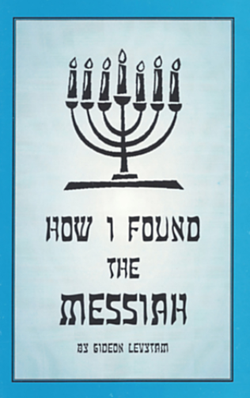
Follow Gideon Levytam's journey and discover how he was led by God, through a series of exciting circumstances, to find the One his people are still waiting for.
Past Episodes

Featured Offer
Follow Gideon Levytam's journey and discover how he was led by God, through a series of exciting circumstances, to find the One his people are still waiting for.
About Holy Scriptures and Israel
As time passed by, the Lord Yeshua took dear brother John Van Stormbroek to himself. The ministry of Holy Scriptures and Israel continued with additional development. In the early 1990’s, a weekly morning Bible class began which brother Gideon Levytam led regularly in the City of Toronto. This weekly open Bible class was held in the Willowdale assembly meeting hall. Eventually, a second mid-week evening Bible class was added. In April 2002, the need for an additional outreach Bible teaching meeting arose. We begun a Saturday (Shabbat) ministry meeting in which a systematic teaching of God’s word is presented to all who attend. Together we learn God’s Word, pray for each need and the salvation of Israel, and sing songs of worship unto our God, praising Him and our Lord Yeshua the Messiah.
In Mid 2004 we started to air on Joy 1250 Radio station a 15 minute Bible teaching program called "The Holy Scriptures and Israel" with Gideon Levytam. The broadcast teaches God’s word from a Hebrew Messianic perspective and has proved to be a blessing to many. It's now aired seven days a week. Our prayer is that many more of our Israeli people will have a clear understanding of who Yeshua is, why we all need him, and come to know him as their Lord and Messiah.
About Gideon Levytam
Contact Holy Scriptures and Israel with Gideon Levytam
426 Simcoe Street
Niagara-on-The-Lake
Ontario L0S 1J0
Canada
(905) 325-1234