
Daniel 6:10-28, Part 2


Daniel In The Lions’ Den Part 2
Guest (Male): Shalom. Holy Scriptures and Israel is a ministry designed to share with the Jewish people the good news of the Lord Jesus Yeshua the Messiah and to instruct Christians on the Jewish roots of their faith. And now teaching God's word from a Hebrew Messianic perspective, here is Gideon Levytam.
Gideon Levytam: The study of Daniel chapter six. He kneeled, notice it says here in verse 10, when Daniel knew that the writing was signed, he went into his house and notice his window being open in his chamber toward the city of Jerusalem. It's very interesting. Turn to the book of Kings, First Kings chapter eight, please.
First Kings chapter eight and we learn where did he find this out? Where did he make the decision to pray towards the city of Jerusalem? Why was it so important for him to pray towards the city of Jerusalem? Well, King Solomon, when he had built the temple in Jerusalem, First Kings chapter eight, when he have ended the building of this temple, we read this. Listen, verse 44, First Kings 8:44.
Solomon is praying and he said, "If thy people go out to battle against their enemy, whithersoever thou shalt send them, and they shall pray unto the Lord toward the city which thou hast chosen and toward the house that I have built in thy name, then hear thou in heaven their prayer and their supplication and maintain their cause. If they sin against thee, for there is no man that sinneth not, and thou be angry with them and deliver them to their enemies so that they carry them away captive unto a land of the enemy far and near."
"Yet if they shall bethink themselves in the land whither they were carried captive and repent and make supplication unto thee in the land of them that carried them captive, saying, 'We have sinned and have done perversely, we have committed wickedness,' and so return unto thee with all their heart and with all their souls in the land of their enemies which led them away captive, and they will pray unto thee toward their land which thou gavest unto their fathers, the city which thou hast chosen, and the house which I have built for thy name, then hear their prayer and their supplication in heaven, thy dwelling place, and maintain their cause and forgive thy people."
You notice what King Solomon have done. King Solomon when he ended up the building of the temple in Jerusalem, he ended up with a prayer and praise and worship. And what he requested from God is this, God, there may be a time that our own people will go astray and will sin and disobey you. And you will have to chasten them and to deliver them to another nation far away from their homeland. God, he's saying, if they will confess their sins and repent and they will pray towards the, notice, it's towards the land, it's towards the city, and towards the house.
The land is the land of Canaan. The city is the city of Jerusalem. The house is the temple of God, which by the way today is not standing because it's supposed to be standing on Mount Moriah where the future temple will be in a future day. Towards the land, towards the city, and towards the house. Then God, forgive their sins. And sure enough, Daniel, by now he must have been close to 80 years old or even over, because the 70 years of the Babylonian captivity have ended.
And when he left Judea being taken by Nebuchadnezzar, he must have been at least maybe 10 or 15 years old. 70 plus 15 is 85 years old. He's ready now to ask God to restore the people of Israel to the land. And Daniel find himself at this age still faithful, praying towards the land, praying towards the city, praying towards the temple, and his window is open towards the city of Jerusalem.
Now there's another beautiful thing here in this verse is something that perhaps you and I might not act in a time like that. Daniel could say this, "Well, what's the use? What's the use to pray? After all, God knows that we have a problem in this land. God knows our situation. What's the use to pray? I don't have to pray, maybe God does not hear anyways." Or maybe Daniel could say, "It's only 30 days."
"I can bear it. I won't pray for 30 days. Or if I pray, I won't open my window toward Jerusalem. I can go in the inner chamber and nobody will know what I used to do on a regular basis." He could reason those things like perhaps you and I would reason sometimes. "30 days I can hold on. I don't have to make it known that I'm praying." No, what he did, beloved, it says here in verse 10, now when Daniel knew that the writing was signed, he went into his house.
Notice, and his windows being open in his chamber toward Jerusalem, he kneeled upon his knees three times a day and he prayed and he gave thanks before his God and underline that, as he did aforetime. He did not change. He was consistently going to the God of Israel, going to his Lord in prayer like he have done before, trusting him that he will answer his prayer. And so verse 10, it's really the prayer of Daniel. What a lesson we learn from this man.
He's gone to his room, he opened the windows, and he prayed three times a day just like he have done before. Now, just for a minute if we just pause here before we move to verse 11. Do you know how many times the Bible in the New Testament, not only the Old Testament in the Hebrew Scriptures, but the new covenant, how many times the New Testament is teaching us to speak to the Lord, to talk to him in prayer?
You know how often the apostle Paul have taught the disciples wherever he wrote, to whomever he wrote? He was always writing to believers never to stop praying. Praying is the lifeline of the believer. Prayer is that which communicates between heaven and earth if you will. Prayer is necessary for every person that came to know the Lord Jesus as his Lord and Savior. Let me just give you a couple of these verses. Turn first of all to Romans 12. I'm just going to give you some of these verses.
Romans chapter 12 and verse 12. Notice how short. "Rejoice in hope, patient in tribulation, continuing instant in prayer." It's an ongoing thing to do for the believer, continuing in prayer. It's something that we are to do on a continued basis. Ephesians chapter six. Ephesians 6 and verse 18. After putting on the whole armor of God, the apostle said to the people at Ephesus, "Praying always with all prayer and supplication in the spirit and watching thereunto with all perseverance and supplication for all saints."
If you notice, four times the word 'all' mentioned in verse 18. Praying always with all prayer and supplication in the spirit and watching thereunto with all perseverance and supplication for all saints. Praying always. How much is it always? I mean, there's never an end. Praying always, continuing in prayer Romans 12:12, praying always Ephesians chapter six and verse 18. Turn to Colossians please.
Colossians chapter four and verse two. Again, very similar to what he said to the Romans, he's saying to the Colossians in Colossians 4:2, "Continue in prayer and watch in the same with thanksgiving." Continue. Watch with thanksgiving. Continue. In other words, he assumed they were always in prayer. He said just continue on, continue on. Turn the page to First Thessalonians, the next book after Colossians. First Thessalonians chapter five and verse 17.
One of the shortest verses in the Bible next to John 11:35, "Jesus wept." First Thessalonians 5:17 says, "Pray without ceasing." Pray without ceasing. How can we pray without ceasing? Does that mean when I ride the car on the highway 100 km/h, I close my eyes and pray without to stop? Well, it's an attitude that we ought to develop as believers. It's an attitude that the believer develops and he talks to the Lord, pray without ceasing, non-stop.
Turn to Timothy please. First Timothy chapter two, verses one and two. "I exhort that first of all supplications, prayers, intercession, giving of thanks be made for all men, for kings and for all that are in authority that we may lead a quiet and peaceable life in all godliness and honesty." I exhort, the writer says, Paul said to Timothy, therefore that first of all supplication, prayers, intercession, giving of thanks be made for all men.
You know this is so important. I believe that one of the reasons that we lack spiritual maturity and spiritual growth is because we simply do not take the time to speak to the Lord. We prefer to speak to people than to speak to the Lord. If you have something to complain about, why don't you complain about it to God? If you have something to say, why don't we talk to God? Somebody says it's far better to talk to God about men than to talk to men about another man.
If we will do more time talking to the Lord, it will make a great change in the life of the people of God. And that's why Daniel could be so effective for the nation of Israel when he was at the Babylonian captivity. And so what does he do? Three times a day. Never mind the in-between, but he has an appointment with God. He took his moments and he went to the Lord. He opened the window towards Jerusalem and he told God, the God of Abraham, Isaac and Jacob, that which was on his heart on behalf of his people.
Now go back to Daniel please. And you notice what it says here. It is interesting that this next verse, it says here, when Daniel knew that the writing was signed, he went into his house and his windows being open in his chamber toward Jerusalem he kneeled upon his knees three times a day and notice, he prayed, but not only that, he gave thanks before his God. He was not only telling God his problems and what his concerns were, but he gave thanks.
Daniel, how can you give thanks? Your people are away from the land. Your land of Israel is presently burnt, is under the occupation of another nation, the temple had been destroyed, the city had been destroyed, the temple had been burnt, you are captive, you are in diaspora. Why would you give thanks? Well beloved, Daniel realized that there is so much also to give thanks about. And Daniel developed this kind of attitude. Not only that I'm praying and I'm asking from God for certain things, but I also want to say to him thank you for what you have already given to me.
And so now notice verse 11. If you just move on down in verse 11, they found him praying. And it says in verse 11, then these men assembled and they found Daniel praying and making notice, supplication before his God. They found him. And when they found him praying, then in verse 12 what did they do? It says they went to the king and they remind the king of the signing of what he had signed, the decree. It says in verse 12, then they came near and they spake before the king concerning the king's decree.
Listen what they tell him. "Hast thou not signed a decree that every man that shall ask a petition of any god or man within 30 days save of thee, O king, shall be cast into the den of lions?" And the king answered and he said, "The thing is true according to the law of the Medes and the Persians which altereth not." Now the 12th verse is that they did not come and tell him immediately, "Oh, we saw Daniel." No, they wanted first of all to make sure that he understand that he signed the decree.
And so they told him, "Didn't you sign the decree first of all? Didn't you make the petition that no one will for 30 days pray to any god or any man except you?" And he said, "Yes, I did." Now in verse 13 they are coming to him and they pointing their finger onto Daniel. "Then answered they and they said before the king that Daniel, which is of the children of the captivity of Judah, regardeth not thee O king, nor the decree that thou hast signed, but he maketh his petition three times a day."
Basically what they said is this Jewish man who is captive, who is not from our nation, this Jewish man that we came from Judea, from the captivity of Judah, he does not regard you. He does not listen to you. And he is decided that he's going to pray anyway three times a day even after you have signed that particular decree. And so now quickly verse 14. The king was not displeased with Daniel, but he was displeased with himself. He made a mistake.
It says in verse 14, "Then the king, when he heard these words, he was sore displeased with himself and he set his heart on Daniel to deliver him and he labored till the going down of the sun to deliver him." You notice that it says here that he was sore displeased with himself and he set his heart on Daniel to deliver him. Now he saw that what he had done was wrong and he allowed them to fool him, to lie to him. And he was displeased with himself, he says, "I'm going to try to do something in order to get him out of this problem."
Very similar, if you just turn for a minute to the gospel of Mark in the New Testament, Mark chapter six. There is another similarity here that we have a New Testament passage. In Mark 6, King Herod had a special party in his own home. Mark chapter six. He had a special party in his own home and if you remember the story, he ended up beheading John the Baptist. Let me just read couple of verses here.
It says here in verse 21. Verse 14 says and King Herod, verse 21 and when a convenient day was come, that Herod on his birthday made a supper to his lords, high captains, and chief estates of Galilee. When the daughter of Herodias came in to dance, it pleased Herod and then that sat with him. And the king said unto the damsel, "Ask of me whatsoever thou wilt and I will give thee." And he sware unto her, "Whatsoever thou shalt ask of me I will give thee and to the half of the kingdom."
And she went forth and she said unto her mother, "What shall I ask?" And she said, "The head of John the Baptist." And she came and in straightway with haste unto the king and she asked saying, "I will that thou wilt give me by and by in a charter the head of John the Baptist." And the king was exceedingly sorry. You see, he made a mistake here, the same Herod here made a mistake here when it came to John the Baptist because he said that he's going to give her up to half of the kingdom.
And he realized that he made a mistake here. Well, the same thing we find Darius, when he realized that they tricked him, he completely wanted to somehow help Daniel with the situation that he found Daniel in. And so I'm back at Daniel right now and Daniel chapter six. And then what happened, he was displeased with himself and he was trying as much as he could to help Daniel outside of this problem. You notice this expression in verse 14, he labored till the going down of the sun.
Why the going down of the sun? Because he had to execute the punishment before the sun was down. So he's trying to wait to delay it to try to find one way or another how can he deliver Daniel out of this punishment. He waited up till the going down of the sun. When the going down of the sun came, he had to send him to his punishment. And so we find in verse 15, then these men assembled unto the king and they said unto the king, "Know O king, that the law of the Medes and the Persian is that no decree nor statues which the king establish may be changed."
Ultimately they challenge him, they tell him you cannot change the decree and he had to obey them by the time that the sun came down. So the accusation against Daniel is in verses 10 to verse 15. Now, from verse 16 to verse 17, the sentence of King Darius. Listen to the sentence. Verse 16. "And the king commanded and they brought Daniel and he cast him into the den of lions. And the king spake and he said unto Daniel, Thy God whom thou servest continually, he will deliver thee."
Now he was sending Daniel to the lion's den, but at the same time he believed the God of Daniel is able to deliver him. This word here by the way, the word 'deliver' comes from the Hebrew.
Featured Offer
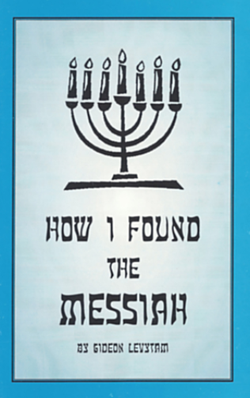
Follow Gideon Levytam's journey and discover how he was led by God, through a series of exciting circumstances, to find the One his people are still waiting for.
Past Episodes

Featured Offer
Follow Gideon Levytam's journey and discover how he was led by God, through a series of exciting circumstances, to find the One his people are still waiting for.
About Holy Scriptures and Israel
As time passed by, the Lord Yeshua took dear brother John Van Stormbroek to himself. The ministry of Holy Scriptures and Israel continued with additional development. In the early 1990’s, a weekly morning Bible class began which brother Gideon Levytam led regularly in the City of Toronto. This weekly open Bible class was held in the Willowdale assembly meeting hall. Eventually, a second mid-week evening Bible class was added. In April 2002, the need for an additional outreach Bible teaching meeting arose. We begun a Saturday (Shabbat) ministry meeting in which a systematic teaching of God’s word is presented to all who attend. Together we learn God’s Word, pray for each need and the salvation of Israel, and sing songs of worship unto our God, praising Him and our Lord Yeshua the Messiah.
In Mid 2004 we started to air on Joy 1250 Radio station a 15 minute Bible teaching program called "The Holy Scriptures and Israel" with Gideon Levytam. The broadcast teaches God’s word from a Hebrew Messianic perspective and has proved to be a blessing to many. It's now aired seven days a week. Our prayer is that many more of our Israeli people will have a clear understanding of who Yeshua is, why we all need him, and come to know him as their Lord and Messiah.
About Gideon Levytam
Contact Holy Scriptures and Israel with Gideon Levytam
426 Simcoe Street
Niagara-on-The-Lake
Ontario L0S 1J0
Canada
(905) 325-1234