
Daniel 6:10-28, Part 1


Daniel In The Lions’ Den Part 1
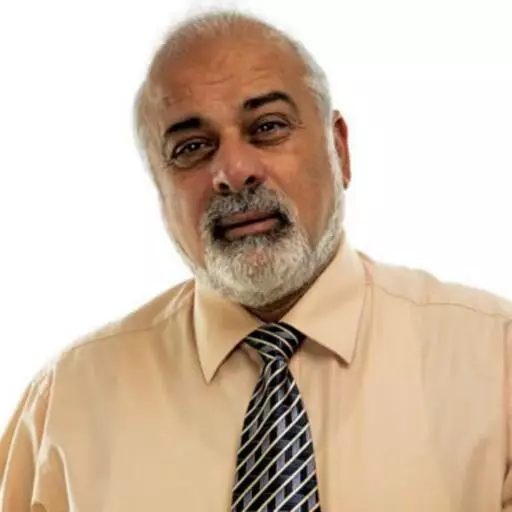
Narrator (Female): Shalom. Holy Scriptures and Israel is a ministry designed to share with the Jewish people the good news of the Lord Jesus, Yeshua the Messiah, and to instruct Christians on the Jewish roots of their faith. And now, teaching God's word from a Hebrew Messianic perspective, here is Gideon Levytam.
Gideon Levytam: Turn with me to Daniel, the sixth chapter. I would like to try to finish this chapter today. I know that we have covered the first nine verses last time when we have been here together. So, I want today to see if we can start from verse 10 and move on, and I'm going to make a few remarks about what we have already covered two weeks ago.
Let me read from verse 10 and please follow me up. Now when Daniel knew that the writing was signed, he went into his house, and his windows being open in his chamber toward Jerusalem, he knelt upon his knees three times a day and prayed and gave thanks before his God as he did aforetime.
Then these men assembled, and they found Daniel praying and making supplication before his God. Then they came near, and they spoke before the king concerning the king's decree. "Hast thou not signed a decree that every man that shall ask a petition of any god or man within 30 days, save of thee, O King, shall be cast into the den of lions?"
The king answered and said, "The thing is true, according to the law of the Medes and the Persian, which altereth not." Then answered they and said before the king, "That Daniel, which is of the children of the captivity of Judah, regardeth not thee, O King, nor the decree that thou hast signed, but maketh his petition three times a day."
Then the king, when he heard these words, was so displeased with himself, and set his heart on Daniel to deliver him, and he labored till the going down of the sun to deliver him. Then these men assembled unto the king, and they said unto the king, "Know, O King, that the law of the Medes of the Persian is that no decree nor statute, which the king established, may be changed."
Then the king commanded, and they brought Daniel and cast him into the den of lions. Now the king spoke, and he said unto Daniel, "Thy God whom thou servest continually, he will deliver thee." And a stone was brought and laid upon the mouth of the den, and the king sealed it with his own signet, and with the signet of his lords, that the purpose might not be changed concerning Daniel.
Then the king went to his palace, and passed the night fasting, neither were instruments of music brought before him, and his sleep went from him. And the king arose very early in the morning, and went in haste into the den of lions, and when he came to the den, he cried with a lamentable voice unto Daniel. And the king spoke and he said to Daniel, "O Daniel, servant of the living God, is thy God, whom thou servest continually, able to deliver thee from the lions?"
Then said Daniel unto the king, "O King, live forever. My God has sent his angel and has shut the lion's mouth, and they have not hurt me, for as much as before him innocency was found in me, and also before thee, O King, have I done no hurt." Then was the king exceedingly glad for him, and he commanded that they should take Daniel up out of the den. So Daniel was taken up out of the den, no matter of hurt was found upon him, because he believed in his God.
And the king commanded, and they brought those men which had accused Daniel, and they cast them into the den of lions, them, their children and their wives, and the lions had the mastery over them, over them, and break all their bones in pieces before they came at the bottom of the den.
Then King Darius wrote unto all people and nations and languages that dwell in all the earth, "Peace or Shalom be multiplied unto you. I make a decree that in every dominion of my kingdom men tremble and fear before the God of Daniel, for he is the living God and steadfast forever, and his kingdom, that which shall not be destroyed, and his dominion shall be even unto the end.
He delivereth, and rescueth, and he worketh signs and wonders in heaven and in earth, who has delivered Daniel from the power of the lions. So this Daniel prospered in the reign of Darius and in the reign of Cyrus the Persian." And I'm going to stop with this.
I love those stories and I freshly every time when we can. It's a wonderful thing to read them and to re-read them again because these are beautiful stories that tell us of the faithfulness of God to his people in every generation. And especially when we think about this, the nation of Israel in captivity in Babylon, the 70 years approaching to the end, if you will, actually they have ended by now when we get to chapter six.
And then, of course, Daniel is finding himself now faithful all the way through, in spite of the difficult experiences that he had to go through. You remember last time when we have been together, I gave you the title of this chapter, and the title was Daniel in the lions' den, Daniel in the lions' den.
We can also title this chapter also the sovereignty of God over the nations, if you will, and the nations' power. Why? Because God is able to change everything. Even though he had allowed the Babylonian and the Medo-Persians and later on the Greeks and ultimately the Romans, he gave them power, yet God has, he is a sovereign over the Gentiles' powers because he is ultimately the God of gods, King of kings and Lord of lords.
Well, what we have covered so far in the first nine verses is simply this. Number one, verses one to three, the position of Daniel under Darius the King. It was interesting that Darius the King, who was really under Cyrus, the king of Persia, Darius was the King of the Medes, he wanted to elevate Daniel into such a high position that you have 100, as it says in the beginning, you have 120 princes, and then over them you have three which are, three which are over the princes, three who are ruling over the princes.
And ultimately he wanted to place Daniel to be above those three. Well, that's brought about jealousy and envy. And those princes, and those, as he called them, over these three presidents, those presidents out of envy and jealousy, they say, "We got to do something about it. We cannot let this man to get that position." So what they were going to do, they were going to find some fault in that man by the name of Daniel.
Well, in verses four to nine, they had a conspiracy against him. And you remember what we have studied, they had tried to find fault in this man. And I don't know if it was a challenge to you. It was a challenge to me in our last meeting together. They saw, they could not find any fault in that man. Why? Because he was a faithful servant, even not only of God, even of the king, Darius.
He was a faithful servant. And if you remember, we made an application. The book of Corinthians says, "It is required of a servant that he may be found faithful." First Corinthians chapter four, verses one and two. It is required from a servant that he may be found faithful, not perfect, not doing everything, if you will, in a perfect way, but faithful. Not that he will never sin or will never fall, but it's required from a servant that he may be found faithful.
Notice in verse four it said, "They could not found no occasion, no fault." Why? For as much as he was faithful. That's what it says about Daniel. He was faithful. It says in verse five, the desire to find fault in him. In verse five, they said, "We shall not find any occasion against this Daniel except we find it in him concerning the law of his God." So, they could not find any fault in him when it's come to the affairs of this world that he had in the palace, in the kingdom.
But they say, "Ah, we're going to find fault in him when it comes to the things that had to do with his God." And so, beloved, what they have done is they went to the king, and we talked about this if you remember last time in verse, in verse six, they plotted against him. In verse seven, they gave a flattery to King, to Darius. They said to him, "Darius, you know what? We came with this advice and suggestion that nobody in your kingdom will worship any God except you, Darius, for 30 days."
Boy, Darius was so happy with this. He never thought about what's coming. He just thought, "Wow, it's kind of wonderful to be able to be worshipped for 30 days, nobody going to pray to any other God, only to me." Well, he agreed with it, and here where the problem was. He did not know that they really tricked him, and they cheated. His own people have tricked him to cause him to make this announcement. And now verse eight and nine, the king's agreement and the signing of the decree.
Let me read that. It says in verse eight, "Now, O King, establish a decree, sign the writing, that it be not changed according to the law of the Medes and the Persians." So the King Darius, in verse nine, he signed it, and he wrote the decree, and he proclaimed it. And so no one was supposed to worship any other person except the king. He signed it, and he made that decree, and you know the law of the Medes and the Persians can never be altered.
By the way, when it comes to the Babylonians, Nebuchadnezzar could make a lot of changes. But when it comes to the Medes and the Persians, even the king could not make any changes. It's the law of the Medes and the Persians. Now the central verse of this chapter is really verse 10. Verse 10 is the central verse of this chapter.
What we find in verse 10 to verse 15, the accusation against Daniel. And now notice what happens. First of all, in verse 10, we find two things that Daniel do in accordance with the Hebrew scriptures. Notice, it says here in verse 10, "Now when Daniel knew that the writing was signed, he went into his house, and his windows being open in his chamber toward Jerusalem, he knelt upon his knees three times a day, and he prayed, and he gave thanks before his God."
And notice this expression, "as he did aforetime." Now this is interesting, this verse. Verse 10 teaches us two things that God, the God of Israel, had given the people of Israel to do when they find themselves in the diaspora. Number one, notice it says here in verse 10. Number one, he prayed three times a day. It is interesting. Three times a day.
Could you turn with me to Psalm, to the book of Psalms, Psalm five. Psalm five and verse three. David had expressed this. Listen, "My voice shall thou hear in the morning, O Lord. In the morning I will decree, or I will direct my prayer unto thee, and I will look up." David says, "In the morning, Lord, you are going to hear my prayer."
Turn to Psalm 55 now, verse 17. "Evening, and morning, and at noon will I pray and cry aloud, and he shall hear my voice." Now the psalmist, is it interesting, it is both of those psalms, Psalm 5 and Psalm 55, those psalms that had been written by King David, the King of Israel, David, Melech Yisrael, David, the King of Israel, he find himself often time in a situation that he was perhaps fleeing from his son, or perhaps fleeing from King Saul, or perhaps whatever circumstances he find himself in his life.
What did King David taught Israel and at least he's showing to us, it's one of the things that he had been doing, is morning, noon and an evening. He was setting a separate time whereby he was going to speak to the Lord. We do not know how long time did he speak to him, and he talked to him and prayed to him, but one thing we know that King David had practiced something that, that we all can learn from that. It's a day by day speaking with the Lord.
Morning, as it says here, and evening, and at noon will I pray and cry aloud, and notice it says, "He shall hear my voice." You know this is such a confident David had, and I believe that what we read here in, in Daniel chapter six and verse 10, that Daniel really practiced what he learned from the time when the psalmist of Israel was writing those psalms and was teaching Israel the necessity of speaking to the Lord.
Not only in the morning, not only at noon, but also in the evening. And I think there is a song, "It's me, it's me, it's me, O Lord, standing in the need of prayer. Not my father, not my mother, but it's me, O Lord, standing in a need of prayer." And you know there is a real need for each and every one of us to really learn from what Daniel and of course David have taught us, the necessity of morning, at noon and at evening to speak to the Lord, to address ourselves to the Lord.
What do we do when we get up in the morning? And the busyness of the day, and the mind, our mind is set about the things that coming before us. What do we do? Do we rush out of bed, if it were, rush out, wash our face and go out of the house that we can carry on our day by day routine, or do we take a little bit of time and just coming to the Lord in prayer, going on our knees and, and really coming before the Lord in prayer?
Now notice that if you just go back to Daniel, and you notice that he did, it says here in verse 10, "Daniel knew that the writing was signed, he went into his house, his window being open in his chamber toward Jerusalem, he knelt upon his knees three times a day and he prayed." This expression knelt upon his knees, you know, most of the time Jewish people today, unfortunately, do not go on their knees today as I know it to pray.
They don't do it today. And if some do it, it's really unusual, but this is a Jewish biblical thing to do is to go on one's knees, as an expression of dependence upon God, and as bowing before him, acknowledging that we are needy people. Daniel went on his knees, and he went on his knees and he prayed three times a day.
Now I believe, beloved, that in between the morning and the noon, and in between the noon and the evening, he did not stop communicating with God. I am sure he prayed, he was speaking with him, and he was thinking of him, but also he made an appointment with God, morning, noon and evening. That's the one thing that we learned from him that he did in accordance with the law, with the scriptures that God had given to Israel.
But notice the second thing that is very interesting here. The second thing we find, let me read that verse again in verse 10. It says here that not only he prayed three times a day, and he knelt, notice it says here in verse 10, "When Daniel knew that the writing was signed, he went into his house," and notice, "his window being open in his chamber toward the city of Jerusalem."
It's very interesting. Turn to the book of Kings, First Kings chapter eight, please. First Kings chapter eight, and we learn, where did he find this out? Where did he make that decision to pray towards the city of Jerusalem? Why was it so important for him to pray towards the city of Jerusalem?
Well, King Solomon, when he had built the temple in Jerusalem, First King chapter eight, when he had ended the building of this temple, we read this. Listen, verse 44. First Kings 8:44. Solomon is praying and he said, "If thy people go out to battle against their enemies, whithersoever thou shall send them, and they shall pray unto the Lord, notice, toward the city which thou hast chosen, and toward the house that I have built in thy name, then hear thou in heaven their prayer and their supplication."
"And maintain their cause. If they sin against thee, for there is no man that sinneth not, and thou be angry with them, and thy deliver them to their enemies so that they carry them away captive unto a land of the enemy far and near. Yet if they shall bethink themselves in the land whither they were carried captives, and repent and make supplication unto thee in the land of them that carried them captive, saying, 'We have sinned and have done perversely, we have committed wickedly,' and so return unto thee with all their heart and with all their souls in the land of their enemies which led them away captive, and they will pray unto thee, notice again, toward their land which thou gavest unto their father, the city which thou hast chosen, and the house which I have built for thy name."
"Then hear their prayer and their supplication in heaven, thy dwelling place, and maintain their cause." And so on, and forgive thy people and so on in verse, in verse 50. You notice what King Solomon had done. King Solomon when he ended up the building of the temple in Jerusalem, he ended up with a prayer and praise and worship.
And what he requested from God is this, "God, there may be a time that our own people will go astray and will sin and disobey you, and you will have to chasten them and to, to deliver them to another nation far away from their homeland. God," he's saying, "if they will confess their sins and will repent, and they will pray towards the, notice, it's towards the land, it's towards the city, and towards the house."
The land is the land of Canaan. The city is the city of Jerusalem. The house is the temple of God, which by the way today is not standing, because it's supposed to be standing on Mount Moriah, where the future temple will be in the future day. Towards the land, towards the city, and towards the house, then God forgive their sins.
And sure enough, Daniel, do you know by now he must have been close to 80 years old, or even over, because the 70 years of the Babylonian captivity have ended. And when he left Judea, being taken by Nebuchadnezzar, he must have been at least maybe 10, 15 years old. 70 plus 10, 15 is 80 or 85 years old. He's ready now to ask God to restore the people of Israel to the land, and Daniel find himself at this age still faithful.
Featured Offer
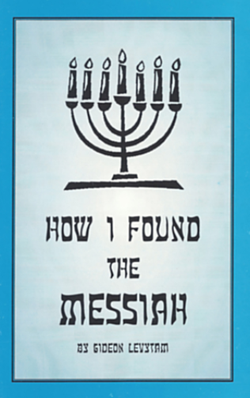
Follow Gideon Levytam's journey and discover how he was led by God, through a series of exciting circumstances, to find the One his people are still waiting for.
Past Episodes

Featured Offer
Follow Gideon Levytam's journey and discover how he was led by God, through a series of exciting circumstances, to find the One his people are still waiting for.
About Holy Scriptures and Israel
As time passed by, the Lord Yeshua took dear brother John Van Stormbroek to himself. The ministry of Holy Scriptures and Israel continued with additional development. In the early 1990’s, a weekly morning Bible class began which brother Gideon Levytam led regularly in the City of Toronto. This weekly open Bible class was held in the Willowdale assembly meeting hall. Eventually, a second mid-week evening Bible class was added. In April 2002, the need for an additional outreach Bible teaching meeting arose. We begun a Saturday (Shabbat) ministry meeting in which a systematic teaching of God’s word is presented to all who attend. Together we learn God’s Word, pray for each need and the salvation of Israel, and sing songs of worship unto our God, praising Him and our Lord Yeshua the Messiah.
In Mid 2004 we started to air on Joy 1250 Radio station a 15 minute Bible teaching program called "The Holy Scriptures and Israel" with Gideon Levytam. The broadcast teaches God’s word from a Hebrew Messianic perspective and has proved to be a blessing to many. It's now aired seven days a week. Our prayer is that many more of our Israeli people will have a clear understanding of who Yeshua is, why we all need him, and come to know him as their Lord and Messiah.
About Gideon Levytam
Contact Holy Scriptures and Israel with Gideon Levytam
426 Simcoe Street
Niagara-on-The-Lake
Ontario L0S 1J0
Canada
(905) 325-1234