
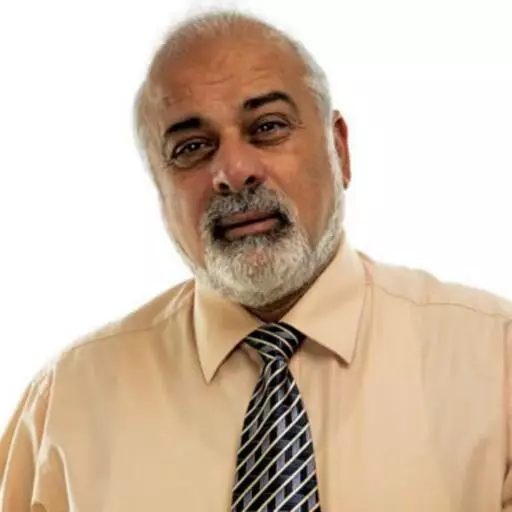
Daniel 5:17-31, Part 1


Daniel’s Interpretation Of The Handwriting On The Wall Part 1
Guest (Male): Shalom! Holy Scriptures and Israel is a ministry designed to share with the Jewish people the good news of the Lord Jesus, Yeshua the Messiah, and to instruct Christians on the Jewish roots of their faith. And now, teaching God's word from a Hebrew Messianic perspective, here is Gideon Levytam.
Gideon Levytam: Today I want to finish chapter 5 and verse 17. I begin to read. Then Daniel answered and said before the king, let thy gift be to thyself and give thy rewards to another. Yet I will read the writing unto the king and make known to him the interpretation. Oh thou king, the most high God gave Nebuchadnezzar thy father a kingdom and majesty and glory and honor. And for the majesty that he gave him, all people, nations, and languages trembled and feared before him, whom he would he slew and whom he would he kept alive, and whom he would he set up, and whom he would he put down.
But when his heart was lifted up and his mind hardened in pride, he was deposed from his kingly throne and they took his glory from him. And he was driven from the sons of men and his heart was made like the beasts and his dwelling was with the wild asses. They fed him with grass like oxen and his body was wet with the dew of heaven till he knew that the most high God ruleth in the kingdom of men and that he appointeth over it whomsoever he will. And thou his son, oh Belshazzar, hast not humbled thine heart, though thou knewest all this.
But hast lifted up thyself against the Lord of heaven. And they have brought the vessels of his house before thee, and thou and thy lords, thy wives and thy concubines have drunk wine in them, and thou hast praised the god of silver and gold and brass and iron and wood and stone which see not and nor hear nor know. And the God in whose hands thy breath is and whose are all thy ways hast thou not glorified. Then was the part of the hand set from him and this writing was written.
And this is the writing that was written: mene, mene, tekel, upharsin. This is the interpretation of the thing. Mene: God has numbered thy kingdom and finished it. Tekel: thou art weighed in a balance and art found wanting. Peres: thy kingdom is divided and given to the Medes and the Persians.
Then commanded Belshazzar and they clothed Daniel with scarlet and put a chain of gold about his neck and made a proclamation concerning him that he should be the third in the kingdom. In that night was Belshazzar the king of the Chaldeans slain. And Darius the Median took the kingdom, being about three score and two years old. And I stop here.
Let me just remind you a little bit before we're going to begin with verse 17 that from verse 1 to verse 16 we have really made five points so far up to this point. First of all, verses 1 to 4, the feast itself. We've spoken about the feast that has happened. Belshazzar the king made a great feast to a thousands of his lord and he drank wine before the thousand. Verses 1 to 4 we have seen the great feast that this man by the name of Belshazzar, who is actually the grandson of Nebuchadnezzar, had made. In a sense, that feast was an affront against God. What he was really doing, he wanted to show both to the Persians and the Medes who are outside the gates of Babylon as well to God that he doesn't care and he can do as he please.
In verses 5 and 6, all of a sudden, in the same hour came forth a finger of man's hand and wrote over against the candlestick upon the plaster of the wall. At the very same moment where he was feasting and celebrating and really mocking the nations outside and the God of Israel, at the same time, there was a sudden language that God had spoken with the writing with a hand on the wall, right next to King Belshazzar the grandson of Nebuchadnezzar. In verses 7 to 9, something happened. Belshazzar changed completely his behavior. You remember we read about him in verse 6, his countenance was changed, his thoughts troubled him, the joints of his loins were loosed, and his knees smote once against the other. All of a sudden a change happened. He's calling all the wise men of Babylon to come to try to give him an answer to this writing on the wall, but they could not help him.
In verse 10 to 12, all of a sudden his mother came, the queen, coming inside, and she reminded him of another man, a wise man. The queen came and then she said, "There is a man in verse 11 in thy kingdom in whom the spirit of the holy gods is." She reminded him about Daniel and his ability to interpret dreams and to be able to be helpful for King Belshazzar. In verses 13 to 16, after seeing Daniel, King Belshazzar began to ask him to help him and he appeals to him. If you notice that in verse 13 it says, "Then was Daniel brought before the king and the king spake and he said unto Daniel, art thou this Daniel which art the children of the captivity of Judah whom the king my father brought out of Jewry?"
"Are you that same Daniel, the well-known Daniel that had been neglected and set aside for many years?" Daniel had to tell him that he was that particular one. King Belshazzar asks him, he appeals to him in verse 16 to give him the interpretation. Look what it says in verse 16: "I have heard of thee that thou canst make interpretation and dissolve doubts. Now if thou canst read the writing and make known to me the interpretation thereof, thou shalt be clothed with scarlet and have chains of gold about thy neck and shall be the third in the kingdom."
Today, the first thing that I want you to notice in verse 17 to 28, we have Daniel's response to King Belshazzar. First of all, verse 17 to 24, Daniel shows to Belshazzar, he really teaches him about lessons from history. Sometimes people don't seem to learn lessons from history. Belshazzar needed to learn a lesson from history. Notice what he does. In verse 17, Daniel declares to Belshazzar that he does not need the gifts that he was going to give him. Daniel answered and he said before the king, "Let thy gift be to yourself and give thy rewards to another, yet I will read the writing unto the king and make known to him the interpretation."
You know that it is something that reminds me of the father of the people of Israel, Abraham. You remember when Abraham won the war against the four kings fighting together? After Lot, his nephew was captured, and also the King of Sodom was relieved. The King of Sodom wanted to give many gifts to Abraham. You know what Abraham said? He says, "I don't need your gifts, lest they're going to say something that Abraham had done what he had done because of those gifts." Mind you, the unbelieving world thinks if they're going to give gifts to the people of God, they're going to benefit from them because they have the ability to give them gifts. Daniel says, "You keep your gift for yourself. You can give it to somebody else." He says in verse 17, "Yet I'm going to give you the writing that was written on the wall."
He wanted to show Belshazzar that, "Belshazzar, it doesn't matter what you give me, I'm going to serve the Lord. I'm going to do the things of the Lord. I'm going to speak for God and I'm going to speak exactly what was written here on the wall." In verses 18, 19, 20, and 21, he gives him a lesson from history. This is very interesting. Notice that there are three things he's telling him here. The lesson of history to Belshazzar. Number one, in verse 18 and 19, he reminds him of the rise to power of his grandfather. "Oh thou king," speaking to Belshazzar, "the most high God gave to Nebuchadnezzar thy father." You remember what we said? Nebuchadnezzar was not his father, he was his grandfather, or thy forefather.
God gave to Nebuchadnezzar thy forefather a kingdom and majesty and glory and honor. He says to him, "You know Belshazzar, I want you to remember that the kingdom that you have been placed in authority was actually given unto your forefathers." It is so true, and I speak for myself and I speak for us, that we seem to think that everything we have is something that we have done on our own. Somehow, "I deserve it because I have worked for that and I have earned it." He's reminding Belshazzar, "Do you know Belshazzar? Don't you ever forget that whatever you are placed in the position that you are there, it was something that was given to your grandfather by God himself." He's saying, "The most high God gave it to your forefather, to Nebuchadnezzar."
For a second, turn to Genesis 14. I just want to show you when it's come to speaking about the most high God. Notice in Genesis 14, this is exactly what I was mentioning earlier about the four kings fighting against the five kings. The four kings in verse 1, the five kings in verse 2, but then jump down to verse 17. Genesis 14, verse 17: "And the king of Sodom went out to meet him after his return from the slaughter of Chedorlaomer and of the kings that were with him at the valley of Shaveh, which is the king dale or the king's valley." Notice verse 18 and 19: "And Melchizedek, king of Salem, brought forth bread and wine, and he was the priest of the most high God." Notice this expression: most high God. And now verse 19: "And he blessed him and he said, Blessed be Abram of the most high God, the possessor of heaven and earth."
The possessor of heaven and earth. You see, the most high God is the possessor of heaven and earth. Everything belongs to him. Notice verse 22: "And Abram said to the king of Sodom, I have lift up mine hand unto the Lord, the most high God, the possessor of heaven and earth." You see what Daniel wanted to tell Belshazzar? He says, "Don't you forget, you have to remember, you have to have a lesson from history, that everything that was given to your father or to your forefather was given by the most high God, who is the possessor of heaven and earth. He owns the cattle upon a thousand hills. He's the one who gave it to your forefathers. Don't you remember that, Belshazzar?"
Go back to Daniel, please, and notice in chapter 5 and verse 19 now. It is God in verse 18 that gave Nebuchadnezzar thy father the kingdom and majesty and glory and honor. God gave it to him. Notice verse 19. He continued and he told him, "And for the majesty that he gave him, all people, nations, and languages trembled and feared before him." Then he says in verse 19b: "whom he would he slew, whom he would he kept alive, whom he would he set up, and whom he would he put down." He's saying to Belshazzar, the grandson, "Didn't you learn from history? Didn't you learn that everything that had been given, everything that you have right now in your hand is something that really had been given to your forefather?"
The most high God, the possessor of heaven and earth, he had given your forefather majesty, glory, and honor. He had given your forefather the ability to put fear upon so many nations and people. That's what God, the possessor of heaven and earth have done. Step two now, in verse 20a he says the pride of Nebuchadnezzar, your grandfather, brought him down. Verse 20a: "But when his heart was lifted up and his mind hardened in pride, he was deposed from his kingly throne and they took the glory from him." Daniel was not afraid of Belshazzar, the grandson of Nebuchadnezzar, and he said to him, "I want you to remember, I want to remind you about the historic account. Once upon a time, God gave to your forefather this power, glory, and honor. He set him in a position, in a very high position. He have elevated him, he let him have power and authority over many nations. But you see what happened to your grandfather? He became very proud and because of his pride, God had to teach him a lesson."
It says here in verse 20 that he was deposed from his kingly throne and they took the glory away from him. Brothers and sisters, I want to say this, to apply it to us in a very practical way. This is nothing new in the history of man. God find pleasure in humility. God resists the proud but he gives grace unto the humble. This is a principle throughout the whole scripture, throughout the whole history of the human race. Payday is someday. One day, the ones that are proud, that are arrogant, God one day going to deal with them. One day. It might seem to take long from our human standpoint, but sooner or later God is going to deal with every individual. And God will bring it to light and ultimately judgment will fall.
Daniel is reminding Belshazzar about his forefather. "Do you remember what happened to your forefather? Do you remember what happened to him?" Of course, by the way, he did not think about it. He forgot about it, or in fact, he didn't want to look back about the history of his forefather. He himself ended up being a proud man that needed to be dealt with. Notice verse 21, the fall and the punishment of Nebuchadnezzar. It says in verse 21: "He was driven from the sons of men and his heart was made like the beasts and his dwelling place with the wild asses. They fed him with grass like oxen and his body was wet with the dew of heaven till he knew, till he knew that the most high God ruled in the kingdom of men and that he appointeth over it whomsoever he will."
That's such a beautiful thing to understand this fact that ultimately, even when we look around the world today and we see some people in authority and we wonder why they are in authority, how does God allow them to be in authority? Notice what the Bible say in this verse 21: "He appointeth over his kingdom whomsoever he will." Ultimately, it is God himself that set people over and place them in position. He's going to deal with them according to how they conduct themselves in light of the position that they have placed them in. From verse 22 to 24, he's pointing out the sin of Belshazzar. I'm reading in verse 22 to 24. First of all, verse 22, the willful sin of Belshazzar. Listen to that: "And thou his son, oh Belshazzar, has not humbled thine heart though thou knewest all this."
You see what he's telling to Belshazzar? He says, "You knew what happened to your grandfather. You knew how God dealt with your grandfather and yet you refused to humble yourself." It is amazing when you think about it. He must have been growing up in the castle where Nebuchadnezzar had been there and he knew, he had seen what happened with his grandfather and yet he didn't do anything about it. He continue on, as it says here in this verse: "You Belshazzar, you has not humbled your heart. You did not humble your heart, even if you knew exactly what happened to your grandfather." The question sometimes it is for us because of the sinful nature that we have. The Bible tell us for example in Romans 3:23, "For all have sinned and come short of the glory of God."
The Bible teaches that we all have fallen, we all have a sinful nature and God has to deal with this nature. God set it aside when the Lord Jesus died for us on the cross once and for all. God have dealt with the question of sin. One have to turn to God and to accept the Lord Jesus as his Lord and Savior or her Lord and Savior, and then God gives us a heart, a divine nature which is enable us to walk in a life that is pleasing to him. The believers today have two natures. The one nature is the divine nature and the old nature, and there's a constant friction, the flesh lusts against the spirit and the spirit against the flesh. It is only as we allow the spirit of God to work in our lives that we can really develop a characteristics which is a little bit like the blessed Lord Jesus, the Messiah.
When it come to Belshazzar, he have seen the experience of his father. You remember what happened at the end of chapter 4, his father finally have come at the trust in the living God and the God of Daniel, but Belshazzar did not come to know this God. In fact, what we read here in chapter 5, he really was like an affront against God. He was really going against the God of Daniel and even the God that his grandfather finally have trusted in. He says to him in verse 22, he says, "You knew it, but you did not humble yourself." Notice verse 23, the pride of Belshazzar and the failure of glorifying the true and living God. In verse 23: "But you have lifted up thyself against the Lord of heaven, and they have brought the vessels of his house before thee, and thou and thy lords, thy wives and thy concubines have drunk the wine in them, and thou hast praised the gods of silver, gold, and brass and wood and stone which see not and nor hear nor know. And the God in whose hand thy breath is and whose are all thy ways, has thou not glorified."
You see what he have done? I believe, and you can see how clearly it is here, he knew the very vessels that he is taking. The very vessel that he is drinking and having this party and getting drunk and worshiping false gods, he knew that and he was doing it intentionally. Then instead of worshiping the true God, he was worshiping false god. Notice what he said at the end in verse 23: "And the God in whose hand thy breath is, thy breath is," he says here, "you did not glorified." I want you to put your finger here and I want to go to a New Testament passage now in the book of Acts chapter 17.
I just want to read a short passage in Acts chapter 17 speaking about the breath. Do you know every breath that we take today, even to be here this evening, every breath that we take today is really a gift from God? Do you know that every time we breathe and thank God that we can freely breathe and be able to enjoy the air today, do you know that even this breath that we have is a gift from God? Look what the apostle Paul is teaching us in Acts chapter 17. The apostle Paul is a Mars Hill in verse 22. You know he have gone to Mars Hill, this is in Athens. And we read in verse 22: "And Paul stood in the midst of Mars Hill and said, ye men of Athens," he was preaching the gospel to the people of Athens who are idolaters.
It says here in verse 22, "Ye men of Athens, I perceive that in all things here ye are very religious, or you're too superstitious, very religious. For as I passed by and beheld your devotions, I found an altar with this inscription: TO THE UNKNOWN GOD. Whom therefore ye ignorantly worship, him I want to declare unto you." Notice verse 24: "God that made the world and all things therein, seeing that he is Lord of heaven and earth, dwelleth not in temples made with hands. Neither is worshiped with men's hand as though he needed anything, seeing he gives to all life and breath and all things. And has made of one blood all nations of men for to dwell on all the face of the earth, and has determined the times before appointed and the bounds of their habitation. That they should seek the Lord if haply they might feel after him and find him, though he be not far from every one of us."
Notice verse 28: "For in him we live and we move and we have our being." You notice in this passage that I read, he's telling them a few things. Number one, he's telling them God in verse 24 is the Creator God. Verse 25: "God who made the world and all things that there in, seeing that he is Lord of heaven and earth, dwelleth not in temple made with hand." Why? Because he's the Creator. He's telling these company in Athens that are worshiping all kind of idols...
Guest (Male): You have been listening to Holy Scriptures and Israel with Gideon Levytam. Gideon teaches God's word from a Hebrew Messianic perspective. For more information about this ministry, write to Holy Scriptures and Israel, Box 1411, Niagara-on-the-Lake, Ontario, L0S 1J0, or visit our website at holyscripturesandisrael.com.
You are also invited to Gideon's weekly Bible teaching on Fridays at 11:00 AM and 7:00 PM and Saturdays at 1:00 PM at Willowdale Christian Assembly Hall, 28 Martin Ross Avenue in Toronto. Holy Scriptures and Israel is made possible by your prayers and financial support. If you would like to support the program, visit holyscripturesandisrael.com. God bless you. Shalom, shalom!
Featured Offer
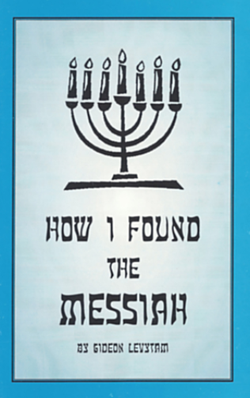
Follow Gideon Levytam's journey and discover how he was led by God, through a series of exciting circumstances, to find the One his people are still waiting for.
Past Episodes

Featured Offer
Follow Gideon Levytam's journey and discover how he was led by God, through a series of exciting circumstances, to find the One his people are still waiting for.
About Holy Scriptures and Israel
As time passed by, the Lord Yeshua took dear brother John Van Stormbroek to himself. The ministry of Holy Scriptures and Israel continued with additional development. In the early 1990’s, a weekly morning Bible class began which brother Gideon Levytam led regularly in the City of Toronto. This weekly open Bible class was held in the Willowdale assembly meeting hall. Eventually, a second mid-week evening Bible class was added. In April 2002, the need for an additional outreach Bible teaching meeting arose. We begun a Saturday (Shabbat) ministry meeting in which a systematic teaching of God’s word is presented to all who attend. Together we learn God’s Word, pray for each need and the salvation of Israel, and sing songs of worship unto our God, praising Him and our Lord Yeshua the Messiah.
In Mid 2004 we started to air on Joy 1250 Radio station a 15 minute Bible teaching program called "The Holy Scriptures and Israel" with Gideon Levytam. The broadcast teaches God’s word from a Hebrew Messianic perspective and has proved to be a blessing to many. It's now aired seven days a week. Our prayer is that many more of our Israeli people will have a clear understanding of who Yeshua is, why we all need him, and come to know him as their Lord and Messiah.
About Gideon Levytam
Contact Holy Scriptures and Israel with Gideon Levytam
426 Simcoe Street
Niagara-on-The-Lake
Ontario L0S 1J0
Canada
(905) 325-1234