
Daniel 5:1-16, Part 3


Belshazzar’s Great Feast and Handwriting On The Wall Part 3
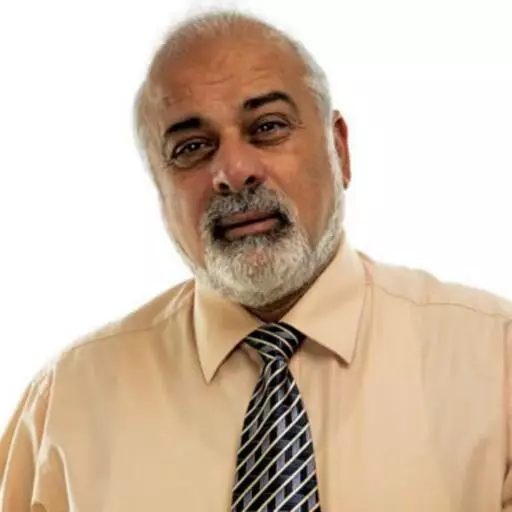
Guest (Male): Shalom! Holy Scriptures and Israel is a ministry designed to share with the Jewish people the good news of the Lord Jesus, Yeshua the Messiah, and to instruct Christians on the Jewish roots of their faith. And now, teaching God’s word from a Hebrew Messianic perspective, here is Gideon Levytam.
Gideon Levytam: The study of Daniel chapter 5. Four things. Number one: the king’s countenance was changed. See, all of a sudden, when God begins to deal with Belshazzar, his face, the countenance changed. He was no longer having the countenance of fun and good time and "I can do as I please." All of a sudden his face and the countenance of his face have changed.
Secondly, it says in verse 6 that his thoughts troubled him. You would think you would take wine and drink as much as you want and you would forget about everything. You discover very quickly when God has to deal with men that all of a sudden, your thoughts are troubling you. This is so true. This is so real. When God is going to deal with individuals that refused him, rejected him, despised him, mocked him, laughed at him, and desecrated the vessels of the temple, God is going to deal with him sooner or later. His thoughts, it says here in verse 6, troubled him.
Then the third thing that we find out happened to him in verse 6 is that the joints of his loins were loosed. You know, the joints of the loins? Sometime when fear is coming our way, we find that we cannot even carry ourselves anymore. You are not anymore when we walk in pride, everything seems to be fine, and when all of a sudden fear is coming our way, all of a sudden we find that we don't have strength even to carry ourselves and we need to be dependent upon God to carry ourselves.
Fourthly, we find out that it says here that his knees smote one against the other. All of a sudden he was shaking in fear and he was really shaking; his knees smote each other. I shiver when I think about the sight that had been there at that particular moment. The whole party, thousands of his lords, his wives, his concubines, and perhaps it had been developed into an orgy there. And yet God comes in with the hands, with the fingers, and he is writing on the wall.
And the whole story has changed. The lampstand was lighting this, if you will, it was next to it, as it says in verse 5, and everybody has seen that sight and the whole picture of that evening has changed completely. So what he does? He does something that every king does when he is in trouble. What does he do? He calls the wise men of Babylon. He is gathering them. Notice now verses 7 to 9. He called the wise men of Babylon and he offered them three things.
Notice in verse 7: then the king cried aloud. He was shouting. He was really raising his voice. He cried aloud and he said to bring in the astrologers, the Chaldeans, and the soothsayers. And the king spoke and he said unto the wise men of Babylon, "Whosoever shall read this writing and show me the interpretation thereof, this particular man shall be clothed in scarlet and have a chain of gold about his neck and shall be the third ruler in the kingdom."
He called the wise men. You remember it was his grandfather, by the way, Nebuchadnezzar, who had done the very same thing in chapter 2 when he had trouble. In chapter 3 he had called the wise men of Babylon. You remember in chapter 2 he wanted the interpretation and they couldn't help him. They wanted first of all that he will tell them the story and they're going to make up a story to give him the interpretation. Here he's calling them and he says, "Whoever is going to give me the interpretation, the right interpretation of what was written on the wall and the interpretation."
Three things he offered them: to be clothed with scarlet. In this time, when you are being clothed with scarlet, that gives you a kingly or a ruling position. Secondly, it says that he will have a chain of gold about his neck. That is a public identification of this person's position. And thirdly, it says here that he is going to be third ruler in the kingdom. It's interesting how accurate the Bible is. Not the second ruler, but the third.
Why the third? Because his father Nabonidus was the first, Belshazzar was the second, and whoever is going to give him the interpretation of this particular writing on the wall was going to be the third ruler in the kingdom. By the way, this expression "third ruler in the kingdom" is mentioned three times in this chapter. If you just go a little bit down in this chapter, you notice it says here in verse 16 at the end, "And shall be third ruler in the kingdom." Notice verse 29 at the end, it says, "And he shall be the third ruler in the kingdom."
It is correct; the third ruler in the kingdom is because his father Nabonidus was the first ruler, Belshazzar was the second one co-reigning with his father, and the one that was going to give the interpretation of the writing on the wall was going to be the third one. And so he called them in chapter 5 and verse 7, and in verse 8 we find out that they fail to read and to make known the interpretation. Verse 8: "Then came in all the king's wise men, but they could not read the writing nor make known to the king the interpretation thereof."
They couldn't help the king. They could not read the writing, neither could they also make known the interpretation. What does it mean? What are the letters? What do they mean? And so in verse 9 we read that King Belshazzar is really troubled. Notice it says, "Then was King Belshazzar greatly troubled and his countenance was changed in him and his lords were astonished." It's not the same man anymore. It is not the same one who began with that great feast, caring for nothing, having everything seems to be fine.
He's going to have this great celebration, he can desecrate the vessels of God's temple and do as he please, everything's going to be fine until God is coming in to deal with this man. And things completely have changed. By the time we get to verse 9, he was greatly troubled, his countenance was changed, and his lords were astonished. Then we follow on now from verse 10 to verse 12: incoming the advice of the queen.
Now I want you to notice that this woman that coming here, it says in verse 10, "Now the queen." This queen is not his wife, it's his mother. It is not his wife because we read already in verse 2 and 3 that his wives were inside with him, his concubines. They were already inside the celebration, that great feast in the temple there. So this queen is not his wife, but his mother. Notice it says in verse 10: "Now the queen, by reason of the words of the king and his lords, she came into the banquet house and the queen spoke and said, 'O king, live forever. Let not thy thoughts trouble thee, nor let thy countenance be changed.'"
See, she heard. She was outside, she was not inside. Apparently she heard, it says here in verse 10, by reason of the words of the king and his lords. In other words, the king was calling for the wise men to come in, and they found out that the wise men could not give him an answer to his question and he was so troubled that the queen came from without inside and she went to him and she said to him in verse 10, "Let not thy thoughts trouble thee, nor let thy countenance be changed."
Then what she does in verse 11, she is pointing him to a man who is able to give him the answer. And who does she point him to? She points him to none else but Daniel, the Jew, the Hebrew, who was still living in the land. Notice it says here in verse 11, the queen gives her own revelation concerning Daniel: "There is a man in the kingdom in whom the spirit of the holy gods is, and in the days of thy father light and understanding and wisdom like the wisdom of the gods was found in him, whom the king Nebuchadnezzar thy father, the king, I say, thy father, made master of the magicians, astrologers, Chaldeans, and soothsayers."
Now you notice that the expression "thy father" here is mentioned. She does not mean the father because Belshazzar was not the son of Nebuchadnezzar. What she means really, she's taking this expression, "thy forefather." In other words, your, just the same like in Hebrew we oftentimes say like this: our father Abraham, Isaac, and Jacob. My father's name is actually Abraham, but it was not the Abraham which was the father of Isaac. My father's name is Abraham, but when I say my forefathers or my father Abraham, Isaac, and Jacob, I do not mean my immediate father, I mean my fathers that has to do what God chose Abraham, Isaac, and Jacob.
When Peter was speaking to the Jewish people in Jerusalem after the death of the Messiah and the resurrection of the Messiah, he says, "Our father David had said." Well, David was not the physical father of every Hebrew there at that particular immediate union, but David is the father of the nation of Israel as well. And so what here she is speaking about, she doesn't say your father that was your immediate father, because his father was Nabonidus. But she's saying your forefather.
Now she knew about this Hebrew man. And notice she said three things about this man Daniel. First of all, she says in verse 11, "There is a man. There is a man." Daniel is a picture of the Lord Jesus, the Messiah, as well. "There is a man." Even today, when we think about there is a man in the glory, which is our blessed Lord, who is the answer to every problem in this world today. And the world, instead of turning to him, to Yeshua, to Jesus the Messiah, they're turning to every other source to try to fix the existing problems of this world today.
And we need and they need to turn to that man, the man of God's counsel, the Lord Yeshua, Jesus the Messiah. But here coming the queen and she said to him, his mother, she said, "There is a man in thy kingdom. You should have listened to him, you should have listened to him long time ago, and just like your forefather had to learn from him, there is a man," and really it is a man of God. Just go back please to chapter 2 for a second of Daniel. I'll show you there the same thing.
You remember when Nebuchadnezzar had a problem with his dream and he wanted the interpretation of this dream in Daniel chapter 2 and verse 25? Then Arioch brought in Daniel before the king in haste and he said unto him, "I have found a man of the captives of Judah that will make known unto the king the interpretation." The queen, by the way, said, "There is a man. There is a man." Now three things she said about that man Daniel. First of all, she says in verse 11, "There is a man in whom the spirit of the holy gods is."
She does not use the spirit of the holy God singular, but the spirit of the holy gods plural. She still thinking Babylonian gods, but they knew from experience that there was something special about Daniel and his God. So she said the spirit of the gods is in him. Secondly she said about Daniel, "And in the days of thy father light and understanding and wisdom like the wisdom of the gods was found in him." In other words, in the time when your father and your forefathers had a need, wisdom and light was found in this man.
Thirdly, notice here the third thing she mentioned about this man in verse 11, she says, "Whom the king Nebuchadnezzar thy father, the king, I say, thy father, made master of the magicians, astrologers, Chaldeans, and soothsayers." Apparently, he was made the master of all these magicians, but things went on and he had been demoted somehow that by now, when they call all the wise men of Babylon, he did not come with them because he was not in that position any longer for a while.
Because King Nebuchadnezzar after he died and his son ruled and others ruled, apparently they did not have the wisdom of Nebuchadnezzar to recognize Daniel and the God of Daniel. And so they set him aside. And so now the mother of this particular Belshazzar, which is really the daughter of King Nebuchadnezzar, she comes in and she says, "There is a man in thy kingdom. I want you to learn about this man, and this man is able to help you." In verse 12 the queen speaks of the uniqueness of Daniel.
Notice she says six things about him in verse 12. It says here: "Forasmuch as an excellent spirit," he had excellent spirit. Secondly, "knowledge." Thirdly, "understanding." Fourthly, "interpreting dreams." Fifthly, "showing hard sentences." And sixthly, "dissolving of doubts." Six things she said about Daniel, and she knew it very well because she had been at the court and she had been with her father when Daniel was assisting her father when he was in various trouble.
Six things she's saying about him: he's excellent spirit, he has an excellent knowledge, he has an excellent understanding, he can interpret dreams, he could show hard sentences, and he can dissolve doubts. At the end of verse 12 she says: "There were found in the same Daniel, whom the king named Belteshazzar, now let Daniel be called and he will show the interpretation." So you see what she does? She directing now this particular king, which is really her son, to the man that's going to give her the answer.
And you notice that Daniel never take the glory to himself, he always direct himself to God. Daniel was the kind of a man that never took the glory to himself, but he always directed the glory and all the ability that he had to the God of heaven, to the God of Israel. Quickly I want to finish at least verse 16 today. In verse where we stopped, I read from verse 13 to verse 16, Daniel is appearing and the appeal to Daniel.
Notice the first thing we find in verse 13, he is identifying Daniel. The king identified him, he says, "Then was Daniel brought in before the king." And he asked him, "Art thou that Daniel, which art of the children of the captivity of Judah, whom the king my father brought out of Jewry?" He first want to make sure that it's not another Daniel but that same Daniel that his forefather brought from Jerusalem to Babylon. "Are you that one?" he asked him. "Are you that particular one that my father brought you out of Jewry?"
You know how many years prior to that Daniel was brought down to Babylon with other Jewish boys and with various things that Nebuchadnezzar had taken of the Jewish people and some of the temple vessels out of Jerusalem? Daniel was one of those young boys who were taken to Babylon away from home, away from his family, away from his land, away from his temple, away from that which he was used to all his life. He was taken all the way to Babylon and he grew up in Babylon and he still trusted God even in the land of Babylon.
What an example he can be for all of us, that the person may be away from the meeting place where the people of God are meeting together, if he has or she has a heart for the Lord, God is going to be sustaining his people everywhere wherever they're going to be found. So "Are you that Daniel?" he asked him. Then notice in verse 14, the king speaks of what he heard about Daniel. "I have even heard of thee that the spirit of the gods is in thee, and that light and understanding and excellent wisdom is found in thee."
"I heard about you. I heard about you." Let me make a practical application for us as believers today. When somebody hears something about you and I, what do they hear? "Oh, I heard about this brother, he is a troublemaker. Oh, I heard about this sister, she is this." What do they hear about us? I mean seriously, this is the testimony that one receives. We don't read of Daniel testifying for himself, "Oh, I was that great man that..." No, that is the mother of Belshazzar, the daughter of Nebuchadnezzar, says, "I telling you about this man, he have done certain things to your father. You call him and he's going to give you the answer."
When he come before Belshazzar, Belshazzar tell him, "I heard about you. I heard about you." Boy, what a testimony he had. Sometimes when we look at ourselves, we ask ourselves the question: is there any testimony for the Lord in our life when somebody hears some things about us? What do they hear about us? Well, Daniel had a testimony for himself from the unbelieving world. They knew they had a testimony about this man.
Now quickly, because I want to end up here, in verses 15, it says the king tell how the other wise men could not help him. The king is telling him, he says verse 15, "And now the wise men, the astrologers, have been brought in before me, that they should read this writing and make known unto me the interpretation thereof, but they could not show the interpretation of the thing." He's spreading before Daniel his problem. He says, "Listen, I call the wise men of Babylon. I sought to find some answers to my problem, to the question that I have, but they could not show the interpretation of the thing. I really need an answer, they could not help me."
In verse 16, he gave him the king appealed to Daniel and he gave him promises. He appeals to him, he says, "Daniel, I've heard of thee that thou canst make interpretations and dissolve doubts. Now if thou canst read the writing and make known to me the interpretation thereof, thou shalt be clothed with scarlet and have a chain of gold about thy neck and shall be the third ruler in the kingdom." He gave him a promise. Notice that he promised him the same thing what he promised to anyone from the wise men of Babylon: to give him a scarlet robe, to give him a chain about his neck, and to make him a third ruler in the kingdom.
He give him those promises if he is going to help him to give him the answer to his problem. I want actually to close with this because you are sitting very nicely for over an hour and I really proud of you and quietly don't ask questions, just listening to what I have to say. Beloved, I tell you when just this thought about Daniel, what a testimony Daniel had here in this world. When you think about we have a span of life to live, God gave us a certain amount of time from the day that we were born spiritually to the day that he decide to take us to be with Yeshua the Messiah in heaven and home.
What kind of a testimony are we going to be to those that are without? What kind of thing those that are without will find out and know about our relationship with the Lord, our attitude, our behavior, our conduct, our testimony? What do they say about us? Now we all fail and we know that Daniel failed himself as well. He is not a perfect man. But what a wonderful thing to know to live to leave here a testimony of the love for the Lord, love for people, and honoring the Lord.
"I heard of you," as he's saying to him, "I heard of thee that thou canst make interpretation, dissolve doubts. Now if you can read the writing, here is the promises that I'm giving to you." Daniel trusted the Lord and the Lord did use him. The God of heaven, the God of Israel did bless him and use him to give various help to various kings like, for example, King Nebuchadnezzar who situated him, placed him in an elevated position.
Even he was a Hebrew, not a Babylonian, came from another country, he was captive, he had been lifted up into a higher position in the kingdom of Babylon. Another Hebrew had had the same experience. His name was Yosef, Joseph, in the land of Egypt. Everything he touched seems to prosper. Why? Because he loved the Lord and he followed the Lord and the Lord honored him. And may the Lord encourage also us that when we're going to do something for him, he is going to bless us, he is going to honor us. "The one that honor me," he says, "I will also honor." Can we hear Amen to that? Amen!
Guest (Male): You have been listening to Holy Scriptures and Israel with Gideon Levytam. Gideon teaches God’s word from a Hebrew Messianic perspective. For more information about this ministry, write to Holy Scriptures and Israel, Box 1411, Niagara-on-the-Lake, Ontario, L0S 1J0, or visit our website at holyscripturesandisrael.com. You are also invited to Gideon’s weekly Bible teaching on Fridays at 11:00 AM and 7:00 PM and Saturdays at 1:00 PM at Willowdale Christian Assembly Hall, 28 Martin Ross Avenue in Toronto. Holy Scriptures and Israel is made possible by your prayers and financial support. If you would like to support the program, visit holyscripturesandisrael.com. God bless you. Shalom, shalom!
Featured Offer
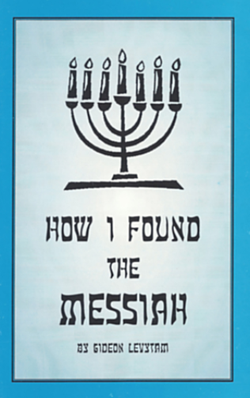
Follow Gideon Levytam's journey and discover how he was led by God, through a series of exciting circumstances, to find the One his people are still waiting for.
Past Episodes

Featured Offer
Follow Gideon Levytam's journey and discover how he was led by God, through a series of exciting circumstances, to find the One his people are still waiting for.
About Holy Scriptures and Israel
As time passed by, the Lord Yeshua took dear brother John Van Stormbroek to himself. The ministry of Holy Scriptures and Israel continued with additional development. In the early 1990’s, a weekly morning Bible class began which brother Gideon Levytam led regularly in the City of Toronto. This weekly open Bible class was held in the Willowdale assembly meeting hall. Eventually, a second mid-week evening Bible class was added. In April 2002, the need for an additional outreach Bible teaching meeting arose. We begun a Saturday (Shabbat) ministry meeting in which a systematic teaching of God’s word is presented to all who attend. Together we learn God’s Word, pray for each need and the salvation of Israel, and sing songs of worship unto our God, praising Him and our Lord Yeshua the Messiah.
In Mid 2004 we started to air on Joy 1250 Radio station a 15 minute Bible teaching program called "The Holy Scriptures and Israel" with Gideon Levytam. The broadcast teaches God’s word from a Hebrew Messianic perspective and has proved to be a blessing to many. It's now aired seven days a week. Our prayer is that many more of our Israeli people will have a clear understanding of who Yeshua is, why we all need him, and come to know him as their Lord and Messiah.
About Gideon Levytam
Contact Holy Scriptures and Israel with Gideon Levytam
426 Simcoe Street
Niagara-on-The-Lake
Ontario L0S 1J0
Canada
(905) 325-1234