
Daniel 5:1-16, Part 1


Belshazzar’s Great Feast and Handwriting On The Wall Part 1
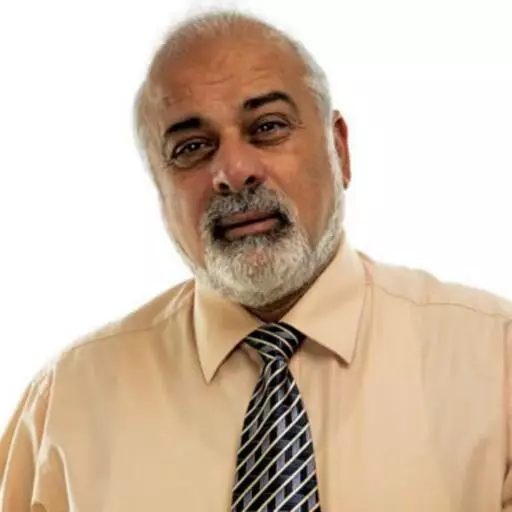
Gideon Levytam: Shalom. Holy Scriptures and Israel is a ministry designed to share with the Jewish people the good news of the Lord Jesus, Yeshua the Messiah, and to instruct Christians on the Jewish roots of their faith.
And now, teaching God's word from a Hebrew Messianic perspective, here is Gideon Levytam.
Gideon Levytam: So turn with me to Daniel chapter five. And I would like to read beginning from verse one. Belshazzar, the king made a great feast to a thousand of his lords, and he drank wine before the thousand.
Belshazzar, while he tasted the wine, he commanded to bring the golden and silver vessels which his father Nebuchadnezzar had taken out of the temple which was in Jerusalem. That the king and his princes, his wives, and his concubines might drink therein.
Then they brought the golden vessels that were taken out of the temple of the house of God which was at Jerusalem. And the king and his princes, his wives and his concubines drank in them. They drank wine and praised the gods of gold, and of silver, and of brass, of iron, of wood, and of stone.
In the same hour, came forth fingers of a man's hand and wrote over against the lampstand upon the plaster of the wall of the king's palace. And the king saw the part of the hand that wrote.
Then the king's countenance was changed, and his thoughts troubled him, so that the joints of his loins were loosed, and his knees smote one against another.
And the king cried aloud to bring in the astrologers, the Chaldeans, and the soothsayers. And the king spoke and he said unto the wise men of Babylon, whosoever shall read this writing and show me the interpretation thereof, shall be clothed with scarlet, and have a chain of gold about his neck, and shall be the third ruler in the kingdom.
Then came in all the king's wise men, but they could not read the writing, nor make known to the king the interpretation thereof. Then was the king Belshazzar greatly troubled and his countenance was changed in him, and his lords were astonished.
Now the queen, by reason of the words of the king and his lords, came into the banquet house, and the queen spoke and said, O King, live forever. Let not thy thoughts trouble thee, nor let thy countenance be changed.
There is a man in the kingdom, in whom the spirit of the Holy Gods, and in the days of thy father light and understanding and wisdom like the wisdom of the gods was found in him. Whom King Nebuchadnezzar, thy father, the king, I say, thy father made master of the magicians, astrologers, Chaldeans and soothsayers.
For as much as an excellent spirit and knowledge and understanding, interpreting of dreams and showing of hard sentences and dissolving of doubts were found in the same Daniel, whom the king named Belshazzar. Now let Daniel be called, and he will show the interpretation.
Then was Daniel brought in before the king. And the king spoke and he said unto Daniel, art thou that Daniel which out of the children of the captivity of Judah? Whom the king, my father brought out of Jewry?
I have seen and even heard of thee that the spirit of the Gods is in thee, and that light and understanding and excellent wisdom is found in thee. And now the wise men, the astrologers have been brought in before me, that they should read this writing and make known unto me the interpretation thereof. But they could not show the interpretation of the thing.
And I have heard of thee that thou canst make interpretations and dissolve doubts. Now if thou canst read the writings and make known unto me the interpretations thereof, thou shall be clothed with scarlet and have a chain of gold about thy neck and shall be the third ruler in the kingdom.
Now let me stop here for a while. But let me make some remarks here that are very important for all of us in order for us to get a hold of where we are. Let me just tell you what happened in chapter five.
Chapter five is a very interesting chapter. In fact, it is interesting that by the time we arrive to chapter five in the book of Daniel, there are other chapters that already have been really happening that we have them later on. For example, by the time that we reach chapter five concerning the fall of Babylon and the destruction of this nation, already other chapters like chapter seven and chapter eight were already existing.
The book of Daniel was not written in a chronological way. When we read the book of Daniel, by the time we get to chapter five, we are already in a chronological way, have already passed chapter seven and chapter eight. I want you just to notice that for a second, in verse 30 of chapter five, it says, in that night was Belshazzar the King of the Chaldean slain.
Now turn to chapter seven. And chapter seven already speaking only about the first year of Belshazzar the king. Notice it says in verse one of chapter seven, in the first year of Belshazzar, the King of Babylon. Notice in chapter eight now in verse one, in the third year of the reign of Belshazzar, a vision was appeared unto me.
In other words, beloved brothers and sisters, when we are reading chapter five of the book of Daniel, we are receiving information that really happened after chapter seven and after chapter eight of the book of Daniel. Because Daniel was not written in a chronological way. God had set it up to teach it in a moral way. We do not see here chapter seven, chapter eight yet, but I want you to bear this in mind, chapter five is the end of the Babylonian kingdom. At the end of chapter five, we are entering now into the Medo-Persian kingdom here upon the face of this earth.
And so what we learn here in chapter five is about a man that never learned the lesson that his father or his forefather had learned, King Nebuchadnezzar. A man that had pride in him, and he did not confess it. He did not judge himself, and end up in being destroyed and ultimately lost the kingdom to another nation.
And so now, let me just tell you what happened. Turn to the book of Jeremiah chapter 27. There's a prophecy concerning Babylon by Jeremiah verses six and seven. Jeremiah chapter 27 verses six and seven. God is speaking and He said, Now I have given all these lands into the hand of Nebuchadnezzar, King of Babylon, my servant, and the beasts of the field have I given also to serve him.
And all nations shall serve him, number one, and his son, number two, and his son's son, number three. Until the very time of his land come, and then many nations and great kings shall serve themselves of him. This is very important prophecy in Jeremiah 27 verses six and seven. You know what God is saying?
King Nebuchadnezzar, you are going to reign and to be a king. And your son is going to reign. And your grandson is going to reign. And that's it. That will be the end of the Babylonian kingdom. Nebuchadnezzar, his son and his grandson. And it very clearly said here, and all nations shall serve him, that's Nebuchadnezzar, his son, his son's son, until.
Until the very time of his land or his land will come, until the time his going his kingdom is going to end. So what happened here? Let me tell you a little bit of history that I have heard a little bit, read a little bit. Nebuchadnezzar died in 561 BC. And I'm giving you some of the notes that I have.
And he was succeeded by his son Evil-Merodach, who reigned from 562 to 560 BC. Now, Evil-Merodach was murdered by his brother-in-law. His name was Nergal-Sharezer. I have very hard names to mention. And Nergal-Sharezer reigned from 559 to 556 BC. Then he died leaving the kingdom to his son.
Now his son, by the name of Labashi-Marduk. He reigned for two months, and he was assassinated, and Nabonidus, the son-in-law of Nebuchadnezzar, in other words, he got married to the daughter of King Nebuchadnezzar. And he reigned from 556 to 539 BC. You get a little bit of the picture. So, Nebuchadnezzar died in 561 BC, and there was a succession of three kings, and then came his son-in-law by the name of Nabonidus.
Now apparently, Nabonidus reigned from 556 to 539, but apparently, Nabonidus had some problems with the wise men of Babylon, and he did not want to remain in Babylon. And he wanted to get away from Babylon, and to live in another place. And let me give you the name of this place, Nabonidus moved to another city in 548 BC, to a place called Tema in Arabia.
And he moved to Tema in Arabia, but what did he do? You know what he did? He placed his son by the name of Belshazzar to be king in Babylon. He still wanted to control Babylon, but he could not control it from Tema, from Arabia. And he left his son by the name of Belshazzar as a co-king to reign in Babylon.
And so what we find out right now, by the time we read about Belshazzar, really while he was a king of Babylon, but in reality he was co-king with his father by the name of Nabonidus. So Nabonidus was in Tema while Belshazzar was in Babylon. So, in a sense, it was not a single king, if you will. He was co-reigning with his father, while his father was in Tema, and he was in Babylon.
And so it is interesting here, you will find that three times it's mentioned here, the word, if anybody will give him an answer to his problem, he will make him a third ruler in the kingdom. I want you to just notice that. Notice in verse seven, and he shall be a third ruler in the kingdom. Notice a little bit later on in verse 16, and he shall be a third ruler in the kingdom.
Notice a little bit later on in the end of chapter five in verse 29, it says here, that he should be the third ruler in the kingdom. Interesting. Why does he say that the person who is going to help him to solve his problem is going to be third king or ruler in the kingdom? Why? Because he was the second. Nabonidus was the first, he was the second, and the person who will help him to solve his problem was going to be the third ruler in the kingdom.
So just imagine what happened. Nebuchadnezzar died, another individual took his place, his son actually. He was murdered. And then another one had died, leaving the kingdom to another. He was after two months assassinated. And finally, the son-in-law of Nebuchadnezzar became the king. And now he was co-reigning with Belshazzar in the kingdom of Babylon.
Now, let's begin. In verses one to four, there was a feast that Belshazzar had made. Listen to that. Belshazzar, the king made a great feast to a thousand of his lords. And he drank wine before the thousand.
Belshazzar, while he tasted the wine, he commanded to bring the golden and the silver vessels which his father, and when you read the word his father in the Aramaic here, it is really has a reference to his forefathers, really his grandfather, Nebuchadnezzar, which his father Nebuchadnezzar had taken out of the temple which was in Jerusalem. And the king and his princes, and his wives, and his concubines might drink therein.
And they brought the golden vessels that were taken out of the temple of the house of God which was in Jerusalem. And the king and his princes and his wives and his concubines drank in them. And they drank wine and they praised the gods of gold and of silver and of brass and of iron and of wood and of stone.
Now, remember what is happening here. It is very interesting to look at the history of the Babylonian. Remember when Babylon had conquered. One of the things that they used to do in all time is any nation that they conquered, by way of telling them, we have won. Our God is greater than your God. Do you know what they used to do? They used to take the gods and the vessels that were found in the temple of these nations.
They used to take the vessels and bring them all the way to Babylon, to the place of their God, to the temple of the God of Babylon. In other words, when Nebuchadnezzar had won various victories against various nations, what did he do? He used to bring the vessels of all these nations, bring their idols if you will, place them in these temples. And what was he really saying? My God is greater than your God. Our God has won your God, therefore you are going to serve us.
And one of the nations that God had allowed him to defeat was God's own chosen people, the nation of Israel, the people of Judah and Benjamin, the southern tribes. And because Israel's disobedience, you remember that we read it in chapter one. God had allowed Nebuchadnezzar to come to Jerusalem, and he came three times, beginning at 605, and finally 587, he destroyed the city of Jerusalem, burned it with fire, burned the temple, and took all the vessels and brought it into his temple in Babylon.
And it was there where the Jewish people were singing that song, by the rivers of Babylon, there we wept. We sat down and we wept when we remembered Zion. There they said to us, they mocked us and they said to us, sing unto us one of Zion's songs. And then we wept and said, how can we sing the Lord's song in a strange land?
It was our own people, the Jewish people, who were suffering in Babylon. And they were because of disobedience. God had to discipline his very own people, and take them to Babylon. Took the vessels, took everything that has to do from the temple. The temple had been destroyed. The Jewish people have been taken captive, including Daniel, Hananiah, Azariah, Mishael, and others of the Jewish people. And they have been in Babylon.
And Nebuchadnezzar had been ruling over them. And now his grandson becoming a co-king with Nabonidus, he is in Babylon. What does he do, beloved? He is now choosing. I want to make us to understand. He is choosing to have a great feast and he wants to use the vessels that belong to the house of God in Jerusalem.
In other words, what we learn from this, he could have chosen any vessels he wanted, because there were various countries that his grandfather had taken all kind of vessels, but he had chosen to use the vessels from the house of Jehovah, the house of Jehovah, the God of Abraham, Isaac and Jacob from the city of Jerusalem. In other words, we learn here that this man was a man of pride. He was mocking God. He was let me saying, I am not going to listen to what you have to say to me.
Now I want you also to realize what happened by the time we are reading chapter five. By the time that we are reading chapter five and he's doing this feast, you know what happened? Already the city of Babylon was surrounded by the Medo-Persians. Some said that the city of Babylon was surrounded for already four months by the Medo-Persians. And in other words, he had already experienced being in the presence of his grandfather. He knew that God was telling Nebuchadnezzar that his kingdom is going to end with his grandson.
And really what he is saying here, I am going to show you that I am going to be different. Things will not be like you say. I am going to continue to rule and I am going to do my own thing. And so he's making this party. And notice what we read here in verse one. It says here, the king made a great feast to a thousand of his lords. And they drank wine before the thousand.
Let me make a suggestion, beloved. They didn't drink some wine with a meal, like some of us will take a glass of wine with a meal. That was a party. That was what you call a feast. They were getting drunk. In fact, it was more than just merely getting drunk. It was, if you want to call it, a mockery. It was a place where everybody is free. Do what you want, do as you please, never mind to control yourself. Just drink and have a good time. Get drunk. Never mind your responsibility.
That's what he was really doing here. He was drinking wine in the presence of the thousands of his lords. And then notice, it says here, while he tasted the wine. In other words, by the time that he was tasting this wine, and while he was tasting, he was commanding to bring the golden silver vessels, the golden and the silver vessels which his father Nebuchadnezzar had taken out of the temple which was in Jerusalem.
And the king and his princes, his wives and his concubines might drink therein. You notice that? It says here, the king and his princes and his wives, plural, and his concubines, plural, were sitting down and drinking from these vessels. Now if you just stop and think with me, you know what those vessels were used for? Those vessels were used for to worship the God of Abraham, Isaac and Jacob in the temple.
Those vessels were used where the priests of Israel, the priests of Judah, in the city of, the Levites used to use those vessels in the order of worship of the God of Abraham, Isaac and Jacob. And the same vessels that were used in the temple in Jerusalem are right now being at that great feast that he makes for his thousands of his lords and all his wives and all his concubines. He's making a celebration there using the vessels that had been used for the service of God, using it in a way, I would like to suggest, like mocking God.
And saying, I do not care of this God of the Hebrews. I do not care of Jehovah, the God of Israel at all. And so he ordered the golden vessels to be brought. And you notice what it says here in verse three, they brought the golden vessels that were taken out of the temple of the house of God which was in Jerusalem. And the king and his princes, his wives and his concubines drank in them.
So they were having this party, they were having this celebration, using the vessels of gold and silver that belong to the house of the Lord. And so we read in verse four, they drank wine. And instead of praising the God of Israel, notice what they do. They praised the God of gold, and the God of silver, and the gods of brass and of iron and of wood and of stone. That's the condition of the man by the name of Belshazzar. A man that really did not learn anything from the experience that his grandfather had to go through in order to bring him into the end of himself.
So can you imagine, he's sitting there in his own city, Babylon, and he's doing as he pleases. He's carrying on and having his own celebration there, while he's really saying, when he did what he did, he really saying, I do not care. Whatever is going to happen to me, I know that I can do as I please.
And like I said before, Babylon had been already for four months surrounded by the Medo-Persians. And the Babylonians were very smart. You know what they have done? The city was so fortified that you would never believe that anybody could take over that city.
87 feet wide wall, 350 high wall, a hundred and something, hundred to 150 towers on top of the wall. There was food inside the city of Babylon to feed the city for 20 years. And there was water flowing through fresh water by the Euphrates river flowing inside the city. They had no fear. For 20 years they could say, I do not need to be afraid. Whatever is going to happen outside, I am going to be able to take care of myself for 20 years.
And you know, there's a lesson. Yesterday I was speaking in my meeting in Niagara on the Lake. And I was just thinking. I went to Israel. I came back from Israel from a tour to Israel. And on the way back from Israel, I stopped in New York City. And I went to the place where ground zero is right now, the two big towers used to stand there. I tell you, I remember about 15 years ago, I used to be underneath those two towers, handing out tracts and telling people about Jesus, the Messiah.
Just two months ago, I went with my son Yoav in the same location. And what I've seen, no towers, nothing but merely a hole in the ground and a big plaque that gives us the statement of the people or the names. I didn't read everything of the people who died there in September 11. Realize, beloved, that the best of what men can produce can be at the end of it. One time it's going to come to an end. The best that men can produce will come to an end.
And that what I'm talking these towers represented a powerful place of this nation of United States of America. This city of Babylon represented the most the power that existed in a time of the Babylonians, the greatness of the Babylonians. It represents power and strength and ability to sustain for years. And you know, there's a lesson that we can learn from these chapters, in these experiences that we live through even right now. That God is the one that is in full control over everything over the affairs of this world.
That when God decided to make an end to something, to make to allow this to fall, God is going to make sure that he's going to bring it to pass. Before a fall, or pride comes before a fall. The Bible does teach us. And so King Nebuchadnezzar, if you remember, have learned that lesson. He ended up becoming like an animal. And for seven years, King Nebuchadnezzar had lived outdoors, on the grass, away from his kingdom, becoming like an animal, eating grass outside, lost everything that God had given him until seven years had gone over him.
Once the seven years had passed away, God had restored him into his high position. And you notice what it says at the end of chapter four of Daniel.
Gideon Levytam: You've been listening to the Holy Scriptures and Israel with Gideon Levytam. Gideon teaches God's word from a Hebrew Messianic perspective. For more information about this ministry, write to Holy Scriptures and Israel, Box 1411, Niagara-on-the-Lake, Ontario, L0S 1J0. Or visit our website at holyscripturesandisrael.com. You are also invited to Gideon's weekly Bible teaching on Fridays at 11:00 AM and 7:00 PM and Saturdays at 1:00 PM at Willowdale Christian Assembly Hall, 28 Martin Ross Avenue in Toronto. Holy Scriptures and Israel is made possible by your prayers and financial support. If you would like to support the program, visit holyscripturesandisrael.com. God bless you. Shalom, shalom.
Featured Offer
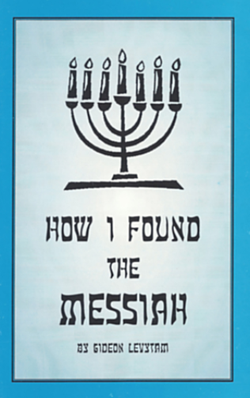
Follow Gideon Levytam's journey and discover how he was led by God, through a series of exciting circumstances, to find the One his people are still waiting for.
Past Episodes

Featured Offer
Follow Gideon Levytam's journey and discover how he was led by God, through a series of exciting circumstances, to find the One his people are still waiting for.
About Holy Scriptures and Israel
As time passed by, the Lord Yeshua took dear brother John Van Stormbroek to himself. The ministry of Holy Scriptures and Israel continued with additional development. In the early 1990’s, a weekly morning Bible class began which brother Gideon Levytam led regularly in the City of Toronto. This weekly open Bible class was held in the Willowdale assembly meeting hall. Eventually, a second mid-week evening Bible class was added. In April 2002, the need for an additional outreach Bible teaching meeting arose. We begun a Saturday (Shabbat) ministry meeting in which a systematic teaching of God’s word is presented to all who attend. Together we learn God’s Word, pray for each need and the salvation of Israel, and sing songs of worship unto our God, praising Him and our Lord Yeshua the Messiah.
In Mid 2004 we started to air on Joy 1250 Radio station a 15 minute Bible teaching program called "The Holy Scriptures and Israel" with Gideon Levytam. The broadcast teaches God’s word from a Hebrew Messianic perspective and has proved to be a blessing to many. It's now aired seven days a week. Our prayer is that many more of our Israeli people will have a clear understanding of who Yeshua is, why we all need him, and come to know him as their Lord and Messiah.
About Gideon Levytam
Contact Holy Scriptures and Israel with Gideon Levytam
426 Simcoe Street
Niagara-on-The-Lake
Ontario L0S 1J0
Canada
(905) 325-1234