
Daniel 4:28-37, Part 2


Nebuchadnezzar’s Pride and God’s Judgment Part 2
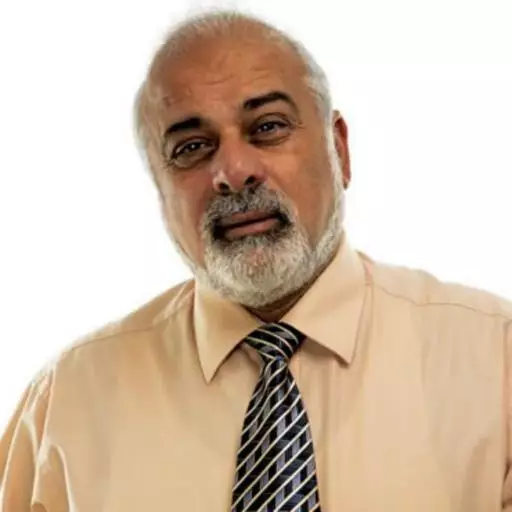
Gideon Levytam: The study of Daniel chapter 4. We’ve, we’ve studied chapter 2 and we’ve learned from chapter 2 that God has shown Nebuchadnezzar a special dream. The image, if you remember, and it showed Nebuchadnezzar the history of the times of the Gentiles, which will begin with the king, with King Nebuchadnezzar, the Babylonian, then the Medo-Persian, then the Grecians, ultimately the Romans, and then the revived Roman Empire, which eventually is going to be a devastated and ending by the second coming of the Messiah himself. We have studied that in chapter 2.
Of course, when we went to chapter 3, if you remember, in chapter 3, we have heard the interesting story of this image that Nebuchadnezzar built of gold, and he wanted everybody in the kingdom of Babylon to come and worship that particular image. But there were three Jewish boys who did not want to fall and worship this particular image. These boys are Hananiah, Azariah, and Mishael, normally known in the in the world, in the, in those who read the scriptures, usually by their Babylonian name, Shadrach, Meshach, and Abednego.
But those three Hebrew boys, Hananiah, Azariah, and Mishael, would not bow to King Nebuchadnezzar and to the image that he made. He threw them into the furnace fire, and there in the midst of the fire, we find out that one like the Son of Man had been with them, and they did not burn at all. And Nebuchadnezzar called them to come out, and surely they came out. There’s nothing of their any, the clothes or any of their body had been burnt. They have come out alive because God had preserved these Jewish boys because of their faithfulness to the God of Israel.
Then, if you remember, we went to chapter 4, and because Nebuchadnezzar was such a proud man, God had to deal with Nebuchadnezzar. And God did deal with him, if you remember the story of chapter 4, which we almost covered the whole chapter. We didn’t quite get to cover the rest of, the ending of the chapter, and that’s what I’m going to do right now.
And you remember what happened to Nebuchadnezzar, he was so proud. He was walking in a palace in in in his kingdom, in Babylon, and he said, “Is not this Babylon, this great Babylon which I have made, I have built with my own hand, for my own self, for my own glory?” And because of his pride, God had to punish Nebuchadnezzar, and He surely did. He punished him tremendously.
And you remember, if you just turn back to chapter 4 for a minute, and notice what we read in verse in verse 27, and apparently that was the last portion that we have dealt with. In verse 27, Daniel said to the king, in chapter 4 and verse 27, he says, “Wherefore, O king, let my counsel be acceptable unto thee, break off thy sin by thy sins by righteousness, and thine iniquities by showing mercy to the poor, if it may be a lengthening of thy tranquility.”
You know, Daniel said to King Nebuchadnezzar, Nebuchadnezzar, there is a solution to the problem. What was the solution to the problem? What was the solution to the problem, King Nebuchadnezzar? You have to confess your sins, and you have to change your manner, to change your behavior. But you know what, beloved, Nebuchadnezzar did not change his behavior.
And because he did not change his behavior, judgment came upon King Nebuchadnezzar. And if if I’m not quite sure, because to my mind, I might, I, I still think that we have covered that, but let me just give you verse 28 of chapter 4 to verse 36, the the fulfillment of the judgment that fell upon Nebuchadnezzar comes about. Notice that in verse 28 to 30.
First of all, notice the sin of Nebuchadnezzar. It says here, and it came to pass, or I should say, and and this came upon King Nebuchadnezzar, verse 29, at the end of 12 months he walked in his palace, the palace of the kingdom of Babylon, and the king spoke and he said, “Is not this great Babylon that I have built for the house of the kingdom, and by the might of my power, and for the honor of my majesty?”
And while the word was in the king’s mouth, there fell there there fell a voice from heaven saying, “O King Nebuchadnezzar, to thee it is spoken, the kingdom is departed from thee.” And so you see what we learn about King Nebuchadnezzar, that King Nebuchadnezzar really did not listen to the voice and to the counsel of Daniel.
And so King Nebuchadnezzar, you notice it says here in in in verse 29, that at the end of 12 months he walked in his palace, the palace of his kingdom in Babylon. In other words, 12 months passed, one year passed, and King Nebuchadnezzar, instead of listening to the counsel of Daniel, he was lofty and proud, and you know, he’s looking at this great kingdom that he has built, the kingdom of Babylon.
And he was looking around, and it says here in verse 30, the king spoke and he says, “Is not this great Babylon that I have built for the house of the kingdom by the might of my power, for the honor of my majesty?” You see, the pride that was in the in the in the heart of Nebuchadnezzar, it really caused him, in other words, it it caused God to bring upon him a judgment that he deserved because pride.
And you know, dear brothers and sisters, one of the greatest problems that we have, that the human race has, is pride. Pride is that which we often time cause us to stumble, to fall, to go astray. There are a lot of frictions and problems between individuals, between friends, between families, between brothers and sisters, and even between churches and those who belong to the Lord Jesus the Messiah, because of pride, it brings about judgment and divisions, and God will resist the proud, but he’s going to give grace to the humble.
Well, Nebuchadnezzar did not humble himself and he became extremely extremely proud. And you know what he was looking, if you remember, and I think I did tell you that, that he was looking at the the the city of Babylon. And you remember what I said? The city of Babylon was about 15 miles square.
It has walls so high, about 350 feet high. He had the width, the width of the city were of the walls were about 87 feet wide. And so you look at this city and you say, “Nobody’s going to be able to take care of this city. This is what I have accomplished for myself, for my glory. Nobody’s able to fight against this city. This city, this monument here in this world, is never going to end up, and I have built it for my glory by my power.”
Well, that pride that he made, he could have, look at this, and it was a great achievement. But instead of giving glory to God, instead of giving glory to the God who had given him all this, the God of Israel, Nebuchadnezzar was proud, and he was occupied now with himself. And so now notice what happens. Verse 31 to verse 33, the judgment that fell upon King Nebuchadnezzar.
While the words were in the king’s mouth, you notice that? While he was saying it, “Is not this great Babylon that I have built?” While the words were in his mouth, it says here in verse 31, that the voice came from heaven saying, “O King Nebuchadnezzar, to thee it is spoken, the kingdom is departed from thee.”
Nebuchadnezzar, you can speak about this, you can be proud about the position that you have, about this great city that you have built. But Nebuchadnezzar, now God is saying to him, “This kingdom is departed from thee.” And notice verse 32, “They shall drive thee from men, and thy dwelling shall be with the beasts of the field. They shall make thee to eat grass as oxen, and seven years, or seven times shall pass over thee until thou will know that the Most High God ruleth in the kingdom of men, and He giveth it to whomsoever He will.”
Do you know, beloved, you know, this is the, this is really the the central verse of the Book of Daniel, is in verse 32. Chapter 4, verse 32, is the central verse of the Book of Daniel, that God is ruling in the kingdom of men, and He giveth the kingdom, or giveth the kingdom to whomsoever He will. That’s the the theme of the Book of Daniel.
Everything, you know, everything that man has today has been given to him by God. You remember we made allusion a couple of times, we spoke about Saddam Hussein, which is today, we do not know where he is found today. He’s running somewhere in in Iraq. Maybe he’s alive, maybe he’s not alive. But about a year ago, or a year and a half, or two years ago, he was priding himself as the one that is in authority and in control over all the area. In fact, we have been told that he was going to emulate Nebuchadnezzar. He was going to take the rule of this world like Nebuchadnezzar was at that time.
Well, beloved, we find that very quickly that Saddam Hussein is not around anymore to have the same power that he had. He’s running and hiding somewhere, someplace. We do not know. Maybe he’s not alive even today, we do not know. But the point that I’m trying to say, and I’m speaking for ourselves as well, that we all need to learn that everything that we have ultimately has been given to us by God.
And everything that we possess, and all that we have, ultimately has been given us to God, and God resists pride, and He gives grace to those who are humble. Also now the judgment came. First of all, the timing, verse 31, while he spoke. Secondly, notice the stating or the sentence is being pronounced, verse 32, “They’re going to drive you from men, your dwelling place will be with the beasts of the field. They shall make thee to eat grass like oxen, and seven years,” or seven times it says here in the book of Daniel, it’s always have a reference to years, “shall pass over thee until you will know, King Nebuchadnezzar, that I’m the one that rules over the kingdom of the affairs of men.”
The timing will be while he spoke, and the sentence is, can you imagine to be driven from men? His dwelling place will be with the beast of the field. And they shall make him to eat grass like an ox. Can you imagine? That was the the punishment that King Nebuchadnezzar was going to receive because of his pride.
The very same king that had authority over so many people, right now the judgment of God was going to fall on him, and the sentence was pronounced. And you notice now in verse 33, notice quickly, I’m going to read that as well. Verse 33, “The same hour, the thing had been fulfilled upon Nebuchadnezzar, and he was driven from men, and he did eat grass as oxen, and his body was wet with the dew of heaven, until his hairs were grown like eagle’s feathers, and his nails like bird’s claws.”
Now, I cannot even fathom what it meant for King Nebuchadnezzar to experience such a thing. Can you imagine now, if it says here in verse 33, everything had been fulfilled. He had been driven away from men. He was no longer enjoying the the company of people. And then it says that he did eat grass like oxen. And then it says that his body was wet with the dew of heaven. He did not have any more an indoor place to stay. He ended up living an outdoor life for seven years.
And finally, it says his hairs were grown like eagle’s feathers, and his nails like bird’s claws. Question? No? Okay, I thought you had a question. Anyway, so what we learn from this is that the judgment of God came upon Nebuchadnezzar, and literally, literally, he became like an animal, living outdoor, in the cold, in the wet, growing, if you will, for seven years, growing his hair long, as it says here in verse 33, and his nails like bird’s claws. He literally lived like an animal for seven years, for seven years.
Now quickly, notice what it says from verse 34 to verse 36. From verse 34 to verse 36, we see the restoration. We see the restoration. And then, first of all, notice Nebuchadnezzar, he his eyes lifted up to God, to heaven, in verse 34.
And at the end of the days, I, Nebuchadnezzar, lifted up mine eyes unto heaven, my understanding returned unto me, I blessed the Most High, and I praised and honored Him that liveth forever and ever, whose dominion is an everlasting dominion, and his kingdom is from generation to generation. Notice one thing that we find out immediately in the restoration. We find Nebuchadnezzar now does not look at himself now, but it says here in verse 34, he lifted up his eyes to heaven.
He was no longer occupied with himself now. He was occupied now with the God of heaven. His eyes were turned to heaven. And you know, he’s no longer lifted himself in pride after seven years of experience. He was no longer occupied with himself. It says here that his understanding returned to him, and he, what does he do? He blessed the Most High, and he praised and he honored Him that liveth forever, whose dominion is an everlasting dominion, and his kingdom is an everlasting kingdom.
You notice what he does here? He does no longer speak about his kingdom, but he’s speaking about the kingdom of God. He’s no longer elevating himself, but he’s elevating God, the Most High God. The change that have happened to the life of Nebuchadnezzar. In fact, many believe, many believe that by the time Nebuchadnezzar had experienced this seven-year experience, Nebuchadnezzar came to faith in the true and living God, the God of Israel, the God of Abraham, Isaac, and Jacob, the God of Daniel. He came here by finally coming to realize, coming to the end of himself, he came truly to acknowledge the God of Daniel, the God of Abraham, Isaac, and Jacob.
And so he has blessed the Most High. He has honored and praised him. He has said, “You live forever and ever. You are the one who possess dominion. You are the one who have an everlasting dominion, and you are the one that have a kingdom from generation to generation.” Here there was a complete change in the life of King Nebuchadnezzar.
And so in verse 35, all the all the inhabitants of the earth are reputed as nothing, and he does according to his will in the army of heaven and among the inhabitants of the earth, and none can stay his hand or say unto him, “What doeth Thou?” You see, he by now completely changed, and now he is acknowledging the God of Israel and giving him the honor that belongs to him.
And so God has restored Nebuchadnezzar. And with this, really, it’s really the, we believe that here Nebuchadnezzar came to faith in the true and living God. Finally. Oh, he believed in the God of Daniel, but in other gods up to this point. He said to Daniel, “Daniel, your God is is a great God and is greater among many gods.” But here we find out that he truly came to recognize that there is only one God, and that is the God of Daniel.
And so in verse in verse 37, I’m sorry, verse 36, he said, “His kingdom, notice his kingdom returned to him,” in verse 36, “At the same time, my reason returned unto me, and for the glory of my kingdom, my honor and brightness returned unto me, and my counselors and my lords sought unto me, and I was established in my kingdom, and excellent majesty was added unto me.”
See, here is the final restoration. God had been so gracious to Nebuchadnezzar that after the seven years that he had gone, he became like an animal living outdoors, living away from the human race. After the seven years, God had restored him the kingdom. As it says here, He has given him everything. In fact, it says here in verse 36 that excellent majesty was added unto him. In other words, he received much more than what he had lost because of his pride.
And there is a great great lesson for us to learn from this chapter. God is going to deal with pride one way or another, one way or another. And so the final verse of this chapter, because we want to go into chapter 5, in verse 37, the conclusion, the praise of the King of Heaven. The conclusion in verse 37 is a threefold conclusion.
Number one, notice it says in verse 37, “I, Nebuchadnezzar, praise and extol and honor the King of Heaven.” Notice, he’s not not occupied with himself as the king, but he’s occupying himself with another king, and that king is the Lord from heaven, the God of Heaven, the God of Daniel. “All whose works are truth, His ways are judgment, and those that walk in pride He’s able to abase,” or to humble.
Do you know that so so real, you know, those that walk in pride, God is able to humble. God is able to humble those that walk in pride. Now, what is the lesson for us here in this chapter? And I’m going to challenge you, I’m going to challenge myself. How are we with our attitude on a day-to-day basis? Do we have pride in our own hearts?
And if we do have pride in our own hearts, the question is then, do we need, or we seek the Lord’s help to confess our pride and to ask him to give us humility and the proper attitude so we might be able to be used by the Lord as servants here in this world. I want to read two verses from the New Testament, please. Turn to the Book of Peter, I’m sorry, the Book of James first, James chapter 4. In the New Testament, the new covenant, James chapter 4, verse 10.
James was writing to Hebrew Christians in early century. Jacob, his name James is in Hebrew, we call him Jacob. Jacob was writing to first century Hebrew believers in the Messiah. And Jacob wrote to them, James wrote to them, and notice what he said to them in verse 10, “Humble yourselves in the sight of the Lord, and He shall lift you up.” That is a very important principle to learn.
If we humble ourselves under the the, if you will, in the sight of the Lord, there is a promise that the Lord will lift up those that are humbling themselves themselves under the the hand of the Lord, in the sight of the Lord. There is a promise. We have been singing that song earlier. *Hashpilu atzmikhem lifnei Adonai*, humble yourselves in the sight of the Lord. That we sang it in Hebrew and in English. There is a promise that if we humble ourselves, God will lift us up.
That is an important principle to learn. This is one lesson that we learn here in this in this chapter. And then one more verse found in First Peter, please. First Peter chapter 5, and verses 5 and 6. Again, I want to mention that Peter, just like James, he wrote to early believers, Jewish believers of first century.
And Peter wrote to them in verse 5 and 6, “Likewise ye younger, submit yourself to the elder. Ye all of you be subject one to another. And then he says, “Be clothed with humility, for God resist the proud and He giveth grace unto the humble. Humble yourselves therefore under the mighty hand of God, and He will exalt you in due time.”
That is a principle that the Bible is teaching us, and we see it, dear brothers and sisters, we see it throughout the history of mankind. In fact, in fact, the sin that have entered into this world was the sin of pride. If you remember, when Satan, we call him Lucifer, when he was as a great angel that God had created and made him to serve him, he said, he wanted to be like the Most High.
And he elevated himself. He says, “I will be.” You read it in Isaiah 14, you read it in Ezekiel 28, “I will be like the Most High.” And he prided himself, and God had to cast him down, and eventually if you will, he was the one that came in the Garden of Eden, in the Garden of Eden, he came to Adam and Eve, and he tempted Eve and he said, “Has God really said? Has God really said?”
And it was in the Garden of Eden, it was there when Adam had plunged the whole human race into sin, when he took of the fruit of the knowledge of good and evil, and he says, “God, You have given me everything except this tree, the fruit from that tree. I want to eat from it.” Really, he took of it, and he plunged the whole human race into sin.
And so the lesson that we learn from Daniel chapter 4 is that God is going to, if you will, to deal with the pride of men in every generation, in every generation. And so you and I will have to learn that in the same way, just like Nebuchadnezzar, just like James wrote, and just like Peter wrote to these particular believers in early centuries.
Featured Offer
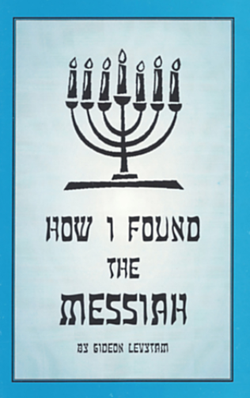
Follow Gideon Levytam's journey and discover how he was led by God, through a series of exciting circumstances, to find the One his people are still waiting for.
Past Episodes

Featured Offer
Follow Gideon Levytam's journey and discover how he was led by God, through a series of exciting circumstances, to find the One his people are still waiting for.
About Holy Scriptures and Israel
As time passed by, the Lord Yeshua took dear brother John Van Stormbroek to himself. The ministry of Holy Scriptures and Israel continued with additional development. In the early 1990’s, a weekly morning Bible class began which brother Gideon Levytam led regularly in the City of Toronto. This weekly open Bible class was held in the Willowdale assembly meeting hall. Eventually, a second mid-week evening Bible class was added. In April 2002, the need for an additional outreach Bible teaching meeting arose. We begun a Saturday (Shabbat) ministry meeting in which a systematic teaching of God’s word is presented to all who attend. Together we learn God’s Word, pray for each need and the salvation of Israel, and sing songs of worship unto our God, praising Him and our Lord Yeshua the Messiah.
In Mid 2004 we started to air on Joy 1250 Radio station a 15 minute Bible teaching program called "The Holy Scriptures and Israel" with Gideon Levytam. The broadcast teaches God’s word from a Hebrew Messianic perspective and has proved to be a blessing to many. It's now aired seven days a week. Our prayer is that many more of our Israeli people will have a clear understanding of who Yeshua is, why we all need him, and come to know him as their Lord and Messiah.
About Gideon Levytam
Contact Holy Scriptures and Israel with Gideon Levytam
426 Simcoe Street
Niagara-on-The-Lake
Ontario L0S 1J0
Canada
(905) 325-1234