
Daniel 4:19-27, Part 3


Daniel’s Interpretation of Nebuchadnezzar’s Second Dream Part 3
Guest (Male): Shalom. Holy Scriptures and Israel is a ministry designed to share with the Jewish people the good news of the Lord Jesus, Yeshua the Messiah, and to instruct Christians on the Jewish roots of their faith. And now, teaching God's Word from a Hebrew Messianic perspective, here is Gideon Levytam.
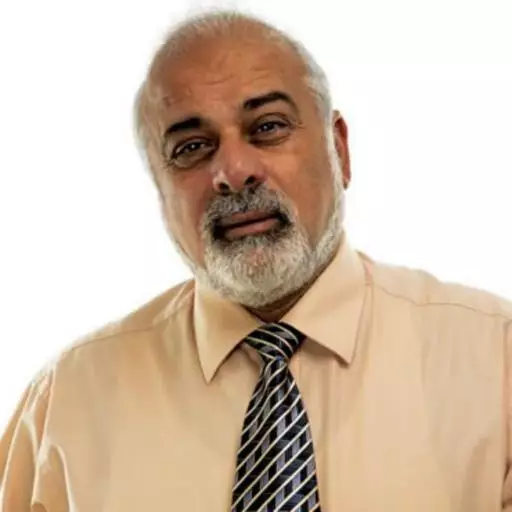
Gideon Levytam: The study of Daniel chapter four. If you remember when David went and he committed the sin against Bathsheba and he fell, and what did he do with Bathsheba's husband, the wife of Uriah? Of course, Uriah the Hittite. He sent him to the front to be killed. And then God sent the prophet to speak to the king. And Nathan said to him, he told him a story about a man that was wealthy and another one that was poor. And then instead of using his own sheep, he took somebody else's sheep or a lamb.
And then David was so upset. He was so angry with that person who took the little lamb that belonged to somebody else. And you know what he said to him? It is thou art that man. And so here, Daniel does the very same thing. He says the story that you told me about this great tree that everyone enjoyed to be sitting, feeding from that tree. This is the tree that God described you, King Nebuchadnezzar. Thou art, O king, the one that grew up. Note verse 22. And became strong, for thy greatness is grown and reached unto heaven and thy dominion to the end of all the earth.
Nebuchadnezzar, do you know you are the one that grown so much? You are the one that developed so much? You are the one that grown and reached to heaven and thy dominion, in other words, he was a king, he was ruling, he was a monarch. His dominion was unto the end of the earth. In other words, he was the only ruler of the then-known world. Now it is interesting. If you just go one page back, Daniel chapter two, verse 37 and 38, it says, "Thou, O king, art king of kings, for the God of heaven has given thee a kingdom, power, and strength, and glory. And wheresoever the children of men dwell, everywhere, wherever people were, the beasts of the field and the fowls of the heaven has he given into thine hand, and has made thee ruler over them all."
That's what happened. God made Nebuchadnezzar ruler over all the affairs here in this world. God had given him all wherever man is dwelling, wherever the fowls of the heaven, wherever the beasts of the field. God had given them all to King Nebuchadnezzar. And if something had been given by God, why is it that you assume that you are so great in yourself? That you so pride yourself as if you had gained everything? And that's how we are. That's not only King Nebuchadnezzar. That's the human race. It is the pride that rises up in the heart of man.
I want you also to turn to Jeremiah chapter 27. Jeremiah chapter 27, verse 6 and 7. Jeremiah was prophesying already about King Nebuchadnezzar in his writing to the Jewish people. Jeremiah is saying in verse 6 and 7 of chapter 27, "And now I have given," God is saying, "all these lands into the hand of Nebuchadnezzar, the king of Babylon, my servant. And the beasts of the field have I given also to serve him. And all nations shall serve him. And not only him, and his son, and his son's son, until." Until what? Until the very time of his land come, and then many nations and great kings shall serve themselves of him.
In other words, here is the limit. Nebuchadnezzar, his son, and his son's son, and that's it. And that's what happened, by the way, when we are going to get to chapter five. You'll see what happened to Babylon. But God had given Nebuchadnezzar everything. He could have never been in that position unless God had given it to him. Today, I was listening to the radio and the news on the television, and the two sons of Saddam Hussein have just died. When they had power, that is how the heart of man is. They abused it and they have caused a lot of sufferings upon their own people. And now they were hiding in some apartment building somewhere when their time came up. And today was their time, or yesterday, or whenever it was.
Isn't it amazing? When God gives somebody power in his hand and how we abuse power? One of the worst things for us, we need to be so careful because power corrupts. That's what power does. When man receives power and he is not subject to God, what does man do with power? His ego. He takes it and use it in his own ways, in his own will, doesn't matter what it cost everybody else, how much sufferings, how much weight he had placed upon somebody else. That's what power does. It corrupts man if he is not careful to recognize who is the giver who gives him this power.
And so he is saying to us, and I'm back now in Daniel, in verse 20 to 22. He's just showing to us that thou, O king, art the one that grown, become very strong, for thy greatness is grown and reached unto heaven and thy dominion unto the end of the earth. You know what? You have become so great, King Nebuchadnezzar. But then notice what happened. Now he tells him about the decree that the watchers gave a decree to hew down that tree. And then he tells us the meaning of that decree in verse 23 to 26. And he says, first of all, verse 23, the decree is given by the watcher.
"And whereas the king saw a watcher and a holy one coming down from heaven and saying, 'Hew the tree down, destroy it, leave the stump of the roots thereof in the earth, even with the band of iron and brass in the tender grass of the field, and let it be wet with the dew of heaven, and let his portion be with the beasts of the field till seven times pass over him.'" He gives us, first of all, in verse 23, the decree was given by a watcher. He tells us, you know what? You have seen an angel. The angel gave a decree. Something is going to happen to that tree. It's going to be hewed down, and the stump and the roots thereof are going to remain on the earth for seven years among the beasts with the dew of heaven wet outdoors on the grass.
Then notice in verse 24, the decree came from God ultimately. "This is the interpretation, O king, and this is the decree of the most high, which is come upon my lord the king." Ultimately, even the angels as servants gave the decree from God himself. The very same God, King Nebuchadnezzar, who gave you power, who have elevated you and lifted you up, given you authority over all ruling over men here in this world, is the very same God who gave the decree to cut the tree down. And now in verse 25, the judgment for Nebuchadnezzar. There are four things that it gives us in verse 25 about the judgment.
Notice that. Number one, that they shall drive thee from men. Nebuchadnezzar, the decree that came from God about the tree, which is you represented. Number one, that they, men, will drive you from people. You will be driven out. That's number one. Number two, it says, "Thy dwelling shall be with the beasts of the field." Notice this time he doesn't say about the tree. He said thy dwelling. They shall drive you, King Nebuchadnezzar. In other words, the second judgment or the second part of the judgment is that your dwelling place shall be with animals now, Nebuchadnezzar.
Thirdly, it says in this same verse, verse 25, "They shall make thee to eat grass like oxen." Nebuchadnezzar, you know what's going to happen to you? The decree that came from God, they're going to drive you outside from men. You're going to live with the animals. And thirdly, you are going to eat grass like an ox. And fourthly, the fourfold part of this judgment, "They shall wet thee with the dew of heaven, seven times shall pass over thee." You're going to be wet. You're going to live outdoor for seven years. Seven times. That's what's going to happen to you. Driven from men, living with the beasts, eating like an oxen, and wet outdoor for seven years, Nebuchadnezzar.
And notice it is interesting. It says "until." Many times the Bible says the word "till" or "until." In other words, God had placed the limit of a certain judgment. You remember what Yeshua said, for example, to his people Israel? "Ye shall not see me henceforth until ye shall say Baruch Haba B'Shem Adonai, blessed is he that cometh in the name of the Lord." In other words, even the judgment that fell upon Israel when the Messiah have gone out and said you're not going to see me henceforth, he says, "until you're going to say." And that takes us to the millennial age just at the end of the tribulation period, when Israel, after suffering persecution by the antichrist, finally they're going to look upon the Messiah whom they have pierced. Zechariah spoke about him. Jeremiah spoke about him. And they're going to mourn for the Messiah, and then they're going to say, Baruch Haba B'Shem Adonai, blessed is he that cometh in the name of the Lord.
And also you're going to see in the book of Romans chapter 11 that the blindness in part happened to Israel until the fullness of the Gentiles becoming in. In other words, Israel as a nation is partially blind, but it's only partial blindness and it's only limited for how long. There is a certain time that's going to be an end to it, until the last Gentile come in, and then God's going to begin his dealing with Israel again. Here it is interesting. It's the same thought, "until," in this verse. That is where the verse is showing to us about the judgment or the meaning of the decree as he says the decree is from God, and the fourfold decree is going to come upon him in verse 21, but it's going to be until. Until what? Verse 25, "Until thou know that the most high ruleth in the kingdom of men and giveth it to whomsoever he will."
Nebuchadnezzar, you need to really learn a lesson. That's what he's saying to him here. You will have to learn that lesson. And sometimes it makes you wonder. Some of our family members, it seems to be like you can bang your head against the wall and they don't want to turn to Yeshua. Doesn't matter what you do, they don't see it. And sometimes it's a fearful thing to think if God's going to come with judgment upon them, to drive them into. And God may do so with certain individuals. God will have to work harder to take them through a lesson that they will never forget.
And that's what's going to happen to Nebuchadnezzar. For seven years, he's going to be driven from men. He's going to dwell with the beasts. He's going to feed on grass and he's going to be wet outdoor for seven years like an animal, like an ox, until he will know that the kingdom of God, that God is ruling over man and he giveth the kingdom to whomsoever he will. Notice what it says here in the next verses. In verse 26, there will be a preservation of the kingdom for Nebuchadnezzar. In other words, Nebuchadnezzar, though he's going to be punished for seven years, it says in verse 26, "And whereas they commanded to leave a stump of the tree roots, thy kingdom shall be sure unto thee after," note the word, underline the word "after," "after that thou shall have known that the heavens do rule."
He gives him also in a sense like a hope. He tells him, "You know what? Seven years you are going to become like an animal. You're going to be outdoor. You're going to get wet. You're going to live with the animals. You're going to eat grass. You're going to be driven away from people. But you know what? Your kingdom, in verse 26, shall be sure for you after, not before, after the lesson." And so quickly, if we just quickly go to verse 27, he gave him a solution if he doesn't want to go through this problem. There is a solution to this problem.
In verse 27, he says there is a way that you, Nebuchadnezzar, can avoid judgment. It's just like we are saying today when we preach the gospel. "Today, if you hear his voice, don't harden your heart." And people still harden their hearts and they don't come to Yeshua. And they say, "I don't need this nonsense. I don't need the Lord. I'll do it some other time. I'll do it another day." I remember I had a very sad experience where I used to lead a congregation in Toronto as a spiritual leader. And one of the ladies whose husband was Jewish came to me. And I heard that her son, who was only 21 years old, went on Lake Simcoe, was a good swimmer, swam there with his friends. And all of a sudden his friends were looking for him and they could not find him.
Two days after, they found him as the water swept him up to shore. He died 21 years old. And I had to take the funeral. And I did not know the young man, and I knew that he was not a believer. How can I preach? I still remember at the burial site, we were sitting at the burial site, what am I going to tell people about this young man? I do not know what happened to him in the last moment. But I know one thing that his mother told me, that many times he was spoken about Jesus, about Yeshua the Messiah, and he set it aside. He said, "I don't need him."
It's an awful feeling when you have to stand before a burial site and the coffin is being brought and you have to give a message about the love of God or message from the Bible. What are you going to tell people? The only thing that we could say, we could speak about the love of God, that God is offering extending his grace to people. And that God still demands from people to repent and to come to know the Lord Jesus as the Lord and Savior. And I had Such a difficult. I took a few funerals like that. One was for an older man. But that was a young man, 21 years old, 22 years old. And the only thing that I could speak really is about the love of God, that those that remain, that hear me can think about the fact that listen, one day we are all going to face, have to stand before God. And unless we know the Lord Yeshua, the Lord Jesus, as our Lord and Savior, what hope do we have?
And so God is appealing to man to accept him, to repent and change his ways and come to him, come to Yeshua, to the Lord Jesus the Messiah. Well, here it is in this verse 27. Daniel is saying to Nebuchadnezzar, "There is a way, Nebuchadnezzar, that you can avoid judgment. Wherefore, O king, let my counsel be acceptable unto thee, and break off thy sins by righteousness and thine iniquities by showing mercy to the poor. If it may be a lengthening or a prolonging of thy tranquility or thy peace." Nebuchadnezzar, there is a way to escape this judgment.
What is the way to escape this judgment, Nebuchadnezzar? It says here, break off thy sins. Notice he's saying to him by righteousness. Now, it does not mean here Nebuchadnezzar if you'll do good deeds, you're going to receive forgiveness. No. What does it say in a New Testament language? It's simply this. Receive righteousness from the one who gave you righteousness, who died for you on the tree, the Messiah. That's a New Testament language. The Old Testament language is simply believe in God and your life will change by your behavior. Don't conduct yourself like you always do. Apparently it says here not only thy sins, but also thine iniquities. Apparently Nebuchadnezzar was treating people in a very bad way because it says here, "and thine iniquities by showing mercy unto the poor." Apparently he was not a merciful individual.
And that's what God is really saying. That's what Daniel is saying to him. If you will, there is a way to receive forgiveness, Nebuchadnezzar. Break thy sins by righteousness. In other words, get justification by faith and your action will be an evident of your faith in God. There will be a change. That is for the New Testament language. Get justification by faith, show mercy to the poor. In other words, action is an evident of a change of life. That's what he was supposed to do. Now quickly, don't hold it against me. I just want to give you a couple of references from the scriptures.
Justification by faith. Turn to Romans chapter one. Just quickly. And we're going to stop with it with this verse because that's it, our time is passed by. Romans chapter one, verse 17 says, listen. I read verse 16 and 17. Romans 1:16-17. We know this verse. "For I am not ashamed of the gospel of Messiah." Why he's not ashamed of the gospel of Messiah? We are sometimes ashamed of the Messiah, but he doesn't mean simply ashamed of the Messiah per se. He speak about the gospel, the essence, the body of truth. What the gospel is. Messiah died for our sins according to the scriptures, rose again on the third day, died, was buried, rose again on the third day according to the scriptures.
And then he says here, "I'm not ashamed of this body of truth." He says, "because it is God's dynamite, it is the power of God unto salvation to everyone that believe, to the Jew first and also to the Gentile, to the Greek." And then in verse 17 he says, "For therein, in this body of truth, that the Messiah died to give us justification," he says, "the righteousness of God revealed from faith unto faith." In this body of truth that Yeshua the Messiah died for our sins, buried and was resurrected according to the scripture for us justification. In this body of truth, when a person believe, he is being declared righteous.
Notice chapter three of the book of Romans, verse 21 and 22. Romans 3:21 and 22 says, "But now the righteousness of God without the law is manifest, being witnessed by the law and the prophets. Even the righteousness of God," verse 22 of chapter three, "which is by faith in Yeshua the Messiah unto all and upon all them that believe, for there is no difference." God's righteousness, God declare me, declare you righteous if you only believe in Yeshua. And I mean real, sincere faith in the Messiah, not a phony one, because God knows our hearts. Real, sincere faith in the Messiah saying to God, "God, I am a sinner. I am wrong. I have wronged you. I'm proud. I'm selfish. I want to accept the Messiah who died for my sins." Then God imputes, as he says here, God gives us his righteousness, declare the believer righteous, justify us by faith.
And that will make a change in our practice. Now turn quickly to Titus. Quickly, that's the last verse. Titus chapter three. Titus chapter three, verses 4 to 8. Titus chapter three. You remember he's saying in verse 27, "Wherefore, O king, let my counsel be acceptable unto thee, break off thy sins by righteousness and thine iniquities by showing mercy." The first part, receive righteousness from God. The second part will be evident by your lifestyle, by your showing mercy to the poor. That will be an evident of a change of life. And now notice Titus chapter three, verse 4.
"But after that the kindness and love of God our Savior towards man appeared, not by works of righteousness which we have done, but according to his mercy he saved us by the washing of the regeneration and renewing of the Holy Spirit, which he shed on us abundantly through Yeshua the Messiah our Savior, that being justified by his grace, we should be made heirs according to the hope of eternal life." Now notice verse 8. "This is faithful saying, and these things I will that thou affirm constantly, that they which have believed in God might be careful to maintain good works. These things are good and profitable unto men." Notice in verse 5, it's not by works of righteousness which we receive eternal life. Not by works at all. In verse 8, be careful to maintain good works.
So there will be a result from if a person have accepted God, accepted the Messiah, there will be a change in his or her life. Nebuchadnezzar, chapter 4, verse 27, "O king, let my counsel be acceptable unto thee, break off thy sins by righteousness," in other words, receive righteousness from God by faith, break it off, number one. Then secondly, your iniquities, your practical lifestyle and the way you behave, by showing mercy unto the poor. And if that's will be the change in your life, in verse 27, it may be, it may be that there will be a prolonging of thy tranquility or thy peace. In other words, you may, you may avoid the judgment of God. Well, next time we'll find out that he did not listen to Daniel's advice. He just did not listen to the advice of God, just like we often don't listen to the advice of others who gives us counsel, and just like many unbelievers do not listen to the advice of the preacher, or the family, or the friend who preached the message and said, "God love you. You better turn to Yeshua to the Messiah. There will be a day where you're going to be judged. Don't delay. Don't neglect." Well, that's the way it is with man. May God bless those thoughts to us all.
Guest (Male): You have been listening to Holy Scriptures and Israel with Gideon Levytam. Gideon teaches God's word from a Hebrew Messianic perspective. For more information about this ministry, write to Holy Scriptures and Israel, Box 1411, Niagara-on-the-Lake, Ontario, L0S 1J0, or visit our website at holyscripturesandisrael.com. You are also invited to Gideon's weekly Bible teaching on Fridays at 11:00 AM and 7:00 PM, and Saturdays at 1:00 PM at Willowdale Christian Assembly Hall, 28 Martin Ross Avenue in Toronto. Holy Scriptures and Israel is made possible by your prayers and financial support. If you would like to support the program, visit holyscripturesandisrael.com. God bless you. Shalom, shalom.
Featured Offer
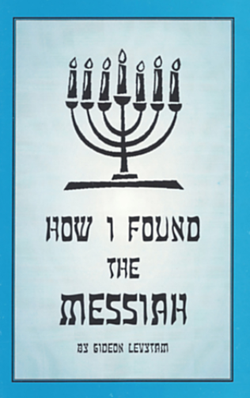
Follow Gideon Levytam's journey and discover how he was led by God, through a series of exciting circumstances, to find the One his people are still waiting for.
Past Episodes

Featured Offer
Follow Gideon Levytam's journey and discover how he was led by God, through a series of exciting circumstances, to find the One his people are still waiting for.
About Holy Scriptures and Israel
As time passed by, the Lord Yeshua took dear brother John Van Stormbroek to himself. The ministry of Holy Scriptures and Israel continued with additional development. In the early 1990’s, a weekly morning Bible class began which brother Gideon Levytam led regularly in the City of Toronto. This weekly open Bible class was held in the Willowdale assembly meeting hall. Eventually, a second mid-week evening Bible class was added. In April 2002, the need for an additional outreach Bible teaching meeting arose. We begun a Saturday (Shabbat) ministry meeting in which a systematic teaching of God’s word is presented to all who attend. Together we learn God’s Word, pray for each need and the salvation of Israel, and sing songs of worship unto our God, praising Him and our Lord Yeshua the Messiah.
In Mid 2004 we started to air on Joy 1250 Radio station a 15 minute Bible teaching program called "The Holy Scriptures and Israel" with Gideon Levytam. The broadcast teaches God’s word from a Hebrew Messianic perspective and has proved to be a blessing to many. It's now aired seven days a week. Our prayer is that many more of our Israeli people will have a clear understanding of who Yeshua is, why we all need him, and come to know him as their Lord and Messiah.
About Gideon Levytam
Contact Holy Scriptures and Israel with Gideon Levytam
426 Simcoe Street
Niagara-on-The-Lake
Ontario L0S 1J0
Canada
(905) 325-1234