

Daniel 4:19-27, Part 1


Daniel’s Interpretation of Nebuchadnezzar’s Second Dream Part 1
Gideon Levytam: Well, we all are going to turn to the book of Daniel chapter 4, and I begin from verse 19 to verse 27 is the fourth division of this chapter. Let me read it.
Guest (Male): Then Daniel, whose name was Belteshazzar, was astonished for one hour and his thoughts troubled him. The king spake and says, "Belteshazzar, let not the dream or the interpretation thereof trouble thee." Belteshazzar answered and said, "My lord, the dream be to them that hate thee and the interpretation thereof to thine enemies. The tree that thou sawest, which grew and was strong, whose height reached unto heaven and the sight thereof to all the earth; whose leaves were fair and the fruit thereof much, and in it was meat for all; under which the beasts of the field dwelt and upon whose branches the fowls of the heaven had their habitation: it is thou, O king, that art grown and become strong; for thy greatness is grown and reacheth unto heaven and thy dominion to the end of the earth."
"And whereas the king saw a watcher and a holy one coming down from heaven and saying, 'Hew the tree down and destroy it, yet leave the stump of the roots thereof in the earth, even with a band of iron and brass in the tender grass of the field; and let it be wet with the dew of heaven, and let his portion be with the beasts of the field till seven times passed over him.' This is the interpretation, O king, and this is the decree of the Most High, which is come upon my lord the king: that they shall drive thee from men and thy dwelling shall be with the beasts of the field, and they shall make thee to eat grass as oxen, and they shall wet thee with the dew of heaven; and seven times shall pass over thee till thou knowest that the Most High ruleth in the kingdom of men and giveth it to whomsoever He will."
"And whereas they commanded to leave the stump and the tree roots, thy kingdom shall be sure unto thee after that thou shalt have known that the heavens do rule. Wherefore, O king, let my counsel be acceptable unto thee and break off thy sins by righteousness and thine iniquities by showing mercy to the poor, if it may be a lengthening of thy tranquility."
Gideon Levytam: The beautiful chapter to read. Just imagine what a story that had been in chapter 4. I've given you the title for this chapter, if you remember two weeks ago, and the title for this chapter would be "The Dream of the Great Tree." Another person gave this title: "God's Sovereign Rule Over the Gentile Rulers Demonstrated." God is demonstrating to us that He is sovereign. This is chapter 4. That's the title: "The Dream of the Great Tree."
Verses 1 to 9, where we have begun two weeks ago, we've dealt with the introduction in verses 1 to 3 and the failure of the wise men of Babylon to give King Nebuchadnezzar the interpretation of that dream. Verses 1 to 3: introduction. The king proclaiming, and remember what I said, that verses 1 to 3 is really those verses in actuality was really proclaimed after the experience that Nebuchadnezzar have gone through.
He has gone through an experience, beloved, it is amazing experience. Nebuchadnezzar needed to learn humility. God had to judge him to teach him a very important lesson. And the lesson, really, is found in verse 17 where it says here, chapter 4, verse 17, "that the living may know that the Most High ruleth in the kingdom of men." That's the lesson. That the living may know that the Most High, this is God, ruleth in the affairs of men and He giveth the kingdom to whomsoever He wills.
Now, what happened? You remember, the Babylonian kingdom had been given to Nebuchadnezzar by God. It was God who had given Nebuchadnezzar the kingdom, and as He has given him that kingdom, Nebuchadnezzar apparently was a very, very proud man. And so, God wanted to teach him a lesson. He showed him the vision of chapter 2. He showed him the lessons of chapter 3, and now God is wanting to teach him a lesson.
And if you remember, he's proclaiming, and it says there, he was in his house, he was flourishing, he was in his palace in verse 4. He said, "I saw a dream which made me afraid, and the thought upon my bed and the vision upon my head troubled me." In other words, he saw a vision, he saw a dream, and it really troubled him. So he called all the wise men of Babylon, he called them like always he does so. They are coming, he tells them the story, he told them the dream. They could not give him an answer.
It says here in verse 7, "Then came the magicians, the astrologers, the Chaldeans, the soothsayers, and I told them the dream before them, but they did not make known unto me the interpretation thereof." They couldn't help him. They could not help him with an answer. Finally, it says in verse 9, "but at last Daniel came." And you remember that, you can see that Nebuchadnezzar at this point still believe in a multiplication of gods. He does not believe only in one God.
Because it says here in verse 8, "at last Daniel came before me, whose name is Belteshazzar, according to the name of my god, and in whom is the spirit of the holy gods," plural. And before him I told the dream and he said before Daniel. So by that point, Nebuchadnezzar still does not believe in the one and only God, the God of Abraham, Isaac, and Jacob, the God of Israel.
So finally Daniel's coming in and he's before him. He's telling Daniel, he says, "You know, Belteshazzar, master of my magicians, because I know that the spirits of the holy gods, notice how many times the plurality here, the spirit of the holy gods is in thee and no secret troubleth thee, tell me the vision of my dream that I have seen and the interpretation thereof." So finally Daniel's coming in and he wants from Daniel to know the dream and the interpretation.
And so here is where we are going now to the next portion where we want to begin today. In verse 10 to verse 18, we have the actual dream. And if I'm correct, we already touched verse 10, but let me just say he giving to Daniel four parts in his dream. He cut it in four sections. Verse 10 to 12 is one part. Verse 13 to 16 is a second part. Verse 17 is a third part, and verse 18 is the fourth part. In other words, we have in the conversation between King Nebuchadnezzar and Daniel four parts to the dream the King Nebuchadnezzar give to Daniel.
First of all, the first part, in verses 10, 11, and 12, he gives Daniel the dream about the great tree. And notice what is the dream. Verse 10: "Thus were the visions of mine head in my bed. Here, Daniel, I want to tell you what happened to me. I saw and behold a tree in the midst of the earth, and the height thereof was great. The tree grew and was strong, and the height thereof reached unto heaven and the sight thereof to the end of all the earth. The leaves thereof were fair and the fruit thereof much, and in it was food for all. The beasts of the field had shadow under it, the fowls of the heaven dwelt in the boughs thereof, and all flesh was fed of it."
In verses 10 to 12, he tells us of that great tree. I want you to notice, first of all, in verse 11, there was a development to that tree. There was a growth. Very interesting. trees growing, natural tree. You plant a seed in your house, in your garden, and if you go to Israel today, they will encourage you to go to any place and plant trees because very little trees existing today in the land of Israel because the Turks burned all the trees.
So many of the Jewish people going and planting trees and you can see, I still remember, we have plant tree for my wife, I plant a tree, and going to see it, you see how it takes in a year, it's getting huge, it's growing. There is a development, there is a growth. And you can see in these verse 10 and verse 11, the tree grew and was strong, and the height thereof reached unto heaven and the sight thereof to the end of all the earth. In other words, in the dream, King Nebuchadnezzar see that tree that is growing and growing and developing and it's so huge that it says here in verse 11 that the sight of it was to the end of all the earth. In other words, it was seen by everyone.
Then in verse 12, there is a spread of influence that the tree have had. It says in verse 12, "The leaves thereof were fair," in other words they were beautiful, they were nice, "and there was fruit, much fruit in that tree, and it was food for everyone. The beast of the field had shadow under it, the fowls of the heaven dwelt in the branches, in the boughs thereof, and all the flesh fed of it." In other words, what he's really saying here, that in his dream, he saw a huge tree that is developing and growing and spreading wide and high, getting to reach to heaven, and it's wide enough and everyone feed and be nourished and in dependence upon that tree.
Now, I said to you before that many times in the Bible, when the Bible describes a tree, often times it depicts people, men, or it will depict a nation, a great nation that is growing. That it's a way the Bible depicts to us about trees, and I've given you references last week, but let me just just one reference. Psalm 1: "Blessed is the man that walketh not in the counsel of the ungodly, nor sitteth in the seat of the scornful, nor stand in the way of sinners, but his delight is in the law of the Lord and in His law does he meditate day and night, and he shall grow like a tree planted by the rivers of water."
Here's a man that his delight in the way of the Lord, walking with the Lord, and he's like a tree that you plant him by a brook where there is water where he gets water and be fed and is growing great. Here's a man that is depicted by a tree. Now, I'm not going to go to all these verses, but I'm just going to give you for those who writes those verses down. In Ezekiel chapter 31, verses 3 to 14, we see a nation looked as a tree, we saw it in our last study. Hosea chapter 9 and verse 10, Joel chapter 1 and verse 7, Matthew chapter 24, verses 32 and 33, Isaiah chapter 56 and verse 3, and Jeremiah chapter 17 and verse 8.
Now, if you haven't written those down, it's fine, because you can have it on the cassette, but just for example, Jeremiah chapter 17 and verse 8 says, verse 7, "Blessed is the man that trusteth in the Lord and whose hope the Lord is, and he shall be as a tree planted by the waters and that spreadeth out her roots by the river." The Bible often times a tree resembles men. And you can see how clear as we are going to continue to study this chapter, it really speaks to us. That tree, that dream is really speaking to us of the greatness of Nebuchadnezzar the King.
He's the one who is depicted here as a king that was a great king and that God had raised him in such a position, God have enlarged his sphere of rule, He had given him so much, and he had to realize what God have done for him. Well, that's the beginning of the dream. Verses 10 to 12: the great tree. The development of the tree, verse 11, and the spread and the influence of the tree in verses 11 and 12.
Now, notice verses 13, 14, 15, and 16, we have a few things that is mentioned for us here. There was a decree proclaimed against the tree in verses 13 to 16. Notice first of all verse 13 and 14, it says, "And I saw in the visions of my head upon my bed, and behold a watcher and a holy one came down from heaven and he cried aloud and he said thus: Hew down the tree, cut off its branches, shake off his leaves, scatter his fruit, let the beasts get away from under it and the fowls from his branches." The watcher's decree, what is commanding, to destroy the tree.
And you know what? This watcher that it says here in verse 13 and a holy one really is an angelic being. The angel receive a declaration, a command from God to say simply this: Here's the tree that got so big, so great, everybody was dependent upon this tree, hew down, cut it down. I've never I've seen it only in the movies how those lumberjacks cutting down the tree and they chopping it all the way from the bottom and somebody with a long rope pulling it in one way and they shout, "Watch out, the tree falling." All the huge trees that have grown up, it's a time to chop it down, it's time to cut it down. And there is a reason for that, we're going to see this in a moment.
God had shown us a development of a tree, huge tree, everyone was dependent upon that tree, but there is a decree that came from the holy one and from the watcher: hew down, cut it down. And then he's warning, he says in verse 14, he says, "Let the beasts get away from under it. That's it. Let the fowls get away from from its branches because that tree is going to fall down. That tree is going to fall down." And so, if you notice in verse 15 now, in verse 15a, it says now verse 13 and 14 the watchers gave us the decree, in verse 15a, there is a stump that will be left and protected.
You see it says in verse 15, "Nevertheless leave the stump of his roots in the earth, even with a band of iron and brass." In other words, he's saying, while the tree is going to be cut down, hewn down, there is a bottom part, the stump, the bottom section of the tree is going to be remained. He says in verse 15, "Leave the stump of his roots in the earth, even with a band of iron," in other words like protect it. Protect it even though the whole tree has gone down, fallen, broken into pieces, he said the lower part you keep it protected with, as it says here, with a band of iron. That's, by the way, is the second section, the second segment of the description of the dream that Nebuchadnezzar telling Daniel, the servant of the Lord.
And so in verse 15b and verse 16, judgment is going to fall upon the stump, and I want you to notice threefold judgment going to fall upon the stump. The whole tree falling down, but whatever is left over going to be protected, something still is going to happen to this stump. And so it says in verse 15b says that "let it be wet with dew of heaven." In other words, what does that mean to be left wet with dew? That mean he's going to be left outside. The dew comes really at night and early morning. In other words, it's going to be that tree stump is going to be left outside and going to get wet with the dew.
Second judgment is going to be upon the stump is in verse 15c, the third part, "let his portion be with the beasts in the grass of the earth." In other words, the stump, the leftover of the tree, is going to be left with the animals outdoors. Wet overnights, outdoor, outside with the beasts, and thirdly in verse 16, "let his heart be changed from men's and let a beast heart be given unto him, and let seven times pass over him." In other words, what he's really saying, that now you can see how he's really direct himself to the king, as he's dreaming.
Can you imagine, the tree which represents men, now he's going to behold his glory is going to fall down, there will be a little bit left of it, the stump in the bottom, and now what's going to happen is that this man who going to be cut down to such a low position, let him receive now no longer men's heart but, like it says here, a beast's heart be given unto him and let seven times pass over him. In other words, when he talks in a Bible, especially in the book of Daniel, when he talks about times, times, it has reference to years in the book of Daniel.
And so, can you imagine what he's really saying, that that stump going to be remained with the dew, going to remain outdoor with the beasts, and he, which represents really man, his heart going to be changed from men's heart into beast's heart, and he is going to be left in such a condition for seven years, seven years. Well, that's the second section that had to do with a dream that Nebuchadnezzar gave to Daniel. Thirdly, now notice in verse 17, that's the third part portion of the dream. What is the purpose? Why does God give Nebuchadnezzar that dream? What's the lesson? That's the theme of the whole book of Daniel, really.
In verse 17, we have the purpose. Number one: God is ruling. It says in verse 17, "This matter is by the decree of the watchers and the demand is by the word of the holy ones to the intent, why? To the intent that the living may know that the Most High ruleth in the kingdom of men." That dream was really given to Nebuchadnezzar and to all those who would hear that dream, that people would understand that God is really ruling in the affairs of men. We sometimes don't realize that, that in everything that we have in our life that happened to us in our life, really God is in control. God is ruling.
Nobody can say that man is really ruling. Any position that man has today had been giving him by God. God is the one that rules. Turn to Psalm 2, verse 4, 5, and 6. I don't know if you know, but Psalm 2 has four voices, speakers. In Psalm 2, verses 1 to 3 is the voice of defiance, and that's the voice of the world against God. In verse 4 to 6 is the voice of derision, and that's the voice of God the Father. In verses 7 to 9 is the voice of declaration, and that's the voice of God the Son, who says, "I will declare the decree. The Lord said unto me." And verses 10 to 12 is the voice of God the Holy Spirit, who is appealing for men to make decision, is the voice of decisions.
So there are four voices: the voice of defiance, of derision, the declaration, and the voice of decision. But the second voice is the voice of God the Father, and notice what He says. In verse 17 of Daniel chapter 4, that men might know that God ruleth in the kingdom of men. Well, notice what it says in verse 4, 5, and 6. "He that sitteth in the heavens shall laugh. The Lord shall have them in derision. Then shall He speak unto them in His wrath and vex them in His sore displeasure. Yet," He says, "I have set my King upon my holy hill of Zion."
Man might say to God, "God, we do not want You to rule over us." God says, "Yet I have set my King upon my holy hill of Zion." God has still His King, and namely we know who is His King. We know that Yeshua the Messiah is God have anointed Him above His fellows, and He is still ruling in the affairs of men. And so verse 17 of our chapter tells us number one that God is ruling. Never mind what man would say, ultimately God is ruling.
Secondly, notice it says in verse 17 also, not only that God is ruling, but God gives the kingdom to whomsoever He will. You know, that is so strange. You mean God gave the kingdom to Nebuchadnezzar? You mean God gave the authority to Saddam Hussein up to certain time to rule over Iraq? Do you mean God let certain kings to be, He's the one who giving to them the authority to be where they are? Yes, beloved. Turn to Romans chapter 13, it's a very interesting chapter when we study the book of Romans. We have been impressed in chapter 13 with the fact that God is ruling.
Romans 13, verse 1. Let me read that. "Let every soul be subject unto the higher powers, for there is no power but of God. The powers that be are ordained of God." I would not write it like that, that, for example, when Russia had USSR, the former Soviet Union, had been for seventy years communist country, I would not say God have allowed them or He placed the rulers to be in that position. Look what the Bible say. When the Apostle Paul wrote the book of Romans, who was in control of the Roman Empire? You see what have happened at that particular time. Paul is saying, "Let every soul," and he's speaking to believers, "be subject unto the higher powers, for there is no power but of God. The powers that be are ordained of God."
And you know we learned that already in the book of Daniel chapter 4 where we are and verse 17. That men may know that God rules, that's number one, but He doesn't only rule. And He giveth the kingdom to whomsoever He will. Do you know what? The reason that Nebuchadnezzar had been in that position is because God gave him that position. The very reason that Israel have been taken captives into Babylon is because God brought upon Israel, our people, the Babylonian to take them into captivity because of disobedience. God is the one that gives powers to whomsoever He will.
Featured Offer
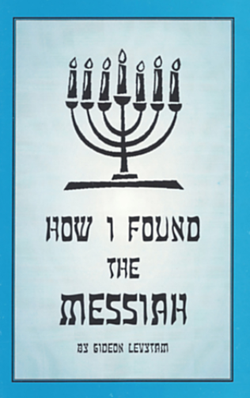
Follow Gideon Levytam's journey and discover how he was led by God, through a series of exciting circumstances, to find the One his people are still waiting for.
Past Episodes

Featured Offer
Follow Gideon Levytam's journey and discover how he was led by God, through a series of exciting circumstances, to find the One his people are still waiting for.
About Holy Scriptures and Israel
As time passed by, the Lord Yeshua took dear brother John Van Stormbroek to himself. The ministry of Holy Scriptures and Israel continued with additional development. In the early 1990’s, a weekly morning Bible class began which brother Gideon Levytam led regularly in the City of Toronto. This weekly open Bible class was held in the Willowdale assembly meeting hall. Eventually, a second mid-week evening Bible class was added. In April 2002, the need for an additional outreach Bible teaching meeting arose. We begun a Saturday (Shabbat) ministry meeting in which a systematic teaching of God’s word is presented to all who attend. Together we learn God’s Word, pray for each need and the salvation of Israel, and sing songs of worship unto our God, praising Him and our Lord Yeshua the Messiah.
In Mid 2004 we started to air on Joy 1250 Radio station a 15 minute Bible teaching program called "The Holy Scriptures and Israel" with Gideon Levytam. The broadcast teaches God’s word from a Hebrew Messianic perspective and has proved to be a blessing to many. It's now aired seven days a week. Our prayer is that many more of our Israeli people will have a clear understanding of who Yeshua is, why we all need him, and come to know him as their Lord and Messiah.
About Gideon Levytam
Contact Holy Scriptures and Israel with Gideon Levytam
426 Simcoe Street
Niagara-on-The-Lake
Ontario L0S 1J0
Canada
(905) 325-1234