
Daniel 4:1-18, Part 1


Nebuchadnezzar’s Second Dream Part 1
Voiceover: Shalom. Holy Scriptures and Israel is a ministry designed to share with the Jewish people the good news of the Lord Jesus Yeshua the Messiah and to instruct Christians on the Jewish roots of their faith. And now, teaching God's Word from a Hebrew Messianic perspective, here is Gideon Levytam.
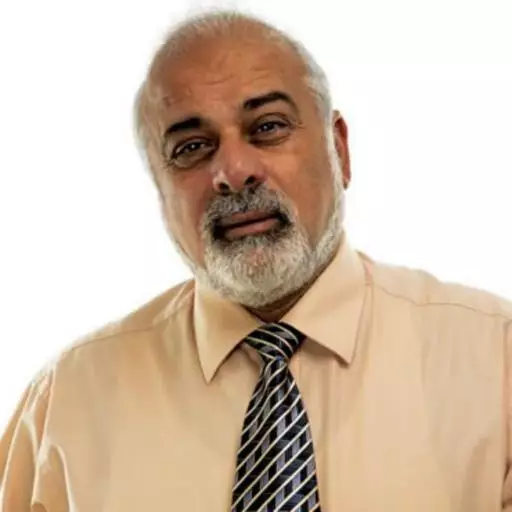
Gideon Levytam: I am going to start today to speak about Daniel chapter 4. We have covered up to now the three chapters, the first three chapters of the Book of Daniel. Today, we are going to begin to look at chapter 4. We will see how far we can get into this chapter. There is so much to learn from Daniel chapter 4. I want first of all to have the reading before us. We begin with reading Daniel 4, and I'm going to begin with verse 1.
Daniel chapter 4 and verse 1. Nebuchadnezzar the king, unto all people, nations and languages that dwell in all the earth. Peace, this is Shalom, be multiplied unto you. I thought it good to show the signs and wonders that the High God had wrought toward me. How great are His signs, and how mighty are His wonders. His kingdom is an everlasting kingdom, and His dominion is from generation to generation.
I, Nebuchadnezzar, was at rest in my house and flourishing in my palace. I saw a dream which made me afraid, and the thoughts upon my bed and the visions of my head troubled me. Therefore, made I a decree to bring in all the wise men of Babylon before me, that they might make known unto me the interpretation of the dream. Then came the magicians and astrologers, the Chaldeans and the soothsayers, and I told the dream before them, but they did not make known unto me the interpretation thereof.
But at last, Daniel came in before me, whose name was Belteshazzar, according to the name of my God, and in whom is the spirit of the holy gods, and before him I told the dream, saying, "Oh, Belteshazzar, master of the magicians, because I know that the spirit of the holy gods is in thee, and no secret troublest thee. Tell me the visions of my dream that I have seen and the interpretation thereof."
Thus were the visions of my head in my bed. I saw and, behold, a tree in the midst of the earth, and the height thereof was great. The tree grew and was strong, and the height thereof reached unto heaven, and the sight thereof to the end of all the earth. The leaves thereof were fair, and the fruit thereof much, and in it was food for all. The beast of the field had shadow under it, and the fowls of the heaven dwelt in the boughs thereof, and all flesh was fed of it.
I saw in visions of my head upon my bed, and, behold, a watcher and a holy one came down from heaven. He cried aloud and said, "Thus hew down the tree and cut off his branches, take off his leaves and scatter his fruit. Let the beasts get away from under it, and the fowls from his branches. Nevertheless, leave the stump of his roots in the earth, even with a band of iron and brass in the tender grass of the field, and let it be wet with the dew of heaven, and let his portion be with the beasts in the grass of the earth.
Let his heart be changed from man's, and let a beast's heart be given unto him, and let seven times pass over him. This matter is by the decree of the watchers, and the demand by the word of the holy ones, to the intent that the living may know that the Most High ruleth in the kingdoms of men, and He giveth it to whomsoever He will, and setteth up over it the basest or the lowest of men, the humblest of men."
"This dream I, King Nebuchadnezzar, have seen. Now, thou, oh, Belteshazzar, declare the interpretation thereof, for as much as all the wise men of my kingdom are not able to make known unto me the interpretation, but thou art able, for the spirit of the holy gods is in thee." I will stop right here.
Chapter 4 is a very unique chapter, and I like this chapter very much in the Book of Daniel, chapter 4. Why? Let me just tell you one of the reasons that this chapter is really different than the rest of the Book of Daniel is up to now what we have studied, chapter 1, chapter 2, chapter 3.
And then we are going to get to chapter 5, 6, all the way to the end of chapter 12. We will find out that all the 11 other chapters were written by Daniel himself. But there is one chapter in the Book of Daniel that was not written by Daniel, that actually is recorded by Nebuchadnezzar himself. It is very interesting. One chapter that you can see that is really recorded by Nebuchadnezzar. In fact, what we have here in chapter 4 of the Book of Daniel, we have a testimony, a witness, a confession, and an expression of a man who was a monarch, a king, the king of Babylon, who is in, he takes some time to acknowledge an experience that he had once upon a time in his life.
In fact, some suggest that Daniel chapter 4 gives us the conversion of Nebuchadnezzar, the king of Babylon. And so, if you take the whole 12 chapters of the Book of Daniel, one chapter is really is a confession of this great man in the eyes of men, great king, that needed to go through an experience in order to recognize that the Most High God ruleth in the kingdom of men.
And you know what I believe, beloved brothers and sisters and friends, I believe so much that every individual, every individual has to go through some sort of an experience in order to come to know the Lord Jesus the Messiah as his Lord or her Lord and Savior. God sometimes is going to have to bring somebody to to the end of himself, if you will, in order to drive a person to himself, to say to this person, "Listen, you have to stop trusting yourself, and you have to trust God and acknowledge that the Most High God ruleth in the kingdom of man."
In a New Testament setting, we will say that a man has to come to to the end of himself to confess that Jesus or Yeshua the Messiah is Lord. That is in a New Testament expression, "Every knee shall bow and every tongue shall confess that Jesus the Messiah, Jesus Christ, is Lord to the glory of God the Father."
And so now, first of all, chapter 4, the title for this chapter is the Dream of the Great Tree. I want you to turn to the Book of Job, chapter 33, for a minute. Job said, and we are reading there, there is a principle that we learn in the Book of Job, chapter 33, verses 14 to 18. There is a very important principle that we learn, and I think Daniel chapter 4 is illustrating this principle.
Listen what what we read there. Job 33 and verse 14. "For God speaketh once, yet twice. Yet man perceiveth it not. In a dream, in a vision of the night, when deep sleep falleth upon men, in slumberings upon the bed. Then He openeth the ears of men and sealeth their instruction, that he may withdraw man from his purpose and hide pride from man." And verse 18, "He keepeth back his soul from the pit, and his life from perishing by the sword."
There is a great principle that we learn in Job 33, verses 14 to 18, and this is this: God is speaking. He speaks once. He speaks twice. According to this verse, it says dreams, vision of the night. In when the deep sleep falleth upon men and slumbers upon his bed, he says in verse 16, "Then He opens his ears, the ears of men, and He seals their instruction."
Why is he giving him instruction? It says here in verse 17, "that He may withdraw man from his purpose and hide pride from man." You know, it is such a wonderful or a fact that we have to learn, there is that principle that God speaks once, he speaks twice. And if it would not be God who is speaking to men, men ultimately will go to the end as it says here, "In the end that He keeps back his soul from the pit and his life from perishing by the sword."
If God would not speak to men once or twice and so on, men will ultimately, people will ultimately will be perishing, will go into the pit and will be destroyed. But the principle in Job 33, verses 14 to 18, is illustrated in the life of Nebuchadnezzar.
Notice it says here, "once, twice." You know, that's what had happened up to now. There was more than one time that God had spoken to Nebuchadnezzar. It was more than one time. And God had spoken to Nebuchadnezzar in chapter 2. God had spoken to Nebuchadnezzar in chapter 3. And now God is speaking to Nebuchadnezzar the third time in a vision, in a dream, and Nebuchadnezzar now is expressing what happened to him and how God had to teach him a very, very important lesson.
So, what we have here in verses 1 to 3 is an introduction. In fact, verses 1 to 3 is the statement that Nebuchadnezzar mentioned after what happened already in verses 4 to the end. And so, in the first three verses, we have the proclamation of the king, introduction really to everything, and the king is now proclaiming to everyone and he is telling them, "I want to tell you something that happened to me already in the past."
He says here, "Nebuchadnezzar the king unto all people, nations, and languages that dwell in the earth, Shalom, peace, be multiplied unto you. I thought it good to show the signs and wonders that the High God had wrought toward me. How great is His sign, how mighty are His wonders. His kingdom is an everlasting kingdom, and His dominion is from generation to generation."
Now, Nebuchadnezzar had already passed through the experience of verses 4 to the end, and he said, "I wanted to tell the people of the world what happened to me." Let me put it in a New Testament setting or a New Testament language, it is just like something that happened to a person who came to faith in the Messiah, in the Lord Jesus. And if you remember what happened to believers, a person finally accepted the Messiah and understood what Yeshua, what Jesus the Messiah had done for him or for her, and then he or she began to go and tell the story to others.
The blind man of John 9 said, "I do not know. Once I was blind, now I see. Now I want to tell you something that happened to me in my life." Therefore, Nebuchadnezzar is saying here, "I want to tell you what happened to me." And you notice, by the way, he is making a decree because he is the king. He said, "The king unto all people, unto all nations and languages that dwell in the earth, Shalom be multiplied unto you. I thought it good to show the signs and wonders that the High God had wrought toward me."
I want to make it very practical. Sometimes people say, "You know what, I do not know how to tell people the gospel. I do not know all the verses of the Bible. I only know John 3:16." And even if we do not know all the verses of the Bible and can quote them all, like many others who could, and praise God for that, we ought to learn and grow and know more verses from the Bible. But the only thing that we can tell people about the Messiah is what He had done for me. Every one of us, what Jesus did for me.
I know that one day I was not a believer and once upon a time God opened my eyes. He showed me what Yeshua, what Jesus, had done for me, and I have accepted Him and He has changed my life. That is it. The only thing we can say, here Nebuchadnezzar is saying, "I want you to know what God had done for me."
And you notice he says in verse 3, four things about God. First of all, in verse 3, he says, "His signs are great." Then secondly, he says, that in verse 3, he says, "His might and His wonders are absolutely great." Thirdly, he says, "His kingdom is an everlasting kingdom." And fourthly, he says, "His dominion is from generation to generation." You see, by the way, he can only say those statements after he had to learn a lesson.
You know, Nebuchadnezzar did not know God until God had to teach him a lesson. You cannot make somebody a child of God by force, by even intellect, by molding somebody, by putting him in a Christian home even, unless a person come to faith in his own soul, in his own heart, in his own conscience, or really honestly accepting who God is, he or she will never be children of God. They have to make them their own.
And I want you to notice that in verse 2, it began with "I" and it end with "me." "I thought it good to show the signs and wonders that the High God had wrought toward me." That is so important, so important. You know, I tell you, those of us that are having family and friends that we can share with them the message of the gospel, until we turn blue, nothing is going to happen until they make it their personal in their own heart. You are not making a child of God by force. It is the Spirit of God which takes the Word of God and appropriates it to a heart of an individual to make a person a child of God.
And it is not different from the Old Testament. In the past, every one had to come to God and to recognize who God is. And how wonderful the expression that he says in verse 3, "How great are His signs, and how mighty are His wonders, and His kingdom is from an everlasting kingdom, and His dominion," as he says here, "is from generation to generation."
Can you imagine Nebuchadnezzar saying that about the God of Daniel, the God of Israel? Something happened to him that he had to learn this lesson. Now, in verses 4 to verse 37, is the actual experience that he had to go through and then he could proclaim that in the proclamation of verses 1 to 3.
And so, notice, first of all, verses 4 to 9. Nebuchadnezzar tells us of what happened and of the failure of the wise men to interpret the dream that he dreamt. He tells, "I, Nebuchadnezzar, was at rest in my house, and I was flourishing in my palace." There was a time of prosperity in the life of Nebuchadnezzar. Apparently, the time of war was over. He had conquered so much of the then known world.
There was a time that he retired from war, and he was sitting at home, flourishing in my palace. He had a great palace. He was in his own house. He was flourishing in everything was well for him. And it is at that time that God wanted to speak to Nebuchadnezzar by vision, by dream. God wanted to speak to him. And so, it says in verse 5, that Nebuchadnezzar saw another dream. He had already seen before some dreams. Now, notice it says here in verse 5, "I saw a dream which made me afraid."
"And the thoughts upon my bed and the vision upon my head troubled me." He saw a dream. God was going to speak to Nebuchadnezzar. You remember, God speaks once, yet twice. Now, God is speaking to Nebuchadnezzar again, and He is again speaking to him in through a dream. In chapter 2, you remember the dream that Nebuchadnezzar saw. He saw this great image. And that image of gold and silver, brass and iron, and this great image that God spoke to him, and He told him, "Listen, this is the the process of history, Gentile history, of from the beginning of the of when they had taken control, when the diaspora of the of the nation of Israel all the way up to the time of the Second Coming of the Messiah. That is the sequence of events and and kingdoms that are going to rule this world."
And so, he had heard about this dream, and Daniel gave him the interpretation, but apparently Nebuchadnezzar had not come to the end of himself yet. He did not come to know the God of Israel in an intimate way. And so, God is now giving him a dream again. "And I saw a dream which made me afraid, and the thoughts upon my bed and the vision upon my head troubled me." And so, in verse 5, we see that God is speaking to him again in a dream.
In verse 6, Nebuchadnezzar made a decree, and he called all the wise men of Babylon. It says in verse 6, "Therefore, made I a decree to bring in all the wise men of Babylon before me, that they might make known unto me the interpretation of the dream." So, what does he do? The same routine like he had done in chapter 2. God giving him a dream. When a king had a dream, he called the wise men of Babylon, the astrologers, the soothsayers, all the wise men of Babylon, and he tells them the dream, and they give them the interpretation. You remember, by the way, there was one time that he did not give them. He wanted to know the interpretation without giving them the dream.
Well, here what he saw, it says here, he made he called them that they might show him the interpretation of the dream. And notice in verse 7, it says there, the wise men coming and he telling them the dream. It says in verse 7, "Then came the magicians and the astrologers and the Chaldeans and the soothsayers, and I told the dream unto them, and they did not make known unto me the interpretation thereof." He told them the dream, and they could not tell him the interpretation thereof. They could not tell him at all the interpretation.
And so, it says here in verse 8, "But at last, Daniel came before me, whose name was Belteshazzar, according to the name of my God, and in whom is the spirit of the holy gods, and before him I told the dream, saying." I want you to notice here, what it says here, it is interesting that by now, he did not yet know the true and living God, the God of Israel, the God of Daniel, because it says here in verse 8, "But at last, Daniel came before me, whose name was Belteshazzar." This was the name that he had given him. Notice, "according to the name of my God." Well, you see, apparently, before the end of the story, the experience, he did not believe in the true and living God. He believed in Baal. And that is why we read here that Daniel's name "according to the name of my God."
And it says in verse 8b, "and in whom is the spirit of the holy gods, and before him I told the dream." So, you see what is happening? He was he dreamt that dream, then he called naturally to all the wise men of Babylon. As it says here in verse 7, "the magicians, the astrologers, the Chaldeans, the soothsayers," he told them everything that he had dreamt about. They could not give him the answer.
Now, some suggest that the reason that they did not give him the answer is because they were afraid to tell him what this dream is all about, because they kind of understood the devastation that was going to come upon him. Some suggest that. Others suggest simply they could not give the interpretation, and God eventually sent to him the man that was going to give him the interpretation.
And so, in verse 9, the request of the king from Daniel to interpret the dream. It says in verse 9, "Oh, Belteshazzar, master of the magicians, because I know that the spirit of the holy gods is in thee, and no secret troublest thee, tell me the visions of my dream that I have seen and the interpretation thereof." You notice it says in verse 9a, he called him "the master of the magicians." Why did he call Daniel "the master of the magicians?" Just go back a little bit to chapter 2 for a minute.
He called him "the master of the magicians" is because in Daniel chapter 2, after Daniel gave him the interpretation of the dream in chapter 2 of this great image, in verse 48, it says, "Then the king made Daniel a great man, and he gave him many great gifts, and he made him, notice, ruler over the whole province of Babylon and the chief governor of the governors over all the wise men of Babylon."
You see, Daniel had been placed in that superior place because King Nebuchadnezzar had placed him in that lofty place. He was going to be, and he became, as it says here in verse 48 of chapter 2, "the chief of the governors over all the wise men of Babylon." And so, in chapter 4 and verse 9, he called him "master of the magicians." "Tell me," he said, "because I know that the spirit of the holy gods are in thee. No secret troublest thee. Tell me the visions of my dream that I have seen and the interpretation thereof."
And so, in verses 4 to 9, really, it is the beginning of the story. He was dreaming a dream. He called the magicians to come to help him to give him the interpretation. They could not help him. Finally, Daniel came, and then he asked Daniel, "Daniel, please, you are the one that are master of all the magicians. I know nothing is troubling you. Tell me the visions of my dream. I want to know the interpretation of that dream." That is verses 4 to 9.
Now, in verses 10 to verse 18, here is the dream itself. When he is telling Daniel the dream, he breaks it into four sections, verses 10 to 18. He breaks it into four sections. The first section is verse 10, 11, and 12. He tells him the dream of a tree. And notice it says, verse 10, 11, and 12, "Thus were the visions of my head in my bed."
Featured Offer
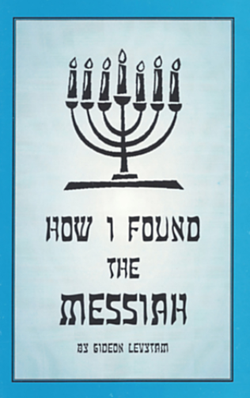
Follow Gideon Levytam's journey and discover how he was led by God, through a series of exciting circumstances, to find the One his people are still waiting for.
Past Episodes

Featured Offer
Follow Gideon Levytam's journey and discover how he was led by God, through a series of exciting circumstances, to find the One his people are still waiting for.
About Holy Scriptures and Israel
As time passed by, the Lord Yeshua took dear brother John Van Stormbroek to himself. The ministry of Holy Scriptures and Israel continued with additional development. In the early 1990’s, a weekly morning Bible class began which brother Gideon Levytam led regularly in the City of Toronto. This weekly open Bible class was held in the Willowdale assembly meeting hall. Eventually, a second mid-week evening Bible class was added. In April 2002, the need for an additional outreach Bible teaching meeting arose. We begun a Saturday (Shabbat) ministry meeting in which a systematic teaching of God’s word is presented to all who attend. Together we learn God’s Word, pray for each need and the salvation of Israel, and sing songs of worship unto our God, praising Him and our Lord Yeshua the Messiah.
In Mid 2004 we started to air on Joy 1250 Radio station a 15 minute Bible teaching program called "The Holy Scriptures and Israel" with Gideon Levytam. The broadcast teaches God’s word from a Hebrew Messianic perspective and has proved to be a blessing to many. It's now aired seven days a week. Our prayer is that many more of our Israeli people will have a clear understanding of who Yeshua is, why we all need him, and come to know him as their Lord and Messiah.
About Gideon Levytam
Contact Holy Scriptures and Israel with Gideon Levytam
426 Simcoe Street
Niagara-on-The-Lake
Ontario L0S 1J0
Canada
(905) 325-1234