
Daniel 3:16-30, Part 2


Three Jewish Boys In The Midst Of Fiery Furnace Part 2
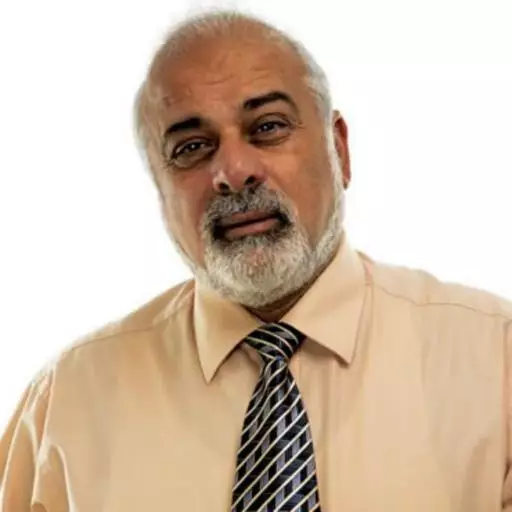
Guest (Male): Shalom. Holy Scriptures and Israel is a ministry designed to share with the Jewish people the good news of the Lord Jesus Yeshua the Messiah and to instruct Christians on the Jewish roots of their faith. And now, teaching God's word from a Hebrew Messianic perspective, here is Gideon Levytam.
Gideon Levytam: The study of Daniel, chapter 3. But he did not want yet to acknowledge that this God of Daniel and his friends, the God of Israel, is the God of gods and Lord of kings. And so right now here, he's saying, "Who is that God?"
If you remember last week in our Bible study, we went to Exodus, chapter 3. And it was Pharaoh, the King of Egypt, who said, "Who is the Lord that I will let you go outside of the land of Egypt?" And he had to learn that lesson that the God of the Hebrews is the true and living God.
And you know what? Sometimes you and I also hear people say to us, "Who is Jesus? Don't give me this nonsense about Jesus the Messiah, Jesus Christ." We hear that often times. And you know, beloved, the Bible says in Philippians, chapter 2, that God had made him both Lord and Christ and Messiah, Mashia'ach, and that every knee shall bow and every tongue will confess that Jesus the Messiah is Lord to the glory of God the Father, Philippians, chapter 2.
If people will not bow to him today, they will bow to him sooner or later. They will have to bow. Everyone will have to acknowledge who Yeshua, Jesus the Messiah truly is. It's better to do it today under the day of grace when there is time, than to have to do it after. Even when people who have died without Christ, without the Messiah, will have, beloved, they will have to bow their knee even in Hell or in the lake of fire to acknowledge who Jesus really is.
The point is this. The difference is, is that it'll be too late. It'll be too late. They will never be able, if you will, to have an opportunity any longer to be restored and to have a relationship right with God. Once a person left the scene, that's it. That's it. It is appointed unto men once to die, Hebrews teaches us, and after this the judgment.
So it's far safer and it's far better to acknowledge the person of the Messiah right now while we are still alive and living in this world, rather than to wait and to bow our knees, or men's knees have to be bowed after, after he left the scene. But it will be too late because without knowing him today while we are still alive, there is no more hope behind that life journey.
And so now, listen. Now we continue here in our Bible study, in our ministry, in verses 16 to verse 18. These young Jewish men, young Jewish boys respond to him. How beautiful they respond. Notice that first of all, in verse 16, they respond in three ways. Notice verse 16, they say this: "We do not have any intention to worship your image."
Notice verse 16, they say, Shadrach, Meshach, and Abednego answered and said to the king, "O Nebuchadnezzar, we are not careful to answer thee in this matter." In other words, we have to understand here, of course, this was written in Aramaic. And what they are saying, they are not being obnoxious. They are not being haughty here, and they're telling him, "Oh, we do not care about what you have to say." No, they are not saying it this way.
They are simply, simply say, "King Nebuchadnezzar, we have no intention to bow to this image simply because we are not a people that are bowing to images." That's what they are simply saying. They were not being haughty and proud and arrogant and said, "I'm not going to listen to you," and so on. No, they are simply saying, "We are simply not intend to bow to an image. We are not going to do so."
And of course, the reason somebody might ask them why, they're going to give them an answer. But they are simply saying in verse 16, "We are not careful or we are not intending to answer thee in this matter." In other words, to do what you expect from us to do in this matter, which mean to bow to that particular image. Now, I want you to turn with me to the Gospel of Matthew in the New Testament for a minute.
Matthew, chapter 10, this expression "careful" reminds us of a verse that the Lord Yeshua, Jesus the Messiah said to his first Hebrew disciples. He said, "Behold, I send you forth as sheep in the midst of wolves. Be wise as the serpent and harmless as a dove." In other words, don't be haughty. Don't be proud. Just be wise, discern. Be also harmless.
And then see in verse 17, "But beware of men, for they will deliver you up into councils and they will scourge you in their synagogues. And ye shall be brought before governors and kings for my sake for a testimony against them and the Gentiles." And notice verse 19, what he said to them. "But when they deliver you up, take no thought how or what ye shall speak, for it shall be given you in that same hour what ye shall speak."
That expression in verse 19, "take no thought," or "do not worry about," or "be not careful," it's the same thought that we have here from the book of Daniel in chapter 3 and verse 16. In other words, he said to them, "I am going to be with you to enable you to speak and to say what I have in mind for you to say at the time when the trial coming your way."
And so that's what we read in the answer of these three Jewish boys: "We do not have intention to worship that particular image." And so now, notice in verse 17, I am back now in Daniel, Daniel chapter 3 and verse 17. Notice in verse 17 what he said, the second thing they say, "Our God is able to deliver us and he will."
Amazing to think about the faith that these Jewish boys have had. It says in verse 17, "If it be so, our God whom we serve is able to deliver us from the burning fiery furnace and he will deliver us out of thine hand." Now, sometimes when I read a passage like that, sometimes I'm wondering because God at times allow people to go through problems and it doesn't always take us out of our problems.
It is amazing to see that sometimes God, that's the way it is, it was always historically with our people, the Jewish people, the nation of Israel, and it's also as well in the history of the Church of Jesus the Messiah, that God, he allow his people to go sometimes through fiery trials. And the deliverance does not mean that he delivered us from, but sometimes he deliver us through the experience.
This is important to understand because sometimes we can get discouraged when we are going through trials and we pray and we says, "Lord, take this situation away from me because I cannot bear it anymore." And yet the Lord says, "I will be with you. I'll never leave you nor forsake you." And he says, "Commit thy ways unto the Lord, casting your cares upon the Lord, for he cares for you."
So we cast our cares upon the Lord, and yet he allows us to go through this trial, and we ask ourselves the question, "Lord, why?" And yet we have to understand, and I believe that here in chapter 3 and verses 16 to 18 as we are studying, we will see that God deliver them, but he didn't deliver them from the trial, he deliver them through the trial.
Another example that is very interesting is the example of Noah and his family. Noah and his family came to the other side of the new world through the flood, through the trials. And the flood that happened in the past history of this world is a picture of the tribulation period.
And the tribulation period, the nation of Israel will go through the tribulation period, but they are going to come on the other side of the tribulation period victorious as God is going to regather them and save them. Finally, will save the nation of Israel, national Israel will be regenerated. But not before they're going to go through the tribulation period.
You see the Church of Jesus the Messiah going to be raptured before the tribulation, while the nation of Israel going to be going through the tribulation, but coming on the other side of the tribulation a redeemed nation. Of course with sufferings and trials like never before.
And so what we learn here from these verses, and it's good for us to get a hold of it, is that they had such a faith in God, that they said to Nebuchadnezzar, "If it be so, our God whom we serve is able to deliver us from the burning fiery furnace and he will deliver us from your hands, O King."
And so in verse 18, notice the third thing that they say. It says in verse 18, "But if not." They understood that God may allow them to go through this experience through the burning fiery furnace. "If not, be it known unto thee, O King, that we will not serve thy gods nor worship the golden image which thou had set up."
You know, somebody called it a little bit chutzpah. You know what chutzpah in Hebrew means? Nerve. What a nerve they had to say such a thing to the king. What a trust they had in God that they simply committed themselves unto the Lord. The Apostle Paul said in the book of Timothy, "I know whom I believed and I am persuaded that he is able to keep that which I have committed unto him against that day."
He knew the Lord. He knew whom he have trusted and believed. And we also know him, but sometimes we do not know him in a real experiential way, day by day as we trust him for all situation in our life. Sometimes unfortunately, because we haven't trusted him and laid down everything before him, sometimes we cannot say such a thing like the Apostle Paul have said or these Jewish boys have said to Nebuchadnezzar.
What a word were they say. "If he will not deliver us, be it known unto thee, O King, that we will not serve your God." In verse 17, "If it be so, our God whom we serve is able to deliver us from the burning fiery furnace and he will deliver us. But if not, we'll still going to trust him."
I remember reading something about some Jewish people in the Holocaust who they found on a wall in a basement on a farm in Europe, somebody had written something, inscribed something on a wall. And that particular person must have gone through a lot of experiences at the Holocaust time when the Jewish people had been hiding from what have happened to them.
Six million of our people have died in a Holocaust. But someone had found in Europe something somebody have written down on a wall this statement: "I believe in the sun even when it doesn't shine. I believe in the wind even when the wind do not blow. And I believe in God even if I cannot see him."
Can you imagine? We believe in the sun even when the sun do not shine. We believe in the wind and we do not see the wind, we only see the effects of this wind when we see the tree moves. But we believe that the wind was there. And sometime we also have to say we have to believe in God even when sometime he doesn't act or doesn't speak. That's faith.
And that's why when people sometime tell us, "Well, Gideon, unless I see, I do not believe." You remember that Thomas said, "Unless I see, I will not believe." You read the book of John at the end and when Yeshua came to Thomas, "Here's my hands and my feet. Thrust your hands against my side."
And you know what he says? He says, "My Lord and my God." And the Lord Yeshua the Messiah said to him, "You now seeing and believe. Blessed are those that do not see and yet believe." And so what a wonderful testimony we see in those three boys in verse 16 to 18. "If our God will not deliver us, we will not serve your gods."
Turn to Psalm 27 and the first a few verses. David is speaking there. What a confidence he had in God. It says, a Psalm of David, verse one: "The Lord is my light and my salvation. Whom shall I fear? The Lord is the strength of my life. Of whom shall I be afraid? When the wicked, even mine enemies and my foes, came upon me to eat up my flesh, they stumbled and fell. Though a host should encamp against me, my heart shall not fear. Though war should rise against me, in this will I be confident.
"One thing I desired of the Lord, and that will I seek after: that I may dwell in the house of the Lord all the days of my life, to behold the beauty of the Lord and to inquire in his temple. For in the time of trouble he shall hide me in his pavilion. In the secret of his tabernacle shall he hide me. He shall set me up upon the rock."
The confidence that these people have had, it is unbelievable. Sometime when we look at our life and we have some trouble and we realize how little faith we really have. And yet what a lesson to learn with David, King of Israel, the Jewish boys in the book of Daniel and the Apostle Shaul. The kind of faith that these men have had. What an example that it is, what an encouragement it is for us indeed.
And we're going to move on now from verse 19 to verse 23. This section is called the casting of the Jewish boys in the fiery furnace. In verse 19, first of all, Nebuchadnezzar, his whole visage have changed. It says here in verse 19, "Then was Nebuchadnezzar full of fury and the form of his visage was changed against Shadrach, Meshach, and Abednego. Therefore he spake and he commanded that they should heat the furnace seven times more than it was wont to be heated."
He was so angry and he was so frustrated. And as it say here, his visage change against Shadrach, Meshach, and Abednego, that he was not thinking straight anymore. What do you think he gained by heating it seven time? Less suffering, quickly to die. If he would have left it seven time less, they would suffer a little bit longer in the furnace fire.
So he made it seven time hotter. But you see what we do when we are not thinking rationally anymore? What he really was doing, he said, "I'm going to make it hotter and in other word, I'm going to make them suffer more." But it doesn't matter what fire you're going to go into, you're going to be suffering pain anyway. But if you hit it seven time more, you're going to suffer quicker and you're going to die, you're going to be consumed much earlier.
He was not thinking rationally anymore. Because it says here in verse 19, he was so much full of fury and his form, his visage was changed against Shadrach, Meshach, and Abednego. He said, "I want you to heat the fiery furnace a fire seven time more." He was so upset with them that he was going to get them because of what they have done. They did not want to worship his image.
And then in verse 20, he command to carry the execution. "And he commanded the most mighty men that were in his army to bind Shadrach, Meshach, and Abednego and to cast them into the burning fiery furnace." But I want you just imagine how that burning fiery furnace have been. Apparently, it had been set or situated in such a way that they could drop the people from the top, but there would be an opening below that you could watch what's going on right before you.
And so King Nebuchadnezzar have given the command that they might be dropped from the top down, while he himself is going to watch to see what's going on, the consequence of them being cast down into the burning fiery furnace. And so in verse 21, the obedience to the king command: "Then these men were bound in their coats and their leggings and their hats and their other garments and were cast into the midst of the burning fiery furnace."
What they have done, they have tied them with their own clothes and you know when you are going into the fire with your clothes, the flame will catch much sooner than on the flesh. And so they tied them with the clothes and they cast them down into the midst of the burning fiery furnace. But then notice what happened.
In verse 22, the ones that have cast them into the fiery furnace find themselves really in a bad state. It says in verse 22, "Therefore because the king's commandment was urgent and the furnace exceeding hot, the flame of the fire slew those men that took up Shadrach, Meshach, and Abednego." The heat had been so tremendous that some of the flames of the fire have gone out of the furnace itself and while these strong mighty men came to cast those three Jewish boys into the midst of the fire, they themselves end up to be slain by the fire.
And in verse 23, the three Jewish men in the burning fiery furnace, it says there, "And these three men Shadrach, Meshach, and Abednego fell down bound into the midst of the burning fiery furnace." And so the execution have been done. They have thrown up the Jewish boys into the midst of the fire. They were bound, their hands, their feet. They fell down right on the floor if you will. But the very ones that have cast them down found them... they have lost their life. They have been slain.
And so the casting into the burning fiery furnace is in verse 19 to verse 23. And I think the next section is one of the most beautiful and interesting section. Verse 24, 25, 26, and 27, those four verses we see the deliverance of these Jewish boys. And first of all, it says in verse 24, Nebuchadnezzar's astonishment and his question.
Nebuchadnezzar looking at the fire in the furnace, they have been cast down inside from the top. Nebuchadnezzar the king was astonished. He's going to see a sight that is unbelievable. He was astonished and he rose up in haste and he spake and he said unto his counselors, "Did not we cast three men bound into the midst of the fire?" They answered and said unto the king, "True, O King."
He is asking this question. He says, "Did not we threw in three men bound?" They answered, "Yes." Then he called them in verse 24 and he said, "Lo, I see four men loose, walking in the midst of the fire and they have no hurt, and the form of the fourth is like the Son of God."
Now, it is so beautiful to see there is a very beautiful spiritual lesson to learn here. First of all, if you notice, it says here in verse 24, "three men bound." In verse 25, "four men loose." In other word, they tied them, they bound them, they cast them into the midst of the fire, but he as he watches that, what does he see? He doesn't see three men bound, he see four men, all of them are loose. I mean, this is a miracle.
Humankind speaking, it is not possible. Humankind speaking, I just put my finger let's say on the barbecue, and you just put it for one second, you're going to say, "Ouch." Right? And there's something is out of the ordinary here in this case. It is something that is unusual. It's not possible. The men upstairs who cast them down, they already died. They cast them into the midst of the fire. They were tied when they cast them, then they watched them and when he looked at them, he does not see only three men bound, he see four men.
Now, I want you to notice there are a few things that are very interesting here. First of all, the first thing that we learn here in verse 25 is that they are not bound but they are loose. That speaks to us. Sometime, and I'm going to make it a spiritual application. Humankind speaking, you're going to go into a real fire, you're going to be burnt. But when I speak about the trials that believers are going through their life, the Apostle told us in the book of Philippians, chapter 4 verse 4, 5 and 6.
Guest (Male): You have been listening to Holy Scriptures and Israel with Gideon Levytam. Gideon teaches God's word from a Hebrew Messianic perspective. For more information about this ministry, write to Holy Scriptures and Israel, Box 1411, Niagara-on-the-Lake, Ontario, L0S 1J0, or visit our website at holyscripturesandisrael.com.
You are also invited to Gideon's weekly Bible teaching on Fridays at 11:00 AM and 7:00 PM, and Saturdays at 1:00 PM at Willowdale Christian Assembly Hall, 28 Martin Ross Avenue in Toronto. Holy Scriptures and Israel is made possible by your prayers and financial support. If you would like to support the program, visit holyscripturesandisrael.com. God bless you. Shalom, shalom.
Featured Offer
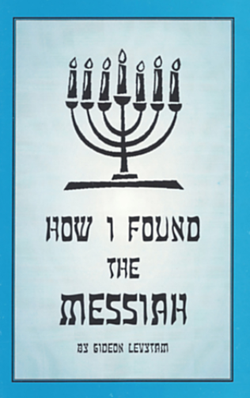
Follow Gideon Levytam's journey and discover how he was led by God, through a series of exciting circumstances, to find the One his people are still waiting for.
Past Episodes

Featured Offer
Follow Gideon Levytam's journey and discover how he was led by God, through a series of exciting circumstances, to find the One his people are still waiting for.
About Holy Scriptures and Israel
As time passed by, the Lord Yeshua took dear brother John Van Stormbroek to himself. The ministry of Holy Scriptures and Israel continued with additional development. In the early 1990’s, a weekly morning Bible class began which brother Gideon Levytam led regularly in the City of Toronto. This weekly open Bible class was held in the Willowdale assembly meeting hall. Eventually, a second mid-week evening Bible class was added. In April 2002, the need for an additional outreach Bible teaching meeting arose. We begun a Saturday (Shabbat) ministry meeting in which a systematic teaching of God’s word is presented to all who attend. Together we learn God’s Word, pray for each need and the salvation of Israel, and sing songs of worship unto our God, praising Him and our Lord Yeshua the Messiah.
In Mid 2004 we started to air on Joy 1250 Radio station a 15 minute Bible teaching program called "The Holy Scriptures and Israel" with Gideon Levytam. The broadcast teaches God’s word from a Hebrew Messianic perspective and has proved to be a blessing to many. It's now aired seven days a week. Our prayer is that many more of our Israeli people will have a clear understanding of who Yeshua is, why we all need him, and come to know him as their Lord and Messiah.
About Gideon Levytam
Contact Holy Scriptures and Israel with Gideon Levytam
426 Simcoe Street
Niagara-on-The-Lake
Ontario L0S 1J0
Canada
(905) 325-1234