
Daniel 3:1-15, Part 2


Nebuchadnezzar’s Image Part 2
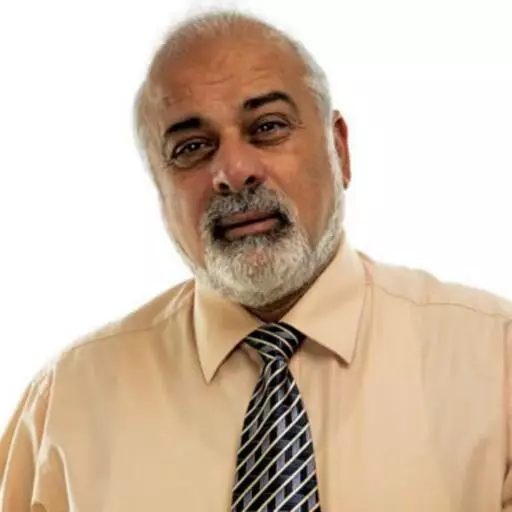
Guest (Male): Shalom. Holy Scriptures and Israel is a ministry designed to share with the Jewish people the good news of the Lord Jesus Yeshua the Messiah and to instruct Christians on the Jewish roots of their faith. And now, teaching God's Word from a Hebrew Messianic perspective, here is Gideon Levytam.
Gideon Levytam: The study of Daniel chapter 3, in light of chapter 2, really represents Nebuchadnezzar himself, even though it's not worded here. In verse 3, notice what we find out: "Then the princes and the governors and the captains and the judges and the treasurers and the counselors and the sheriffs and all the rulers of the province were gathered together unto the dedication of the image that Nebuchadnezzar the king had set up, and they stood before the image that Nebuchadnezzar had set up."
All these people are in the government. Those are the leaders of Babylon. If you remember what we read at the end of chapter 2 in verse 49, Daniel requested of the king to set Shadrach, Meshach, and Abednego over the affairs of the province of Babylon. So we know that would include the three friends. Oftentimes we find them as Shadrach, Meshach, and Abednego, but we also know their Hebrew names: Hananiah, Azariah, and Mishael. They were included in the event of the dedication of that particular image.
There is not a problem with the dedication. Up to this point, everything is fine. While everybody is gathering in verses 2 and 3, in verses 4, 5, and 6, there is a command. It was an appeal first of all for everyone to come for the dedication, but now in verses 4 to 6, there is a command not only to come to dedicate the image, but this time to fall down and to worship the image.
In verse 4, we read, "Then a herald cried aloud, 'To you it is commanded, O people, nations, and languages, that at what time ye hear the sound of the cornet, flute, harp, sackbut, psaltery, dulcimer, and all kinds of music, ye fall down and worship the golden image that Nebuchadnezzar the king had set up.'" Right now you find out that Nebuchadnezzar had in mind not only to have a special celebration to have an image and dedicate it, now he is giving a command.
Everybody is responsible to fall down and to worship that image the moment they are hearing all kinds of musical instruments, such as the cornet, flute, and harp. It is unfortunate with all the music that is going on these days. I am not speaking about that which honors the Lord. There is so much music that becomes like a noise. Even believers many times hear the sound of music and it gets you into that mood of going out of yourself and throwing you into all kinds of feelings. It is nothing new because it was already there in those days.
In verse 6, there is a warning: "Whosoever falleth not down and worshippeth shall the same hour be cast into the midst of the burning fiery furnace." You see there is a warning now that you do not voluntarily make a decision whether you would like to worship or not. Here there is a command. If you are not going to worship, you are going to be cast into the burning fiery furnace.
The thought that is interesting is that this command was given for the people of Babylon to worship many gods. For them, that is not a problem. You worship one god, then you can worship the other god. It is not so much a problem for the Babylonians, but for the Jewish people, it is a big problem because God had given strict instruction for the people of Israel not to worship any other god.
In verse 7 it says, "Therefore at that time, when all the people heard the sound of the cornet, flute, harp, sackbut, psaltery, and all kinds of music, all the people, the nations, and the languages fell down and worshipped the golden image that Nebuchadnezzar the king had set up." The vast majority of the nations had a multitude of gods. They can worship this god or that god. It is not a problem. But for the Jewish people, it was a great problem.
As we enter the next verses, I want you to understand that God sometimes takes His people through testing. God is sometimes maturing and blessing His people by testing them to find out their faithfulness towards Him. They just finished chapter 1 where they were commanded to eat all kinds of food. God took them through that test and He helped them there.
Now we find out that these Jewish boys, who had been taken captive from Judea, are going to go through a second test. In verses 8 through 12, there is an accusation against these Jewish boys. First of all, there is an accusation by the Chaldeans. Verse 8 says, "Wherefore at that time certain Chaldeans came near, and accused the Jews." This accusation is a repeated history throughout the ages.
Why would they accuse the Jews? Remember what happened in chapter 1. These Jewish men were taken captive from Judea. They were nobodies in the Babylonian kingdom. They were nothing. Then you take those boys, bring them down to Babylon, and they arrive in a great position. As we read in verses 48 and 49, Daniel became a great man and his friends were over the affairs of the province of Babylon.
Do you know what that does to a person who is local? It makes them jealous and unhappy. This is exactly what happened. They were jealous over these Jewish men who had received a position. It just simply happened to be about these Jewish boys. It is interesting that they were seeking an opportunity to accuse them. I can assure you they were trying to find a time to accuse them all along.
Now came an opportunity to accuse these young men. What is it to them whether these Jewish boys worship or not? Why is it bothering them? The command was given and they had to do what they had to do. Why does it bother them what another person does? Behind the scenes, they wanted to find an opportunity to put an end to the position that these boys had.
In verse 9, they address King Nebuchadnezzar: "They spake and said to the king Nebuchadnezzar, 'O king, live for ever.'" This expression is oftentimes mentioned in the books of Daniel and Nehemiah. It is a word of respect given to the king. In verse 10, they remind him of the decree: "Thou, O king, hast made a decree, that every man that shall hear the sound of the cornet, flute, harp, sackbut, psaltery, and dulcimer, and all kinds of music, shall fall down and worship the golden image."
They first of all remind him, "Didn't you say that, King Nebuchadnezzar?" He of course would say, "Sure I said that." He said it earlier in verse 6, that whosoever will not fall down and worship shall be cast into the midst of the burning fiery furnace. They are reminding the king because they have something in mind that they want to say.
It reminds me of Adam. When God told him, "What have you done?" after he ate of the fruit, he blamed God and the woman in the same breath: "The woman whom thou gavest to be with me, she gave me of the tree, and I did eat." He blamed God and the wife God had given. God had given the woman as a helpmeet, and instead of saying, "God, thank you," he passed the buck and blamed God.
That is what they are doing here. They are very cunning. "Didn't you, King Nebuchadnezzar, make this kind of remark? We just want to remind you, but now we are going to tell you why we are reminding you of the command that you have given." Verse 11 says, "And whoso falleth not down and worshippeth, that he should be cast into the midst of a burning fiery furnace."
In verse 12, there is a threefold accusation. Number one: the Jews do not regard you, King. "There are certain Jews whom thou hast set over the affairs of the province of Babylon, Shadrach, Meshach, and Abednego; these men, O king, have not regarded thee." They say, "There are certain Jews whom you have set over the affairs of this province. You shouldn't have. Look at the problem. You have given them an elevated position and they don't regard you."
Secondly: the Jews do not serve the gods of Nebuchadnezzar. It says, "They serve not thy gods." Not only do they not regard you, King Nebuchadnezzar, these same Jews whom you have set in such a high position don't even regard your gods. Thirdly: the Jews do not worship the image that the king had set up. At the end of verse 12, "Nor worship the golden image which thou hast set up."
It was a threefold accusation. They covered all the bases. Remember, they say, "You are the one who set them up, King Nebuchadnezzar." In other words, they are saying you shouldn't have set them up over us. Why didn't they fall down and worship the image? Exodus chapter 20, verses 1 through 6 contains the Ten Commandments that had been given to the people of Israel at Mount Sinai.
God said to Israel, "I am the LORD thy God, which have brought thee out of the land of Egypt, out of the house of bondage. Thou shalt have no other gods before me. Thou shalt not make unto thee any graven image, or any likeness of any thing that is in heaven above, or that is in the earth beneath, or that is in the water under the earth. Thou shalt not bow down thyself to them, nor serve them."
"For I the LORD thy God am a jealous God, visiting the iniquity of the fathers upon the children unto the third and fourth generation of them that hate me; and shewing mercy unto thousands of them that love me, and keep my commandments." It is sad when you think about how man can come to a point where he worships all kinds of idols that are made by men.
They can't move, see, hear, or walk. They can't do anything, and yet people would fall down to the ground to worship those images. What distinguishes the people of Israel from all other nations is simply this: they worship the true and living God. Our people have been taken out of Egypt and taken from slavery in order to be a nation that worships the true and living God, to be a testimony.
Unfortunately, Israel had failed. These Jewish boys were in Babylon not because the nation had been faithful, but because God had to judge the nation of Israel because Israel had forgotten what God had done for them. God is a jealous God and God wanted His people to be different, not to worship those idols that cannot see or hear.
Intelligent people can come to this point. If you remember, after God had given Israel the Ten Commandments, when Moses went up to bring the tablets down, before he even came down, Israel broke the first commandment: "Thou shalt have no other god before me." Moses could not bring the Ten Commandments into the midst of the camp because Israel would have been totally consumed.
He broke them right at the foot of the mount. That is the reality. If you read the book of Romans chapter 1, people are still doing the same thing. Instead of worshipping the true and living God and recognizing the Messiah, the Lord Jesus who loves us and gave Himself for us, they would worship all kinds of images and man-made gods. God will not share His glory with another.
There was a reason why those three young Jewish men did not fall down to worship this image. In verses 13 to 18, notice the testimony of these Jewish young men. In verses 13 to 15, Nebuchadnezzar called them and asked those three boys. Instead of immediately judging them, he gave them a chance.
In verse 13, we see that he was enraged: "Then Nebuchadnezzar in his rage and fury commanded to bring Shadrach, Meshach, and Abednego. Then they brought these men before the king." He was furious because he gave the command earlier that whosoever fell not down would be cast into the midst of the burning fiery furnace. Here he discovered there were these Jewish boys who did not.
His authority was in doubt. He gave a command and someone did not obey it. In verse 14, Nebuchadnezzar charged these Jewish boys and said to them, "Is it true, O Shadrach, Meshach, and Abednego, do not ye serve my gods, nor worship the golden image which I have set up?" He wanted to hear from them, "Is it true that you have not bowed to that image and worshiped it?"
In verse 15, Nebuchadnezzar gives them a second chance. "If ye be ready that at what time ye hear the sound of the cornet, and the flute, the harp, the sackbut, the psaltery, and the dulcimer, and all kinds of music, if ye fall down and worship the image which I have made, well: but if ye worship not, ye shall be cast the same hour into the midst of a burning fiery furnace."
Then he made a statement which he should have never said: "And who is that God that shall deliver you out of my hands?" He was going to find out very soon who that God is. He gave them an opportunity to make a choice. "You either fall down when you hear the sound and I'm going to let you go, or you are going to be cast into the furnace." He was challenging God to see whether God was able to deliver them.
Turn to Exodus chapter 5. Just as Nebuchadnezzar needed to learn who that God was, there was another king, Pharaoh, who also challenged Moses. In Exodus chapter 4 verse 23, Moses said, "I say unto thee, Let my people go, that he may serve me: and if thou refuse to let him go, behold, I will slay thy son, even thy firstborn." Pharaoh did not take seriously the call of God to let Israel go.
In chapter 5, verses 1 and 2, Moses and Aaron went in and told Pharaoh, "Thus saith the LORD God of Israel, 'Let my people go, that they may hold a feast unto me in the wilderness.'" Pharaoh said, "Who is the LORD, that I should obey his voice to let Israel go? I know not the LORD, neither will I let Israel go." There is a defiance in his voice.
Pharaoh's element of pride led him to say, "I do not know Him and I am not going to listen to Him. I do not believe in this God." It is the same thing Nebuchadnezzar said here in chapter 3 verse 15 of Daniel: "Who is that God that shall deliver you out of my hand?" He did not believe God was able to deliver them.
Nebuchadnezzar apparently, even after he had gone through the experience of the image and the interpretation that Daniel had given to him, had not come to a point where he was broken before God. He did not recognize that there is only one true and living God. Nebuchadnezzar apparently was still self-sufficient. He doesn't need anyone; he can do it on his own.
By building that great, huge image which was approximately 90 feet high and nine feet wide, he was saying, "I am the master, I'm the captain. I'm going to do things my way. I'm going to run the affairs of the future kingdom. My kingdom will never have an end." You can see the pride in this man. The Bible tells us that pride comes before a fall.
We need to learn that lesson in our own lives as believers. God says to us, "Humble yourself under the mighty hands of God and He will exalt us in due time." Peter and James speak about it: God resists the proud but He gives grace unto the humble. In his pride, Nebuchadnezzar built that image, gathered all the leaders of Babylon, and commanded them to fall down and worship it.
In the same location happened to be three Jewish young men who were the leaders at that time. They had been placed in such a high position, but they were faithful to the God of Abraham, Isaac, and Jacob. There are two things that we learn in the Bible. On the one hand, God gave a command in Romans chapter 13 to obey the rulers of this world.
On the other hand, God also gave another command that we are not to worship any other god. They had to make a choice. They were either going to obey the king or they were going to obey the God who had chosen them. They made a choice to obey God rather than the king because the king abused his power and had gone away from the will of the Lord.
For this, they are accused of not regarding the king, not serving the gods of the king, and not worshipping the image that the king had made. So this statement, "Who is that God that shall deliver you out of my hand?" well, he is going to find out that this one is the true and living God, the God of Abraham, Isaac, and Jacob. Can we say amen to that?
Featured Offer
Follow Gideon Levytam's journey and discover how he was led by God, through a series of exciting circumstances, to find the One his people are still waiting for.
Past Episodes

Featured Offer
Follow Gideon Levytam's journey and discover how he was led by God, through a series of exciting circumstances, to find the One his people are still waiting for.
About Holy Scriptures and Israel
As time passed by, the Lord Yeshua took dear brother John Van Stormbroek to himself. The ministry of Holy Scriptures and Israel continued with additional development. In the early 1990’s, a weekly morning Bible class began which brother Gideon Levytam led regularly in the City of Toronto. This weekly open Bible class was held in the Willowdale assembly meeting hall. Eventually, a second mid-week evening Bible class was added. In April 2002, the need for an additional outreach Bible teaching meeting arose. We begun a Saturday (Shabbat) ministry meeting in which a systematic teaching of God’s word is presented to all who attend. Together we learn God’s Word, pray for each need and the salvation of Israel, and sing songs of worship unto our God, praising Him and our Lord Yeshua the Messiah.
In Mid 2004 we started to air on Joy 1250 Radio station a 15 minute Bible teaching program called "The Holy Scriptures and Israel" with Gideon Levytam. The broadcast teaches God’s word from a Hebrew Messianic perspective and has proved to be a blessing to many. It's now aired seven days a week. Our prayer is that many more of our Israeli people will have a clear understanding of who Yeshua is, why we all need him, and come to know him as their Lord and Messiah.
About Gideon Levytam
Contact Holy Scriptures and Israel with Gideon Levytam
426 Simcoe Street
Niagara-on-The-Lake
Ontario L0S 1J0
Canada
(905) 325-1234