

Daniel 2:1-30, Part 3


Nebuchadnezzar’s First Dream Part 3
Gideon Levytam: The study of Daniel chapter two. Then notice verse 16. Then the second thing that we learned there, Daniel requests for an appointment.
In verse 16, then Daniel went in and he desired of the king that he would give him time. And the word there should be an appointment, not really just some time, but an appointment. It says, notice, and that he would show the king the interpretation. By the way, he was sure that God was going to help him to give the interpretation to the king of Babylon.
If you just turn please back to chapter one for a second, look at what we read in verse 20. Chapter one and verse 20, it says here, and in all matters of wisdom and understanding, that the king inquired of them, he found them 10 times better than all the magicians and astrologers that were in all his realm.
And then if you go a little bit back to verse 17 of chapter one, as for these four children, God gave them knowledge and skill in all learning and wisdom. And Daniel had understanding in all visions and dreams.
And so you see that God had been giving to Daniel the ability to understand visions and dreams and give the interpretation thereof. And so Daniel in verse 16 says, "Give me an appointment. Give an appointed time, and I'm going to give you the answer. I'm going to give you the interpretation thereof."
But you know, one thing he does that is so beautiful, he doesn't trust in himself, he doesn't have confidence in himself. The first thing that he does is going to the Lord in prayer.
You know, when this is very practical, when there are problems coming across our pathway and challenges in our life. You know, sometimes we're trying to fix them without first of all going to the Lord in prayer. And this is a beautiful principle to see here. Verse 17 now to verse 23, we find out Daniel in prayer. Daniel or the prayer of Daniel.
Notice how beautiful. First of all, the first thing that he does, you know what he does? He called up his friends and he shared with them his problem. Notice he says, "Then Daniel went to his house and he made the thing known unto Hananiah, Mishael and Azariah, his companions."
I know we are on the topic, we are going to get to the topic, but just to see, what do you do? What do I do? What do we do when trouble come across our way? When challenge comes across our path, are we the kind of a people who are learning from the word of God, or going first of all to the Lord and talk with the Lord about those challenges?
Or are we immediately trying to solve everything without first of all sharing with the Lord the challenges that are coming across our life? This is something so beautiful with Daniel. The principle that we learn from this chapter is that the first thing that he does is going to the Lord in prayer.
But it's not only that he's going alone, this we would suggest this is what an individual prayer, but he get his companion, his friends, and he come with them and he say, "This is the problem. That's the situation. I want you to please spend some time to pray, to talk to the Lord about this situation."
If you just put your finger here and turn to the book of Acts. Acts chapter four. Peter and John, if you remember the story that they had been threatened because of they were preaching of the message of the Messiah of the gospel. It says here, notice, it says there in I'll just read verse 13 now, "When they saw the boldness of Peter and John and perceived that they were unlearned and ignorant men, they marveled, and they took knowledge that they had been with Yeshua with Jesus."
And then notice it says in verse 18, "They called them and they commanded them not to speak at all, nor teaching in the name of Yeshua, in the name of Jesus. But Peter and John answered and said unto them, whether it is right in the sight of God to hearken unto you more than unto God, you judge. For we cannot but speak the things which we have seen and heard."
"So when they had further threatened them, they let them go, finding nothing how they might punish them, because of the people, for all men glorified God for that which was done. For the men were above 40 years old, on whom this miracle of healing was shown."
Now, notice verse 23. "And being let go, they went to their own company, and they reported all that the chief priests and the elders had said unto them. And notice that, the first thing they reported the situation."
The second thing, you find them praying together. "And when they heard, they lifted up their voice unto God with one accord. And they said, 'Lord, thou art God, which have made heaven and earth, and the sea, and all that is in them.'" Notice how beautiful it is.
In fact, one of the first prayer meetings is found right here in the New Testament for the, the church, the, the assembly, the first prayer meeting, or one of the first prayer meetings, is found right here, when they have gone and shared the burden that they had collectively with all the believers in this local place.
And in verse, in verse 24, "When they heard that," notice, "they lifted up their voice to God with one accord." And they glorified the Lord and they began to ask and to request help from him.
Back to Daniel two. Same principle, we see here in Daniel chapter two, and verse 17 and 18. First of all, Daniel went to the friends, to his friends. In verse 17, "Daniel went to his house. He made the thing known unto Hananiah, Mishael and Azariah his companions."
And then verse 18, "that they would desire mercies of the God of heaven concerning this secret, that Daniel and his fellows should not perish with the rest of the wise men of Babylon."
How precious it is for Daniel. The first thing that he does, he share it with his friends, and they together are going to talk about it and to request from God help in the matter.
By the way, you notice that this is, I think it is the first time here in Daniel chapter two and verse 18, the expression, the God of heaven. Why is this expression, the God of heaven, is mentioned a few times here in this chapter? This is most likely found in the books, in the scriptures, where Israel had been in their diaspora if you will, or Israel had been outside of the land.
Or even what you call the, the post, after they've been outside of the land, they returned, like in the book of Ezra or Nehemiah, you will find it. The reason for that is simply this. By the time Israel, in the book of Ezekiel, you find that that because Israel's disobedience, the Shekinah glory have departed from the temple.
And if if you, if you from chapter eight of Ezekiel and onward, you find that the Shekinah, the Shekinah glory, have left the temple, left the whole temple mount, if you will, went all the way to the wall and ultimately returned to heaven.
Now, why is it this expression? Because often time, you find the other expression, the God of Israel, the God of Abraham, Isaac and Jacob. But this time, you find quite a few times the expression, the God of heaven.
In other words, now the scepter, if you will, the rule that Israel as a nation have had, have been taken for a time if you will, and handed over if you will, to another nation for a while. And now God is, if you will, from heaven overseeing the affair, the affairs of the times of the Gentiles.
And so this expression you will find it a few times mentioned here in the book of Daniel, especially here in chapter two, the God, they have, they would desire mercies of the God of heaven.
If you write down, I'm just going to give you a couple of places where it is found. In Ezra chapter one and verse two. In Ezra chapter six and verse 10. In Ezra chapter seven, verse 12 and verse 21. In Malachi, or Malakhi in Hebrew, chapter one and verse five. In Malachi chapter two and verse four.
And if you want to read a little bit about the Shekinah departing, Shekinah glory, the Shekinah departing is Ezekiel chapter eight and verse one till Ezekiel chapter 11 and verse 25. There are the four stages of the departure of the Shekinah glory. And by the way, the word Shekinah is come from the Hebrew word Shekinah.
Shekinah means to rest. When God, when the temple was built, in the Tabernacle was built in Exodus, then the Shekinah, the Shekinah, God's glory had rested upon the Tabernacle that Moses and Aaron and Bezalel and others have built in the wilderness.
Then later on, when when the temple had been built by King Solomon, the Shekinah, the Shekinah glory, the manifestation of God had rested upon the temple. And the cloud was the whole cloud had filled the house of God and the evidence of the presence of God in the midst of his people.
And time went on, by the time you read in in Ezekiel, the spiritual state of the nation of Israel have been so low that the Shekinah, the Shekinah glory have departed. And you know, it's amazing. If you read the chapter there, departed so slow as if if the people of Israel will turn back to God, that the Shekinah will come back.
But slowly, slowly, the Shekinah, the Shekinah, have left the temple and went back all the way to heaven. And by the way, we read in the New Testament that the Shekinah, the dwelling place, the Lord Jesus, the Messiah is the one who came to dwell.
You remember John one, in the beginning was the word, and the word was with God, and the word was God. And then we read, and the word became flesh and dwelt. That's the word to dwell, Lishkon. It's come from the Hebrew word Shekinah, Shekinah. And he dwelt among us, and we beheld his glory, the glory of the only begotten of the Father, full of grace and truth. This is found in the Gospel of John.
But he, as well in the future day, will rest and get his place in the Messianic kingdom, where Israel going to be restored and he will take his rightful place in the temple in the future day. But here just this expression in verse 18, they would desire mercies of the God of heaven.
And so can you imagine in verse 17 and 18, the group praying together to the Lord for mercies. They asked for mercies. They that they would, as it says here in verse 18, that they would not perish with the rest of the wise men of Babylon.
And I think it's well for you and I also, when we come across some problems, the first thing for us to do, it's take it to the Lord in prayer. It's so important to do this. This is a good principle to learn.
Then notice verse 19, God give the revelation now. Then was the secret revealed unto Daniel in a night vision. Then Daniel blessed the God of heaven. He talked to the Lord, he talked to the God of heaven, he talked to of course, to the God of his fathers. God had given him an answer, and then in verse 20 to 23 now, Daniel now is giving a praise and worship for the answer that he had received.
Notice those four things we find out in verse 20 to 23. First of all, he's saying to God, "God, you are all knowing and you are all powerful." In verse 20, "Daniel answered and said, 'Blessed be the name of God forever and ever, for wisdom and might are his.'"
He knows he's the wisest God and power, the mighty, he's the most powerful God. And you know, it's so true that God is all knowing. He knows everything and he's also all powerful. But it doesn't stop there. He continue. In verse 21, he's saying in to God, "God is also is a sovereign God. He has a right to do as he please."
"He changes the times and the seasons. He removes kings and he sets up kings. He gives wisdom unto the wise, and knowledge to them that know understanding." You see, he's a sovereign God. God is a sovereign God. He can do as he please. He changed the times, he changed the seasons, he removes kings, he set up kings. He gives wisdom to the wise and knowledge to them that know understanding.
In verse 22, "He reveals the deep and secret things. He knoweth what is in the darkness and the light dwelleth with him." Not only that he's a God who is all knowing, not only he's all powerful, not only that he is a sovereign God, but he is God that gives revelation. He revealed to whomsoever he will, he revealed all that he wishes.
And finally in verse 23, he giving praise to God for the past and praise to God for the present. "I thank thee and I praise thee, oh thou God of my fathers, who has given me wisdom and might and has made known unto me now what we desired of thee, and thou has now made known unto me the king's matter."
You know this, he call him here, the God of my fathers. In an earlier verse in verse 18, he pray to the God of heaven, but the same God of heaven is the God of Abraham, Isaac and Jacob, the God of the fathers of Daniel and his friends.
And so up to this point, we have learned certain things concerning Daniel. And by the time we have arrived to verse 23, he finished the prayer and he received the revelation from the Lord. And an earth can verse 24 to 30, the testimony of Daniel. Daniel went to Arioch and he told him in verse 24, "Do not destroy all the men of Babylon."
"Therefore Daniel went in unto Arioch, whom the king had ordained to destroy the wise men of Babylon. He went and he said thus unto him, 'Destroy not the wise men of Babylon, bring me in before the king, and I will show unto the king the interpretation.'" That's the first thing he does. He, he's giving a testimony now, he went to Arioch, he says, "Arioch, do not destroy anyone. I'm going to give you the answer that you wanted."
And so immediately Arioch bring him before the king in verse 25. "Arioch brought Daniel before the king in haste and he said unto him, 'I have found a man.'" And that man was a Jewish man, a Hebrew man. "I have found a man of the captives of Judah, that he will make known unto the king the interpretation."
And so Nebuchadnezzar really wanted to see, is Daniel really is able to answer him? "The king answered and he said in verse 26 unto Daniel, whose name was Belshazzar, 'Are thou able to make known unto me the dream which I have seen and the interpretation thereof?'"
And so Daniel now giving him the testimony. Look what he says in verse. In verse 27, he's being very honest with him. He says, "You know, he's really repeating what the wise men of Babylon said." He answered and he said in the presence of the king and he said, "The secret which the king has demanded, cannot the wise men, or astrologers, or magicians, or soothsayers, show unto the king." He says, "Listen, I'm telling you what the wise men of Babylon already told you."
That human being, people cannot give you this answer. I'm telling you just the same. "Not the wise men, nor the astrologers, nor the magicians, nor the soothsayers, they cannot show this to the king." And then notice in verse 28 and verse 29, he's saying, "But there is a God in heaven that reveals secrets. And he maketh known to King Nebuchadnezzar what shall be in the latter days. Thy dream and the visions of thy head upon thy bed are these."
And I just want you to pause here for a second. Notice this expression, the latter days. This expression and I marked for myself is quite a few times is mentioned in the scriptures in connection with events that were going to come in latter days. For example, in Genesis chapter 49 and verse one, this expression is in connection with the 12 tribes of Israel.
In Numbers chapter 24 and verse 14, this expression was spoken about in connection with Israel against Moab. In Deuteronomy chapter four and verse 30, this expression is spoken about concerning Israel's return to God. In Deuteronomy chapter 31 and verse 29, this expression is in connection with the tribulation.
In Isaiah chapter two and verse two, this expression is mentioned in connection with the coming kingdom. In Jeremiah chapter 30 and verse 24, the expression is in connection with Israel's return to the land. In Jeremiah 48 verse 47, this expression is in connection with the coming back of Moab.
And then in Jeremiah 49 verse 39, this expression in connection with the coming back of the Iranian or the Elamites. And one last one, Ezekiel 38 verse 16 is in connection with the King of the North, which will invade Israel.
And of course in Daniel, where we are, chapter two verse 28, the expression, the latter days is in connection with the times of the Gentiles. And so what we have here in verse 28, Daniel is saying, "There is a God in heaven that reveals secrets and he want you, Nebuchadnezzar, he want to make you known what shall be in the latter days. Thy dreams and thy visions of thy head upon thy bed are these."
And then quickly verse 29, "As for thee, oh king, thy thoughts came into thy mind upon thy bed. What should come to pass hereafter? And he that reveals secrets makes known to thee what shall come to pass." You see Nebuchadnezzar apparently was laying in bed and he was thinking. What's going to be the future days?
And God, as he said, the God of heaven want to reveal to Nebuchadnezzar events that are going to happen in the future day. Events that are going to shape history. And he want to show this to King Nebuchadnezzar. He says to him, "As for me in verse 30, the secret is not revealed unto me for any wisdom that I have more than any living, but for their sakes that shall make known the interpretation to the king, and that thou might know the thoughts of thine heart."
And so you see what he's saying, what he's telling to King Nebuchadnezzar. You were laying in bed and you wanted to know what going to be in the future day. And he says there is a God in heaven that is going to tell you what going to be in the latter days. And you can just imagine Nebuchadnezzar dreaming and all what he saw basically is that image. He was fascinated with this image. He didn't know what to make out of this image.
But he wanted to know what's going to be happening in latter days. So Daniel went to the Lord in prayer, to the God of heaven. The God of heaven revealed to him the actual dream that Nebuchadnezzar have dreamt, but not only the dream, he also gave him the interpretation thereof. And so that the king would be able to see and to understand what is going to happen in the future day.
And so I just want quickly, and we know we're going to stop with this, but I just want you to notice that and I'm going to point to that. In verse 31, notice how it begin the whole story. "Thou, oh king, sawest and behold a great image." Here's the image. Daniel is saying to King Nebuchadnezzar, "Nebuchadnezzar, you were dreaming. And what did you see in your dream?" You saw a great image.
But not only that, he's saying to him, and we're going to go into detail a little bit next time. "This image was bright, his brightness was excellent, stood before thee, and the form thereof was terrible." Apparently, the way that God had presented to King Nebuchadnezzar that image, it was rather scary if you will, or terrible, or great, or majestic if you will. As he says here, it was, "whose brightness was excellent. It stood before thee, and the form thereof was terrible."
And you notice now, I'm just quickly going to mention it now. This thought, you notice in verse 32 and 33, we're going to go through it again next time. "This image head was of gold." Notice the head? Here's the image. The head apparently he said to him, head, the, the, the material of this head was made out of gold.
"Then in verse 32 B, his breasts and his arms, these two arms were of silver." The breast and the two arms together, this portion, was made out of silver. Then he continued in the same verse. He said, "his belly and his thighs were made out of brass." And here again, you notice, the belly, all the way down to his thighs were made out of brass.
"And then fourthly it says here in verse 33, his legs of iron." Here is the legs right here. Those two legs was made were made out of iron. "And finally in this verse it says in verse 33 B, his feet of iron part and partly of clay." And so here's the feet with the 10 toes were partly iron and partly clay.
And just imagine, beloved brothers and sisters, this is the, the image that he have seen. He was so burdened to know what is the answer, what does it mean? He was ready to destroy the whole wise men of Babylon until the Arioch coming into his into his into the king and he's saying, "I have found a man of the captives of Judah that will make known unto the king the interpretation."
And immediately Daniel came in and Daniel began to show him the dream, and one by one, he gave him as well the interpretation. Now, we are going to stop with that.
Gideon Levytam: Shalom. Holy Scriptures and Israel is a ministry designed to share with the Jewish people the good news of the Lord Jesus Yeshua the Messiah, and to instruct Christians on the Jewish roots of their faith. And now, teaching God's word from a Hebrew Messianic perspective, here is Gideon Levytam. You have been listening to the Holy Scriptures and Israel with Gideon Levytam. Gideon teaches God's word from a Hebrew Messianic perspective. For more information about this ministry, write to Holy Scriptures and Israel, Box 1411, Niagara on the Lake, Ontario, L0S 1J0, or visit our website at holyscripturesandisrael.com. You are also invited to Gideon's weekly Bible teaching on Fridays at 11:00 a.m. and 7:00 p.m., and Saturdays at 1:00 p.m. at Willowdale Christian Assembly Hall, 28 Martin Ross Avenue in Toronto. Holy Scriptures and Israel is made possible by your prayers and financial support. If you would like to support the program, visit holyscripturesandisrael.com. God bless you. Shalom, shalom.
Featured Offer
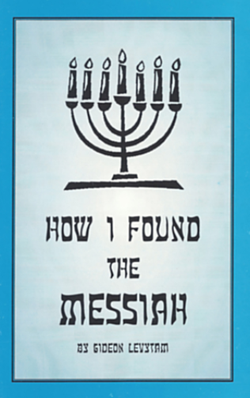
Follow Gideon Levytam's journey and discover how he was led by God, through a series of exciting circumstances, to find the One his people are still waiting for.
Past Episodes

Featured Offer
Follow Gideon Levytam's journey and discover how he was led by God, through a series of exciting circumstances, to find the One his people are still waiting for.
About Holy Scriptures and Israel
As time passed by, the Lord Yeshua took dear brother John Van Stormbroek to himself. The ministry of Holy Scriptures and Israel continued with additional development. In the early 1990’s, a weekly morning Bible class began which brother Gideon Levytam led regularly in the City of Toronto. This weekly open Bible class was held in the Willowdale assembly meeting hall. Eventually, a second mid-week evening Bible class was added. In April 2002, the need for an additional outreach Bible teaching meeting arose. We begun a Saturday (Shabbat) ministry meeting in which a systematic teaching of God’s word is presented to all who attend. Together we learn God’s Word, pray for each need and the salvation of Israel, and sing songs of worship unto our God, praising Him and our Lord Yeshua the Messiah.
In Mid 2004 we started to air on Joy 1250 Radio station a 15 minute Bible teaching program called "The Holy Scriptures and Israel" with Gideon Levytam. The broadcast teaches God’s word from a Hebrew Messianic perspective and has proved to be a blessing to many. It's now aired seven days a week. Our prayer is that many more of our Israeli people will have a clear understanding of who Yeshua is, why we all need him, and come to know him as their Lord and Messiah.
About Gideon Levytam
Contact Holy Scriptures and Israel with Gideon Levytam
426 Simcoe Street
Niagara-on-The-Lake
Ontario L0S 1J0
Canada
(905) 325-1234