
Daniel 1:1-7, Part 3


Nebuchadnezzar’s Instructions Part 3
Guest (Male): Shalom. Holy Scriptures and Israel is a ministry designed to share with the Jewish people the good news of the Lord Jesus, Yeshua the Messiah, and to instruct Christians on the Jewish roots of their faith. And now, teaching God's word from a Hebrew Messianic perspective, here is Gideon Levytam.
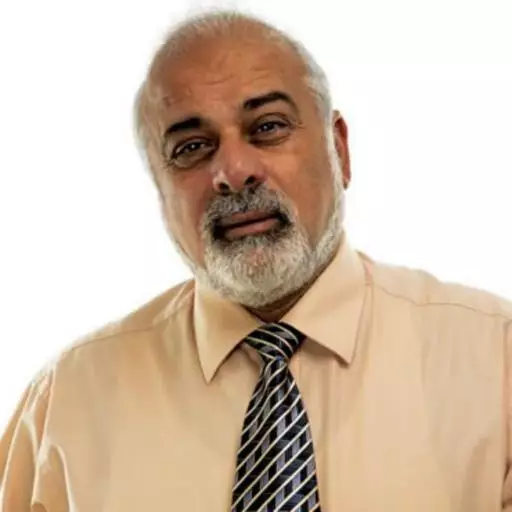
Gideon Levytam: The study of Daniel chapter one. So let me read verses three to seven. It says in verse three, "And the king spake unto Ashpenaz, the master of his eunuchs, that he should bring certain of the children of Israel, and of the king's seed, and of the princes; children in whom there was no blemish, but well favored, and skillful in all wisdom, and cunning in knowledge, and understanding science, and such as had ability in them to stand in the king's palace, and whom they might teach the learning and the tongue of the Chaldeans.
And the king appointed them a daily provision of the king's food, and of his wine which he drank: so nourishing them three years, that at the end thereof they might stand before the king. Now among these were of the children of Judah, Daniel, Hananiah, Mishael, and Azariah: unto whom the prince of the eunuchs gave names: for he gave unto Daniel the name of Belteshazzar; and to Hananiah, Shadrach; and to Mishael, Meshach; and to Azariah, Abed-nego."
From verse three to verse seven, we have a special selection. These Jewish boys, just like many other boys from other nations, have come being captive in the land of Babylon. Now Ashpenaz was to choose some of these individuals to stand before the king. Notice what we find out in verse three. The king was the one that spake unto Ashpenaz, the master of his eunuchs, that he should bring certain of the children of Israel, and of the king's seed, and of the princes.
Can you just imagine? It says here in this verse that not all, but he would bring some. Some of the children would become eunuchs to become servants in the king's castle and palace to serve King Nebuchadnezzar. Ashpenaz was the one who was supposed to choose individuals who were going to become eunuchs. Now, sometimes we have a problem with the word eunuch. Basically, the thought is to be castrated. In other words, a person who would not be able to have children or a family, so he can totally, entirely devote his time to the service of the king without anything to distract him.
He was simply an individual that was called to come to serve the king. These individuals would be people who would spend all their time and devotion in the service of the king. Just for a verse to speak a little bit about eunuchs, look what Yeshua the Messiah said in Matthew chapter 19, verses 11 and 12. "But he said unto them, All men cannot receive this saying, save they to whom it is given. For there are some eunuchs, which were so born from their mother's womb: and there are some eunuchs, which were made eunuchs of men: and there be eunuchs, which have made themselves eunuchs for the kingdom of heaven's sake. He that is able to receive it, let him receive it."
When you think of a eunuch, it is a person who, under the Babylonian time, was a person who could not have a physical relationship and was completely and totally devoted to serving in the king's palace. But now Yeshua is explaining the fact that there are three types of eunuchs. He says in verse 12 that some eunuchs were born this way. They were simply born unable to perform physical relationships in order to have children and a family. That is by natural birth. That is the first one.
But then he says there be some eunuchs which were made eunuchs of men. These are the eunuchs that were made eunuchs by other people, such as Nebuchadnezzar and others, for the purpose of making them servants in the castle or palace. But then he gave us a third type. Verse 12 says there be some eunuchs who have made themselves eunuchs for the sake of the kingdom of heaven. These are individuals who say, "Lord, I want so much to devote my time and my life for you that I am willing not to have a family to tie me down."
Because there is a responsibility when a person has a family, a wife, and children, this is an individual who made himself a eunuch for the sake of the kingdom of God. In fact, I know a few individuals who are so devoted for the gospel and for the work of the Lord that they simply never got married or had children. They have simply said, "Lord, I am devoting my life for you. I'm going to commit my life for the service of the Lord." It is not because they do not want it or like it, but simply because they want totally and entirely to devote their life for the service of the Lord.
The eunuchs in the time of Nebuchadnezzar were not eunuchs who made themselves. In fact, most of them were not eunuchs who were born eunuchs by birth, but they were made eunuchs by force so that nothing would hinder them from serving the king. Go back to our chapter, Daniel. Ashpenaz was to choose some to stand before the king. They were those individuals who had been chosen by the king. Notice what selection he made in verse four. They had certain qualifications.
Number one, it says they must be children, young individuals. It is interesting they did not take them old. The Hebrew word here for children is yeladim. Yeladim simply means young children or young boys. It does not necessarily mean that they were one or three years old. Yeladim could very well be at the age of a young teenager. They were young children, and they started them very young. Secondly, not only were they children, but they had to have a proper look. Verse four says there was no blemish, and they were well favored.
They must be good-looking, the look that was expected by the king. Thirdly, they had to have a certain ability. Verse four says they must be "skillful in all wisdom, and cunning in knowledge, and understanding science, and such as had ability in them to stand in the king's palace, and whom they might teach the learning and the tongue of the Chaldeans." You see how they were training. I often think about taking children very young. It does not take too long before you can influence them to follow anything that you instruct them.
This is extremely sad when there are various countries and nations that train their children from youth to hold guns, to hate, or to hate a certain group of people. It is wonderful if we take children and teach them the ways of the Lord and teach them the ways of God. The Bible teaches us to train up our children. God gave us instruction to train our children when you are getting up in the morning, when you rise up, and when you sit in your house. God said to the people of Israel to train the children.
Here what they are doing is taking these young children, making sure they are good-looking and smart, and beginning to train them. You notice what it says there. They are training them in the learning and the tongue of the Chaldeans. Imagine what happened right now. These Jewish boys came from Jerusalem, from Israel. They were taken captive all the way to Babylon. And right now they have been under the influence of the Babylonian influence in the learning and in the language.
Not only that, but they would also want to give them a certain food to eat so they would be completely immersed in the Babylonian lifestyle and culture. What would you do? Just think about it. What would you do if somebody came to your home when you were about ten to fifteen years old, took you away from your family, and did whatever they had done to the temple, the center of worship? They have taken you away captive to another land and began to bombard you with all kind of material, language, and food that is very foreign for you.
There was a tremendous amount of pressure for these particular young Jewish boys. If I were there, or if you were there, we would need just as much as they needed the grace of God to help them to stand for the Lord in the midst of conditions like that. None of us can point at them because we would have been under tremendous influence if we had been in the situation they find themselves here. Notice what they do here in verse five.
The king appointed unto them a daily provision of the king's food and of the wine which he drank. He nourished them for three years so that at the end of those three years, they would stand before the king. Three years of day-by-day influence to influence these Jewish boys, number one, by the books of the Chaldeans, number two, by the language of the Chaldeans, and number three, by the food of the Chaldeans. What would you do in such a situation?
By the way, notice there are three things they try to do to these Jewish boys. The word for learning is the Hebrew word for book, sefer. These Jewish boys knew only one book: the Bible, the Tanakh, the Torah, Nevi'im, and Ketuvim. The Hebrew Scriptures was the only book they knew. Now the Chaldeans were going to influence them with their religious teaching and the influence in their books.
Think of the language they had spoken. When we speak Hebrew, much of our Hebrew has to do with the names of God and with various beautiful things that speak about God. Now they had to begin to speak the language and the tongues of the Chaldeans. Ultimately, they wanted to give them the food of the king. These Jewish boys had all their lives been taught that there was certain food they were not to eat. Now they began to give them food they had liberty to eat, and much of this food was even offered to idols.
What unbelievable pressure these Jewish boys were under. I want to give you quickly ten points of pressure. Number one, they have been conquered by another nation. For a teenager, that says a lot. It says my nation is not as strong, and this nation is stronger than our nation. Maybe I should follow this nation. Maybe I should be like these people. There is a pressure point for a young man at that particular time. Secondly, they have been taken away from their home. They could very well say, "I am not at home anymore, and I can do as I please."
At home, I was called by my father to follow after God, but here I am away from home. I have teenagers, and I know how difficult it is. They can say, "In my home, my father has a certain expectation, but when I am away from home in university, college, or away from my father, I have liberty and freedom to do what I want that I could not do at home." Thirdly, they were placed in a totally different culture. If they were not committed to the God of Abraham, Isaac, and Jacob, they could say, "That is not my culture anymore."
When we are at home, we are responsible to our God and our people, but now we are in a different culture. We live here as believers in this world, but we are called to be out of this world. When the influence of the world comes upon us, we can say the same thing. I am living in America or Canada, and I can do as I please in a different culture. These boys had this third pressure. They had been under a different culture and could say they did not have to do what they had done before.
Fourthly, they were a small minority in the land of Babylon. In Israel, these Jewish boys were the majority, but in Babylon, they were a vast minority. Just like us as believers, we are a minority in this world. There are very few believers. They could say, "We are a minority; therefore, we are not going to trust God and continue to follow the God of Abraham, Isaac, and Jacob." Fifthly, they were teenagers. They were young boys.
If we as older people can get influenced by the world around us, how much more so can a teenager be influenced? I never believed how a teenager could get influenced until I arrived with my children into the teenage years. Teenage is the hardest period in the history of any human being when it comes to finding himself and deciding what direction he will go in the future. Their hormones are changing, the influence, they are looking up to individuals. This is a difficult period.
Number six, their God had been seemingly humiliated. Their God had lost the battle. The vessels had been taken away from Jerusalem and placed in the house of their god, Marduk. They could say, "My God has been defeated. If my God was the true and living God, he would have won against the god of the Babylonians." That is what they could say. One Israeli believer once told me her son had cancer and died as a young boy.
Her family told her the reason he died was because she believed Jesus is the Messiah. Can you imagine people blaming the Lord for all kinds of problems that believers have? This is the guilt they could have. They say, "If your God was so strong, how come he did not do that?" They told her, "How come your God could not heal your son?" Sure, he could heal her son, but God is a sovereign God. He could take him home or he could leave him here.
Nobody has a corner to say to God what to do, who to take, or when to heal. Paul asked God three times to take away what he had, and the Lord said, "My grace is sufficient for you." God can take things away or can leave things upon us, and God has the right to do so. Number seven, they were placed under a godless nation and people to teach them. It is one thing to send your children to a Christian school. It is another thing to send your children to a school where the teachers do not believe in God.
It is one thing to have a teacher who tells your children that God is love and the Messiah has come. It is another thing when a teacher challenges you and tells you there is no God. It is a completely different influence. Number eight, they have been taught godless teaching. Number nine, their names have been changed from Hebrew names to pagan names. Every time you call a Hebrew boy with a Hebrew name, it has a beautiful meaning to do with the name of God.
But the names they received were pagan names. Lastly, they were entirely surrounded by pagan gods, idols, and idolatry. They had pressure points where they could very well say, "I am not going to continue to follow after what my mom and dad taught me. I am away from home. Our God has lost the battle. We have completely been defeated. I'm going to get the influence of the Babylonians over my life and I am going to become just like them."
In the book of Daniel, we learn that these Jewish boys made a decision to follow the God of Israel no matter what and no matter where they found themselves. What a beautiful lesson it is for us as believers. No matter what the world around us tells us concerning Jesus, that he is not the Messiah, that God's word is not true, or that the Bible is not inspired, we need the same grace they needed to say, "I am going to continue to follow Yeshua, even if I am going to have some opposition in my life." From verses one to seven, we find out two points: the deportation and the special selection for individuals to come to serve the king. These Jewish boys happened to be part of this selection.
Guest (Male): You have been listening to Holy Scriptures and Israel with Gideon Levytam. Gideon teaches God's word from a Hebrew Messianic perspective. For more information about this ministry, write to Holy Scriptures and Israel, Box 1411, Niagara-on-the-Lake, Ontario, L0S 1J0, or visit our website at holyscripturesandisrael.com. You are also invited to Gideon's weekly Bible teaching on Fridays at 11:00 AM and 7:00 PM and Saturdays at 1:00 PM at Willowdale Christian Assembly Hall, 28 Martin Ross Avenue in Toronto. Holy Scriptures and Israel is made possible by your prayers and financial support. If you would like to support the program, visit holyscripturesandisrael.com. God bless you. Shalom, Shalom.
Featured Offer
Follow Gideon Levytam's journey and discover how he was led by God, through a series of exciting circumstances, to find the One his people are still waiting for.
Past Episodes

Featured Offer
Follow Gideon Levytam's journey and discover how he was led by God, through a series of exciting circumstances, to find the One his people are still waiting for.
About Holy Scriptures and Israel
As time passed by, the Lord Yeshua took dear brother John Van Stormbroek to himself. The ministry of Holy Scriptures and Israel continued with additional development. In the early 1990’s, a weekly morning Bible class began which brother Gideon Levytam led regularly in the City of Toronto. This weekly open Bible class was held in the Willowdale assembly meeting hall. Eventually, a second mid-week evening Bible class was added. In April 2002, the need for an additional outreach Bible teaching meeting arose. We begun a Saturday (Shabbat) ministry meeting in which a systematic teaching of God’s word is presented to all who attend. Together we learn God’s Word, pray for each need and the salvation of Israel, and sing songs of worship unto our God, praising Him and our Lord Yeshua the Messiah.
In Mid 2004 we started to air on Joy 1250 Radio station a 15 minute Bible teaching program called "The Holy Scriptures and Israel" with Gideon Levytam. The broadcast teaches God’s word from a Hebrew Messianic perspective and has proved to be a blessing to many. It's now aired seven days a week. Our prayer is that many more of our Israeli people will have a clear understanding of who Yeshua is, why we all need him, and come to know him as their Lord and Messiah.
About Gideon Levytam
Contact Holy Scriptures and Israel with Gideon Levytam
426 Simcoe Street
Niagara-on-The-Lake
Ontario L0S 1J0
Canada
(905) 325-1234