
Acts 9:32 to 10:8, Part 3


Peter’s Ministry in Lod, Yafo & Caesarea Part 3
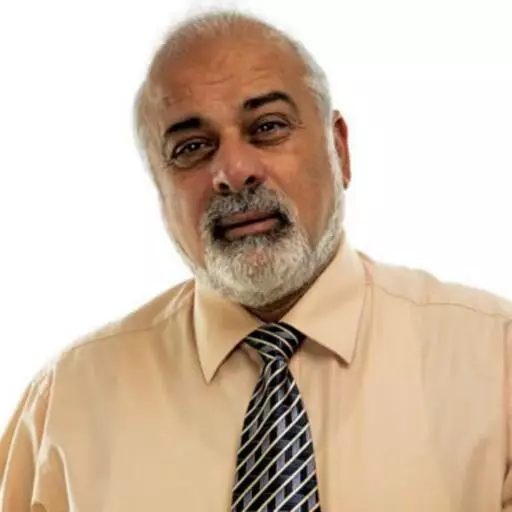
[ --Gideon Levytam--] Shalom. Holy scriptures and Israel is a ministry designed to share with the Jewish people the good news of the Lord Jesus Yeshua the Messiah and to instruct Christians on the Jewish roots of their faith. And now, teaching God's word from a Hebrew Messianic perspective. Here is Gideon Levytam.
[ --Gideon Levytam--] The study of Acts chapter nine. God wanted him to go to preach to Nineveh, to the people at Nineveh, to tell them that God is going to come in judgment over the city of Nineveh. But Jonah instead of going in one direction, he went to another direction. But he had to go to the city of Yafo.
There he went into a ship and then he ended up sailing in a different direction. Well, Yafo, about 15 kilometers away from the city of Lod. We find out that there was a disciple, a woman by the name of Tabitha, which is by interpretation called Dorcas. Tabitha is the Aramaic name that she has and actually the Hebrew name is Zvia.
Apparently she was a Jewish believer. Her name is in Aramaic is Tabitha, in Greek is Dorcas, in Hebrew is Zvia. It really the word gazelle. The gazelles that we find usually in the desert. But a feminine name. Zvi, it's the masculine. Zvia, it's the feminine. The gazelle, the feminine.
And so this woman by the name of Tabitha or Zvia in Hebrew. She was apparently a godly sister in the local assembly in Yafo, and her name was also called Dorcas. And this woman was full of good works. And she did all kind of alms. She did all kind of good deeds.
And here we find out that this woman in verse 37, it says that it came to pass in those days that she was sick and she died. Whom when they had washed her body, they laid her in an upper chamber. A godly sister by the name of Zvia or Tabitha or Dorcas, did all kind of good deeds, and she ended up dying.
Sometimes we are amazed how the Lord sometimes we don't understand why, but He removing from the midst of the saints those that were so useful. You know, we had a few times in local assemblies here in this country in Canada, some servants of the Lord who were so useful. They were blessing to the believers.
They were helping the needs. They were encouragement, they were pillars in our assembly. But for some reason, low and behold, something happened and they leave us. They die. God removed them. And we ask the question, why? You and I might be so puzzled and we say, Lord, why is it that the person that is so useful in the midst of their assembly you're removing them because we need them so much?
We are in shortage of those that are blessing to the people of God. Here's a sister. Oh, she was not a preacher in the public place of the head of her home, but nevertheless she was so useful in the midst of their assembly. And so she died. The Lord removed her from the scene, from the assembly in the city of Yafo.
But notice in verse 38 and 39 there was a call from the brothers and sisters in the city of Yafo to Peter who is found at this time in the city of Lod. So in verse 38 and 39, for as much as Lod was nigh unto Yafo, and the disciples had heard that Peter was there, they sent unto him two men desiring him that he would not delay to come unto them.
Then Peter arose and he went with them. And when he was come, they brought him unto the upper chamber. And all the widows stood by him weeping and showing the coats and the garments which Dorcas made while she was yet with them. Now, again I would like to tell you that this is in context with the Jewish believers in the city of Yafo.
Even though the vast majority of the people were not Jewish, but it is within the context of the Jewish community. Usually, when a Jewish person dies, that person should be immediately put in a grave before the sundown. If you notice a person dies in Israel, they don't wait for one week or so for a burial, they immediately as soon as possible, they're putting that person in the grave.
They feel that it's dishonoring to the body to keep the body for such a long time unburied. But in the case of the lady by the name of Tabitha here, apparently they have kept her for a while in the upper chamber. And why? Because she was not from the city of Jerusalem. She was outside of Jerusalem.
And there there was allowing to those who pass away, not in the city of Jerusalem to be buried a little bit later. And so they kept her as it says in verse 37, you notice they washed her, and they laid her in the upper chamber. And quickly they sent to Peter in verse 38 to the city of Lod, come to Yafo, don't delay.
And so Peter without delay, he rose and he went. And they brought him to the upper chamber where they have laid her. And what we find there happening two things. We find the widows, the ladies doing there, number one, they were weeping. They were sad because this one servant of the Lord in the midst of their assembly was removed from them.
They were very sad. And the second thing that they have done, they showed to Peter the garments and the coats which Dorcas made while she was with them. I could just imagine the widows there had a need. They didn't have many means. They didn't have unemployment insurance. They didn't have the government to take care of them.
It is the local assembly who took care of their own people. So Dorcas, what did she do? She says, oh, you need a coat. I'll knit you a coat. Oh, you need a head. I'll make for you a head. Whatever the need that existed, the garments, the coats she made. You can just imagine the ladies are saying they are weeping.
They say, wow, this sister had been such a blessing to us and look at us, she's gone right now. Look, she did this for me. They talk highly about this sister by the name of Dorcas. Brothers and sisters, how we need those sisters in our midst. We don't only need the brothers who may serve publicly and do some other things, but we need the sisters in the local assembly, in the local fellowship to be part to help and to build.
And sometime it cost. It's not easy to serve when people don't appreciate you all the time. But that's the attitude that we all need to develop in our lives as believers. That's a real ministry. You know, we talk about the ministry. And ministry is not standing and preaching. And ministry is serving, is ministering to the people of God.
Is helping meeting the need of the people. That's what she did. And so these ladies were weeping. And the ladies were showing to Petros, to Shimon what this woman did for them. And so it says in the next verses in verses 40 and 41, look how the Lord using Peter not only to heal a body.
That's happened in Lod. Now also to raise the dead in the city of Yafo. It says in verse 40, Peter put them all forth, and he knelt down and he prayed. And turning him to the body, he said, Tabitha, Kumi, arise. And she opened her eyes. And when she saw Peter, she sat up.
It's so nice to see how Peter is functioning. Again, you remember in the earlier verses, he said to Ananias, Yeshua, the Messiah make you whole. Not me. Here, he's turning in prayer and he's praying to God. It's so beautiful to see, and not only that, he knelt down. He was on his knees.
A confession of dependence upon God, dependence upon the Lord Yeshua, the Messiah. He knelt down and he prayed. And he turned to the body of this woman and he said to her, Tabitha, arise. You know, he did exactly the same what our Lord Yeshua, the Messiah have done in the Gospel of Mark in chapter five to another young lady by the name of Talita, not Tabitha, but Talita.
In Mark chapter five, if you remember, verses 34 to 43, especially you remember that it says about Yeshua, the Messiah, in verse 39, when He was come. This is Mark 5:39. He saith unto them, why make ye also a door and weep? The damsel is not dead, but she is sleeping.
This is Yeshua when he went there to the house of the man by the name of Jairus. And then they were laughing at him to scorn, but when he had put them all out, he talked to the father and the mother of the damsel. He took them with them, and they were with him, and he entereth in where the damsel was laying.
And he took the damsel by the hand, and he said unto her, Talita, Kumi. Talita, arise. Little lamb, arise. Which is being interpreted, damsel, I say unto you, arise. Mark 5 and verse 41. And straightly the damsel arose and walked. And she was of the age of 12 years old.
See, Peter did exactly what his master, his Messiah, his Lord have done in Mark chapter 5 to the woman by the name of Talita. Peter has been used by the Lord now to raise a woman that is called Tabitha. And he's saying, Tabitha, arise. This is verse 40 of Acts 9. And she opened her eyes, and when she saw Peter, she sat up.
And so in verse 41, he gave her his hand, and lifted her up. And when he had called the saints and widows, he presented her alive. What a joy it must have been in this local assembly in the city of Yafo when Tabitha was now alive. They were weeping. They were crying because they have lost a dear sister from their midst.
And yet now the Lord used Peter to raise Tabitha and to bring her alive to the brothers and sisters. He called them saints and widows. There were many widows apparently there who Tabitha took care of them when she was alive. And so in the last two verses of chapter nine, in verse 42, look at the result of the resurrection of Tabitha.
The result was, it was known throughout all Yafo, and many believed in the Lord. In Lod, we also read that many turned to the Lord. In Yafo, we read many believed on the Lord. And you can see that the Lord has used Peter in that way. And the last verse of chapter nine, in verse 43, Peter remained there in the city of Yafo for a little while.
It says in verse 43, and it came to pass that he tarried many days in Yafo with one by the name of Shimon, the Tanner. Simon the Tanner. Every time when we take groups to Israel, I love to take our groups to the house of Simon the Tanner. Right on the coast of the city of Yafo, right by the water.
And you can see that the signs says the house of Simon the Tanner, and you can just imagine how there is a preparation of the Lord using Peter to bring him from Lod to Yafo, from Yafo to Caesarea, which we're going to get to, and you can see the wisdom of the Lord, the ways of the Lord in leading Peter, ultimately, to open the door to the Gentiles to be part of the assembly of the living God.
So he remained with a man by the name of Simon the Tanner. If you will look carefully in your Bible, and you're wondering, it says, why did God, why did the Lord Yeshua led Simon Peter to the house of a man by the name of Simon who was a Tanner? A Tanner is a person who handled dead animals, dead bodies.
And why would he lead Peter to come to the house of Simon the Tanner and to remain with him a certain days? Because a person that handled dead bodies considered to be unclean. This job is an unclean job. If you remember in Leviticus chapter 11, God gave instruction to our people Israel of old, what animals are clean and what animals are unclean, and how those that handle those animals are to be treated and what they are to do.
But especially in verse 28, it says Leviticus 11:28, he that bears the carcasses of them shall wash his clothes and be unclean until the evening. They are unclean unto you. Look, if you just go a little bit further, verse 35. Everything where upon any part of their carcasses fall, shall be unclean.
Whether it be oven or ranges or pots. They shall be broken down, for they are unclean and shall be unclean unto you. Nevertheless, a fountain or pit wherein there is plenty of water, shall be clean. But that which is touching their carcasses shall be unclean. And if any part of their carcass fall upon any sowing seed, which is to be sown, it shall be clean.
But if any water be put upon the seed, and any part of their carcass fall thereon, it shall be unclean unto you. And notice verse 39 and 40, and if any beast of which ye may eat, die, he that touches that carcass thereof shall be unclean until even. And then verse 40, against the person, and he that eateth of the carcass of it shall wash his clothes and be unclean until the evening.
He also that bears the carcass of it shall wash his clothes and be unclean until the evening. Now, it is interesting because in the next chapter, you will find out that Peter is there in the house of Simon, the Tanner, the one who handles dead animals, the dead bodies, if you will, and he's seen a vision of animals.
It is not coincidental why the Lord bringing Peter, who was Jewish man from Galilee, from the Galilee, to a person by the name of Simon the Tanner. And apparently this man by the name of Shimon the Tanner became a believer in Yeshua, the Messiah. So Peter could stay with him at his house.
And I want another thing to mention, because the book of Acts is a transitional book that lead us from the law to grace, from the commandments to liberty in the Messiah. And so it lead us from only the nation of Israel to including the Gentile world. So the book of Acts is a transitional book.
Peter needed to learn what he had now through Yeshua, the Messiah. And that's why the Lord in his wisdom bring him from Lud to Yafo, and from Yafo to Caesarea. Because there in Caesarea, there is a man that need to come to be part of the assembly of God, a Gentile man. And so now quickly, let's go to the next verses in chapter 10 now.
All this chapter 10, verses 1 to 48, really we see how Peter is used by the Lord to open the door to the Gentiles to become part of the assembly of God, to be led unto salvation. Now the first eight verses, we see the vision that Cornelius have received in the city of Caesarea. Now you notice, in verse 32 of chapter nine, we have Lod.
In verse 36 of chapter nine, we have Yafo. Now in verse one of chapter 10, we have Caesarea, Caesarea. And so we read in verse one, there was a certain man in Caesarea by the name Cornelius, a Centurion of the band that is called the Italian band. Now here's a man by the name of Cornelius.
He was living in a city called Caesarea. And Caesarea used to be the Roman capital of Judea. There in Caesarea, there was the powerful men, the leaders there. Caesarea was known is just the capital area of the Judea area for the Romans. All they worship the Caesars. They worship their gods.
They worship their idols. But there there was a man by the name of Cornelius. He was a Centurion. A Centurion is a man who is a commander over 100 individuals. He was of the band. This band is a company of 600 soldiers. And these 600 soldiers had six Centurions for every 100 soldiers that the band was.
And so it says here in verse one that Cornelius was a Centurion of the band that is called the Italian band. This is the band that is uniquely Romans, Italian. There were other bands, but he was one of the commanders of the Italian bands. And so we read of him very interesting that he was in verse two, we have some of the characteristics of this man.
He was a godly man. Look at this. He was a devout man. He feared God with all his house. And he gave much alms unto the people and he prayed to God always. You see, that is also very interesting about this man by the name of Cornelius. There are four things that mentioned about him.
He was a devout man. He feared God with all his house. And he gave much alms to the people and he prayed to God always. He was not Jewish. He was a God-fearer. He was a Gentile who believed in the God of Israel. But he was not saved. You know, many religious people think that if they give alms, if they even pray, and if they are doing good deeds, they think that that will get them away to heaven.
But not him. He feared God. He knew the truth concerning the God of Israel, but he needed to be introduced to the Messiahship of Yeshua. To introduce to the truth in the Gospel that right now just began to be reaching now the Gentile world. And so look at this. In verse three, Cornelius sees a vision through an angel.
He saw in a vision evidently about the ninth hour of the day, an angel of God coming unto him and saying unto him, Cornelius. And he looked on him, and he was afraid and he says, what is it, Lord? And he said unto him, your prayers and your alms are come up for a memorial before God. You see, God is not
Featured Offer
Follow Gideon Levytam's journey and discover how he was led by God, through a series of exciting circumstances, to find the One his people are still waiting for.
Past Episodes

Featured Offer
Follow Gideon Levytam's journey and discover how he was led by God, through a series of exciting circumstances, to find the One his people are still waiting for.
About Holy Scriptures and Israel
As time passed by, the Lord Yeshua took dear brother John Van Stormbroek to himself. The ministry of Holy Scriptures and Israel continued with additional development. In the early 1990’s, a weekly morning Bible class began which brother Gideon Levytam led regularly in the City of Toronto. This weekly open Bible class was held in the Willowdale assembly meeting hall. Eventually, a second mid-week evening Bible class was added. In April 2002, the need for an additional outreach Bible teaching meeting arose. We begun a Saturday (Shabbat) ministry meeting in which a systematic teaching of God’s word is presented to all who attend. Together we learn God’s Word, pray for each need and the salvation of Israel, and sing songs of worship unto our God, praising Him and our Lord Yeshua the Messiah.
In Mid 2004 we started to air on Joy 1250 Radio station a 15 minute Bible teaching program called "The Holy Scriptures and Israel" with Gideon Levytam. The broadcast teaches God’s word from a Hebrew Messianic perspective and has proved to be a blessing to many. It's now aired seven days a week. Our prayer is that many more of our Israeli people will have a clear understanding of who Yeshua is, why we all need him, and come to know him as their Lord and Messiah.
About Gideon Levytam
Contact Holy Scriptures and Israel with Gideon Levytam
426 Simcoe Street
Niagara-on-The-Lake
Ontario L0S 1J0
Canada
(905) 325-1234