
Acts 9:32 to 10:8, Part 2


Peter’s Ministry in Lod, Yafo & Caesarea Part 2
Guest (Female): Shalom. Holy Scriptures and Israel is a ministry designed to share with the Jewish people the good news of the Lord Jesus, Yeshua the Messiah, and to instruct Christians on the Jewish roots of their faith. And now, teaching God's word from a Hebrew Messianic perspective, here is Gideon Levytam.
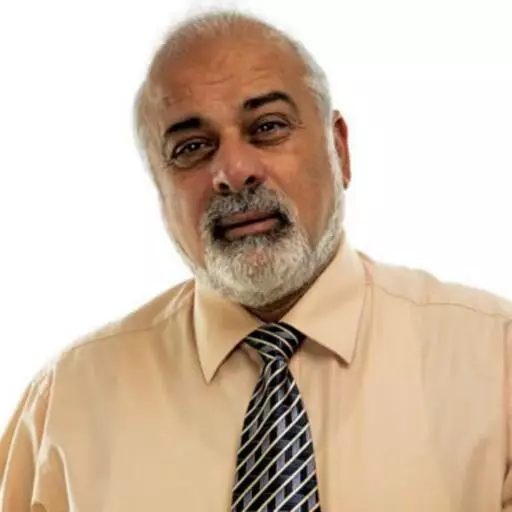
Gideon Levytam: The study of Acts chapter nine. If we look quickly in chapter eight of the book of Acts, I am going back. If you remember, it says in Acts chapter eight at verse 14, "Now when the apostles which were in Jerusalem heard that Samaria had received the word of God, they sent unto them Peter and John." Chapter eight of Acts. "Who when they were come down, they prayed for them that they might receive the Holy Spirit."
Peter was in Jerusalem, Peter was in Samaria, and now Peter is going to be the one that will introduce the Gentile world into the body of Messiah, to use the key to open the gate for them, if you will, to enter into the body of Messiah. So, Shaul is going to be the apostle to the uncircumcision, but before he can start his ministry, it was Peter who needed to open the gate and open the door.
Now, in an abrupt way, we end up in chapter nine at verse 31 that there was fear of the Lord, the comfort of the Holy Spirit. They were multiplied there when Shaul was in Damascus and then later on he went to Jerusalem. Now all of a sudden, we stop reading about Saul, and Peter comes into the picture. In verses 32 of chapter nine all the way to chapter 11 and verse 18, we see the witness of Peter.
Then Shaul, Paul, comes back into the picture and continues the ministry among the Gentile world in which the Lord has called him to serve. Now, in these verses that we have read today, Acts chapter nine verse 32 into Acts chapter 10 and verse eight, we can see how the Lord is using Peter in three ways. Number one, to heal the body of a person. Number two, he is using him to raise the dead. Number three, he is using Peter to lead a Gentile unto salvation.
Sometimes people ask and say, you know, there are certain things that are very important in life for a person. And they say, "What is the most important thing in life for the human race?" Is it the healing of the body? Is the most important thing the resurrection from the dead? Or is the most important thing in life for a person to receive a new life, a regeneration?
What we find out here in these verses as we move on to chapter 10 is that really the most important thing for the whole human race is not to have only a nice body, and not only to have a resurrected body like Lazarus rose from the dead, and others were resurrected from among the dead in the scripture. The most important thing in life for every individual today is the regeneration of the soul.
If a person will have a perfect life here on earth, the most beautiful body here on earth, a long life here on earth, and even like Lazarus and others who rose from the dead and lived a little bit longer after resurrection, you will notice in scripture that the most important thing is regeneration. If a person is not saved and his or her sins are not forgiven, this person only lives for a certain length of time and no longer with joy and peace in his or her heart.
That is what we learn here as we move on from chapter nine to chapter 10. We are talking about three cities here. The first one is Lod, the second one is Yafo, and the third one is Caesarea. We are also talking about the three ways in which the Lord used Peter. He used him to heal a sick person, he used him to raise a dead person, and he used him to lead a sinner to the knowledge of sins' forgiveness. The first one is nice, the second one is even nicer, but the third one, the regeneration, is the ultimate. What shall it profit a man or a woman if he shall gain the whole world but lose his own soul? What shall a man give in exchange for his soul?
Look at how beautiful here we are being led into the next step. Peter now comes to the front here. In verses 32 to 35 of Acts chapter nine, we see Peter being used by the Lord to heal the body of a man that is called Aeneas. In verse 32, first of all, Peter arrives to the city of Lod. It says, "It came to pass as Peter passed through all quarters, he came down also to the saints which dwelt at Lod." I know in the King James it says Lydda, but it is actually Lod. It's the Old Testament city called Lod.
We read about Lod in various passages. That city is mentioned in First Chronicles chapter eight and Nehemiah chapter 11. It is a city that was built there by the tribe of Benjamin and it's called Lod. If you fly to Israel today and you land in Israel, you are landing at the airport which is called Ben Gurion Airport, which is located by the city of Lod. Lod is right on the coast there. It is not too far from Tel Aviv. It is not too far from Jerusalem and so on. It is in the center, but it's closer to the coast there.
Here he is finding himself coming to the city of Lod, but notice it says in verse 32, "He came down also to the saints which were at Lod." Saints were those who were believers. Here we find Peter is arriving to the city that is called Lod and he went among the believers. Apparently, those were Jewish believers. Yet the door to the Gentile world had not yet opened.
He came to the city of Lod and there he is coming to the saints. I think you will find later on in the scripture, especially in the Epistles, that when the apostles writing to the believers in various cities like Romans, First Corinthians, Second Corinthians, and Galatians, usually the apostle uses the word "saints" rather than "disciples." Even though the word "disciples" does interchange here and there, the word "saints" means "set apart."
They were believers who were set apart for God. They were saved, they were forgiven, but they were positionally saints. Maybe we don't always behave as saints, but we are saints positionally. That means God has set the brothers and sisters in the city of Lod for himself, set them apart.
He came to Lod and there he found in verse 33 a certain man by the name of Aeneas, which had kept his bed eight years. He was sick of palsy, he was crippled. Peter came to Lod and to the believers there, and the first thing that he has to be confronted with is with a man that his name is Aeneas. Aeneas apparently was sick for eight years. He was sick of palsy. He was actually a crippled man.
When he came to this place and he saw this man by the name of Aeneas, most likely they were Jewish believers. Even though in Lod and also later on in Yafo there were a lot of Gentiles, there were actually Gentile majorities, Peter is still dealing with the Jewish believers. He began in Jerusalem and later on he went elsewhere, but it is mainly dealing with Jewish believers. Then what happened? Aeneas, there for eight years, is sick. He cannot walk properly, he is crippled.
It says here in this verse that he "kept his bed." In other words, he was subject to constantly be close to his bed. He depended upon his bed. He constantly needed to be in bed. People needed perhaps to carry him. He could not walk properly. He was crippled for eight years. Notice what Peter does. Peter said unto him, "Aeneas," in verse 34, "Yeshua the Messiah makes thee whole. Arise and make thy bed." He arose immediately, no delay.
Here you can see the power that God had given to this man by the name of Simon Peter with regard to the healing of the body. I want to make a point here. Not everybody can do that. Not everybody had been gifted in this area. Even in the first century, the very fact that Peter needed to come to the city of Lod already proved to us that not everyone could do this. God has used this man by the name of Peter who was an apostle. He used him and gave him the gift in the name of the Lord Jesus to heal a person that was sick of palsy for eight years.
Can you imagine what kind of life to live without the ability to walk properly? Can you imagine what it meant for this man? By the way, he was saved. He was a child of God. For him, the salvation was the most important thing. He was a part of the saints that had been sanctified. And yet Peter was used by the Lord Jesus, the Messiah, in the city of Lod to give healing to the man by the name of Aeneas.
He doesn't take credit for himself. Notice he says, "Yeshua the Messiah make thee whole." I don't make you whole. It's not me, Peter, that come and I'm the one that make you healthy, make you whole. No, it's not me. It is Yeshua, Jesus, the Messiah that makes thee whole. This is important to realize that if there is healing in a life of anyone, it only comes to mankind through the person of the Lord Jesus, the Messiah. It's not man, it's not you, it's not me, it's not Peter.
If you remember in Acts chapter three and verse 16, "And in His name through faith in the name He has made this man strong." Remember in chapter three when Peter and John went out to the temple, there was a man that was asking for alms there? Peter said to him, "Silver and gold have I none, but such as I have I give it unto you in the name of the Lord Jesus the Messiah of Nazareth, rise up and walk."
Peter was used to minister to his brethren in the city of Jerusalem and now he is used by the Lord Jesus the Messiah to minister to the need of a single individual by the name of Aeneas. "Jesus the Messiah makes thee whole. Arise, make your bed." He arose immediately and he made his bed. Now the making of the bed is not necessarily depending on somebody else to make the bed and make himself ready. He got up and he's the one who took care of this vessel, the bed that was carrying him. Now because of the power through the name of Yeshua the Messiah, he healed this person. Now this person by the name of Aeneas is the one who makes his own bed.
God, Yeshua, used Peter in the healing of the body in the city of Lod. But that was not where Peter was going to stay because Peter is on his way to the city of Caesarea. Yeshua was going to use him to open the door for the Gentile world to come in to be part of the assembly of the living God. It says in verse 35, "All that dwelt in Lod and Sharon saw him and they turned unto the Lord." The witness of this man by the name of Aeneas, right now no longer crippled, able to walk, healed from his disease of palsy, was a testimony to the people in the city of Lod in the area called Sharon, the plain of Sharon there.
People looked at this, they saw him, and they turned to the Lord. This was a witness of the power of the Lord Jesus, the Messiah, and many turned to the Lord. It's so nice to see that people turned to the Lord. Remember again in this text, "all that dwell in Lod" does not mean all the people because the vast majority of the people were not Jewish, they were Gentile. So, the "all" here is in context of the Jewish community in this area who have not yet come to faith in the Messiah. They have turned to the Lord and they became also part of the assembly that existed in the city of Lod.
Remember again, the key was not used yet to open the door to the kingdom of heaven to the Gentile world. It will be. He's on the way to Caesarea to open the door. So, Peter was used by Yeshua the Messiah to heal the body of Aeneas in the city of Lod. This is verse 32, 33, 34, and 35. Now the next verse, verse 36 on to the end of this chapter nine, we find out another thing that Peter was used by the Lord. This time, Peter was used by the Lord in raising a person from the dead in another city, the city that is called Yafo. You find the word Joppa here in the King James version, but it's really the Hebrew city of Yafo.
Look, it says in verse 36, "And there was at Joppa a certain disciple by the name of Tabitha, which by interpretation is called Dorcas. This woman was full of good works and alms deeds which she did." Now, Yafo is approximately 15 kilometers from the city of Lod. The distance is very short. About 15 kilometers from the city of Lod to the city of Yafo. You remember the city of Yafo very well from the book of Jonah the prophet. He went down to Joppa, which was right by the coast. He took a ship and he went down into the ship. And then they sailed away from the location where God wanted him to go.
God wanted him to go to preach to Nineveh, to the people at Nineveh, to tell them that God is going to come in judgment over the city of Nineveh. But Jonah, instead of going in one direction, he went to another direction, but he had to go to the city of Yafo. There he went into a ship and then he ended up sailing in a different direction. Yafo, about 15 kilometers away from the city of Lod. We find out that there was a disciple, a woman by the name of Tabitha, which is by interpretation called Dorcas.
Tabitha is the Aramaic name that she has and actually the Hebrew name is Tzvia. Apparently, she was a Jewish believer. Her name in Aramaic is Tabitha, in Greek is Dorcas, in Hebrew is Tzvia. It's really the word "gazelle," the gazelles that we find usually in the desert. But the feminine name, Tzvi is the masculine, Tzvia is the feminine, the gazelle, the feminine. This woman by the name of Tabitha or Tzvia in Hebrew, she was apparently a godly sister in the local assembly in Yafo. Her name was also called Dorcas, and this woman was full of good works. She did all kind of alms, she did all kind of good deeds.
Here we find out that this woman, in verse 37, it says that, "it came to pass in those days that she was sick and she died. Whom when they had washed her body, they laid her in an upper chamber." A godly sister by the name of Tzvia or Tabitha or Dorcas did all kind of good deeds and she ended up dying. Sometimes we are amazed how the Lord, we don't understand why, but he's removing from the midst of the saints those that were so useful. We had a few times in local assemblies here in this country, in Canada, some servants of the Lord who were so useful.
They were a blessing to the believers. They were helping the needs. They were encouragement, they were pillars in the assembly. But for some reason, something happens and they leave us, they die. God removes them. We ask the question, "Why?" We say, "Lord, why is it that the person that is so useful in the midst of the assembly You are removing them because we need them so much?" We are in shortage of those that are blessing to the people of God.
Here is a sister. She was not a preacher in the public place or the head of a home, but nevertheless, she was so useful in the midst of the assembly. And so she died. The Lord removed her from the scene, from the assembly in the city of Yafo. But notice in verse 38 and 39, there was a call from the brothers and sisters in the city of Yafo to Peter, who is found at this time in the city of Lod.
In verse 38 and 39, forasmuch as Lod was near unto Yafo, and the disciples have heard that Peter was there, they sent unto him two men desiring him that he would not delay to come unto them. Then Peter arose and he went with them. When he was come, they brought him unto the upper chamber, and all the widows stood by him weeping and showing the coats and the garments which Dorcas made while she was yet with them.
Again, I would like to tell you that this is in context with the Jewish believers in the city of Yafo. Even though the vast majority of the people were not Jewish, it is within the context of the Jewish community. Usually, when a Jewish person dies, that person should be immediately put in a grave before the sundown. If you notice, if a person dies in Israel, they don't wait for one week for a burial. They immediately, as soon as possible, are putting that person in the grave. They feel that it's a dishonoring to the body to keep the body for such a long time unburied.
But in a case of the lady by the name of Tabitha here, apparently they have kept her for a while in the upper chamber. Why? Because she was not from the city of Jerusalem. She was outside of Jerusalem. There they were allowing those who pass away to wait. Peter was also near. He was at Lod. It's about 15 kilometers, about nine miles from Yafo. Peter was there. They said, "Let's send and call Peter to come to us." They expected Peter to come and do something. Otherwise, they would have buried her already. They called Peter to come to Yafo. Next time we continue. Shalom.
Featured Offer
Follow Gideon Levytam's journey and discover how he was led by God, through a series of exciting circumstances, to find the One his people are still waiting for.
Past Episodes

Featured Offer
Follow Gideon Levytam's journey and discover how he was led by God, through a series of exciting circumstances, to find the One his people are still waiting for.
About Holy Scriptures and Israel
As time passed by, the Lord Yeshua took dear brother John Van Stormbroek to himself. The ministry of Holy Scriptures and Israel continued with additional development. In the early 1990’s, a weekly morning Bible class began which brother Gideon Levytam led regularly in the City of Toronto. This weekly open Bible class was held in the Willowdale assembly meeting hall. Eventually, a second mid-week evening Bible class was added. In April 2002, the need for an additional outreach Bible teaching meeting arose. We begun a Saturday (Shabbat) ministry meeting in which a systematic teaching of God’s word is presented to all who attend. Together we learn God’s Word, pray for each need and the salvation of Israel, and sing songs of worship unto our God, praising Him and our Lord Yeshua the Messiah.
In Mid 2004 we started to air on Joy 1250 Radio station a 15 minute Bible teaching program called "The Holy Scriptures and Israel" with Gideon Levytam. The broadcast teaches God’s word from a Hebrew Messianic perspective and has proved to be a blessing to many. It's now aired seven days a week. Our prayer is that many more of our Israeli people will have a clear understanding of who Yeshua is, why we all need him, and come to know him as their Lord and Messiah.
About Gideon Levytam
Contact Holy Scriptures and Israel with Gideon Levytam
426 Simcoe Street
Niagara-on-The-Lake
Ontario L0S 1J0
Canada
(905) 325-1234