
Acts 9:1-19, Part 2


Shaul the Persecutor and Yeshua the Messiah Part 2
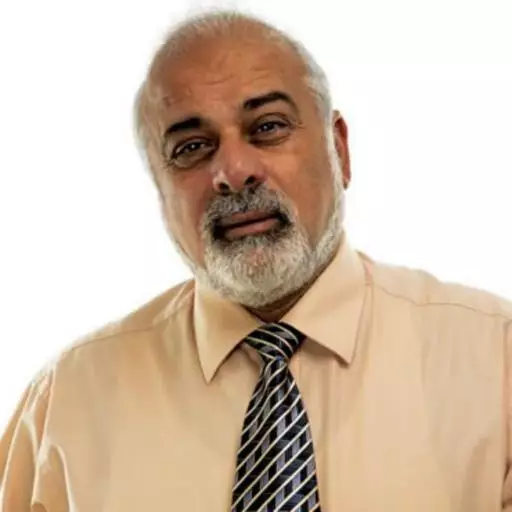
Announcer: Shalom. Holy Scriptures and Israel is a ministry designed to share with the Jewish people the good news of the Lord Jesus, Yeshua the Messiah, and to instruct Christians on the Jewish roots of their faith. And now, teaching God's word from a Hebrew Messianic perspective, here is Gideon Levytam.
Gideon Levytam: The study of Acts chapter 9. Earlier we read Isaiah chapter 64 and verse 6. And Isaiah wrote to our brethren, the nation of Israel, and this is the confession of the nation of Israel, which they said, "We are all as an unclean thing," Isaiah 64:6. "And all our righteousnesses are as filthy rags, and we all do fade as a leaf, and our iniquities, like the wind, have taken us away."
Isaiah prophesied to the nation of Israel 750 years prior to the Messianship of Yeshua, telling them, "Listen, Israel, you will have to come to a point that you will acknowledge that all your righteousnesses are as filthy rags because all the good deeds that we do and all the righteousness that we do come from the old nature and is not sufficient for a holy and a righteous God."
And that's why the second problem that we want to mention about Paul, about Sha’ul, is that he depended upon his own righteousness. And how sad it is today when men and women and people in many religious groups depend upon their own righteousness. They think, "I can attain righteousness from God by acting or doing something."
This is exactly the problem of Adam and Eve in the garden when they have covered their nakedness with fig leaves. And even if they covered their nakedness with fig leaves, fig leaves do not avail. God had to cover them with a garment of skin of an animal that became a sacrifice for them. And so we learn here that he trusted in his own righteousness.
And you know, he mentioned a lot about himself. Paul later on when he wrote to the Philippians and he said to them, "You know what? Do you want to compete with me? Who had more righteous living in his life?" He said to them, "Look in Philippians 3, verse 4. He said, 'If you think about having confidence in the flesh, I have so much more to be confident in my own flesh.'"
He says, "I was circumcised on the eighth day. I was of the stock of Israel. I'm of the tribe of Benjamin. I'm a Hebrew of the Hebrews. As touching the law, I was a Pharisee. Concerning zeal, I was persecuting the assembly. Touching the righteousness which is of the law, I was blameless." That's what he says about himself.
He had the kind of a godly life that he could say, "Righteousness, I was blameless." He had had a righteous life, righteous living, and he had trusted in his righteous living in order to be declared just by God. And that's why he had so much confidence in himself. That's why when he saw other brethren of his, Hebrew brethren believing in Yeshua the Messiah, he was ready to persecute them. He was ready to tell them that they were wrong, they are going astray, they are not following the God of Abraham, Isaac, and Jacob.
So the first one, he was spiritually blind. The second thing, he was depending upon his own righteousness. And I trust, brothers and sisters, that we all understand that. We cannot trust our own merits, our own righteousness, because all our righteousnesses before God are totally filthy rags. And we need righteousness that we receive from somebody else without merit, without work, without anything that we have done.
The third thing that I would like to say about Sha'ul is that Sha'ul thought that Yeshua died and done away. He thought, "Here we go." He says, "Listen, they talked about Yeshua the Messiah. I heard about him. I was a witness to the truth that really he died, he's no longer in existence. And you know, they're starting to tell us that he's alive, but I don't believe it."
He did not believe that Yeshua rose from the dead and had been ascended to heaven. And he needed to learn that. A lot of people today just the same as Sha’ul, like Paul, thinking that Jesus had died, he's dead. They don't recognize that he's alive, that he's living at the right hand of God the Father, that he's moving about among his people in the power of the Holy Spirit of God, that he's coming again to judge this world in righteousness. He didn't realize that.
He was blinded spiritually. He was proud, he was self-righteous, and he thought that the story about this Jesus had ended when he died. Well, he made a mistake because throughout the early parts of the book of Acts, the disciples again and again spoke about the resurrection of the Messiah.
Even Peter said, "This Yeshua, God raised from the dead, whereof we are his witnesses," Peter said. "We have been witnesses of Yeshua that he was raised by God, he has been raised from the dead." And Stephen, if you remember, at the end of chapter 7 in our study together earlier, Stephen we read, looked steadfastly and he saw the glory of God and Yeshua standing at the right hand of God, Acts chapter 7 and verse 55.
He had those three problems, like many have today. Number one: blinded spiritually, cannot see beyond the Scripture, cannot understand the things of God. Secondly: they have trust in their own self-righteousness. And thirdly: they think that this Jesus that they have heard about has finished, has died. When he had gone to the cross, he died and he's away, and there is no need to talk about him anymore.
Well, in the next verses of Acts chapter 9, we see the Lord now reveal himself to Sha'ul. Look what we read here in verse 3. After the points that I have spoken here, in verse 3 we see now he is seeing a vision that came from heaven. We read in verse 3, "And as he journeyed, he came near Damascus, and suddenly there shined round about him light from heaven."
Can you imagine the sight? He's going on a way to Damascus with some people along that he took with him. As he's riding and going on a way to Damascus, all of a sudden the Shechinah glory, we call it in Hebrew the Shechinah, all of a sudden there came upon him a light that came from heaven.
This light is interesting because many times in the Bible we see some unique situations. For example, if you remember, the Magi, the wise men in Matthew chapter 2, saw a star. A star that is moving from the east to the west. A star that moved from the west and going all the way to Bethlehem and shining right above that baby that was born by the name of Yeshua in Bethlehem.
What is that star? Here we see a light shining round about him, a light that came from heaven. Well, many times this light that comes from heaven, there is another word for that, it's called the Shechinah. In Hebrew, Shechinah, that's the glory of God which is resting. It rested upon the Tabernacle. It rested upon the Temple when the Temple was erected in the city of Jerusalem. The Shechinah in the English is the Shechinah. It comes from the word 'lishkon', to rest, to settle, to reveal God's glory.
And here he is on the way, and he sees a light that came from heaven. You know, when we're going to get to chapter 22 and later on to chapter 26, you can see that when Sha'ul tells us the story again of his confrontation with Yeshua the Messiah, he makes this expression far greater and greater and greater.
Here in chapter 9, he said he saw a light that is shining from heaven. In chapter 22, he's also repeating the story. In verse 6, he's enlarging the expression. He says in verse 6, "I saw from heaven a light round about me, a great light," he says now in chapter 22 and in verse 6. Not only a light, but a great light.
And in chapter 26, if you read there in verse 13, he says this expression. He says, "And suddenly I saw in the way a light from heaven above the brightness of the sun, shining round about me." You see, in Acts 9, it was a light from heaven. In Acts chapter 22, he is speaking about a greater light. And in Acts chapter 26, he says a light that is brighter than the sun.
What we learn of his appreciation of what he saw in that vision on the way to Damascus, the vision that he had experienced? So this light that came and suddenly shined round about him, a light that came from heaven. And you see, now the Lord is going to deal with Sha'ul and leading him to himself because the next verses, dear brothers and sisters, in verses 4 and 5 and 6, we see the Lord calling Sha'ul from heaven.
And that is beautiful. You know, there are two types of encounters. There is the experiential encounter and there is what you call the encounter that we go through the word, it is the teaching encounter. There are two types of encounters. Some people encounter the person of the Lord Jesus, the Messiah, through an experience. Some have had maybe accidents in their life, so-called accidents. Others have all kinds of experiences in their life. That is what Sha'ul has had. Others did not have any specific experience, but they have read the Scripture, were convicted by the Spirit of God, and came to faith in Yeshua the Messiah.
Well, Sha'ul here has an encounter. And so in verses 4, 5, and 6, look at the three things that we find in these verses. First of all, in verse 4, he heard the call. Notice, it's verse 4. It says he fell to the earth and he heard a voice saying unto him, "Sha'ul, Sha'ul, why do you persecute me?"
Notice, the Lord is calling him from heaven in the Hebrew tongue, in the Hebrew language. And he called him Sha'ul, Sha'ul. The very fact that he called him twice, it speaks of the fact that he is calling his attention, immediate attention to the call of the Lord. You remember it was Jacob in the book of Genesis where God called him, "Ya'akov, Ya'akov!" You remember when it comes to Shmuel, Samuel, when God called him in 1 Samuel in chapter 3, calling him "Shmuel, Shmuel!" Need to call to his attention, to get his awareness of his call from God, from the Lord.
And here he's saying to him, "Sha'ul, Sha'ul, why do you persecute me?" Now mind you, we don't see Sha'ul persecuting the Lord because the Lord was in heaven. But you see what happened: when Sha'ul was persecuting the brethren, the believers. And because we are the body and the Lord Yeshua is the head in glory, a persecution of the body is a persecution of the head. A persecution of the believers is a persecution of our blessed Lord Yeshua the Messiah.
And he said to him, "Sha'ul, Sha'ul, why do you persecute me?" the Lord is saying. It shows us, brothers and sisters, of the care that the Lord has for his own people. You know, when you and I are experiencing discomfort, if you will, or persecution and misunderstanding, the head in glory in heaven, the Messiah himself, he can feel it going through with us through the experiences that we do experience here on earth in this world.
And so the sufferings of the believer, the persecution of the assembly was the persecution of the Lord himself. And so he's saying to him, "Sha'ul, Sha'ul, why do you persecute me?" in verse 4. And now immediately we see here in verse 5 that Sha'ul is responding and he is saying to him, "Who are you, Lord?"
Notice he's calling him Lord. In other words, you can see the very fact that he called him Lord here, even though he asked "Who are you?", in some measure he realized that someone unique is calling him, who he can call Lord. Recognizing the Messiah, recognizing that he is Lord. And then the Lord is saying to him in a simple word in verse 5, "I am Yeshua, whom you persecute. I am Yeshua, I am Jesus, whom you persecute."
"It is hard for you to kick against the pricks." Apparently Yeshua was appealing to Sha'ul and saying to him, "I am Jesus. You're persecuting me by running after the believers, by getting letters from the High Priest, going to Damascus, bringing them, desiring to bring them and to hold them to the Jerusalem to prison." And ultimately what he had done to them, killing some of them, proven that he hated Jesus through the believers.
And Yeshua had to remind him. He says, "Listen, when you're persecuting them," he says, "I am Yeshua, whom you are persecuting." And that expression "it is hard for you to kick against the pricks," it's like an animal that needed to be controlled. And he was so much, as it said, he was breathing out threatening against the believer, slaughters against the believer. He needed to be controlled. He was not being controlled and he was without any reservation. He was persecuting the believers. He was consenting unto the death of Stephen. He made havoc of the believers, to those who believed in Yeshua the Messiah.
And so the Lord Jesus spoke with him from glory, and it must have been a tremendous experience that this light shone round about him and the voice of the Lord coming from heaven, calling him in the Hebrew tongue, "Sha'ul, Sha'ul, why are you persecuting me?" And then he said to him, "I am Jesus, whom you are persecuting."
You remember, brothers and sisters, when we read in the Gospel of Matthew when Yeshua himself before he died, he was talking about the tribulation period. And he was talking about events that will occur during the tribulation. And he was talking about those that will treat the believers in a right way. He says, "As much as you have done it to the least of my brethren, you have done it unto me." How the believers are being treated by the world is exactly how they have treated the Lord Jesus the Messiah.
And here we see the way that he had treated the believers, and the Lord Jesus said to him, "You are persecuting me. I am Yeshua, whom you are persecuting." And so after he said this to him, he, trembling in verse 6, he was astonished, and it must have been an amazing experience. And he says, "Lord..." Notice this is the second time he is calling him Lord in this text. He's saying to him, "Lord, what will you have me to do?"
You see, here we can see the salvation of Sha'ul. It is right here in this experience that we can see the change in his life. No delay. He was with letters in his hand, heading up towards Damascus to destroy the believers, to bring them to Jerusalem. And now he hasn't even arrived to Damascus, there was a change in his life.
And now from being a persecutor of the believers, a persecutor of Yeshua, now he's asking him, calling him Lord, telling him, "What do you want me to do, Lord? What do you want me to do?" That's what happened to you and I when we became believers. Once we didn't like him, we didn't want to hear about him, we rejected him. And when we became believers, something had happened, there was a change in our lives. All of a sudden we wanted to serve him, we wanted to do something for him.
So he is saying to him, "What will you have me to do, Lord?" And that is important. The Lordship of Jesus is very important. We don't only need him as a Savior, dear brothers and sisters, but we also have to recognize that he is Lord over our lives. He is the one that is in charge. He's the one that tells us how to live, what to do. That's the way that he would want to see this in the life of each and every one.
And so we can see that he is saying to him, "What will you have me to do, Lord?" And the Lord gave him an answer. And in verse 6, he is giving him that answer and he's saying to him, "You know, arise, go into the city, and it will be told to you what you must do." You get up, go to the city (at that time, of course, he was going to the city of Damascus), you go to Damascus, go to the city and you will see the things will be done there. Someone will come and tell you what you need to do.
And so these verses 4, 5, and 6, we see the salvation, the conversion of Sha'ul, the acceptance of Yeshua the Messiah. It was an experiential salvation. He experienced something unique on the way to Damascus. And so look at it: in verses 7, 8, and 9, Sha'ul was without sight for three days. We find him trembling and he was astonished in verse 6.
And then in verse 7, "The men which journeyed with him stood speechless, hearing a voice, but they didn't see any man. And Saul arose from the earth, and when his eyes were opened, he saw no man. But they led him by the hand and they brought him to Damascus. And there he was three days without sight, and neither did he eat or drink."
Notice the difference that happened to him here. Just before he accepted Yeshua, he was so strong, trusted in himself, in his own righteousness. He had the letters from the rabbis, from the priests to go and to take the believers from the synagogues to bring them to Jerusalem. Right now, he was no longer able to do this on his own. He became helpless and dependent totally upon others. He became blind, as it says here in verse 8. He saw no man. He had to be led by others and to be brought unto Damascus. Completely dependent now upon others, blinded, unable to see, unable to do anything anymore.
But something happened to this man by the name of Sha'ul. He became a child of God. He became a believer in Yeshua the Messiah. And this is wonderful, brothers and sisters, that there is a change in the life of a person coming to acknowledge the Messianship of Yeshua. Now notice, let's move on into the next verses, verses 10 to 19. We see now...
Featured Offer
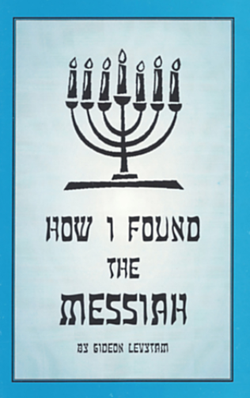
Follow Gideon Levytam's journey and discover how he was led by God, through a series of exciting circumstances, to find the One his people are still waiting for.
Past Episodes

Featured Offer
Follow Gideon Levytam's journey and discover how he was led by God, through a series of exciting circumstances, to find the One his people are still waiting for.
About Holy Scriptures and Israel
As time passed by, the Lord Yeshua took dear brother John Van Stormbroek to himself. The ministry of Holy Scriptures and Israel continued with additional development. In the early 1990’s, a weekly morning Bible class began which brother Gideon Levytam led regularly in the City of Toronto. This weekly open Bible class was held in the Willowdale assembly meeting hall. Eventually, a second mid-week evening Bible class was added. In April 2002, the need for an additional outreach Bible teaching meeting arose. We begun a Saturday (Shabbat) ministry meeting in which a systematic teaching of God’s word is presented to all who attend. Together we learn God’s Word, pray for each need and the salvation of Israel, and sing songs of worship unto our God, praising Him and our Lord Yeshua the Messiah.
In Mid 2004 we started to air on Joy 1250 Radio station a 15 minute Bible teaching program called "The Holy Scriptures and Israel" with Gideon Levytam. The broadcast teaches God’s word from a Hebrew Messianic perspective and has proved to be a blessing to many. It's now aired seven days a week. Our prayer is that many more of our Israeli people will have a clear understanding of who Yeshua is, why we all need him, and come to know him as their Lord and Messiah.
About Gideon Levytam
Contact Holy Scriptures and Israel with Gideon Levytam
426 Simcoe Street
Niagara-on-The-Lake
Ontario L0S 1J0
Canada
(905) 325-1234