
Acts 8:26-40, Part 2


Philip and the Ethiopian Eunuch Part 2
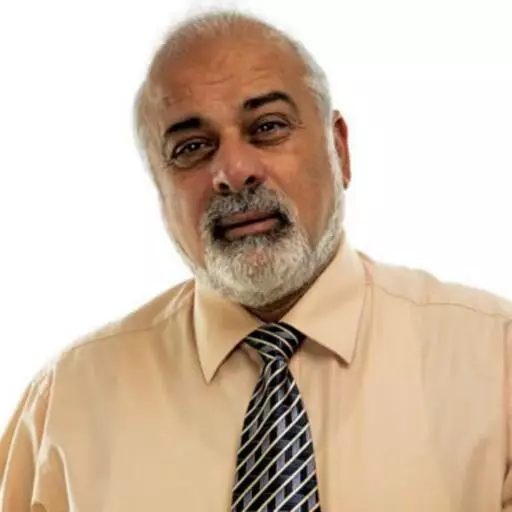
Guest (Male): Shalom. Holy Scriptures and Israel is a ministry designed to share with the Jewish people the good news of the Lord Jesus Yeshua the Messiah and to instruct Christians on the Jewish roots of their faith. And now, teaching God's word from a Hebrew Messianic perspective, here is Gideon Levytam.
Gideon Levytam: The study of Acts Chapter 8. Look at the honesty of the Ethiopian eunuch. Look at his response. In verse 31, he said, "How can I understand it except some men should guide me?" And he desired Philip that he would come up and sit with him.
It is so nice to see that he was getting ready. He really longed to know what the scripture says. This will remind us of many that come across our pathway in our life that we do not need to work hard to convince them about Yeshua the Messiah. They are ready. The Spirit of God has already prepared the ground ahead of time and they come your way without you even doing much except simply coming and sitting with them, spending the time with them, and giving them your time so you can explain to them and allow the Spirit of God to work in their hearts, leading them ultimately to the Lord Yeshua the Messiah.
Years ago, I remember I had opportunities to share with people the message of the gospel. With some, I could read and I could share and I could speak and spend so much time and it does not seem to grasp. They do not seem to get a hold of it. But with others, it seems to be so easy because you just come and sit and you read with them and they ask you questions and ultimately you lead them to know Yeshua the Messiah. It seems to be without effort.
What is the difference? The one has hardened his or her heart, not led by the Holy Spirit of God. The other, with a preparation by the Lord, the heart is softened. The Spirit of God has been moving and preparing them to accept Yeshua the Messiah. Notice with Philip, he does not have to work hard in that sense. He is simply obeying the Spirit of God's call to go into the desert place to meet that man.
Philip is going there and he is asking him, "Do you understand what you read?" and he says, "How can I understand except someone will guide me?" He wanted Philip to come up to sit with him in the chariot. This is also very unusual. Usually, when you want to talk to somebody about Yeshua, he says, "Get away, I don't want to hear about that." Here is a man who is inviting you to sit. "Come sit with me, explain to me, tell me about what I was just reading."
In this verse 31, he invited Philip to sit with him. In verse 32 and 33 are very precious verses because in these two verses there is a quotation of Isaiah Chapter 53. It says the place of the scripture which he read was this: He was led as a sheep to the slaughter and like a lamb dumb before his shearers so he opened not his mouth. In his humiliation his judgment was taken away and who shall declare his generation? For his life is taken from the earth.
He was reading one of the most precious texts found in the Bible. Notice how many times the word "He" is mentioned here? About seven or eight times the word "He" is mentioned here in these two verses. It is actually Isaiah 53 verse 7b to Isaiah 53 verse 8a. These verses are very precious because it speaks to us of the sufferings of the Son of God, Yeshua the Messiah.
These verses really touch the strings of our hearts because it speaks to us about one that went to suffer on our behalf. One that was willing to lay down his life, rejected and despised. In fact, Isaiah Chapter 53 in verse 3 says that he was a man of sorrows which have been acquainted with grief. Have you ever been misunderstood in your life? Have you ever felt that somebody rejected you and somebody set you aside and somebody despised you?
This is nothing compared to what the Son of God had to experience in his life. He was like a sheep led to the slaughter. He did not speak a word. He could speak for himself but he did not speak a word for himself. You remember when Yeshua was on the cross, many said, "He saved others, himself he cannot save." You remember when the two thieves in Luke Chapter 23 on the two sides of the cross of Yeshua the Messiah, one of them railed at him and said to him, "If you are the Son of God, save yourself and us."
You remember what the other one said? "Dost not thou fear God seeing we are in the same condemnation? But this man have done nothing amiss." There was no reason for the Lord Jesus the Messiah to be taken to the cross and to be crucified for any fault of his own. He laid down his life voluntarily, allowing people to take him away, allowing people to be taking him from judgment to judgment and ultimately he allowed them to take his life away.
In John Chapter 10, Yeshua said, "No man taketh away my life. I lay it down of myself that I may take it back. This commandment have I received from my father." What a beautiful picture of the Messiah that warms our hearts to see what he was willing to do for us. Isaiah, the Hebrew prophet, was writing about this man already 750 years prior to his coming. He was writing about God's Son, Israel Mashiah, the savior of this world.
This is very precious. The sheep which was led to the slaughter. He was reading this and then notice in the next verse, the question of the eunuch to Philip. He said in verse 34, "And the eunuch answered and he said to Philip, I pray thee, of whom does the prophet speak this? Does he speak this of himself or some other man?" He wanted to know whom the prophet speaks about.
How wonderful that he wanted to know about this man that Isaiah spoke so vividly about and he asked Philip, "Philip tell me, whom does the prophet speak about? Does he speak about himself or does he speak about another man?" Philip had this greatest opportunity. He had been already preaching in Samaria. The crowds have come to hear about Jesus but Philip had an opportunity to lead one single searching soul. He had the opportunity to lead him to Yeshua and notice, as simple as possible.
In verse 35, Philip just opened his mouth and he began from the same scripture Isaiah Chapter 53 and he simply preached unto him Yeshua. He was simply telling him about Yeshua. The man that was born in Bethlehem, the man who lived in Nazareth, the man who ministered in Galilee, the man from Galilee, the man who ministered in the temple area and shared the word of God among the people of Israel, the man Jesus.
Philip does not say to him he is the Son of God. He does not speak about his divine nature even here. He is strictly speaking to him about the humanity of Yeshua the Messiah. He preached unto him Yeshua. Whom does the prophet speak about? He preached unto him Yeshua. We learn in the scriptures that the prophets of Israel always wanted to find out about the promises that were given to them in the word of God.
Peter wrote in 1st Peter Chapter 1 and verses 10 and 11, "Of which salvation the prophets have inquired and they search diligently who prophesied of the grace that should come unto you." They were searching what manner of time the Spirit of the Messiah which was in them did signify when it testified beforehand of the sufferings of the Messiah and the glory that should follow. The Hebrew prophets longed to find out about Yeshua the Messiah.
They were searching and searching and even though they received prophecies from the Lord, they themselves did not yet understand it perfectly like you and I can understand this today because we have the complete canon of the word of God. Philip simply preached unto him Yeshua. Brothers and sisters, you and I just simply need to speak of Yeshua. No more, no less. We need just simply to present the person of the Messiah to those who are really interested in hearing.
Let the Holy Spirit of God work in their lives and the Lord had promised that he will do so. Faith cometh by hearing and hearing by the word of God. Finally, here in the last verses in verses 36 to 40, look at the response of this Ethiopian eunuch to the words that Philip shared with him. Philip, it says here, he began with that same scripture. He must have read to him other passages. He maybe read to him Psalms. He may have gone all the way to Genesis Chapter 3 and verse 15, the seed of the woman.
He had read to him other passages. He opened the scripture to him and he showed to him the fact that the prophets are speaking about the Messiah. The response of the eunuch was simply this: In the next verse, verse 36, as they went on their way they came unto a certain water and the eunuch said, "See, here is water. What does hinder me to be baptized?" Between verse 35 and 36, it must have been that Philip had led the Ethiopian eunuch to Yeshua the Messiah.
He must have accepted him, have invited him into his heart, recognized, "Oh yes, he is the promised Messiah. I want to have him into my life. I want to accept him. He lived and died and was buried and he rose again for my justification." He must have accepted the Messiah Yeshua right there and then in order for him to say to Philip in the next verse, "What does hinder me to be baptized?" Yesterday, we were talking about baptism in our Bible class.
It is very interesting and you notice that there is no delay. He has heard the message of the scripture concerning Yeshua the Messiah, he has accepted Yeshua the Messiah into his life, into his heart, understood that he died for his sins, was buried and rose again, and then immediately he sees water and he asks Philip, "What does it hinder me to be baptized?" He understood the important of baptism, in the Greek baptizmo meaning to be dipped, to be placed under, to be immersed, to be submerged.
I remember just to make a comparison here for a moment, many years ago when I accepted Yeshua the Messiah and I was on a way to a conference and I had not yet gotten baptized. But I can tell you as a Jewish man, I had the fear to get baptized because to be baptized, lehitavel, means in a sense identifying with the one that our people reject. For a Jewish man to get baptized is almost like cutting yourself off from the relationship to the nation according to the rabbis.
I was driving with a brother and his daughter at that time to the conference and on the way to the conference I told this dear brother in my mind, I thought, I better deal with the baptism quietly so that no publicity, the best thing I am going to ask him to baptize me on the way. So I told him, "Dear brother, do me a favor, if you see some water on the way, can you baptize me please?" And this gracious brother says, "I don't think it's a good idea, but if you really insist, I wouldn't mind, I'll do so."
Somehow the time passes by and I don't know if he went away where there was no water because he did not want me to be baptized in secret on the side. We continued to the conference and when we arrived there was a large conference between 1,000 to 1,500 people. I remember, I think you know the story, that a little girl came to me at the dining room and said to me, "You know, I'm going to get baptized."
In my mind, I said to her, "Why you bothering me with this? You're going to get baptized, fine, why are you coming and telling me?" But it seems to be that the Lord had used this little girl to impress upon my heart the need to be baptized publicly, telling the others that I have decided to identify with the death and burial and resurrection of Yeshua the Messiah. That is what happened. There was a baptism there and I asked to be baptized and I was publicly baptized in front of nearly about a thousand people.
It was hard for a Jew to do that because for us to be baptized unto the name of Jesus is in a sense a point of no return. Nevertheless, baptism was not originated by the Gentile world. It was already done in Israel. John the Baptizer had baptized before and others. The first Christian or Messianic baptism did not start here in Toronto. It started there in the city of Yerushalayim by first century Jewish believers.
Philip was asked by the Ethiopian eunuch, "Here is water, what hinder me to be baptized?" Verse 37 is not found in the best manuscripts even though we have it here in our scripture, but really most manuscripts do not include verse 37 that is found here in Acts Chapter 8. It says, "And Philip said, if you believe with all your heart, you may. And he answered and he said, I believe that Yeshua the Messiah is the Son of God."
Even though this verse is not found in the best manuscript, the truth of this verse remains the same. The truth of this verse is being taught elsewhere in the Bible like Romans Chapter 10 verses 9 and 10, that if you confess with your mouth Jesus as Lord and believe in your heart that God had raised him from the dead, you shall be saved. In other words, the truth of verse 37 is being taught elsewhere in the Bible even though in the primary manuscript this verse is not found there.
He has accepted Yeshua the Messiah. He believed on him, confessed his sins and now he wants to identify with the rejected Messiah in baptism, in tevillah. In verse 38, he commanded the chariot to stand still and they went down both into the water, both Philip and the eunuch, and he baptized him. Notice, brothers and sisters, there is no sprinkling here. It is total immersion. Both of them went to the water.
He dipped him under. Baptizo strictly speaks about to be placed under, to be put into, to be immersed. He put him under and then both of them came out of the water. The Bible tells us baptism is very important in testimony of identification with Yeshua the Messiah. Allow me please to read just two verses in the scripture concerning baptism. Romans Chapter 6, Paul in his teaching concerning baptism said in Romans 6 verse 3 and 4: "Don't you know that so many of us as were baptized into Yeshua the Messiah were baptized unto his death?"
Therefore we are buried with him in baptism into death, that like as the Messiah was raised up from the dead by the glory of the Father, even so we also should walk in newness of life. Paul really gave the Roman believers to understand what baptism means. When we have been baptized symbolically by water baptism, what we really say is that we identify with the death of the Messiah. He died, I died with him. He died for my sins, I died with him because of sin. He was buried, placed under. The water is symbolically of his burial and then he rose, symbolically coming out of the water speaks of resurrection in order to live in newness of life.
Baptism does not take us to heaven, but baptism is symbolically saying I decided to follow Yeshua the Messiah. There is another verse that I think should be read in connection with this in Colossians Chapter 2 verse 12. Paul again speaking about baptism and he said: "Buried with him in baptism, where is also ye are risen with him through the faith of the operation of God who hath raised him from the dead." When we became believers in Yeshua the Messiah, we really identified with him in death, burial and resurrection.
Featured Offer
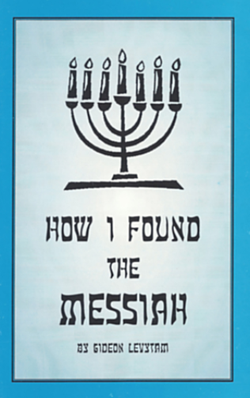
Follow Gideon Levytam's journey and discover how he was led by God, through a series of exciting circumstances, to find the One his people are still waiting for.
Past Episodes

Featured Offer
Follow Gideon Levytam's journey and discover how he was led by God, through a series of exciting circumstances, to find the One his people are still waiting for.
About Holy Scriptures and Israel
As time passed by, the Lord Yeshua took dear brother John Van Stormbroek to himself. The ministry of Holy Scriptures and Israel continued with additional development. In the early 1990’s, a weekly morning Bible class began which brother Gideon Levytam led regularly in the City of Toronto. This weekly open Bible class was held in the Willowdale assembly meeting hall. Eventually, a second mid-week evening Bible class was added. In April 2002, the need for an additional outreach Bible teaching meeting arose. We begun a Saturday (Shabbat) ministry meeting in which a systematic teaching of God’s word is presented to all who attend. Together we learn God’s Word, pray for each need and the salvation of Israel, and sing songs of worship unto our God, praising Him and our Lord Yeshua the Messiah.
In Mid 2004 we started to air on Joy 1250 Radio station a 15 minute Bible teaching program called "The Holy Scriptures and Israel" with Gideon Levytam. The broadcast teaches God’s word from a Hebrew Messianic perspective and has proved to be a blessing to many. It's now aired seven days a week. Our prayer is that many more of our Israeli people will have a clear understanding of who Yeshua is, why we all need him, and come to know him as their Lord and Messiah.
About Gideon Levytam
Contact Holy Scriptures and Israel with Gideon Levytam
426 Simcoe Street
Niagara-on-The-Lake
Ontario L0S 1J0
Canada
(905) 325-1234