

Acts 8:1-25, Part 2


The Fourth Persecution and the Preaching in Samaria Part 2
Guest (Male): Shalom! Holy Scriptures and Israel is a ministry designed to share with the Jewish people the good news of the Lord Jesus, Yeshua the Messiah, and to instruct Christians on the Jewish roots of their faith. And now, teaching God's word from a Hebrew Messianic perspective, here is Gideon Levytam.
Gideon Levytam: This study of Acts chapter 8, look at this great persecution that happened in Jerusalem. You will hear a little bit more about what's going on today in Israel, but I personally, just two weeks ago, stood in Israel, in the city of Arad, in the middle of a demonstration of Orthodox people who believe strongly in the God of our fathers, the God of Abraham, Isaac, and Jacob, opposing those who believe in Yeshua the Messiah.
Obviously, they didn't go from door to door and haul the believers from house to house, but nevertheless, there is an opposition to faith in Yeshua the Messiah by our own people even today as we are finding ourselves in these days of age. And so, he went, Sha'ul, from house to house, hauling men and women. Notice, it's not only men but also women. We can see that it's not only the leaders of a household but also their wives. He's taking them all, bringing them into prison.
If you read in Acts chapter 22, he will say later on in his testimony that he had gone beyond merely taking them to prison. In Acts chapter 22 and in verse 4, it says that I persecuted this way unto death. Paul said, Sha'ul said, in Acts 22:4. Literally, he was bringing Jewish believers and not only putting them in prison but also seeking their death. And that's the kind of man this man by the name of Sha'ul had been.
But you see, it had been said that the seed of the martyrs is the development of that which caused the church, the assembly, to grow. The more they sought to persecute the believers, they were scattered abroad. They were gone from one place to another place. But what do you think they did? They began to preach beyond the borders of the city of Jerusalem. They shared the message of the gospel.
So what we learn here from these verses is that persecution did not hinder the believers from sharing the message of the gospel beyond the area where they were living before. And that's what really happened here in verses 4 to 8 of Acts chapter 8. We see that the preaching of the message of the gospel has gone beyond the city of Jerusalem to a place that is called Shomron, Samaria.
And look at this, it says in verse 4, "Therefore they that were scattered abroad went everywhere preaching the word." The word for scattered abroad comes from the word like we have earlier. It comes from the word diaspora in the Greek word diaspiro. It means to be scattered. That's where we get the word "the Jews of the Diaspora." Here it is, the Jewish believers who have been dispersed, have gone to the diaspora, have been scattered abroad.
But they preached the message. Wherever they have gone, they have preached the person of the message of the Lord Jesus the Messiah. It may have been publicly, it may have been on a personal level, but they have preached the word of God faithfully. Wherever they have been, they were preaching the word, sharing the message of the gospel.
Why? Because they understood the truth that faith comes by hearing, and hearing comes by the preaching of the message of the word of God. And that's why we on a regular basis preach the word here. We teach the Bible, we share the message of the word of God. We don't deviate. We simply teach the message of the word of God verse by verse, chapter by chapter, book by book because through preaching of the word, sinners can be saved and saints can be encouraged in the things of the Lord.
And so look, they have gone. They were preaching the word wherever they had been scattered to. And then we read in verses 5, 6, 7, and 8, the preaching of Philip in the location that is called Shomron, Samaria. Now, just pause here for a moment about the Samaritans. You notice it says in verse 5, Philip went down to the city of Samaria. We call it in Hebrew, Shomron.
Shomron is what is known today as the West Bank. It's occupied by the Palestinians today, much of it, and it is the area that is being really discussed today. Does it belong to Israel or not? Should we give it to the Palestinians or not? But this area of Shomron, remember that was part of the nation of Israel when God had given the land to the Israelis who came from Egypt, entered into the Promised Land, and it was given to the tribes of Israel.
But what happened? The nation of Israel had been divided into these two nations: the northern tribes, Israel, and the southern tribe, Judah. And then there was constant friction between those two nations. And because of unbelief and because of disobedience to God, he had carried the northern kingdom by the Assyrians away from the land.
And you read it in 2nd Kings chapter 17. Those ten tribes, because of disobedience, idolatry, and all kind of things that they had done, they have been carried by the Assyrian because God had judged the ten tribes. But you see what happened? When they were carried away by the Assyrian, apparently the king of Assyria brought other people into this area that is called Shomron, Samaria.
They were people who were pagan from outside of the land, and they were living in this land worshipping their own gods. So what happened, they were bitten by lions and they were worried. What are we going to do? And so the Levites told them, because you are worshipping other gods, that's why you are being bitten by the lions.
So he's brought back some of the people of the nation, and they end up intermingling with them. And that's how you got that which is called the Samaritan. It was mixed marriages, but more than just mixed marriages, it was a union or mixture of faith in the true God but also faith in all sort of gods and idols of the nations of the world.
And that's how the Samaritans were characterized. It was a mixture. Today in Israel, there are between 400 to 700 Samaritans who live in Israel, some in the city called Holon and some of them actually live on Mount Gerizim. I personally have visited Mount Gerizim about a year and a half ago, speaking to some of the Samaritans there. They are really in a very similar way, they are following some of the Israeli or Jewish traditions. They have Hebrew names, they have synagogues, they keep the Passover, they keep some of the holidays.
But they don't believe that it is through Israel, through Judah, and in the city of Jerusalem is where the Messiah is going to be. So you know what they are doing? They have introduced a temple in Mount Gerizim. They have introduced all kind of things. They have eliminated the city of Jerusalem from the Torah, from the five books of Moses, and they claim that everything has been done through the Samaritan. Ultimately, the Messiah will come and they will establish a kingdom there in Samaria.
And they needed to know that it is not through the Samaritans that the salvation will come, that salvation will ultimately come through the promises that God had given to the nation of Israel, to the Jewish people. And so here we see Philip. He's going to Samaria in verses 5, 6, 7, and 8. He went down to Samaria and notice what he does. He preached Messiah, Christ, unto them.
He was simply preaching Yeshua the Messiah. And the people with one accord gave heed unto those things which Philip has spoken. And they heard and they saw the miracles which he did. Apparently, accompanying the preaching of the gospel by Philip was the miracles that have happened. There was demonic activity there, there was physical needs there, and somehow because Philip was connected with the apostles—remember he was not an apostle, he was one of those deacons, servants that was chosen by the people in chapter 6—he was used by the Lord in the preaching of the message of the gospel there in Samaria.
And apparently what a wonderful result there was there. He was preaching, they were listening to his message, and they have accepted. Many have come to faith in Yeshua the Messiah. It tells us here in verse 6 that the people with one accord gave heed to those things which Philip spoke, and hearing and seeing the miracles which he did. Unclean spirits, crying with a loud voice, came out of many that were possessed with them, and many taken with palsies and that were lame were healed.
So there was a miracle that was going on there. There was the preaching of the word accompanied by miraculous things that have happened. The Lord had used Philip to remove demons from many of them, to physically heal those that were sick with palsies. And there was great joy in those cities of Samaria. Beautiful to see the work of the Lord in a place such as Samaria.
But remember again, I would like to show this to you, that the Samaritans needed to know that salvation is of the Jews and salvation come through God's promises to the nation of Israel. Today there is no such thing as the city of Samaria. It's a region called Shomron, but nevertheless, it was the joy that came there because of their faith in Yeshua the Messiah.
I want you for a moment, please, to turn to the Gospel of John, just for a couple of verses there in John chapter 4. And I'd like you to see the problem that had existed between the Jewish people and the Samaritans. You see, the Samaritans and the Jewish people had no relationship with each other because of what the Samaritans believed in.
In John chapter 4, we read of Yeshua the Messiah. In verse 4, it says, "He must needs go through Samaria." Then cometh he unto the city of Samaria, which is called Sychar, or Shechem, near the parcel of the ground that Jacob gave unto his son Joseph. And there he had a special meeting with the Samaritan woman.
It says here, there cometh in verse 7 a woman of Samaria to draw water, and Yeshua said unto her, "Give me to drink," for his disciples were gone away unto the city to buy food. Then says the woman of Samaria unto him, "How is it," look at this, "that you being a Jew and you ask to drink of me, which am a woman of Samaria?" And then it says, "For the Jews have no dealing with the Samaritans."
Well, why there was no dealing with the Samaritan? Because the Samaritan had a mixed religion. They believed in God, but they also believed in all kind of gods of the nations of the world. There was a mixture of belief. And that's why there was no dealing because the Jewish people, the people of Israel, believed in God and the only God, the true and living God, the God of Abraham, Isaac, and Jacob.
And they could not mix with the Samaritan because the Samaritan shifted and they moved away from simply faith in the God of Abraham, Isaac, and Jacob. And so the Samaritan woman was amazed. And she said to Yeshua, "How come that you, a Jew, Jewish, Yehudi, you ask me for water because I'm a woman number one, and number two, I'm a Samaritan?"
And then Yeshua had to answer to her, and if you remember, I'm not going to read all the text, but I want you to see what he ultimately had to teach this Samaritan woman. He said to her, and I'm going down to verse 21, "Woman, believe me, that the hour is coming when ye shall neither in this mountain nor in Jerusalem will worship the Father. You worship what you do not know, but we know what we worship, for salvation is of the Jews."
Yeshua had to teach these Samaritans this fact: that they have deviated with what God had intended to give to them, and the salvation that was promised by God will only come in accordance with His purpose and His plan. And salvation will come through the tribe of Judah that will bring birth to the Messiah Yeshua, and ultimately He will be the one that will provide salvation to the world around.
And so she needed to hear it, the Samaritan needed to learn that, and that's why in Samaria, when Philip went there, he had to present to them Christ, the Messiah of Israel, the Lord Yeshua himself. And so notice verse 8 and I'm back in our chapter, there was joy in Samaria because many of them have come to faith in Yeshua the Messiah. There was a great joy in that city.
And it is always good, it is always joy in the heart of God when a sinner come to know Him. You remember what we read in Luke chapter 15 of the prodigal son that he have gone astray, and when he returned, we read there was a great celebration, there was a great joy because the son have returned.
When the woman lost one of her coins and she searched for that—the story is spoken in Luke chapter 15—when she found that one coin, there was a joy, there was a celebration because the coin represented a lost individual who came back to God and came to faith in Yeshua the Messiah. So there was a great joy in that city we read here in verse 8.
And now we are moving on to another man. You see, we talked about Saul, verses 1 to 3. We talked about Philip, verses 4 to 8. And now we are going to speak about another man by the name of Shimon, or Simon, the sorcerer, in verses 9 to 25. Look at this. First of all, we read of him in verse 9, 10, and 11, that Simon was a sorcerer and the people of Samaria were bewitched by him.
It says in verse 9, there was a certain man by the name of Simon, which beforetime in the same city used sorcery or magic and he bewitched the people of Samaria and he giving out that he himself was some great one, to whom they all gave heed from the least to the greatest, saying, "This man is the great power of God." And to him they had regard because of a long time he had bewitched them with sorceries.
Now, it's no coincidence that we have here this man by the name of Simon immediately after the preaching of Philip. Because every time God does a work, every time the Spirit of God is on a move and on the go and there is the preaching of the truth of the gospel and people get saved, at the same time, Satan does his job.
As God move about presenting the love of the Messiah to men, immediately following this, there is the move of Satan, the move of the devil, the move of the enemy of God to present false teaching, to present that which is not of God. And so what we see here, this man by the name of Simon, he was bewitching. The Greek word for sorcery is like coming from the word magic.
He was tricking them. He would do magic, he was beguiling them. He was like one that have succeeded in the power of Satan to bewitch them and to cause them to follow after him. It says there that they said, "This man is the great power of God." That's how the Samaritans, those that had followed him, looked at this man by the name of Simon. And they thought, "Wow, this man has really the great power of God."
And you know, we can see, brothers and sisters, in this man Simon exactly what's going to happen in the tribulation period. When there will be those who will follow after the Antichrist. 2nd Thessalonians chapter 2 shows us that the Antichrist will have powers that were given to him, satanic powers, that he will show and reveal of himself and many will follow after him.
Well, here we see exactly what Simon was doing. He was bewitching, he was magically attracting the people, and many followed after him. And to him they had much regard because for a long time he had bewitched them with all sort of sorcery.
I don't have to tell you this today. Oftentimes when I drive on the highway, I see all kind of signs that says, somebody can read your palms, somebody can tell you your future, somebody can claim that they can see beyond the scene, they are able to show you the future.
Featured Offer
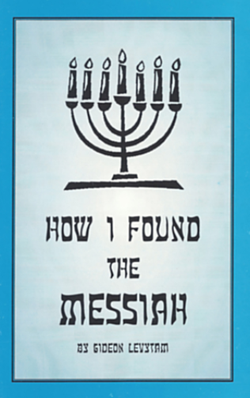
Follow Gideon Levytam's journey and discover how he was led by God, through a series of exciting circumstances, to find the One his people are still waiting for.
Past Episodes

Featured Offer
Follow Gideon Levytam's journey and discover how he was led by God, through a series of exciting circumstances, to find the One his people are still waiting for.
About Holy Scriptures and Israel
As time passed by, the Lord Yeshua took dear brother John Van Stormbroek to himself. The ministry of Holy Scriptures and Israel continued with additional development. In the early 1990’s, a weekly morning Bible class began which brother Gideon Levytam led regularly in the City of Toronto. This weekly open Bible class was held in the Willowdale assembly meeting hall. Eventually, a second mid-week evening Bible class was added. In April 2002, the need for an additional outreach Bible teaching meeting arose. We begun a Saturday (Shabbat) ministry meeting in which a systematic teaching of God’s word is presented to all who attend. Together we learn God’s Word, pray for each need and the salvation of Israel, and sing songs of worship unto our God, praising Him and our Lord Yeshua the Messiah.
In Mid 2004 we started to air on Joy 1250 Radio station a 15 minute Bible teaching program called "The Holy Scriptures and Israel" with Gideon Levytam. The broadcast teaches God’s word from a Hebrew Messianic perspective and has proved to be a blessing to many. It's now aired seven days a week. Our prayer is that many more of our Israeli people will have a clear understanding of who Yeshua is, why we all need him, and come to know him as their Lord and Messiah.
About Gideon Levytam
Contact Holy Scriptures and Israel with Gideon Levytam
426 Simcoe Street
Niagara-on-The-Lake
Ontario L0S 1J0
Canada
(905) 325-1234