

Acts 7:1-16, Part 3


Stephen’s Testimony Before the Sanhedrin Part 3
Narrator: Shalom. Holy Scriptures and Israel is a ministry designed to share with the Jewish people the good news of the Lord Jesus Yeshua the Messiah, and to instruct Christians on the Jewish roots of their faith. And now, teaching God's word from a Hebrew Messianic perspective, here is Gideon Levytam.
Gideon Levytam: The study of Acts chapter 7 and in chapter 4, when the nation of Israel went to fight against the Philistines. As they were fighting, the Philistines defeated the nation of Israel. So you know what Israel did? Israel said to Eli, "Where is the Ark of the Covenant? Let us take the Ark of the Covenant, bring it into our midst. When we have the Ark of the Covenant in our midst, the glory of God in our midst, we will be able to defeat the Philistines."
But the mistake of Israel was that God, because of the disobedience of the nation, God was not intent to help them in a time of disobedience. And so they brought the Ark. When the Ark was brought, Israel shouted and the Philistines said, "Wow, the Ark has come. We are now going to be defeated by the nation." Well, you know what happened. When they began to fight against the Philistines, Israel was defeated the second time by the Philistines because of their disobedience to God. And you know what the Philistines did? They took the Ark with them.
The Ark had been taken away. Eli's two sons died, then later on Eli died. Then when Eli's daughter-in-law was mentioning that when she found out that the Ark was taken, her husband died, her father-in-law died, she said, "Ichabod," the glory has departed. And the Ark was taken away from among the nation of Israel from the area that is called Shiloh in the tabernacle. You see, it is important when Stephen is mentioning the glory because he is speaking here about the God of glory.
Israel, the favored nation that should have accepted the Messiah, they should have accepted the testimony of Peter and John, they should have accepted the testimony of the apostle, and now they're accusing Stephen. When Stephen is telling them, "You've violated God's word, look at the history of our people." Let's make sure that we don't blame Israel because the history of the church is far worse than the history of the nation of Israel. But nevertheless, Stephen, as a Jew among his own people, is presenting to them the fault.
He says in verse three, "Get thee out of thy country, out of thy kindred, come into the land which I shall show thee of." Then he came into the land of the Chaldeans. He dwelt in Haran and from thence, when his father was dead—you noticed that—he removed him from there into the land where you are now dwelling. So his father had to be removed in order for Abraham to continue on to follow the Lord.
The message to us is this: sometimes there are hindrances in our lives that cause us not to move forward because of our family members. We love our family, we love our nation, we love our people, but nevertheless, God had to teach Abraham to follow him even if the family, if his father, was not called and was not the one that would follow.
And so now in the next verses, in verse five, we find out the next thing: "And he gave him no inheritance here, not so much as to set his foot. Yet he promised that he would give it to him for a possession and to his seed after him, when as yet he had no child." So God had promised the land to Abraham, but really Abraham actually did not inherit the land.
God had promised this to Abraham and his seed. The nation of Israel right now at that time, they were already in the land, but Abraham himself had not yet enjoyed it. He promises to his seed and the benefit that they have enjoyed to be in the land at that time, even though they were still under the Roman occupation.
Now in verses 6, 7, and 8, the message of the God of Abraham concerning his people. God spoke on this wise: "That his seed would sojourn in a strange land and that they would bring them into bondage and entreat them evil for four hundred years. And the nation to whom they shall be in bondage will I judge, said God. And after that they shall come forth and serve me here in this place."
You see, he's showing to his own brethren, Stephen showing it to the nation there, he says God said to Abraham that his own people will go down for 400 years to be in bondage. We know that that's the history of Israel being in Egypt for 400 years. Then also that they will come out of bondage. They're going to be delivered out of bondage and they will come forth and serve him here in this land.
Then also he says about Abraham in verse eight, "He gave him a covenant of circumcision. And Abraham begat Isaac and he circumcised Isaac on the eighth day. And Isaac begat Jacob and Jacob begat the patriarchs," the 12 sons, the tribes, beginning from Reuben and ending up with Benjamin.
Here you can see that God not only had given to Israel the glory, but He also made a covenant with this nation. The covenant was seen through the circumcising of the children at eight days old. But you see, Stephen is pointing out to this because of two things. Number one, the glory has departed because of disobedience of the nation.
Number two, the nation has thought that because they have been circumcised physically, that this is the only thing that God is expecting from the nation. And if you remember, it was in the book of Deuteronomy that God said to Israel, "Circumcise the foreskin of your heart." God not only wanted the external circumcision, but He wanted the internal circumcision, the circumcision of the heart, in Deuteronomy chapter 10 and verse 16.
And this is exactly what Stephen is pointing out to the leaders in the Sanhedrin as they placed him there in the middle and began to accuse him for blaspheming. The first eight verses, he is dealing with the life of Abraham, showing to Israel that Abraham came to God by faith. Abraham was a man that was serving idols. He was chosen by God. He came to God by faith. God gave him the glory. God gave him the covenant.
He is challenging them. He says, "Did you in a sense recognize where is the glory of God departed? Where is the covenant in obedience to God? It's not only in circumcision of the flesh, it has to be the circumcision of the heart as well." And so now after he finished with Abraham, he is moving on to Joseph. You notice here when he's speaking about Joseph, he shows them that there was a rejection of Joseph when he first came among his brethren.
Look, it says here in verse nine, "And the patriarchs, they moved with envy and they sold Joseph into Egypt, but God was with him." See again, he's pointing to rejection. Why? Because they rejected the Messiah. They rejected the testimony of Peter. Now they're rejecting the testimony of Stephen. He's pointing to them—he doesn't do it out of hatred, he does it out of love for his brethren because he really loves the nation—he shows what the patriarchs did. They moved with envy and they sold Joseph.
Now Joseph in the Bible is a very prominent man. He was the favorite son of Jacob, the first son of Rachel, and he was the one that God used him to see dreams and visions and to interpret them. And you remember from the history in chapter 37, how when Joseph was dreaming dreams before his brethren, his brethren were envious at him.
When they were envying at him, they did not like him to get this prominent place. He had this coat that his father made him, full of stripes. He was very unique. And then his brethren moved with envy and they sold him. You remember the story, how they sold him and he cried to them and he says, "Please don't do that." They end up putting him in a pit.
Then they took him out of the pit and they sold him, this young man, his own brother. They sold him and took him to the Ishmaelites, the Midianites, they took him down to Egypt. Joseph had been there for many years. And this story Stephen is mentioning to the council to remind them of history of consistent violation and rebellion against God.
And he does it in order to stir them up, to turn around and accept the Messiah. They sold him out of envy. Then it's so beautiful in this verse 9b and 10, we can see that Joseph was taken care of by God. God was with him. He delivered him out of his affliction. He gave him favor and wisdom in the sight of Pharaoh the king of Egypt. He made him governor over Egypt and all his house.
Joseph? Yes, this young man Joseph that was rejected by his brethren found favor in the home of Potiphar and later on the king of Egypt have end up to be attracted to him because God was with Joseph. If there is any beautiful picture of the Messiah in the Bible, dear brothers and sisters, is this man by the name of Joseph. We see his rejection and then we see his acceptance by his brethren.
We see the time that he was rejected by his own dear brothers whom he loved so much, but they rejected him. They didn't want him to be a leader, a ruler among them. But then later on he revealed himself to them and Israel as a nation accepted him at the second time. Look, it says here in verse 11 and 12, how God in a supernatural way led the nation to come to the very brother that they have rejected.
It says here in verse 11, "Now there came a famine, dearth, over all the land of Egypt and Canaan and great affliction and our fathers found no sustenance. But when Jacob heard that there was corn in Egypt, he sent to our fathers first." And then it says here in verse 13, "But at the second time Joseph was made known to his brethren and Joseph's kindred was made known unto Pharaoh."
You remember that story, brothers and sisters, at the time when Israel, the brethren came down to Egypt to have food. Joseph became second to Pharaoh. He was leading the whole nation. Everything went through Joseph. And Joseph, leading the whole nation of Egypt, gave them instruction. There will be seven years of famine and there will be prior to it seven years of plenty.
He built barns and they collected so much food for the seven years of plenty because when there was a famine in the land, everyone came down to Egypt. And God in his sovereign way of dealing with his own nation, Israel, caused in Canaan to have famine as well. Jacob sent his own sons down to Egypt as they came to Egypt. You remember they didn't recognize Joseph, their brother.
How could they recognize him? The last time they had seen him, they'd cast him into the pit. Then they had sold him to the Ishmaelite. Who would imagine that Joseph would become second to the king of Egypt? Well, the God of glory working in the lives of every individual, here He worked in the life of Joseph and He made him second to the king.
When the brethren came down to Egypt needing food, the one they came to was this second to Pharaoh. Now he gave them some food that they bought from him, of course. Then he put in his own younger brother Benjamin a cup. When they'd gone away back to their father on the way, they captured them and they told them, "You have stolen the cup that belonged to Joseph."
And you remember they took the cup, they'd shown it to them and they came back. Joseph brought them inside and when Joseph saw his younger brother Benjamin, he couldn't hold his tears. He went out in a secret place and he began to weep as he's looking at his brethren, the very brethren who rejected him and sold him.
But his love for them was so great and he couldn't hold himself. And I would like you, if you don't mind, please to go to Genesis. I want to read these verses there, Genesis chapter 45. Beautiful story. It shows us how the love of Joseph resembled the love of the Lord Yeshua the Messiah. I'm reading verse one.
Joseph could not refrain himself before all of them that stood with him and he cried and he said, "Cause every man to go out from me." And there stood no man with him while Joseph made himself known unto his brethren. And he wept aloud. Can you imagine? He was rejected for years. He was there in Egypt. His brethren didn't know him, didn't know anything about him, assuming that he's dead.
He looked at them, he wept aloud. I can just hear that cry. And the Egyptians and the house of Pharaoh heard it. And Joseph said unto his brethren, "I am Joseph, Ani Yosef. Does my father yet alive?" And his brethren could not answer him, for they were troubled at his presence.
And Joseph said unto his brethren, "Come near to me, I pray you." And they came near and he said, "I am Yosef, your brother, whom ye sold into Egypt. Now therefore be not grieved nor angry with yourselves that ye sold me hither, for God did send me before you to preserve life."
"For these two years has the famine been in the land and yet there are five years in the which there shall neither be earing nor harvest. And God sent me before you to preserve you a posterity in the earth and to save your lives by this great deliverance." Brothers and sisters, if you can just imagine the heart of Yosef here.
After not seeing his brethren for so many years, he could have been so angry with them. He could, perhaps those years that he was in Egypt, could harbor hatred towards his brethren. He could say, "I'm going to get them one day. I'm going to make sure that I'm going to get back at what they have done to me."
But Joseph is a picture of Yeshua, the Messiah of Israel, the savior of this world. Instead of harboring anger, he took it from God. Instead of harboring hatred, he acknowledged that God is the one that is in full control. And he said to his brethren, "You sold me to Egypt. Now," he says, "don't be grieved that you sold me." He says, "God have sent me before you to preserve life."
You see again, brothers and sisters, this is the God of glory who is in full control over the affairs of this world. Working behind the scene in the life of these 12 men, working behind the scene in the life of Jacob and his sons and here in this case, Yosef, Joseph. Allowing him to go through suffering and rejection, allowing him to experience, but changing the wind of the direction of God and moving him up to be second to Pharaoh in the land of Egypt.
And bringing the brethren, the very one that have rejected him and sold him the first time, bringing them to a point when they are totally dependent upon Joseph's mercies. And Joseph embraced them and he wept and embraced them. He says, "Come near to me." You know, again I would like to say that this is a miniature picture of what is going to happen when Israel the nation, who have rejected the Messiah for already 2,000 years, when as a nation, according to the prophet Zechariah chapter 12 and verse 10, when the prophet says they shall look upon me whom they have pierced, and they shall mourn for him as one mourneth for his only child.
And Israel as a nation will finally acknowledge that Yeshua is the Messiah. This is exactly what Stephen is trying to do here when he is sharing with the Sanhedrin the history of our nation. He's talking about Abraham and how he was called by the God of glory, and how this mishap in his life, shortcoming, not necessarily obeying at first, but after his father was removed, he moved on to the promised land. And then he's speaking about Yosef, Joseph, the second figure that we have here in this text.
And there is more that can be said. I just wanted to highlight one or two things before I'm going to close. Many times people say that the Bible is not accurate because of some things that are mentioned that are not similar. For example, you notice that it says here in verse six of Acts 7 that God spoke on this wise, that his seed should sojourn in a strange land, that they should bring them into bondage and they will entreat them evil for 400 years.
But if you read in the book of Exodus, Israel was 430 years in the land of Egypt. And so some would say to us the Bible is not consistent, there is an error in the Bible because it says here 400 years. In Exodus 12 verses 40 and 41, it does mention there that Israel was 430 years in Egypt, not only 400 years. So some say that you see, there's something wrong here with the text.
Now look at the next verse in verse 14 which we read: "And Joseph sent and he called his father Jacob to him and all his kindred, 75 souls." Notice that, 75 souls. Now if you're going to go to Genesis chapter 46 and verse 26 and 27...
Featured Offer
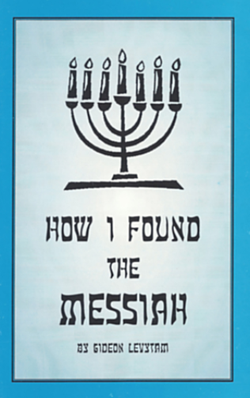
Follow Gideon Levytam's journey and discover how he was led by God, through a series of exciting circumstances, to find the One his people are still waiting for.
Past Episodes

Featured Offer
Follow Gideon Levytam's journey and discover how he was led by God, through a series of exciting circumstances, to find the One his people are still waiting for.
About Holy Scriptures and Israel
As time passed by, the Lord Yeshua took dear brother John Van Stormbroek to himself. The ministry of Holy Scriptures and Israel continued with additional development. In the early 1990’s, a weekly morning Bible class began which brother Gideon Levytam led regularly in the City of Toronto. This weekly open Bible class was held in the Willowdale assembly meeting hall. Eventually, a second mid-week evening Bible class was added. In April 2002, the need for an additional outreach Bible teaching meeting arose. We begun a Saturday (Shabbat) ministry meeting in which a systematic teaching of God’s word is presented to all who attend. Together we learn God’s Word, pray for each need and the salvation of Israel, and sing songs of worship unto our God, praising Him and our Lord Yeshua the Messiah.
In Mid 2004 we started to air on Joy 1250 Radio station a 15 minute Bible teaching program called "The Holy Scriptures and Israel" with Gideon Levytam. The broadcast teaches God’s word from a Hebrew Messianic perspective and has proved to be a blessing to many. It's now aired seven days a week. Our prayer is that many more of our Israeli people will have a clear understanding of who Yeshua is, why we all need him, and come to know him as their Lord and Messiah.
About Gideon Levytam
Contact Holy Scriptures and Israel with Gideon Levytam
426 Simcoe Street
Niagara-on-The-Lake
Ontario L0S 1J0
Canada
(905) 325-1234