
Acts 7:1-16, Part 2


Stephen’s Testimony Before the Sanhedrin Part 2
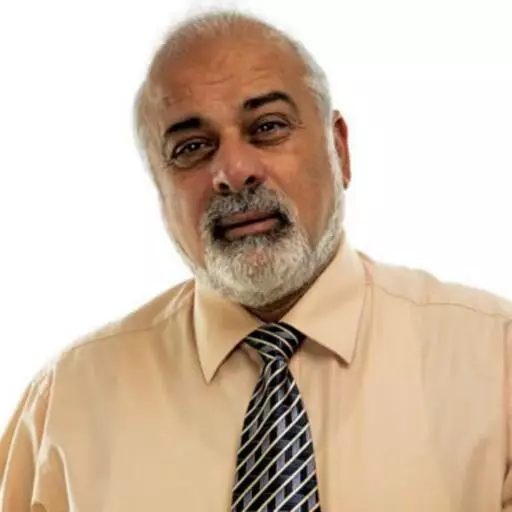
Gideon Levytam: The study of Acts chapter 7, if it will not be seen with the countenance, with the shining of our face, it will be evident in our mannerism, in our behavior, in our speech, in our conduct. It will be evident. And so we see here the face of Stephen as the face of an angel, shining. The Shekhinah glory is manifested through Stephen and the council is fixed upon him as Stephen begins to report to them and to share with them about the whole history of the nation of Israel.
Now, you notice in the first verse of chapter 7, we have here the High Priest. After all the accusation against Stephen, after all the claiming that he blasphemed against God, against the temple, against Moses, the High Priest coming to him in verse 1 of chapter 7, he says, "Are these things so? Is that correct what they're claiming to say against you?" Now, I want you to remember this is not the first time that the High Priest and the council were accusing the believers.
If you remember in Matthew chapter 26, the High Priest was accusing Yeshua the Messiah when He was in the midst of His nation. In Acts chapter 4, Peter was there in the midst of the council when they accused him and didn't want him to preach in the name of Yeshua the Messiah. In Acts chapter 5, the apostles were accused because they were sharing the message and they also didn't want them to preach in the name of Yeshua the Messiah. And here Stephen again in chapter 7, the council and the High Priest saying, "Are those things so? Did you really blaspheme against God, against the law, against the temple, against the things of God, against Moses?"
And from verse 2 all the way to the end of chapter 7 to verse 60, Stephen is giving a message to his brethren. Now, what he does here, he simply recollects. He is reminding our nation Israel of the whole history of the nation. Of course, he is skipping some individuals because the history is a great history, but he's just highlighting some individuals among the nation of Israel that are very precious to our people, to the nation of Israel. And he is speaking, by the way, about Abraham in verses 2 to 8. And then in verses 9 to 16, he is speaking about Joseph, or Yosef. In verse 17 to verse 44, he is speaking about Moses. And then in verse 45, he is speaking about Joshua. Then finally, he's going to verse 46 to 50, he's speaking about David and Solomon, the kings of Israel.
So, he is really taking the council through the whole history of the nation. But you know what he's trying to do here? He's trying to show his own nation, his own brethren, that throughout the history, here and there, while there were times of glory, a time of obedience, there was much decline among our own nation. Here and there, there was unbelief. Here and there, they did not receive the promises of God and God had to discipline the nation. And he showed this to us through Abraham, Joseph, Moses, Joshua, David, and Solomon.
And he began, of course, in the first eight verses, and he speaks first of all about our father Abraham. And you know, if you ask any Jewish person today, one of the most important people in the history of our nation is Father Abraham. Every time when we speak to each other, we always refer to our forefather Abraham because when the nation had began as a nation, it began from Abraham. But look what Stephen does here. He shows us some things that you and I would not know unless we have read Acts chapter 7 and the first few verses.
He began by speaking to his brethren in verse 2, and he shows them the call of Abraham from Mesopotamia, verses 2, 3, and 4. And I'm reading these verses again. "And he said, 'Men and brethren, and fathers, hearken; The God of glory appeared unto our father Abraham when he was in Mesopotamia, before he dwelt in Haran. And said unto him, Get thee out of thy country, and from thy kindred, and come into the land which I shall shew thee. Then came he out of the land of the Chaldaeans, and dwelt in Haran: and from thence, when his father was dead, he removed him into this land, wherein ye now dwell.'"
Now, let's pause here and let me just mention something very interesting and very beautiful here. You notice that in our reading today, when we read in Genesis chapter 12 the first nine verses, we read there the passage that speaks about the call of Abraham out of the land. And the place that he was called out in chapter 12 was not from Mesopotamia, but it was from a place that is called Haran. Notice that in verse 5, "Abraham took Sarai his wife, he took Lot his brother's son, and all their substance which they had gathered and the souls that they had gotten in Haran; and they went to go into the land of Canaan; and into the land of Canaan they arrived."
Notice that the name Haran, when Abraham was called in Genesis chapter 12, it was not from Mesopotamia. Abraham was called from a place that is called Haran. Haran is actually the place where Abraham stopped, because he should have continued to go all the way to the Promised Land. But apparently, Abraham stopped in Haran and he remained there for a while. And there is a great lesson here to teach us is that Abraham remained in Haran because his father was still alive. And because of the natural ties, it was very hard for him to separate from his own flesh and blood, his own father.
And sometimes we learn here that God had to remove a person, a family member that is very dear, in this case, Abraham's father, to remove him before Abraham can continue on in obedience to go to the Promised Land. Again, I want to emphasize it. He's saying, "The God of glory," verse 2, "appeared unto our father," notice Abraham, "when he was in Mesopotamia, before he dwelt in Haran." Now, remember what happened. In Haran, He told him, "Get out of your country, out of your kindred," but it mentioned also, "out of your father's house."
But here in Acts chapter 7 in verse 3, the father's house is not mentioned at all because at that time when God called Abraham, Abraham was called to leave the country, the kindred, and assuming that he would also leave his father's house. But because Abraham was so connected with his father, his father remained with him and he didn't leave his father. He didn't leave his family. And he remained there and God had to remove the family ties until his father died, then Abraham could move on.
Isn't it true in your life and in my life? One of the problems for us when we first were exposed to the message of the Messiah is what would my family say? What about my husband, my wife, my father, my mother, my children? What would they say? I remember that for myself. When I was exposed to the Messiahip of Yeshua, immediately I was asking the question, but why, what about our people? What about our rabbis? What about our leaders? What about my family? What about my grandfather who was taking me to the synagogue every Shabbat in the city of Jerusalem, what will he say?
And you see what happened? Abraham, there was a relapse in his life. Even though he was the father of all believers, even though he was a man of God, but God shows us that even in the history of Abraham, there was a relapse. There was a time that he did not follow through with that which God had called him. I'm reading this verse again. Stephen is saying to them, "Men, brethren, and fathers." He is speaking to his own nation. "The God of glory had appeared unto our father Abraham when he was in Mesopotamia," notice, "before he dwelt in Haran."
What we read in Genesis chapter 12 is the call of God from Haran. In a sense, it is the second calling of God to Abraham to come out of Haran. And there He is telling him not only that you should leave your country, not only you should leave your kindred, but you need to leave your father's house and family ties. They say that blood is thicker than water. Family ties often times hinder individuals from following after the Lord, from following after God, because of the resistance, because of the care that we do have, the natural tie that we have.
Here also notice that he used that expression, "the God of glory." The Hebrew word for glory is Kavod, the God of Kavod, the God of glory, the God who has value, the God who is the all-sufficient one. And he says he appeared unto Abraham our father. He is the God of glory, the God who created everything. He is the God who is the all-sufficient one. He has appeared unto Abraham long before he was in Haran. He appeared to him in Mesopotamia. This chapter actually began with the God of glory in verse 2 and it end with the glory of God at the end of chapter 7 where Stephen saw the glory of God in verse 55.
It is the God of glory and the glory of God that Stephen is trying to share with his own brethren, the nation of Israel. Now, just to add a few more things here when we are speaking about Abraham, remember that when Abraham was called out, Abraham was actually a pagan individual. Abraham was part of the pagan world. He is called Abraham the Hebrew after in chapter 14 when he left where he was and he crossed over the rivers and entered into the land he was called Abraham the Hebrew in chapter 14.
But before that, the Bible teaches us that our father Abraham was actually worshipping other gods. Let me show you two verses. If you turn with me first of all to Deuteronomy chapter 26 for a moment. Moses there is speaking to the nation and he is telling them in the early part of this chapter, he says in verse 5, "You shall speak and say before the Lord God, A Syrian ready to perish was my father. And he went and dwelt down into Egypt and he sojourned there with a few and he became there a nation, great and mighty and populous."
Moses taught Israel to say this, "A Syrian ready to perish was my father." Abraham, before he became a great man that was called by the God of glory, he was really a Syrian ready to perish. But he was called by God. God made out of him a nation, the nation of Israel. He called him, He had chosen him, He had elected him. Now turn to the book of Joshua, one book next after the book of Deuteronomy. At the end of the book of Joshua, we are studying the book of Joshua on our morning classes, Joshua chapter 24.
And there the first few verses, verses 2 and 3, "And Joshua said unto all the people," and I'm reading verse 2 and verse 3 of Joshua chapter 24, "Joshua said unto all the people, Thus saith the Lord God of Israel, Your fathers dwelt on the other side of the flood in old time, even Terah, the father of Abraham, and the father of Nachor; and they served other gods." Now brothers and sisters, this is exactly where Abraham came from. Abraham served, as it says here in verse 2 with his father Terah, with his brother Nachor, they have served other gods.
And then look what it says in verse 3, "And I took your father Abraham from the other side of the flood, and I led him, and I brought him, and led him throughout all the land of Canaan, and multiplied his seed, and gave him Isaac." God reminding the nation of Israel, and that is exactly what Stephen is trying to show his brethren when they were accusing him of speaking blasphemy against the temple, against God, against Moses, against the law. Stephen is trying to show his brethren, "Look, we as a nation came from our forefather Abraham, who was serving other gods with his father Terah and his brother Nachor."
And God had brought him into this land. God had elected him. He had chosen him. And he became a child of God, not because of any works that he have done, but only because he simply believed God and he trusted His word. And so he says, "Men and brethren," and how wonderful I love when he calls them "men, brethren, fathers," because Stephen was one of them. He was a Hebrew talking to the Hebrews. He was a Jew talking to his Jewish brethren. He was an Israeli talking to his Israeli nation.
And he's saying to them, "Fathers, brethren, men, God of glory have called our father Abraham." And he called him before Haran, he called him from Mesopotamia. And he said to him, "Get out of the country and of your father's and come into the land which I will show you." Now, allow me please to slow down here on this because we are talking about the God of glory. The Hebrew word for glory is the Shekhinah or Shekhinah glory. And it speaks about what Israel as a nation have received. Israel is the only nation in this world that to them was given all the glory of God was given to the nation.
And they needed to be reminded as a nation again and again that they are a favored nation, but a favored nation that were chosen by the God. It was not on a basis of Israel's merit, but it was totally on the basis of the grace of God and so he's using this expression, "the God of glory" because to Israel the glory was given. But to Israel the glory was taken away from because when Israel disobeyed God, the glory had been removed. And we notice from history, do you remember in the book of Samuel, 1 Samuel chapter 4, when Eli was an unfaithful High Priest?
And God raised Samuel, the young boy. And God said to Samuel that he is going to deal with Eli and his family because Eli's unfaithfulness. And in chapter 4, when the nation of Israel went to fight against the Philistines, as they were fighting, the Philistines defeated the nation of Israel. So, you know what Israel did? Israel said to Eli and they said, "Where is the ark of the covenant? Let us take the ark of the covenant, we bring it into our midst, and when we're going to have the ark of the covenant in our midst, the glory of God in our midst, we will be able to defeat the Philistines."
But the mistake of Israel was there is that God, because of the disobedience of the nation, God was not intent to help them in a time of disobedience. And so they brought the ark. And when the ark was brought, Israel shouting and the Philistines said, "Wow, the ark has come and we are now going to be defeated by the nation." Well, you know what happened. When they began to fight against the Philistines, Israel were defeated the second time by the Philistines because of their disobedience to God. And you know what the Philistines did? They took the ark with them.
And the ark had been taken away. Eli's two sons died, then later on Eli died. And then when Eli's daughter-in-law was mentioning that when she found out that the ark was taken, her husband died, her father-in-law died, she said, "Ichabod, the glory have departed." And the ark was taken away from among the nation of Israel from the area that is called Shiloh in the tabernacle. And you see, it is important when Stephen is mentioning the glory because he is speaking here about the God of glory, Israel the favored nation, that should have accepted the Messiah.
They should have accepted the testimony of Peter and John. They should have accepted the testimony of the apostle. And now they're accusing Stephen. And when Stephen telling them, "You violated God's word, look at the history of our people." And let's make sure that we don't blame Israel because the history of the church is far worse than the history of the nation of Israel. But nevertheless, Stephen as a Jew among his own people is presenting to them the fault that they have had.
And so he says in verse 3, "Get out of your country, out of your kindred, come into the land which I will show you. Then he came into the land of the Chaldaean, he dwelt in Haran; and from thence, when his father was dead," you notice that, "he removed him from there into the land where you are now dwelling." So, his father had to be removed in order for Abraham to continue on to follow the Lord. And the message to us is this: sometimes there are hindrances in our lives that cause us not to move forward because...
Featured Offer
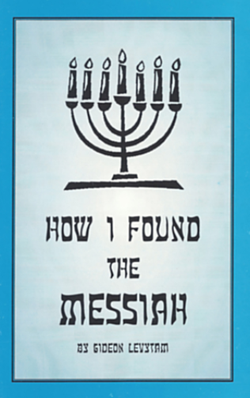
Follow Gideon Levytam's journey and discover how he was led by God, through a series of exciting circumstances, to find the One his people are still waiting for.
Past Episodes

Featured Offer
Follow Gideon Levytam's journey and discover how he was led by God, through a series of exciting circumstances, to find the One his people are still waiting for.
About Holy Scriptures and Israel
As time passed by, the Lord Yeshua took dear brother John Van Stormbroek to himself. The ministry of Holy Scriptures and Israel continued with additional development. In the early 1990’s, a weekly morning Bible class began which brother Gideon Levytam led regularly in the City of Toronto. This weekly open Bible class was held in the Willowdale assembly meeting hall. Eventually, a second mid-week evening Bible class was added. In April 2002, the need for an additional outreach Bible teaching meeting arose. We begun a Saturday (Shabbat) ministry meeting in which a systematic teaching of God’s word is presented to all who attend. Together we learn God’s Word, pray for each need and the salvation of Israel, and sing songs of worship unto our God, praising Him and our Lord Yeshua the Messiah.
In Mid 2004 we started to air on Joy 1250 Radio station a 15 minute Bible teaching program called "The Holy Scriptures and Israel" with Gideon Levytam. The broadcast teaches God’s word from a Hebrew Messianic perspective and has proved to be a blessing to many. It's now aired seven days a week. Our prayer is that many more of our Israeli people will have a clear understanding of who Yeshua is, why we all need him, and come to know him as their Lord and Messiah.
About Gideon Levytam
Contact Holy Scriptures and Israel with Gideon Levytam
426 Simcoe Street
Niagara-on-The-Lake
Ontario L0S 1J0
Canada
(905) 325-1234