

Acts 5:17-42, Part 2


The Second Persecution of the Assembly Part 2
Gideon Levytam: The study of Acts chapter 5. This is what he really means. The Lord said it earlier. The Messiah himself said it in Matthew chapter 7 when he was speaking about the two ways and the two roads. You remember that in chapter 7, the Lord himself said in verse 13 and 14 of Matthew, "Enter ye at the straight gate for wide is the gate and broad is the way that lead us to destruction, and many are there that go thereby because straight is the gate and narrow is the way which leadeth unto life and a few there be that find it."
He was speaking about the life, the ways of life. You preach to this people at the temple the words of this life. That's the beautiful thing that they needed to hear about life, the hope of life, the hope of resurrection, the hope of eternal life.
You remember what Yeshua said in John 10? You remember he said, "My sheep hear my voice and I know them, and I will give unto them eternal life and they shall never perish." That's the words that people need to hear today. The words of life.
When we hear the news, we watch the television, look in the internet, everything we see, everything seems to be going down and down. No hope in this world. But here the apostles were to preach and to teach in the temple that words of this life. And that's what we are called also to do.
And here he is giving them this instruction to do so. And you notice in verse 21, when they have heard that, "They entered into the temple early in the morning and taught."
Brothers and sisters, I want to emphasize that word taught and teach. One of the important things that we need to realize is that we have the responsibility to teach others, to teach. The object is not merely the physical things, the external experiences, but to be taught from the scripture the things concerning the promises of God. And they were teaching them.
Remember, they didn't have Matthew, Mark, Luke, and John. They didn't have Acts, Romans, 1st, 2nd Corinthians. They didn't have any New Testament scripture. What did they have? They had the Tanakh. They have the Old Testament scripture, the Hebrew scriptures.
So they were standing in the temple teaching the Israelites who were coming to the temple, the words of life, that God had promised in the scriptures. So, and then of course, leading to Yeshua the Messiah, the one who had given the eternal life to those who would believe in him.
So we see verse 19 and 20 and the first part of verse 21, we see the involvement of God through the angel in helping those apostles to come out of prison.
And so, beautiful to see here. Now in the second half of verse 21 to verse 28, we see the gathering of the council of the Sanhedrin and the doing of the apostles. We read here that the high priest, here he is again, the high priest, it's Annas. He's very upset. He's not happy that those believers were speaking, but he was assuming that now they are in jail.
So they gathered all the Sanhedrin. They brought them. It says here, the high priest came and they that were with him and they called the council together and all the Senate. This is the Sanhedrin of the children of Israel, and they sent to the prison to have them brought back.
Now can you imagine? Here they are all gathering together now, the religious leaders of Israel, and they are sending some individuals to bring the apostles from prison because they are going now to judge them or to condemn them for what they have done. Well, they had a surprise.
They have sent to the prison, the officers came back and they went to them and they said they found them not in the prison. And they returned and they told and they said, "The prison truly we found shut and all is safe outside." He says, but he says, "The keepers are without before the door." He says, "But when we open it, we found no men within."
See, they come, they unlock the doors. Well, the keepers, the jailers are outside. They are opening the door. They want to bring these apostles out so they can bring them before the council. Well, what do they find? They are not there.
The people who were protecting them were outside safe and sound. The doors were locked, but the apostles were not in jail. Well, you see, that must have been shocking to them.
And we read here in these verses that when they have heard that, look, verse 24, "When the high priest and the captain of the temple and the chief priest heard these things, they doubted of them and they said, 'Where unto this would grow?'"
They were so worried. They said, "What's going on here?" And they look back and they remember when Yeshua, when the Lord Jesus, the Messiah was still alive before his crucifixion, he was the one that they ultimately have rejected, sent him to Pilate. Pilate and the Romans have crucified him. They remember these things.
And now his followers are preaching that message. What's going to happen? How far will it go? They were concerned. They were worried. And that's why they asked this question in verse 24. It says, "Where unto this would grow? How can this happening?"
"We told them not to preach. They went to preach again. We told them not to mention the name of Yeshua, they mentioned it again. We locked them in jail. Now we are trying to find them to put them into court and to condemn them and we cannot even find them. How did they come out?"
And so they were really, really worried in these verses. We can see clearly that the concern of the leaders of Israel at that time. And so, look what happened. It says here in the next verse, "Then another person came, one of them, he told them." He says, "Look, the men whom you put in prison are standing in the temple and teaching the people."
You make a note in your scripture, how many times the word teaching is mentioned or doctrine is mentioned here. "They went and taught," they were told by the angel in verse 21. "And they have gone and they have taught," it says here in the temple. "And now again, they found him and they said they are in the temple teaching the people."
And teaching, and by the way, that's why we are doing teaching here because teaching is what we need, to learn from the scripture and by the help of God to appropriate to our life what we have learned. And so they were teaching the people.
And so, what did the captain did? What did they do? "They sent officers and they brought them without violence." You see, there was still no violence up to this point and the reason is because that they were concerned. He says, "They feared the people lest they should have been stoned."
The people of Israel at that time were attracted to the name of Yeshua. They were attracted to those who believe in Yeshua the Messiah. There was a work that was going on.
You remember in our study up to this point, we see that there were 3,000 plus 5,000 plus more multitude, plus more that have been added to the Lord and so on. There were many that now became believers in Yeshua the Messiah. And so the leaders were concerned.
And so they did not want to cause problem, so they took them from the temple gently and they brought them to the Sanhedrin, to the council without to cause a problem because they were concerned that they themselves may be stoned by their own people. And so they brought them in.
And now, brothers and sisters, in the next verses, 27 and 28, look at these verses, very interesting. They brought them. They set them before the council and the high priest asking them, and I want you to notice that the high priest does not even want to mention the name Yeshua. He doesn't want to mention the name Yeshua at all.
He's saying in verse 28, he says, "Did not we strictly commend you that you should not teach in this name?" Notice, he doesn't say, "Didn't we commend you not to teach in Jesus' name or in Yeshua's name?" But he doesn't even mention the name Yeshua.
And by the way, I can tell you that even today, our own people do not like to mention the name Yeshua. In fact, the religious leaders of Israel throughout the history of our people do not even give the full name of Yeshua because the meaning of Yeshua means salvation. Yeshua, salvation.
And so they call him, even today, they call him Yeshu. Since I was a little boy, whenever I've heard about Jesus, in Hebrew, I always heard the word Yeshu. I never heard the name Yeshua fully, because Yeshu is a shortcut of the name Yeshua, and also abbreviation which means, may his name and may his memory be erased.
And so the name Yeshua is not mentioned. And here you can see because they did not understand, because of the hardness of their heart, they don't mention the name Yeshua. Yeshua means salvation. The salvation that God had promised to the nation of Israel and to the nations of the world.
But they don't mention it because of the hardness of their heart, because of the blindness of their eyes. And because of rejection of the Messiahship of Yeshua, they don't even mention his name. He says, "Listen, we told you that you should not teach in this name," meaning Yeshua, without to mention his name.
And that is the name that today is being hated, rejected by the whole world. The unbelieving world, and rejection of the name of Yeshua. You experience this in your life when you mention Jesus or Yeshua at your workplace, at your school, or wherever we are going, you find other people don't want to hear about Yeshua, about Jesus.
Every other name is okay to mention. But the name of Yeshua is not liked to be mentioned. And yet the Bible say, as we have read in chapter 4, "There's none other name given among men whereby we must be saved."
Salvation is only through the name of Yeshua the Messiah who came from heaven to pay the price for our sin and our sins, and he died for us on a tree. And so they don't mention his name. They don't like them. Again, the word to teach is mentioned in his name.
And they said, "Behold," in verse 28, the second part, he says, "You have filled Jerusalem with your doctrine." "And do you intend to bring this man's blood upon us?" Again the word teaching, doctrine. "You have filled the city of Jerusalem with your teaching."
What do you think they were teaching? They were teaching the resurrection through the name of Yeshua the Messiah. They were teaching that the Messiah has come and he had given to everyone that believe in him, given life. These are the words of life that they were preaching in the city of Jerusalem.
So the Sadducees, the one who didn't believe in angel, and God used an angel to take Peter and the apostles out. They didn't believe in the spirit realm and God is showing to them that there is a spiritual life that one can have if he or she believe in Yeshua the Messiah.
They don't believe in a resurrection and yet God had raised his son, the Messiah from among the dead. And so we read that they have been concerned in these verses, verse 28 specifically, "You have filled Jerusalem with your teaching, and do you intend to bring this man's blood upon us?"
You remember when we look back in the gospels, and when the leader says his blood shall be upon us and upon our children. And now again, you can see, "Do you intend to bring this man's blood upon us?" And you see what happened? They were really concerned.
And so in the next verses, in verse 29 to verse 30, here is the apostles who are answering to the leaders of the nation of Israel. I think it is very beautiful to see and it is really amazing, where do they have the boldness to do what they are doing?
How could they do that? Just a little while earlier, when the Messiah was crucified, we read, "Smite the shepherd and the sheep shall be scattered." They were scattered abroad. They were scared because of the fact that the crucifixion had come. Even before that, Peter denied the Lord three times when Yeshua was taken from the Garden of Gethsemane and brought to the house of the high priest.
Now, you can see the boldness. And brothers and sisters, boldness, as I mentioned before, do not come by nature here. It is the work of the Holy Spirit of God who enabled them to speak the way they are speaking.
And so in those verses, you notice the witnessing now in verse 29 and on, we find the apostle and specifically Peter, but the other apostles are mentioned. It says here in verse 29, "Then Peter and the other apostles answered and said, 'We ought to obey God rather than men.'"
What a statement. "We ought to obey God rather than men." "You have told us not to preach in the name of Yeshua. God told us to preach in the name of Yeshua. Who should we listen to?" If you remember earlier in our chapter, there was the same thought that they had to say to them in chapter 4. They also spoke with him when they told them not to preach. As you remember, they said in verse 19, "You tell us what is right in the sight of God. To hearken unto you or to hearken unto God. You be the judge."
And here they tell them, "We are to obey God rather than men. And we are going to preach in the name of Yeshua the Messiah."
Just to pause here for a moment, we have to say that many times we don't speak in the name of Yeshua the Messiah because of the fear of consequences. Who liked to be rejected? Who liked to be persecuted? Who likes to be captured and put in jail? Nobody likes that.
But the truth of the matter is that if the Lord gives us the boldness, he will enable us to speak in the name of Yeshua the Messiah. Otherwise, we are not willing to do so because of the consequences that comes along with the preaching the name of Yeshua the Messiah.
And so, they said this to them, "We ought to obey God rather than men." And then look at what Peter is saying now. "The God of our fathers." And I love that so much because Peter never distinguished himself as not being Jew, as not being part of the family of the nation of Israel.
He says, "The God of our fathers." Who is the God of our fathers? This is the God of Abraham, Isaac, and Jacob. Who is the God of those Pharisees and the Sadducees? And he is the God of the fathers of those apostles as well. They were all from the same nation.
He says, "Listen, the God of our fathers raised up Yeshua, whom you have slew and hung on a tree." He was now instead of him being accused, he turned this around and he's accusing the leaders.
And he's saying to them, "Listen, you and I, we have a God, the God of Abraham, Isaac, and Jacob. He's the God of our fathers. He's the one that according to the promises of the Hebrew scripture, he raised up Yeshua, the Messiah. But you know what?" He's saying to them, "You are guilty in slaying him and hanging him on a tree."
Again, they did not hang him on a tree, but they rejected him. They gave him to Pilate. But they had the responsibility as the leaders of the nation to lead the nation to believe in the true and living God in the Messiah, but instead, they have rejected Yeshua the Messiah.
And by rejecting him, they in a sense had the responsibility. And so we know that Yeshua the Messiah died on a tree because of all of our sins. We all are guilty in the death of the Messiah. He came to take away the sin of this world. He came to die as a lamb to the slaughter he was taken in order to redeem people for himself. But there was the responsibility of the leaders of Israel at that time.
And that's why he's saying to them, "You have slain and hung on a tree." And I want you to also notice the word tree here is the Greek word Xylon, X Y L O N, which simply mean wood.
There is another word that the apostle Paul used often, the word for cross. It's a different Greek word. But nevertheless, it is simply mean a tree. Peter used this in other passages. 1st Peter chapter 2 and verse 24, he used again the word tree.
That the Lord Jesus was hung on a tree. And that thought, you know, "who his own self bore our sins in his own body on a tree." 1st Peter 2 and verse 24. And Paul often time use the word cross. And I know that there is various views about this. Some believe that it was a piece of wood up and down and across to cross it and his hands were stretched sideways. Other believe his hands were stretched upwards.
Whichever way, the issue is not how his hands were stretched. The issue is that he was hung. He died on a tree. There he was punished on our behalf. That's the issue.
And I'm just saying that the Greek word here, and the Hebrew word is ets, simply mean tree. He was hung on a tree. In the book of Deuteronomy chapter 21, the Bible says, "Cursed is the man who hung on a tree." And they hung him on a tree. He became accursed for us.
He was judged on our behalf. He was the just one and we are the unjust. He was judged that we will never need to be judged. See, Peter is now telling them, "Listen, God raised him, but you rejected him and you have slain him and hung him on a tree."
And it says in verse 31, "Him God had exalted to his right hand to be a prince and a savior for to give repentance to Israel and forgiveness of sins." You see, Peter is preaching the gospel. That's what he's doing here, preaching the death of the Messiah. He preaching the burial and the resurrection of the Messiah. That's the gospel. He is preaching to his own brethren, the Jewish people. In this case specifically to the religious leaders, the council, he's preaching to them.
Featured Offer
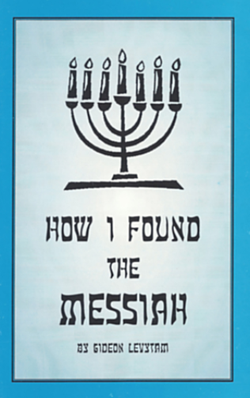
Follow Gideon Levytam's journey and discover how he was led by God, through a series of exciting circumstances, to find the One his people are still waiting for.
Past Episodes

Featured Offer
Follow Gideon Levytam's journey and discover how he was led by God, through a series of exciting circumstances, to find the One his people are still waiting for.
About Holy Scriptures and Israel
As time passed by, the Lord Yeshua took dear brother John Van Stormbroek to himself. The ministry of Holy Scriptures and Israel continued with additional development. In the early 1990’s, a weekly morning Bible class began which brother Gideon Levytam led regularly in the City of Toronto. This weekly open Bible class was held in the Willowdale assembly meeting hall. Eventually, a second mid-week evening Bible class was added. In April 2002, the need for an additional outreach Bible teaching meeting arose. We begun a Saturday (Shabbat) ministry meeting in which a systematic teaching of God’s word is presented to all who attend. Together we learn God’s Word, pray for each need and the salvation of Israel, and sing songs of worship unto our God, praising Him and our Lord Yeshua the Messiah.
In Mid 2004 we started to air on Joy 1250 Radio station a 15 minute Bible teaching program called "The Holy Scriptures and Israel" with Gideon Levytam. The broadcast teaches God’s word from a Hebrew Messianic perspective and has proved to be a blessing to many. It's now aired seven days a week. Our prayer is that many more of our Israeli people will have a clear understanding of who Yeshua is, why we all need him, and come to know him as their Lord and Messiah.
About Gideon Levytam
Contact Holy Scriptures and Israel with Gideon Levytam
426 Simcoe Street
Niagara-on-The-Lake
Ontario L0S 1J0
Canada
(905) 325-1234