
Acts 4:32 to 5:16, Part 2


The Condition of the Assembly in Jerusalem Part 2
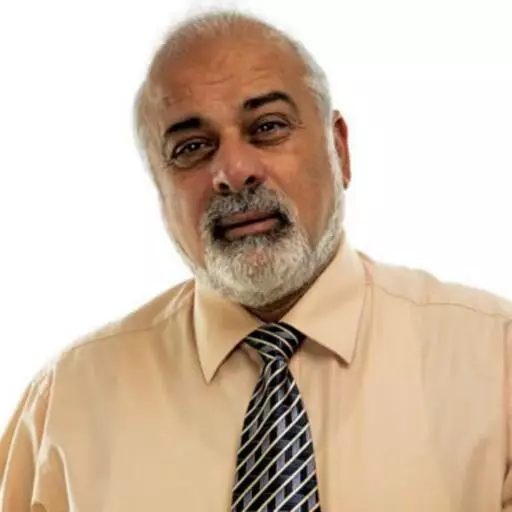
Announcer: Shalom. Holy Scriptures and Israel is a ministry designed to share with the Jewish people the good news of the Lord Jesus, Yeshua the Messiah, and to instruct Christians on the Jewish roots of their faith. And now, teaching God's word from a Hebrew Messianic perspective, here is Gideon Levytam.
Gideon Levytam: This study of Acts chapter four, because if we only have a dead Messiah, a dead person who died on a cross and then was buried in a tomb, and if there is no resurrection, there is no life, there is no hope for us. The resurrection is being taught in the scripture to show us that when God raised his son, when God raised Yeshua the Messiah, we were justified by believing in his finished work.
And so the resurrection was preached with great power. And you notice that in this same verse, it's also mentioned that great grace was upon them all. The word for great grace means chesed gadol, a lot of grace they needed. You know, they needed much grace, much chesed in Hebrew. Much grace, and grace is unmerited favor to mankind. We did not deserve the favor of God.
When it comes to Yeshua, when it says that he grew in grace in the Gospels, towards Yeshua, it is a merited favor because he was not a sinner. But towards you and I, brothers and sisters, it is unmerited favor of God. That there was so much grace as it says in verse 33, "Great grace was upon all of them." You know, we need grace, brothers and sisters. We need a lot of grace from God. We don't deserve it, but we need it.
We need grace to deal with each other. We need grace to go to work, to go to school. We need grace to raise a baby. We need grace with each other as husband and wife. We need a lot of grace as two friends, as brothers and sisters, because we all have the sin nature and we can fight with each other, we can hurt each other. And if we are to continue together, we need much grace.
Grace involves so much. The favor of God upon everything that we do. We need so much. Look for a moment if you turn with me to Second Timothy, just to read there the first few verses in Second Timothy two. Paul was writing to his younger brother, Timothy. And notice he said to him, "You therefore, my son, be strong in the grace that in the Messiah Yeshua."
He's saying to Timothy, "Timothy, if you are going to serve Yeshua the Messiah, if you're going to be a servant of the Lord in this world, you have to be strong in grace." Be strong in it. Ask for more. Seek for more. Pray for more. That's what he's saying to Timothy. And Timothy had to deal with so many problems that existed in the early assembly, in the early church age. Ask for more grace. Pray for more grace.
You need a lot of grace. And those early believers, how do you think they could do that? How do you think in the world they could maintain such a unity, to be willing to be so much committed to each other, if they wouldn't have a lot of grace? They had the same old nature than you have, than I have. They have the same sin nature that we have.
And that's what we need. You know, sometimes we come to a point we say, "I'm fed up. I cannot take it anymore." Well, you know what's the time to do when you cannot take it anymore? Ask from the Lord for more grace. That's what you need. That's what we need. And so great grace was upon all of them there in the city of Jerusalem, those that believe. And so wonderful we see here that they have done certain things that were really unique to show us the power and the movement of the Holy Spirit of God.
Now, in the next verses, verses 34 and 35, all the needs of all the believers were met. How wonderful to see that. Verse 34, "Neither was there any among them that lacked. For as many as were possessors of lands and houses sold them and brought the price of the things that were sold and laid them down at the apostles' feet, and distribution was made unto every man according as he had a need."
You know, sometimes unfortunately we have a want. But here we see needs have been met. There was beautiful to see some of them came, sold their homes, sold their possessions to meet the need of the people of God. And I want to suggest again that this was unique to that time and may happen in other time, in other period of time of history. But here we see that it was something really unique that we see in those verses.
By the way, you notice it was not demanded. Nobody had to. There was not a law and said, "Oh, you became a believer in Yeshua the Messiah. Okay, go sell your house and bring the money to the apostles." Here you see that it was not forced upon them. It was done out of the abundance of the hearts of individuals who fell before God that that's what they want to do in commitment to the things of the Lord. It was not forced. It was not a law. It was not demanded and commanded. But it was out of the movement of the Holy Spirit of God.
And we have to realize that God uses individuals as the spirit of God empower them to do things that are unique to that individual. We cannot expect it and force it on anybody else. It is an exercise as we say, an individual exercise before the Lord. And so notice in verse 34 that "neither was there any among them that lacked." In other words, the needs were met by the brethren, by the believers themselves.
The assembly took care of their own people. They took care of their own brothers and sisters. Without demand, without command, without force, out of the abundance of their hearts. And this is beautiful. By the way, some individuals have this unique gift. And the Bible does say in Romans chapter 12 that there is that which is called the gift of giving. You know, all believers are to give, but some believers have the gift of giving.
Just turn with me to Romans 12. I'll show you this verse as well. Romans 12, verse eight, speaking about those gifts. Paul said, "He that exhorting in exhortation, but notice, he that giveth, let him do it with simplicity. He that ruleth with diligence, he that showeth mercy with cheerfulness." You see, there are specific gifts that were given to believers in the body of Yeshua the Messiah. And one of the gift in the midst of this list is the gift of giving.
Some individuals may have that gift of giving. And here we see one individual that is pointed to us here in these next verses, 36 and 37, a man by the name of Yosef, who was from the tribe of Levi. Interesting, by the way, because if you remember when we had our study in the book of Joshua, Yehoshua chapter 13, we pointed out concerning the tribe of Levi.
And it says, if you remember that in chapter 13 of Joshua and verse 14, it says, "Only unto the tribe of Levi he gave no inheritance. The sacrifice of the Lord God of Israel made by fire are their inheritance as he said unto them." In other words, the tribe of Levi did not even have possessions in the earlier period of time in the history of our own people, the nation of Israel. Now, of course, this in the time of Joshua we are talking about long, many years, over 3,000 years from now. About over a thousand years from the time that the book of Acts had been before us.
Long time before the tribe of Levi didn't have any inheritance. And now look at this, we have a man, it says here in verse 36 and 37 of Acts four, "And Yosef, who by the apostles was surnamed Bar-Nabba, which is being interpreted the son of comfort, a Levite, and of the country of Kittim, which is Cyprus, having land, he sold it and he brought the money and he laid it at the feet of the apostles."
Very interesting. How come this man who was from the tribe of Levi could do such a thing? How did he even have a land? Well, apparently brothers and sisters, of course, as time moved on, things have changed. Israel now, of course, is in a time of decline. They didn't receive the Messiah. We studied this in the earlier chapters of the book of Acts. We have looked at that in the Gospels when the nation as a nation did not accept Yeshua the Messiah.
Israel in the time of decline. Things are completely not in the same order that God had intended them for the nation of Israel. And so what happened here when the people have come back to the land, even in the time of Ezra, in the time of Nehemiah, and time have passed by, that the Levites, some have already possessed land. But here we see a beautiful thing that man from the tribe of Levi understood that his inheritance is found in the Lord.
And what does he do? Yosef his name, by the way, it says Joseph in here, but is the Hebrew name Yosef. And apparently the apostles named him Bar-Nabba. Bar means son in Aramaic, in Hebrew is Ben. Nabba means comfort, consolation. And apparently this man was such a man we find him a lot later on in the book of Acts. He gave so much comfort to the brothers and sisters in Jerusalem.
He was a man that was from the tribe of Levi that had been such a blessing to the people of God. And one of the evidence of the mood of the Holy Spirit of God in his own life that he was willing to sell everything that he had and he brought it before the apostles and he laid them at the feet of the apostles. He recognized the fact that the move of God is there. The apostles were raised by Yeshua the Messiah to preach the message, to share the gospel. And they were the one whom he have trusted.
Again I want to say, no force, no command, no obligation, no demand. It was done out of the abundance of his heart. And that's beautiful thing that we need to realize in anything that we do, that God does not force us. It's liberty that he gives us to serve him, to be a blessing to others, to give, to help, to share. It's not commanded in a sense of if you will not do it, you will be punished. No, it is out of the abundance of the heart.
And that's the way God wants it and that's why blessing can flow out of this. You don't have any bringing the whole assembly there, tell them, "Oh, we need to raise so much and so much. And if we don't raise, God's work will stop." You think God cannot continue without us? He doesn't need us. He doesn't need our money. You know many time we mess up more than help. He can do it. He can use whomsoever he will.
If I'm not going to be willing to be part of it, he can use somebody else. And if you don't go to be willing to be part, he's going to use somebody else. God is not out of resources. He's not limited to you and I. Praise God for that. If it would have been limited to us, we would be in a shameful condition. How we fail him, how much we sinned against him and disobeyed him in our life. He doesn't need us.
And here we see a man that he used. That's why he could be called Bar-Nabba, son of comfort, son of consolation. And so when he did that, you can just imagine that the people around maybe said, "Wow, what a man." Now I don't believe that Yosef wanted that "wow." I don't believe that he sought for that. But you know what we learn? That there are those others who sought for that "wow," who did not and that's where chapter five come in about Chananya and Shaffira in Hebrew or Ananias and Sapphira.
In the first 11 verses of chapter five of the book of Acts, we see exactly the opposite what God did not want to see among the people of God. We see, brothers and sisters, like you and I, sometime hypocrites. Hypocrisy we see here in the next verses. And let's not look at them, we see this in our own life. Hypocrisy, you know, the word for hypocrite is a two-face. It's like a mask that one time we have a mask for one show and then we have a mask for another show.
We often time behave like that. Sometime we behave, we put on one mask and then we change that mask for another occasion. You know like it had been said and we know it from experience when we used to be going to the meetings in the morning on Sunday morning with taking our children and sometime you get fed up because of disobedience and you are upset with the children and upset with your wife and your wife upset maybe with you. And you come to the meeting you angry and you come to the meeting and all of a sudden, "Hi, how are you?" "Oh great, everything is so fine, we are just doing great."
And yet all along you were angry and upset and you were rude and I was and I'm speaking now for myself. You know how we have a face for the people and a face in another way. And you know how it is sometime happening to us. We can't help it. We get so taken up by problems and we have two faces or sometime more than two faces. That's hypocrisy. And of course we get angry, we get upset at time. We need to ask, "Lord, help me. I fail you there. I sinned against you."
And we do. And so here we see now, we're not talking about unbelievers. We are talking about the people of God. They all were one heart, one soul, verse 32 of chapter four. Chapter four, verse 37 having land, Yosef sold everything and laid it in apostles' feet and used for the people of God. And everybody must have been impressed.
So chapter five, verses one to 11, we see the sin and the punishment of Chananya and Shaffira. And you see in the first couple of verses, here is their doing. You see when they saw, we don't read that here in between the line, but between chapter four and chapter five there's really not a break. It's really a continuation.
"And a certain man by the name of Chananya with Shaffira his wife, sold a possession." Now notice it's "a possession." Maybe he had more land, maybe he had more other things, but it's one portion that he sold. So we read, Chananya and Shaffira, they sold a possession and they kept back part of the price, his wife also being privately to it, and he brought a certain part of it and he laid it at apostles' feet.
Now let me say this again. Did he have to do it? No. There was no force here. There was no command here. There was no demand here. But here we see the different heart. Yosef had a state of heart that wanted to do service out of the abundance of his heart without to seek for glory for himself. And here we see another man and his wife who wanted glory for themselves. They wanted that "wow." Others will impress by what they are doing.
"See, not only Yosef can do it. I, Chananya, can do it as well." That shows us that he was not content with what the Lord have allowed him to do. It's almost like a spirit of jealousy and a spirit of seeking glory for oneself. Again, I'm not pointing to him. I'm mentioning what the scripture the text says. But we need to know that that is existing in our very own hearts. And it happens to us during our time as believers.
And so they're doing was well, they sold the possession, he kept part for himself and he brought to the apostle the money. Now again I want to say nothing wrong with keeping a part for himself. Nothing wrong with it at all. But the problem comes after is in verses three, four and five. Peter's questioning him. And Peter said, "Chananya," and you know how Peter knows why he asks him this question.
Why Peter could have just said, "You know what? Praise the Lord, Chananya and Shaffira. You brought it. Praise the Lord." But Peter asking him, guided by the spirit of God, Peter said unto Chananya, "Why has Satan filled thine heart to lie against the Holy Spirit and to keep back part of the price of the land?" You see, Peter knew that Chananya was trying to give an appearance of what others have done, but it was not truly the full truth.
And what Peter said to him, "Listen, you have lied to the Holy Spirit of God." And you notice Peter continue in verse four. He says, "Listen, while it remained, was it not your own? And after it was sold, was it not in your own power?" In other words, he could say, "You know Peter, I came, here is some of it. I don't want to give everything because I need some things for many other needs that I have in my life."
This is not the issue here. The issue here that he wanted to give an appearance that others have had like Yosef in the previous chapter. And Peter said to him, "Listen, before you sold it, it was your own. After you sold it, it was in your own power. Why did you conceive this thing in your heart? You has not lied unto men, but you have lied unto God."
And here we find out another truth that you and I cannot lie to God. He knows everything about us. In our study of the Gospel of John, we read of Yeshua, he knowing all things that were going to happen to him, chapter 18. In chapter two of the Gospel of John, we read of Yeshua, he knew everything that is in the heart of man. He did not commit himself unto them because he knew all men.
The Lord knows our hearts. And how oftentimes, more than oftentimes, we fail him in our thoughts and in our practices. And so he says, "You didn't lie to men, but you lied to God." You know, brothers and sisters, he lie to the Holy Spirit and he lie to God and not to men. We learn that the Holy Spirit is divine. He is God, the Holy Spirit. He's the one that move us. He's the one that indwell in us. He's the one that have given us a new nature.
Featured Offer
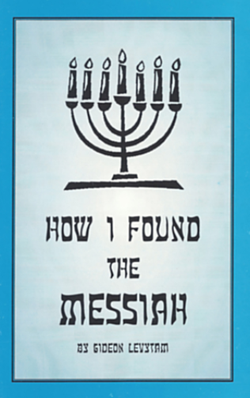
Follow Gideon Levytam's journey and discover how he was led by God, through a series of exciting circumstances, to find the One his people are still waiting for.
Past Episodes

Featured Offer
Follow Gideon Levytam's journey and discover how he was led by God, through a series of exciting circumstances, to find the One his people are still waiting for.
About Holy Scriptures and Israel
As time passed by, the Lord Yeshua took dear brother John Van Stormbroek to himself. The ministry of Holy Scriptures and Israel continued with additional development. In the early 1990’s, a weekly morning Bible class began which brother Gideon Levytam led regularly in the City of Toronto. This weekly open Bible class was held in the Willowdale assembly meeting hall. Eventually, a second mid-week evening Bible class was added. In April 2002, the need for an additional outreach Bible teaching meeting arose. We begun a Saturday (Shabbat) ministry meeting in which a systematic teaching of God’s word is presented to all who attend. Together we learn God’s Word, pray for each need and the salvation of Israel, and sing songs of worship unto our God, praising Him and our Lord Yeshua the Messiah.
In Mid 2004 we started to air on Joy 1250 Radio station a 15 minute Bible teaching program called "The Holy Scriptures and Israel" with Gideon Levytam. The broadcast teaches God’s word from a Hebrew Messianic perspective and has proved to be a blessing to many. It's now aired seven days a week. Our prayer is that many more of our Israeli people will have a clear understanding of who Yeshua is, why we all need him, and come to know him as their Lord and Messiah.
About Gideon Levytam
Contact Holy Scriptures and Israel with Gideon Levytam
426 Simcoe Street
Niagara-on-The-Lake
Ontario L0S 1J0
Canada
(905) 325-1234