
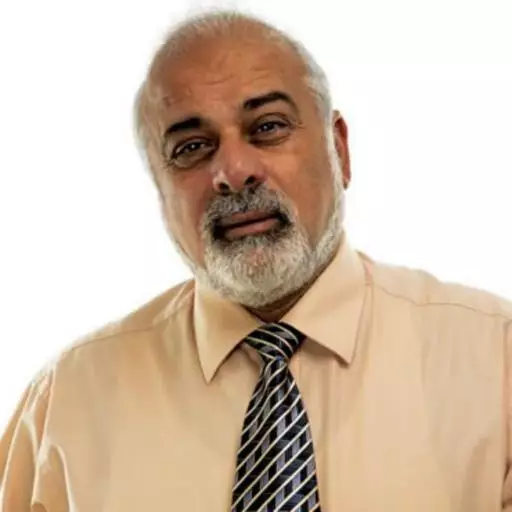
Acts 4:1-12, Part 3


The First Persecution of the Assembly Part 3
Intro/Outro Announcer: Shalom. Holy Scriptures and Israel is a ministry designed to share with the Jewish people the good news of the Lord Jesus, Yeshua the Messiah, and to instruct Christians on the Jewish roots of their faith. And now, teaching God’s word from a Hebrew Messianic perspective, here is Gideon Levytam.
Gideon Levytam: This study of Acts chapter 4, an answer for sin is only found in Yeshua’s person and Yeshua’s work when he died on the tree, and he was buried and rose again on the third day for our justification.
That’s the lesson that we learn, beloved brothers and sisters, from these verses. The whole context shows us that we need to be faithful in the presentation of the gospel, that we need to be patient as we present it, that we need to be practical and not only intellectual, that we need to recognize that there will be opposition.
Also, we need to realize that Satan is right next door seeking to discourage and to stop that work of God. And finally, to realize in our hearts that the only answer for sin, for man’s problem, is the person of the Messiah Yeshua and the finished work that he has done for us on the tree.
And so now let’s move on. These are the first four verses of Acts chapter 4. But notice now, in verses 5 to 12, we find Peter and John before the Sanhedrin. And there we see the council is there. Imagine, 71. And then not only those 71. Look what it says here. First of all, in verses 5 and 6, we see the gathering of the council, the gathering of the Sanhedrin.
It says, and it came to pass on the morrow that their rulers and elders and scribes and Hanan, the high priest, and Caiaphas and John, or Yohanan, and Alexander, and as many as were of the kindred of the family of the high priest, they were gathered together in Jerusalem.
Here we see, beloved brothers and sisters, in verses 5 and 6, we see the gathering of at least 71 in the Sanhedrin. Plus, you have here the high priest’s family. We have the son-in-law Caiaphas, the son-in-law of the high priest. And then we also have John, the son, and Alexander, and many of the family of the high priest. Apparently, the high priest had his whole family participating in the priesthood there. It had been told, I think, that five of his sons were priests at that time, during the time of Hanan, of Annas, the high priest. And ultimately, his son-in-law Caiaphas became that high priest at that time.
But here you see them all gathering together in Jerusalem, the 71 plus the rest of the family members. They are all gathering together to counsel about what has happened there. Now again, visualize. It’s not necessarily sometimes people say Jews against Christians. The whole story is Jewish here. It is in Jerusalem. The leadership of the priesthood was Jewish. Peter and John were Jewish. The man that was impotent was Jewish. It’s the whole scenery there. It’s a story of what’s happening, "What are you doing here violating the rules and the regulations of the council of the nation of Israel?"
And so, they gathered together in verses 5 and 6. The rulers, the 24 elders, the scribes, the Sadducees. Those scribes are actually the Pharisees. And then the high priestly family, they were all gathering there together in order to counsel what to do, what has happened there. They were at the court. Peter and John were sitting there before their judges who were going to judge them for what they had done.
And so, verse 7, we have the question to Peter and John by the council. And the question was this: when they had set them in the midst, they asked them, by what power or by what name have ye done this? Now, it says here that they have set them in the midst. Can you imagine, brothers and sisters, how fearful that must have been? You are sitting in the midst of a few hundred, perhaps. And you are there. You know that everybody is opposing what you believe and what you stand for. Can you imagine?
Don’t you feel sometimes that the reason that we don’t share the message of the gospel is because of fear that we have? Some of us are bolder than others. But nevertheless, the opposition is tremendous. And Peter and John must have felt like they were in a lion’s den. They were their own people, their own brethren, their own nation, their own religious leaders whom they dearly loved.
But Peter and John came to faith in Yeshua the Messiah in accordance with the word of God. But they asked them the question that was to them, by what name have ye done this? You see, the name is very important here. You see, they knew very well what happened and how this event took place. But they didn’t want the name of Yeshua to be again before them. And so the question was to Peter and John, by what name have ye done this?
If you go just a moment back to chapter 3, look what we read. In verse 6, Peter said, silver and gold have I none, but such as I have, I give unto you. In the name of Yeshua the Messiah from Nazareth, rise up and walk. You see, it was in the name of Jesus, in the name of Yeshua, that this impotent man rose up and walked.
How true it is that men today do not want to hear the name of Jesus. You know, I and you would agree with me, we can talk about anything with many people. We can talk about the weather. We can talk about the job situation, the economy, and even politics. We can talk about everything. But the moment we bring to the picture the name of Yeshua the Messiah, the problem has begun. The question is always here. It is the name of Yeshua, the name of the Lord Jesus the Messiah. That’s the problem. That’s the cause of the friction. And so the question was, by what name have you done this?
And so Peter in verse 8, the first part, and I want to highlight that because this is important. It says in verse 8, the first part of verse 8, and Peter, filled with the Holy Spirit. You notice that the Bible emphasized many times the necessity of being filled with the Spirit of God. You see, Peter and John had already had the Holy Spirit of God indwelling them. In Acts chapter 2, the Spirit of God descended upon all the believers and formed them into one body and was placed in their hearts. They were already taken over. In other words, they were already sealed by the Holy Spirit. They were already indwelt by the Holy Spirit of God.
But in order to empower them to present the message, they had to be filled with the Holy Spirit of God. And you and I are very much the same. Every one of us who believe in Yeshua the Messiah, we have the Holy Spirit of God indwelling us. First Corinthians 12 says by one Spirit we were all being baptized into one body. We all have the Holy Spirit of God indwelling us. But we are not always filled with the Spirit of God.
Being filled with the Spirit of God really demands from the believer to be in communication with the Lord, in fellowship with the Lord, in submissiveness to the Lord. Many times, we know we are not filled with the Spirit of God by the way we conduct ourselves. And the person who is filled with the Spirit of God, that means that the Spirit of God is controlling them in their lives.
It was Paul who said in Ephesians chapter 5. He says these words in verse 18: be not drunk with wine wherein is excess but be filled with the Spirit. Just the same like wine can control a person in drunkenness, the Spirit of God can control a person in walking with the Lord. And that’s what Paul is saying. Listen, be filled with the Holy Spirit of God. In other words, he says, let the Spirit of God control you and lead you in your life.
And what happened here in this chapter, in Acts chapter 4, the Spirit of God controlled Peter as he was boldly speaking to the council in Jerusalem. It’s so beautiful to see that. Beautiful to see how the Holy Spirit of God filled Peter, and he now can present the message fearlessly before the council in Jerusalem.
I want to have one more verse to show you. If you turn with me, please, to Matthew chapter 10. We read that the Lord himself already warned the disciples that that’s what’s going to happen to them before he died. He said to them in Matthew chapter 10, verse 17: beware of men, for they will deliver you up to the councils. They will scourge you in their synagogues and ye shall be brought before governors and kings for my sake for a testimony against them and the Gentiles. But when they shall deliver you up, take no thought how or what ye shall speak. For it shall be given unto you that same hour what ye shall speak. For it is not ye that speak, but the Spirit of your Father which speaketh in you.
See, Yeshua, before he died and he gathered his disciples, the 12 apostles in Jerusalem, he told them, he warned them. He says, listen, that’s what’s going to happen to you. You will be opposed. You will be rejected for my name’s sake. And you see, when you are going to be taken to the council and to the synagogues and to various places where they will accuse you, he said to them, listen, for it is not ye that speak, but it is the Spirit of your Father that is speaking in you. This is Matthew chapter 10, verse 17 to 20.
And the reality happened right here in this chapter. Peter was taken up, if you will, filled by the Holy Spirit of God. He began to speak. And so we see what Peter said to the council. It’s a boldness that he had at that time. It is amazing. But it was in the power of the Holy Spirit of God. And so we find him now speaking in verse 8b. And I’ll make some points here, some comments.
In verse 8b, he says: ye rulers of the people and elders of Israel, if we this day be examined of the good deed done to the impotent man, by what means he is made whole, be it known unto you all and to all the people of Israel that by the name of Yeshua the Messiah from Nazareth, whom ye crucified, whom God raised from the dead, even by him does this man stand before you whole. This is the stone which was set at nought of you the builders, which is become the head of the corner. Neither is there salvation in any other, for there is no other name under heaven given among men whereby we must be saved.
What Peter was saying to them was so bold that he could tell them the things that perhaps they did not want to hear at all. The first thing we find out in verses 9 and 10, that Peter was speaking to the council and he clearly told them that through the name of Yeshua the Messiah, that this man was healed. He was not afraid to tell them how this man became whole. He says, look, if you examine the good deed, and you notice that he says the good deed? Nothing bad that they have done. They have done a good deed by using the name of Yeshua to heal that man that for 40 years was sitting there, was lame from birth. And finally, he could walk.
And so can you imagine? He says, look, the good deed that is done to this impotent man, by what means he is made whole. Look, the good deed happened to him. Now he’s able to walk. He’s able to sing. He’s able to praise God. They are accusing him about the good deed that was done to this good man. So he told them, listen, I want you to know, you all the leaders of Israel and all the people of Israel, that in the name of Yeshua from Nazareth, whom ye have crucified, God raised from the dead, even by him does this man stand here whole before you.
He was not ashamed to tell them that it was through the name of Yeshua from Nazareth that this man became healthy and whole. But he told them two other things here that they didn’t like. He told them, whom you have crucified. Now, you see what happened here? Apparently, Peter and John were sitting there before the council, before the court. And what he really did here, he reversed this. What he really did here, he actually took them to court. And they were the ones who are now being the accused. He reversed things. They accused him for using the name of Yeshua to heal that man. And he told them, listen, the reality of the truth is that you have crucified Yeshua from Nazareth.
Now we know very well, brothers and sisters, that it was not the leaders of Israel who have crucified Jesus. It was the Romans who have crucified him. But nevertheless, the leaders of Israel had the responsibility. They should have accepted him. They should have embraced him as the Messiah. They should have recognized that he was the promised one of Israel. But they didn’t. And just a few years earlier, it was the same man by the name of Yeshua who was also standing before the very same council, the same court, accused because he claimed to be the Messiah. Now they are accusing his servants, the apostles, of being the one that spoke in the name of Yeshua. And so he told them, Peter told them, whom ye have crucified.
And then he said to them that God had raised this man from among the dead. You have delivered him up, verse 10. But God has raised him up. You have given him over to the nations, to the Gentiles, to the Romans to ultimately crucify him and you participated, you have a guilt in that. But God has raised him from among the dead. The human responsibility and the sovereignty of God. Men, and this is where you and I are coming. You and I are guilty in the crucifixion of Yeshua the Messiah.
But God was satisfied with his work. And after he died, God had raised him from among the dead and took him to sit at his right hand. And that’s why he said to him, sit down on my right hand until I make thy enemies thy footstool. So look what he is really taking them to court. And he’s showing to them that they have the initial responsibility and that it is in the name of Yeshua the Messiah that this man that is standing there before them is whole.
And then in verses 11 and 12, he shows them who Yeshua really is. Yeshua, Jesus the Messiah, is the rock, is the stone, is the rock of our salvation. He’s showing this to them. And he’s saying to them in verse 11, this is by the way where we read Psalm 118 today: this is the stone which was set at nought by you, the builders, which is become the head of the corner.
And you know what he was really doing? He was quoting to them Psalm 118 which they had in their hands. You see, they didn’t have the New Testament, the Brit Hadashah. It was in nonexistence at that time. The book of Acts was enacted right now. They didn’t have the Brit Hadashah, the New Testament. But what they did have is the Old Testament, the Tanakh, the Hebrew scriptures.
And in Psalm 118 and verse 22, the stone which the builders refused had become the head of the corner. The stone is Yeshua the Messiah. The builders are the religious leaders of Israel. And the stone became the head of the corner. He became the one that ultimately will become that leader, the head of the corner of the building. That’s what he is saying to them in verse 11: the stone which was set at nought by you builders, which is become the head of the corner.
Now oftentimes, brothers and sisters, when the Bible speaks about the rock or the stone, it’s oftentimes in the Bible applied either to God, to the God of Israel, or at times to the Messiah of Israel, who is the God and men in one. It’s often in the Bible spoken to us concerning the God of Israel. And the religious leaders of Israel knew it very well. And so when Peter was telling them that he is the stone which the builders reject, they must have gone in their mind to many, many passages in the Tanakh, in the Old Testament.
I just want to quote you just some of them in the Old Testament, in the Hebrew scriptures. The first time we find that word rock is found in Deuteronomy chapter 32, and it has to do with the God of Israel. It says in verse 4 of Deuteronomy chapter 32, he is the rock. His work is perfect for all his ways are judgment. The God of truth and without iniquity, just and right is he.
Featured Offer
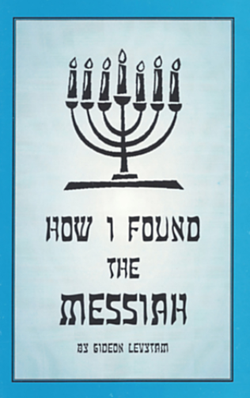
Follow Gideon Levytam's journey and discover how he was led by God, through a series of exciting circumstances, to find the One his people are still waiting for.
Past Episodes

Featured Offer
Follow Gideon Levytam's journey and discover how he was led by God, through a series of exciting circumstances, to find the One his people are still waiting for.
About Holy Scriptures and Israel
As time passed by, the Lord Yeshua took dear brother John Van Stormbroek to himself. The ministry of Holy Scriptures and Israel continued with additional development. In the early 1990’s, a weekly morning Bible class began which brother Gideon Levytam led regularly in the City of Toronto. This weekly open Bible class was held in the Willowdale assembly meeting hall. Eventually, a second mid-week evening Bible class was added. In April 2002, the need for an additional outreach Bible teaching meeting arose. We begun a Saturday (Shabbat) ministry meeting in which a systematic teaching of God’s word is presented to all who attend. Together we learn God’s Word, pray for each need and the salvation of Israel, and sing songs of worship unto our God, praising Him and our Lord Yeshua the Messiah.
In Mid 2004 we started to air on Joy 1250 Radio station a 15 minute Bible teaching program called "The Holy Scriptures and Israel" with Gideon Levytam. The broadcast teaches God’s word from a Hebrew Messianic perspective and has proved to be a blessing to many. It's now aired seven days a week. Our prayer is that many more of our Israeli people will have a clear understanding of who Yeshua is, why we all need him, and come to know him as their Lord and Messiah.
About Gideon Levytam
Contact Holy Scriptures and Israel with Gideon Levytam
426 Simcoe Street
Niagara-on-The-Lake
Ontario L0S 1J0
Canada
(905) 325-1234