

Acts 4:1-12, Part 2


The First Persecution of the Assembly Part 2
Announcer: Shalom. Holy Scriptures and Israel is a ministry designed to share with the Jewish people the good news of the Lord Jesus, Yeshua the Messiah, and to instruct Christians on the Jewish roots of their faith. And now, teaching God’s word from a Hebrew Messianic perspective, here is Gideon Levytam.
Gideon Levytam: This study of Acts chapter 4. But you see what happened in the preaching of Peter at the end of chapter 3. Look what it says in verse 26, “And to you first God, having raised up His son Yeshua, and He sent Him to bless you.”
Brothers and sisters, the teaching concerning the resurrection is essential in the presentation of the gospel. The Lord Yeshua the Messiah did not only die for us. He not only was buried for us in a tomb, but He rose from among the dead, and the resurrection is one of the greatest, beautiful facts of the finished work of Christ, of the Messiah. And that’s why it is important for us in the preaching of the gospel to speak about the resurrection.
And so Peter at the end of chapter 3 presented the resurrection of the Messiah, and immediately the priests and the captains of the temple and the Sadducees came suddenly upon him and John. And so in the first verse, we see the sudden coming of the religious leaders against those two apostles who were presenting the message of the gospel.
So you can see what happens when you present the word of God and you’re talking about the name of Jesus. The whole chapter 4 deals with the name of Yeshua the Messiah. And so now in verse 2, actually we see the reason why the leaders came against Peter and John. Why did they come against them? What did they do? They didn’t do anything wrong.
So it says here in verse 2, they were grieved that they taught the people and they preach through Yeshua the resurrection from the dead. You see, they were grieved. The Sadducees were grieved because Peter and John preach that through Yeshua, through the Lord Jesus the Messiah, there is the resurrection from among the dead, and they were angry.
Now remember, if you would have been there 2,000 years ago in the city of Jerusalem, the temple area, the temple compound, and the whole city, the religious activity of the nation of Israel was led by the leadership of Israel. And in the leadership of Israel, they would not allow anything that was not right or anything that was not in accordance with their will to be preached in the Temple Mount. And you can understand it, providing that what they taught was the right presentation of God’s message.
But the truth of the matter that the religious leaders of Israel by the time that Yeshua was there, there was a decline from the simple ABC of the word of God to all kind of rabbinical teaching and rabbinical views. Even the fact that they did not believe in a resurrection proves that they didn’t accept what God said in His word. Many times in the Bible in the Old Testament, God did speak of the truth of the resurrection.
The Messiah Himself prophetically said in Psalm 16, “Thou shall not leave my soul in Sheol, nor the Holy One to see corruption.” In other words, the Messiah Himself prophetically in Psalm 16:10 spoke about the resurrection that He will raise one day from among the dead.
Daniel himself in chapter 12 spoke about the resurrection of the just and the unjust. In chapter 12 and verse 2, Daniel said this, and I better read these words from the book of Daniel. He said in verse 2, “Many of them that sleep in the dust of the earth shall be awakened, some to everlasting life and some to shame and to everlasting contempt.” Daniel chapter 12 and verse 2. The truth of the resurrection, beloved brothers and sisters, is clearly taught in the Hebrew scriptures.
But the Sadducees did not believe in the resurrection. And so when Peter presented the resurrection through the name of Yeshua the Messiah, that offended them and they were grieved and they came against them and they stopped the preaching of the message. And so those Sadducees who were the leaders of the nation stopped the presentation of the gospel by Peter and John.
Let me just say a few things about the Sanhedrin. The Sanhedrin is the council, the Supreme Court of Israel, and they were the one that were making decisions for the nation of Israel. They were made out of 71 men, and those 71 leaders, 24 of them were Sadducees. They were in the higher place in the Sanhedrin.
Now where did they get the number 71? How did this council come about? If you will look in the book of Numbers, if you turn back for a moment with me to the book of Numbers, I want to show you how did the number 71 come about to be those who will lead the nation of Israel. In chapter 11 of the book of Numbers, Moses was very much grieved with the disobedience of the nation.
Moses said to God, verse 14, “I am not able to bear all this people alone, because it is too heavy for me.” He could not bear with the disobedience of the nation. They were constantly grumbling, constantly disobeying, not satisfied, just like many times you and I as believers today in the body of Messiah, complaining and grumbling and constantly frictions among the people of God, not satisfied with what God provides for His people. And so here Moses says, “I’m not able God to bear them alone.”
So you know what God told him in verse 16? The Lord said unto Moses, “You gather yourself 70 men of the elders of Israel, whom thou knowest to be the elders of the people and officers over them, and bring them unto the tabernacle of the congregation, that they may stand there with thee. And I will come down, and I will talk with thee there, and I will take of the spirit which is upon thee and I will put it upon them, and they shall bear the burden of the people with thee, that thou bearest not thyself alone.”
You see, when Moses was discouraged in a certain time of his life there when Israel was so much grumbling against him and against the things of God, Moses said to God, “God, I cannot take it anymore.” And I don’t blame him at all when you think about what he had to experience as the leader of the nation. And so he said he couldn’t take it. You know what God did? He says, “Okay Moses. You know you’re not able. I didn’t expect you to do it alone. You had to do it in the power of mine.”
“But you see, Moses, what I’m going to do, you bring 70 other elders that you recognize as godly elders, and I will put of the same spirit, not another, of the same spirit upon them and they will rule the nation together with you.” So now what we have, instead of one leading the nation in the power of the Holy Spirit of God, we have 71 leading the nation with the same power of the Holy Spirit of God.
And that’s how we get that number 71. The 70 elders plus the leader, and that’s what we have in the Sanhedrin, the 71. It is the Supreme Court of ancient Israel and the number of the leaders will be 71, but the higher group were the Sadducees who did not believe in the resurrection. They did not believe in the angelic realm, in the spirit realm, and they were the one that were actually the leadership of the nation. And so they were opposing the message that Peter and John were proclaiming, that there is the resurrection from the dead, and they were proclaiming it through the name of Yeshua the Messiah.
So in verse 1, the sudden coming of the religious leaders. Verse 2, the reason, because they were grieved, because they taught through the name of Yeshua the resurrection from the dead. And so the arrest of Peter and John is being done in verse 3. What they did, they laid hands on them, they put them in hold until the next day, for it was already evening.
They took them and they held them. They locked them in jail, wherever they had placed them there. It was evening, they didn’t want to deal with them that evening. They took them, they held them, and they locked them and they kept them there until the next morning.
And then it says, look at the beautiful thing, in spite of the fact that they locked them and held them and stopped the message to be proclaimed, it says in verse 4, “Howbeit many of them which heard the word believed, and the number of the men was about 5,000.” You know, I think we today have a problem to gather 30 people in a meeting. Peter and John, going to the temple in Jerusalem, presented a message to thousands of people.
And as they were presenting the message, we find out that there is power in the word of God, beloved brothers and sisters. The power is not in the vessel, but the power is in the person that they proclaim, the person of the Lord Jesus the Messiah. Can you imagine? 5,000 men. Only men. Now some suggest that the number 5,000 is in addition to what have already come to pass in chapter 2 and verse 41, where we read there, if you remember, in chapter 2 and verse 41, that there were 3,000 souls that received His word and were baptized.
So there was an additional 2,000 which will make it 5,000. This is some suggested that it is 5,000, 3 plus 2. But others suggest that no, these are 5,000 men alone, as it’s mentioned here in verse 4, “The number of the men was about 5,000.” Can you imagine what a wonderful truth was that to see so many have accepted the word? Why? They heard the word delivered and they have accepted it.
The apostle Paul said in Roman chapter 10, “Faith cometh by hearing, and hearing is by the word of God.” And when you present the word and one hears the word, the Spirit of God takes the word and appropriates it to the heart of the one who heard the word, and convicting him or convicting her and bringing them to the knowledge of Yeshua the Messiah.
And that what happened here. And from these four verses, we learn many lessons as we present the word of God. You know, some of the lessons that if you want to make a notes of those lessons that we learn, I’m going to share these with you, some of the lesson that we learn from what happened here are these.
The first lesson that we learn is that we must be faithful in preaching a clear message of the gospel from the word of God. Not to play with it, not to add anything, not to subtract anything, to be faithful in presenting the message of the word of God as it is found in the word. That’s our responsibility. If we are to serve the Lord and to present it properly, we are to present it faithfully.
Secondly, in the lesson we learn that as we present the message of the gospel, we should present it with a lot of patience. Not to expect everybody to right away say, “Oh, I want to take it, I want to take it,” because there is a lot of patience in the presentation of the gospel with people. It is the Lord’s work, it’s not your work, it’s not my work. It is the Lord’s work. God has been so patients with Israel. He has been so patient with His people. He have already given them to hear the message of the Messiah for 33 years since Yeshua was born and He lived here, and His ministry before He died, He presented with the nation the fact that He was the Messiah. There is need of a lot of patience in the presentation of the word of God.
Thirdly, we learn from this is that when we present the gospel, it’s not sufficient enough to present it intellectually, but we need to be also practical. You remember when they went to the temple to pray, and this beggar said, “Give me some money,” and Peter said to him, “Silver and gold have I none. But what I have, I give unto you in the name of Yeshua the Messiah, rise up and walk.” Being practical means that we cannot merely present a word intellectually to the head and not practically meet the needs of people.
Oftentimes missionaries who go overseas to present the message of the gospel to the people in Africa or elsewhere, they are not only telling them about the Bible, but they’re presenting before them other needs. They’re helping them practically. They meet their need. You know, a hungry man need first of all to be fed physically that he can rest and be clear enough to receive spiritual truth. So we are not only to present it intellectually, but we are also to be practical in the presentation of the word of God as we share the message of the gospel.
Fourthly, we learn from what happened here is that we should expect opposition from without to the message that we proclaim. In the beginning, when I first became a believer, I thought every person whom I tell him about the love of God is going to say, “Brother Gideon, I’m so happy, I want you to come to tell me some more.” But you know, that’s not right because you don’t know too many people gonna come and say, “Tell me more, tell me more, I want to hear more about Jesus.” Most of the people said, “Don’t tell me anymore. I don’t want to hear this. I don’t want you to talk to me about this man anymore.”
You know, there is a song that being sung sometime by many Christians where the unbelievers world says, “Send the light, send the light.” And I remember brother Moishe Rosen, the leader of Jews for Jesus, when we were sitting and learning from the word when he was preaching, he says, “Something wrong with this song. The world never says send the light, send the light. The world says don’t send the light. I don’t want to hear about the message of the gospel.” The Gospel of John says men love darkness rather than light.
We cannot fool ourselves by saying, “Oh, everybody’s going to embrace me because I came and I told them about the love of God.” The point is this, that the world love darkness rather than light, and we are to expect opposition to the message as we present the message of the gospel. And you can see the first time they present the message of the gospel to the leaders to the nation of Israel here, you get so much opposition, not from the ordinary individual on the street of Yerushalayim, but from the religious leaders, the one who love God. You see what happened?
Fifthly, when we present the gospel and God is doing a great work, realize that Satan is always around to do a work against the work of God. Every time God is doing a work, right behind or right the next moment, Satan is coming and doing his work to oppose the message, to oppose the growth, to oppose the proclamation, because Satan hates the things of God. Satan always caused problems wherever God is working, and it began in the Garden of Eden, when Adam and Eve were told by God, “You have everything. Do everything. You can enjoy the garden, enjoy the trees, enjoy the animal, enjoy everything is yours, the fruit and so on, but I want you not to eat of this tree of the knowledge of good and evil.”
So Satan come and he says, “Has God really said so? Really? Is it really? God really don’t care for you. That’s why He doesn’t want you to eat from the tree of the knowledge of good and evil. He withholds from you something.” He’s always as the serpent, as Satan the deceiver, the accuser. He is always there to hinder the work of God, and he does it in a crafty way.
The Bible tells us in 1 Peter 5 and in 2 Corinthians 11, on the one hand he’s coming as an angel of light, and when he cannot deceive, he comes as a roaring lion to hurt and to crush the people of God. And that’s what we see here. The Satan comes along and coming with this religious garment to say, “Oh, we are really caring for the people of God, for the religious activity. How can you speak in the name of Yeshua the Messiah and preach the resurrection?”
And finally, another point to mention that we learn from what happened here is that Yeshua’s person and Yeshua’s finished work is the only answer for sin. There is no answer in the whole universe today, and has never been an answer for sin, is only found in Yeshua’s person and Yeshua’s work when He died on the tree and He was buried and rose again on the third day for our justification.
That’s the lessons that we learn, beloved brothers and sisters, from these verses. And the whole context here shows us that we need to be faithful in the presentation of the gospel, that we need to be patients as we present it, that we need to be practical and not only intellectual, that we need to recognize that there will be opposition, and that also we need to realize that Satan is right next door seeking to discourage and to stop that work of God, and finally to realize in our hearts that the only answer for sin, for man’s problem, is the person of the Messiah Yeshua and the finished work that He have done for us on the tree.
And so now let’s move on. These are the first four verses of Acts chapter 4. But notice now in verses 5 to 12, we find Peter and John before the Sanhedrin, and there we see the council is there, imagine, 71, and then not only those 71, look what it says here. First of all in verses 5 and 6, we see the gathering of the council, the gathering of the Sanhedrin. It says, “And it came to pass on the morrow that their rulers and elders...”
Featured Offer
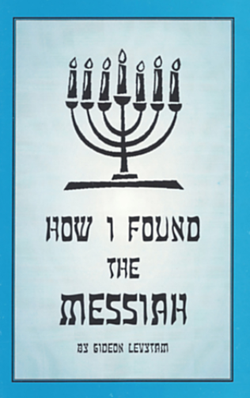
Follow Gideon Levytam's journey and discover how he was led by God, through a series of exciting circumstances, to find the One his people are still waiting for.
Past Episodes

Featured Offer
Follow Gideon Levytam's journey and discover how he was led by God, through a series of exciting circumstances, to find the One his people are still waiting for.
About Holy Scriptures and Israel
As time passed by, the Lord Yeshua took dear brother John Van Stormbroek to himself. The ministry of Holy Scriptures and Israel continued with additional development. In the early 1990’s, a weekly morning Bible class began which brother Gideon Levytam led regularly in the City of Toronto. This weekly open Bible class was held in the Willowdale assembly meeting hall. Eventually, a second mid-week evening Bible class was added. In April 2002, the need for an additional outreach Bible teaching meeting arose. We begun a Saturday (Shabbat) ministry meeting in which a systematic teaching of God’s word is presented to all who attend. Together we learn God’s Word, pray for each need and the salvation of Israel, and sing songs of worship unto our God, praising Him and our Lord Yeshua the Messiah.
In Mid 2004 we started to air on Joy 1250 Radio station a 15 minute Bible teaching program called "The Holy Scriptures and Israel" with Gideon Levytam. The broadcast teaches God’s word from a Hebrew Messianic perspective and has proved to be a blessing to many. It's now aired seven days a week. Our prayer is that many more of our Israeli people will have a clear understanding of who Yeshua is, why we all need him, and come to know him as their Lord and Messiah.
About Gideon Levytam
Contact Holy Scriptures and Israel with Gideon Levytam
426 Simcoe Street
Niagara-on-The-Lake
Ontario L0S 1J0
Canada
(905) 325-1234