

Acts 28:17-31, Part 3


Paul’s Appeal to The Jewish Community in Rome Part 3
Guest (Male): Shalom! Holy Scriptures and Israel is a ministry designed to share with the Jewish people the good news of the Lord Jesus Yeshua the Messiah and to instruct Christians on the Jewish roots of their faith. And now, teaching God's word from a Hebrew Messianic perspective, here is Gideon Levytam.
Gideon Levytam: Welcome back to our study of Acts chapter 28. We see in verse 24 that after Paul's message, "Some believed the things which he had spoken unto them, and some believed not." It's like this everywhere. Wherever we mention and share the message of the gospel, a decision has to be made. A conscience has to be pricked and a decision made to say, "What will I do? Does that apply to me? How do I react to the message that has been presented before me concerning Yeshua the Messiah and the coming kingdom in a future day?"
Some believed. Praise God for that. But apparently, there were those who did not believe the message. We can look at John 3:16, the most well-known verse today: "For God so loved the world, that he gave his only begotten Son, that whosoever believeth on him shall not perish but have everlasting life." The same chapter says, "He that believeth on the Son has life. He that believeth not the Son shall not see life, but the wrath of God abideth on him."
There is a choice that everyone has to make. You either believe or you believe not. You either accept the message of the gospel or you reject it. The Jewish community of Rome had to make a decision. Either they accept the message or they reject the message. Well, apparently some believed, but some believed not. It reminds me of what happened in Acts chapter 17 when he preached in Athens. In verses 32 through 34, a decision had to be made.
It says here, "When they've heard of the resurrection of the dead, some mocked, and others said, 'We will hear you again on this matter.'" And Paul departed from them. However, certain men clave unto him and believed. This was on Mars Hill in Athens, in Greece. Some believed, some didn't, some even mocked, and others said, "I will talk to you about this some other time."
And I tell you today, if I were to be standing today on the streets and preaching the message of the gospel, there would be those who might say, "I want to hear some more. Let me know about the Messiah." Others might say, "Don't give me this nonsense. I don't believe what you say." And others might even say, "You know what, we'll talk about it some other time. I don't have time for you today. I have to deal with business. I have some pleasure to attend. I have some things that I'm occupied with. I will not talk about this today. Some other time."
This some other time may never come to them because when God in judgment is going to have to deal with a person rejecting the Messiah, he will have to be ushered into eternity of separation because of the rejection of the message of the gospel. Some believed, but some did not believe. So beloved brothers and sisters, look at this. The same text, Acts chapter 28.
In verses 25 to 28, look at what Paul is saying to the Jewish community of the city of Rome now. He's speaking to them, and his words to those who did not believe. Look at what he is telling them in verses 25 to 28. It says, "And when they agreed not among themselves, they departed after that Paul had spoken one word." So now they left, but just before they left, here's the last message of the Apostle Paul, Shaul, to the Jewish community of Rome.
He said to them, "Well spake the Holy Spirit by Isaiah the prophet unto our fathers." You know what he does? He says, "What Isaiah prophesied to our fathers, what Isaiah, guided by the Holy Spirit of God, spoke to our forefathers in the past about 750 years before the Messiah came," he says, "it really is fulfilled even now as I'm speaking to you."
Notice he says, "Well spoke the Holy Spirit by Isaiah." The author of the Bible is not Isaiah, is not Jeremiah, is not Paul, it's not Peter. It is the Holy Spirit of God. In Hebrew, we call Him the Ruach HaKodesh. Holy men of God spoke as they were moved by the Holy Spirit. This book that we have in our hands is not humanly developed. It's not a man that thought about it by himself. These are the words of God, divinely inspired. Second Peter 1 tells us, "Holy men of God spoke as they were moved by the Ruach HaKodesh, by the Holy Spirit."
And so he is saying to them in verse 25, "Well, what Isaiah said is truly correct as he was guided by the Holy Spirit." And he is quoting Isaiah chapter 6, verses 9 and 10. Again, I would like you to always remember, he does not have the New Testament. He only has the Tanakh, the Old Testament. And he is opening to Isaiah, Yeshayahu, chapter 6, verses 9 and 10.
There, look at what it says: "Go unto this people and say, 'Hearing ye shall hear, and ye shall not understand. Seeing ye shall see, and ye will not perceive. For the heart of this people is waxed gross, and their ears are dull of hearing, and their eyes have they closed, lest they should see with their eyes and hear with their ears and understand with their heart and should be converted and I should heal them.'"
What he's really saying is there is what is called judicial blindness. What Isaiah prophesied, partial national judicial judgment, blindness on the nation, on our own people, the nation of Israel. It is what we call there is a natural blindness, there is a willful blindness, and there is a judicial judgment blindness. Here we see a self-will blindness and rejection of the message of the Messiahship of Yeshua will lead into a judgment that come by God.
Really what God is saying is you go tell the people, "Hearing they shall hear, but they will not understand. Seeing they shall see, but they will not perceive." In other words, he's saying to them, "Their heart of this people is waxed gross, deceitful, do not accept what we offer them." And while Paul was speaking about the nation of Israel in this context, we can say that that's applied to the nations of the world, to the people around the world where people reject the Lord.
God appeals to them. He says, "Come to me. I will forgive your sins. I paid for every sin that you have committed. I love you. I want you to have eternity with me. Don't follow the wrong way. Turn around, repent and turn to me." And he's appealing. And yet men reject it and despise it and say, "No, I don't want to hear about it." And they harden their hearts like Pharaoh of old.
"Let my people go." "I will not let your people go." "Let my people go." "I will not let your people go." So God said to Moses, "You will see that there will be a time that I will harden the heart of Pharaoh, that even if he want to let the people go, I will not allow him to let the people go so I will judge him." What is called judicial blindness.
The ninth and 10th verses of Isaiah chapter 6 are referred to in the scripture at least about six times. And every time it is mentioned, at least in the four Gospels, Matthew, Mark, Luke, and John, all refer to Isaiah chapter 6 when Yeshua was speaking to our own leaders, the leaders of Israel, concerning himself. I want you please turn to John 12 and verse 38. Look at how Yeshua the Messiah quoting Isaiah chapter 6 in reference to himself and the message that he has proclaimed to the nation.
I'll read verse 37 first. "But though he have done so many miracles before them," this is the Pharisees, the Sadducees, the leaders of Israel, "they believe not on him. That the saying of Isaiah the prophet might be fulfilled which he spake: 'Lord, who has believed our report and to whom has the arm of the Lord had been revealed?'" This is Isaiah 53 and verse 1.
Then he continues, "Therefore they could not believe," verse 39, "because Isaiah said again," and now he's quoting chapter 6, "'He has blinded their eyes and he hardened their heart, that they should not see with their eyes nor understand with their heart and be converted and I should heal them.'" He's quoting now Isaiah 6:9-10, specifically verse 10.
In other words, here's a point of no return. There is a point when a person is exposed to the message, hardening his heart, and often being reproved by the Lord challenging him, and he hardened and hardened his heart. And then what God does is turning around and he says, "Okay, you harden your heart. Now I'm going to judicially harden your heart that you will not be able to turn to me and come to accept."
That's what we call partial blindness, judicial judgment. We will see that that is something we read in Second Thessalonians 2 in the tribulation period, where people because they receive not the love of the truth, God would give them strong delusion that they will believe a lie. Second Thessalonians chapter 2 during the tribulation period.
Here we see in the earlier part of the church age in the city of Rome, the Apostle Paul is speaking to his own Jewish community of Rome. And he's speaking to them and we see it throughout the 2,000 years of the church age, that the message has been proclaimed. The Messiah Shaul has been presented, and men willfully rejected which lead into the judicial judgment of God by blinding that person.
So again, he is telling them in chapter 28, and he says that the saying of Isaiah the prophet to our fathers, it was right what he said, saying, "Go to this people and hearing they shall hear and shall not understand. Seeing they shall see, but they shall not perceive. For the heart of this people is waxed gross, and their ears are dull of hearing, and their eyes they have closed, lest they should see with their eyes and hear with their ears and understand with their heart and should be converted that I should heal them."
Notice that he's using the three avenues. We see with our eyes, we hear with our ears, and we understand with our hearts. The heart, the eyes, the ears, this is the avenue in which God reach us. He want us to see things. He want us to hear the message, but he want us to receive it in our heart. The eye, the ear, the heart, God had given men these members of our bodies not to only use it for ourselves, but also to use it for him to accept what he has to say to us.
So in the Bible we have many times, at least six times: Matthew 13, Mark 4, Luke 8, John 12, where these verses are referred to by the Messiah himself. In Acts chapter 28, we have Paul mentioning it. And we have a reference to Isaiah 6 in Romans chapter 11 and verses 8, 9, and 10, all in connection with Isaiah chapter 6, in connection with the nation of Israel.
And so no wonder, brothers and sisters, today when we ask why so few of our own Jewish people believe, only a few really in comparison to the rest of the nation. Well, here's the reason. They have ears, but they are dull of hearing. They have eyes, but they are closed. They have heart, but they simply are not understanding the message.
You can be a rabbi Jewish man who have a lot of reading and understanding of rabbinical truths. You can even read the Bible. The natural man receives not the things of the Spirit of God, First Corinthians 2:14, because it only can be discerned as we allow the Spirit of God to open the scriptures unto us. The natural man cannot receive it.
And you know, brothers and sisters, unless the Holy Spirit of God has showed this to you and I, we ourselves will never turn to Yeshua. He open our eyes and our hearts. And had he not open our eyes and our hearts, we would have rejected him just like others are rejecting him today. There's nothing to pride ourselves in this. The only thing is humble us to be broken before the Lord and say, "Lord, thank you for your mercy and for your grace in touching our hearts and our eyes and our ears and allowing us to accept that message of the Messiahship of Yeshua and the coming glorious kingdom of God."
In the last verses here, verse 28, Paul pointed out to the fact that salvation will be going now to the nations, to the Goyim, to the Gentiles. He says in verse 28, "Be it known therefore unto you that the salvation of God, Yeshuat Elohim, is sent unto the Goyim, unto the Gentiles, and they will also hear it."
In other words, Paul is saying now to the Romans Jewish community, "Now I'm done with it to the Jew first. Now I'm turning to the Goyim, to the Gentiles, to the nations of the world." Now, he doesn't mean that he's not going to have preaching in the Jewish community again and again throughout the church age. Of course he does apply here, but he is saying, "I have acted upon the principle of Romans 1:16, and now I'm going to the nations of the world."
You notice it says at the end "that they will hear it." Now, there are quite a few other translations that use the word "they will hear it also." I know in the King James it doesn't say "also," it only says "they will hear it," but really it's not correct. It should be "they will hear it also." In other words, some Jewish people believe because we just read in verse 24, "some believed."
So it's not that all the Jewish people around the world did not believe and all the Gentiles will believe. Well, we know it's not true. We live now 2,000 years of church history. The vast majority of the Gentile world reject the Messiah. So it's not that all the Gentiles will believe and all the Jewish people will not believe. No, what he's really saying that from among the Gentiles, some will also believe just the same as some of the Jewish people have believed. That's what he is really saying. There are various translations like the Darby translation, the New American Standard, the American Standard, and the Young translation have used the word "also." If you have it, you'll notice that that they use the word "also." That means that they have others from the Gentile will believe just the same as some of the Jewish people have believed as well.
Now verse 29 says, "And when he had said these words, the Jews departed and had great reasoning among themselves." I can just imagine that they've left and they had this conversation. "What do you think Paul meant? Why does he believe that Yeshua is the Messiah? But Rabbi so-and-so does not believe that Yeshua is the Messiah. And why should we believe that Yeshua is the Messiah? And what about the kingdom? Look at us, the Jewish community, we are scattered, we are in the world, we are hated. Where is the promised kingdom that we have in the Hebrew Tanakh? And where is the kingdom?"
And they were reasoning among themselves like today, brothers and sisters. When we have heard of Yeshua, we reason. We say, "Wait a minute, but my rabbi, he never accepted the Messiah. Why should I? He knows better than I. Why he doesn't accept the Messiah?" And then our parents says, "But how can you do so? Believe that this Jesus is the Messiah? Look at all our nation. We don't believe this. This is for the Gentile. It's not for us Jewish people."
Every one of us who is Jewish here know that in our own homes, in our own family, we tell them, "Yeah, but we believe that Yeshua is the Messiah. Look at the scripture." They say, "Nobody believed in him. How can you believe in that?" And the struggles and the reasoning that we go through today. And we struggle. And it's the Spirit of God had to touch our hearts to expound to us the scriptures concerning Yeshua the Messiah. So reasoning to discuss this is important, but to subject ourselves to the written word of God is far more important in order to be on the right side and right with God.
Well, the concluding of the book of Acts is the two years of Paul being bound in his own home in the city of Rome. And you can see, you might say, "Paul is now in jail or in prison or he is locked, he cannot do anything." You know, you might say, "Well, now he is limited. He cannot be preaching. He cannot be active and therefore we're going to lose out."
Well, listen. The Spirit of God is not subject to men. The Spirit of God can use us at home, at school, on the job, on the street, in a meeting, wherever we are if we are ready to be vessels for the Lord. Look at that. "But Paul," verse 30, "dwelt two whole years in his own hired house, and he received all that came in unto him." Apparently he was like a magnet.
People came to him and he received them. "Yeah, come here, what do you want to hear? I want to tell you." And people were coming to his own hired house and the Spirit of God used Shaul Paul in ministering for two years. Actually, beloved brothers and sisters, the Apostle Paul in those two years wrote the epistles of Ephesians, Philippians, Colossians, and Philemon. Those epistles that you have in your hand in your Bible were written to the Ephesian believers, to the Colossian believers, to the Philippians, and to Philemon from this house where he was bound for two years.
He was used by the Lord. We have an inspiration of the Spirit of God, passages in the Brit Hadashah that the Apostle Paul wrote when he was in Rome for two years. And to show you that he was an impact, I want you to turn to Philippians chapter 1 just for a moment, to show you that he had an effect there. In Philippians chapter 1, we read this about the Apostle.
It says in verse 12, "But I would ye should understand, brethren, that the things which have happened unto me have fallen out rather unto the furtherance of the gospel, so that my bonds in the Messiah are manifest in all the palace and in all the other places. And many of the brethren in the Lord, waxing confident in my bonds, are much more bold to speak the word without fear."
Apparently when he was in Rome, he was so effective because even in Caesar's palace he was effective there when he was ministering the word in the city of Rome. The being in bond only helped the Lord used him for the furtherance of the message of the gospel. In my bonds in the Messiah, it was manifest in the palace. This is Caesar's court and in all other places.
So even though he was bound, he did not lose on the presentation of the gospel. He was used by the Lord. And the last verse 31, he was "preaching the kingdom of God, Malkhut Elohim, and teaching those things which concern the Lord Yeshua the Messiah, the Lord Jesus Christ, Yeshua HaMashiach, with all confidence, no man forbidding him."
Here's a man that when he is free or when he is bound, whether he is out there in the field or whether he's in jail, he is able to minister the word and the person of the Lord to everyone that come in touch with him. He was like a magnet. He was not rude. He was not hurting people, but he was ministering to people. And he was reaching out to people and sharing them the message of the gospel. This is very precious. And again, notice, "concerning the Lord Yeshua the Messiah." Everything is linked with the person of our Lord Jesus the Messiah.
Now just last remark. It had been said that the Apostle Paul about 63 AD was released from being two years in this hired house. Apparently from about 61 AD to 63 AD, Paul was in this hired house effective. But after two years, because they found nothing against him, they did not accuse him, or in other words, they did not find any fault in him, he was released.
History teaches this. You have to read it. We don't have it here in scripture. And apparently from about 63 AD, he was free for about four or five years, from 63 to about 68 AD. And he was preaching. He made various missionaries activity. He went to Spain. He went to other areas. And apparently after about five years of ministry, he was imprisoned again.
Then the Apostle Paul was taken to prison, this time in Rome. He was no longer had the same privilege as he had now in this chapter. And apparently there was such a hard time for him. And it is in this second imprisonment that the Apostle Paul wrote the epistle of Second Timothy where he says, "I'm ready for my departure. I have finished the course. I fought the fight. I finished my course."
And now he was ready to depart when he was writing to younger Timothy. This letter was written to about 67, 68 AD from the second imprisonment where he was really heavy before his death. And apparently in about 68 AD, Nero the emperor have severed his head. And he died at about 68 AD where the Apostle Paul have gone to be with his Messiah, with our Lord Yeshua the Messiah.
What a servant he have been. What a minister of the gospel he have been. The suffering that he have suffered for our Lord Yeshua the Messiah. And we can learn from him. I know we think about his suffering, we don't like so much to identify with his suffering, but we can definitely learn from what the Apostle Paul have gone through in his life and how he glorified the person of Yeshua the Messiah in his life. And may the Lord help us as well, brothers and sisters, to glorify Yeshua the Messiah also in our life.
Guest (Male): You have been listening to Holy Scriptures and Israel with Gideon Levytam. Gideon teaches God's word from a Hebrew Messianic perspective. For more information about this ministry, write to Holy Scriptures and Israel, Box 1411, Niagara-on-the-Lake, Ontario, L0S 1J0, or visit our website at holyscripturesandisrael.com. You are also invited to Gideon's weekly Bible teaching on Fridays at 11:00 AM and 7:00 PM and Saturdays at 1:00 PM at Willowdale Christian Assembly Hall, 28 Martin Ross Avenue in Toronto. Holy Scriptures and Israel is made possible by your prayers and financial support. If you would like to support the program, visit holyscripturesandisrael.com. God bless you. Shalom, shalom.
Featured Offer
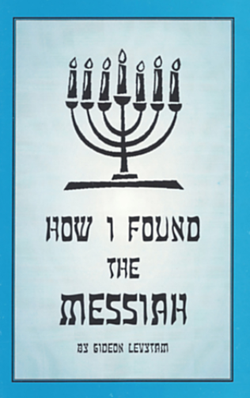
Follow Gideon Levytam's journey and discover how he was led by God, through a series of exciting circumstances, to find the One his people are still waiting for.
Past Episodes

Featured Offer
Follow Gideon Levytam's journey and discover how he was led by God, through a series of exciting circumstances, to find the One his people are still waiting for.
About Holy Scriptures and Israel
As time passed by, the Lord Yeshua took dear brother John Van Stormbroek to himself. The ministry of Holy Scriptures and Israel continued with additional development. In the early 1990’s, a weekly morning Bible class began which brother Gideon Levytam led regularly in the City of Toronto. This weekly open Bible class was held in the Willowdale assembly meeting hall. Eventually, a second mid-week evening Bible class was added. In April 2002, the need for an additional outreach Bible teaching meeting arose. We begun a Saturday (Shabbat) ministry meeting in which a systematic teaching of God’s word is presented to all who attend. Together we learn God’s Word, pray for each need and the salvation of Israel, and sing songs of worship unto our God, praising Him and our Lord Yeshua the Messiah.
In Mid 2004 we started to air on Joy 1250 Radio station a 15 minute Bible teaching program called "The Holy Scriptures and Israel" with Gideon Levytam. The broadcast teaches God’s word from a Hebrew Messianic perspective and has proved to be a blessing to many. It's now aired seven days a week. Our prayer is that many more of our Israeli people will have a clear understanding of who Yeshua is, why we all need him, and come to know him as their Lord and Messiah.
About Gideon Levytam
Contact Holy Scriptures and Israel with Gideon Levytam
426 Simcoe Street
Niagara-on-The-Lake
Ontario L0S 1J0
Canada
(905) 325-1234