
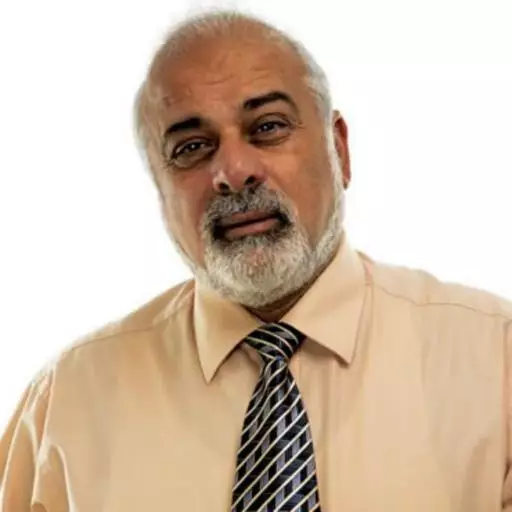
Acts 28:17-31, Part 2


Paul’s Appeal to The Jewish Community in Rome Part 1
Guest (Male): Shalom. Holy Scriptures and Israel is a ministry designed to share with the Jewish people the good news of the Lord Jesus, Yeshua the Messiah, and to instruct Christians on the Jewish roots of their faith. And now, teaching God's word from a Hebrew Messianic perspective, here is Gideon Levytam.
Gideon Levytam: This study of Acts chapter 28. One time it speaks of Mikvah, speaks of gathering of water into one location. In other times, it speaks of the word for hope, that which is something that you look forward to. And it is interesting because the gathering of the water into one pit, which we call Mikvah, where we do tvila, baptism, it's really a gathering of the nation into one pit, one location where it is in the land of the Bible, in the promised land, where God will be the one who will gather the nation into one place and he will reign and rule through the Messiah, Yeshua, over the nation of Israel.
So this interesting expression that Paul is mentioning for the hope of Israel, I am bound with this chain. One more time it's mentioned in Jeremiah chapter 50, in the same prophet and verse six, "My people has been lost sheep. Their shepherds have caused them to go astray. They have turned them away on the mountain. They have gone from the mountain to hill. They have forgotten their resting place. All that found them has devoured them. And their adversary said, 'We offend not because they have sinned against the Lord, the habitation of justice, even the Lord, the hope of their fathers.'"
The hope of Israel is none else but the Messiah himself. The hope of the fathers of Israel is the restored nation, the kingdom that will come one day to fruition when Israel, the nation, will accept the Messiah. And Paul, sitting there, bound in chain, telling the Jewish leaders who came in Rome to visit him, he says, "Listen, the reason that I'm here with this chain, it is because I stood and I spoke and I believed of the one that is the hope of our people, Israel. And that's why I'm here with this chain."
So they responded now to him. I am back in Acts chapter 28, verse 21 and 22. The Jewish leaders answer him and they said two things. Verse 21, they said to him, "We neither received letters out of Judea concerning thee, neither any of the brethren that came showed or spoke any harm of thee." Apparently, those that accused him in Jerusalem did not send any information to the Jewish community of Rome about Paul, Shaul. Those that accused him and put him in the hand of the Roman leaders, they did not come to Rome, neither sent any letter to inform the Jewish community of Rome about this man by the name of Paul.
So the Jewish community of Rome didn't hear about Paul's actions and condition. But then in verse 22, they said to him, "We desire to hear of thee what you think. For as concerning this sect, we know that everywhere it is spoken against." "Paul, we didn't hear anything about you. But you know what, Paul? We heard a lot about this sect. We heard a lot about this sect, and everywhere when we hear about this sect, we hear things that are against the sect that is called the sect of the Notzrim or the Meshichiyim, the Messianic believers. We hear everywhere things against this sect."
The word "sect" comes from the Greek word hairesis. We hear of a heresy. We hear of somebody speaking false doctrine or false teaching. From the Greek, the word "sect" means heresy, false teaching. Something that these people are a sect of this, a sect of that. The word "sect" is really giving us a red light. It's warning us, "Hey, listen, don't get involved with this sect." But I want you to understand that when it comes to the book of Acts, and the Jewish people speaking to the Apostle Paul, the Jews of Rome speaking to the Apostle Paul about this sect, it is the sect within the Jewish community.
There was a sect of the Pharisees. There was a sect of the Sadducees. There was a sect of the Nazarenes, of the Notzrim, of the Meshichiyim. It is a section from among the Jewish community, the worldwide Jewish community. In Acts chapter five, we have the sect of the Sadducees mentioned. It's called Kat ha-Tzdukim. In Acts chapter 15 and verse five, we have the sect of the Pharisees mentioned. In Hebrew, we call it Kat ha-Prushim. And in Acts chapter 24 and verse five, we have the sect of the Notzrim or Meshichiyim. We call it Kat ha-Notzrim in Hebrew.
So we have those three sects within the Jewish community: the Prushim, the Tzdukim, the Meshichiyim, the Notzrim. Each one of them is distinct from the other. And what happened is that here, these Jewish leaders of Rome said to the Apostle Paul, to Shaul, "Paul, listen, we want to hear what you have to say about this, but we hear everywhere that people are saying that this sect is something that is spoken against." The Jewish community resisted the faith in Yeshua the Messiah. And that's why verse 22 is the conclusion of their statement. They say everywhere it is spoken against.
By the way, Paul said in Acts chapter 26 and verse five, "I was part of the strictest sect of our religion," he said to them, Kat ha-Makpida be-yoter, when he was speaking to the Jewish leaders in the city of Jerusalem. So he himself, before becoming a believer in Yeshua, he was a Parush, a Pharisee. And he was part of the strictest sect that was part of the Jewish community. So Paul appealed to the Jewish leaders in verses 17 to 20. The response of the Jewish leaders of Rome is in verse 21 and verse 22.
And now, brothers and sisters, here is the second appeal of the Apostle Paul. But this time, it's not only to the Jewish leaders. This time he gathered many, many of the Jewish community who came to where he dwelt. So verse 23 to verse 29, he appeals to the many of the Jewish people who came to where he dwelt. First of all, the first part of verse 23 says, "And when they had appointed him a day, there came many to him into his lodging."
So they have appointed a day. They said there will be a time. "Okay, you get many of the Jewish community to come to where I lodge, where I live, where I stay." They have set up a day. They had an appointment. What an opportunity the Apostle Paul had to minister to the many who came to where he stayed. He may have had a large area in which he could speak to the many who came to him and what an opportunity he had to share with them concerning the person of our Lord Jesus the Messiah.
In the second half of this verse, Paul is now testifying to the many who came to him in this house. He expounded to them. He expounded and he testified the Kingdom of God and he persuaded them concerning Yeshua, both out of the law of Moses and out of the prophets from morning till evening. Apparently, they came to him. Many of them from the city of Rome came to his house where he lodged. And from the morning to the evening, can you imagine, for a long day they spent together, gathered there in that home?
Notice what it says, that he expounded and he testified the Kingdom of God. The words here "the Kingdom of God," simply in Hebrew, it means Malchut Ha-Elohim, the Kingdom of God. He expounded to them and he persuaded them concerning Yeshua, both out of the Torat Moshe, the law of Moses, and the Nevi'im, the prophets. What did he do? You see, remember, beloved brothers and sisters, he does not have the book of the New Testament, the Brit Hadasha, in his hand because it didn't exist. There were letters that had been already written, some of them, but he didn't have all the Brit Hadasha, the New Covenant, in his hand.
The only thing that he could speak from is the Tanakh, the Old Testament, the Hebrew scriptures. So what did he do? He took the scripture, just like you and I are doing today with our Bible in our hands, with the Tanakh and Brit Hadasha in our hands. He didn't have the New Covenant in his hand, but he opened the word of God. And he began to speak to them about Malchut Ha-Elohim, the Kingdom of God. What does that mean, the Kingdom of God?
God is a King. God is a King. He is sovereign. He has authority over all those who are subject to him. Because God is the creator, he created all men, and all men are to be subject to him. And since the world has gone astray since the fall of Adam, and then since the time that the new world had begun through Noah and his family and they've gone astray again, he had chosen a nation, namely the nation of Israel, out of the descendants of Abraham, Isaac, and Jacob—Avraham, Yitzchak, v'Ya'akov—to be a nation through whom his kingdom will be displayed.
That is the Kingdom of God. His rights will be submitted to and he will receive the place that he deserves. But Israel as a nation had not fulfilled the place that God had in mind for them. And therefore, the Kingdom of God, the Malchut Ha-Elohim, had been postponed to a later day. And today, in the present day in which you and I live today in the church age, we have what it is called the kingdom in a mystery form. What does that mean? That we have a King, but the King is absent. He is not here.
The King is absent, meaning our Lord Jesus the Messiah, who is the King of the Jews, the King of Israel, is absent today in the present day dispensation. And the people who submit to his authority are believers, both Jews and Gentiles, who are part of the ecclesia, the church. But there is coming a day when the King will come back and he will restore his nation Israel. Through them, the Kingdom will be established upon the face of this earth.
So what the Apostle Paul does, he takes from the Hebrew scripture passages, and he is speaking concerning the Kingdom of God, Malchut Ha-Elohim. God is going to have his rights in this world. He's the one who created heaven and earth and created men and women, and he's the one who has the right to be ruling over his affairs here in this world. But men rejected the King. They despised him, rejected him. And now we have the Kingdom of God in a mystery form.
Let me just show you from the scripture how the development of the Kingdom of God came because he wanted to establish a kingdom and the Kingdom will come to pass. Here is Paul, already having preached in many of the Gentile cities and areas of Asia Minor and provinces. Now he is arriving finally to Rome and he is gathering the Jewish community to himself and he speaks about the Kingdom of God. Yeshua is the one that is related to the Kingdom. He's the King Messiah. He's using both Torat Moshe, the law of Moses, and the Nevi'im, the prophets of the nation of Israel.
I want you for a moment, please, to turn in your Bible to Exodus chapter 19. Israel of old have come out of Egypt, out of the land of Egypt. They've arrived to Mount Sinai, Har Sinai. There, God gave them an instruction. Look what he had intended for the nation of Israel to participate in. Exodus chapter 19, verse six: "And ye shall be unto me a kingdom of priests, and a holy nation. These are the words which thou shalt speak unto the children of Israel."
God is speaking to them through Moshe, through Moses. "You, Israel, are going to be to me a kingdom of priests." A priest, of course, is one who represents God before the people. But he doesn't speak only the priest who represents God before Israel, but he speaks about the whole nation of Israel. God had planned for the nation of Israel to be a whole nation that will be part of the Kingdom of God and they will represent God before the world. "You're going to be a kingdom of priests and a holy nation." That's what God had intended for Israel.
But you know what happened. Israel did not submit to the authority of God. Israel, instead of submitting to the God of our fathers, disobeyed God. In 1 Samuel chapter eight, Israel came to Samuel and said to Samuel, "Samuel, make for us a king. Raise for us a king, so we're going to be like the other nations of the world. Give us a king." 1 Samuel chapter eight, verses four, five, and seven: God said to Samuel, "They did not reject you, Samuel," because Samuel wept before the Lord. "Samuel, Israel did not reject you from being a king over them. Israel rejected me, God, from being a King, from reigning over them."
So he says, "Give them a king." Israel received a king like the other nations. Instead of allowing God to establish his kingdom upon the face of this earth, they have chosen a man after their own hearts and they chose King Saul. King Saul, instead of being an obedient king to God, ended up being a king that rejected the will of the Lord. God had to set him aside and to raise another man after his own heart by the name of David.
David became the king of Israel and then God said to David through the prophet Nathan in 2 Samuel chapter seven, "You tell David that I will build him a house and I will build him a kingdom. Through his seed, through David's seed, one will be established as a king over Israel forever and ever." 2 Samuel chapter seven. You need to read the whole chapter there.
Prophetically, God said to David through Nathan the prophet, "Israel one day will have a King. The King will be the one that will rule over my nation Israel and over all the world forever in a future day." So time passes by. The northern tribe and the southern tribe have been divided. The northern tribe had been taken to Assyria. The southern tribe had been taken to Babylon. There they wept before the Lord and they said, "We hung up our harps on the willow. There we wept."
The people of Babylon said to them, "Sing unto us one of the songs of Zion." They said, "How shall we sing the Lord's song in a strange land?" And there God has said, "I will restore you." There was a man by the name of Nebuchadnezzar. Nebuchadnezzar had seen that vision, the vision of this image, this great image. That's where Daniel tells us in Daniel chapter two, speaking about a future day where there will be a King that will be established here upon the face of this earth.
Daniel chapter 2, verse 44: "And in the days of these kings shall the God of heaven set up a kingdom, which shall never be destroyed. The kingdom shall not be left to other people, but it shall break in pieces and consume all these kingdoms, and it shall stand forever." It will no longer be given to other peoples. It will be given back to the very same nation of Israel whom God had intended to use in his kingdom as a kingdom of priesthood to the nations of the world.
I can just imagine the Apostle Paul is opening the scriptures to these Jewish people who came to him from Rome in the house where he stayed. He looks at scripture after scripture after scripture and he's pointing out to the Kingdom and the King, the Kingdom and the Messiah. He's pointing out that there is a Kingdom that is coming, but we have blown it. We have sinned against the Lord and there is a Kingdom that one day will be established when Israel, the nation, is going to be restored. And Yeshua is the one that is linked to this Kingdom.
I'm back now in Acts chapter 28, verse 23b. He does the same thing what Yeshua the Messiah did when he was on earth and he shared from the scriptures concerning himself. He expounded and he testified the Kingdom of God and he persuaded them concerning Yeshua, both out of the law of Moses and out of the prophets from morning till the evening.
I would have loved to be there, to sit there and to see how the Apostle Paul could expound the scripture, open the word of God and by the help of the Spirit of God seeking to open their understanding concerning the person Yeshua and the coming Kingdom promised to our forefathers, to the nation of Israel. Well, like everywhere, whenever you preach the message of the gospel, whenever you preach about the Lord Jesus, about the coming Kingdom, there are always those who have to make a decision.
There's always a decision that has to be made because you are offering the person of the Messiah. By the way, when he spoke about Jesus, he didn't only speak about Yeshua about the future, but what would lead to the future. If Yeshua would not first of all die on the tree, on the cross for the sin of this world, for the sin of the nation of Israel, he could never establish the Kingdom. First his suffering, then his glory. First his rejection, then his acceptance.
So a decision had to be made. Verse 24 tells us some believed the things which he had spoken unto them and some believed not. It's like this everywhere. Wherever we mention and we share the message of the gospel, a decision has to be made. A conscience has to be pricked and a decision to say, "What will I do? Does that apply to me? How do I react to the message that has been presented before me concerning Yeshua the Messiah and the coming Kingdom in a future day?"
Some believed. Praise God for that. But apparently, there were those who did not believe the message. We can look at verses in John 3:16, the most known verse today. "For God so loved the world, that he gave his only begotten Son, that whosoever believeth on him shall not perish but have everlasting life." The same chapter says, "He that believeth on the Son has life. He that believeth not the Son shall not see life, but the wrath of God abideth on him."
There is a choice that everyone has to make. You either believe or you believe not. You either accept the message of the gospel or you reject it. The Jewish community of Rome had to make a decision: either they accept the message or they reject the message. Well, apparently, some believed but some believed not. It reminds me of what happened in Acts chapter 17 where he preached in Athens.
In Athens, he was preaching there and even there, in verses 32, 33, and 34, there was a decision that had to be made. It says here, "When they've heard of the resurrection of the dead, some mocked and others said, 'We will hear you again on this matter.' So Paul departed from them." Then it says, "However, certain men clave unto him and believed." This was on Mars Hill in Athens, in Greece.
Some believe, some don't. Some even mock. Others say, "I will talk to you about this some other time." And I tell you today, if I were to be standing today on the streets and preaching the message of the gospel, there will be those who might say, "I want to hear some more. Let me know about the Messiah." Others might say, "Don't give me this nonsense. I don't believe what you say." And others might even say, "You know what, we'll talk about it some other time. I don't have time for you today. I have to deal with business. I have some pleasure to attend. I have some things that I'm occupied with. I will not talk about this today, some other time."
This "some other time" may never come to them because when God in judgment is going to have to deal with a person rejecting the Messiah, he will have to be ushered to eternity of separation because of their rejection of the message of the gospel. Some believed but some did not believe.
So look at this. The same text, Acts chapter 28, in the next verse we find out in verse 25 to 28, look what Paul is saying to the Jewish community of the city of Rome now. He's speaking to them and his words to those who did not believe, look what he is telling them in verse 25 to 28. It says, "And when they agreed not among themselves, they departed after that Paul had spoken one word." So now they left, but just before they left, here is the last message of the Apostle Paul to the Jewish community of Rome.
He said to them, "Well spoke the Holy Spirit by Isaiah the prophet unto our fathers." You know what he does? He says, "Ah, what Isaiah prophesied to our fathers, what Isaiah, guided by the Holy Spirit of God, spoke to our fathers, surely comes to pass." While he spoke to our forefathers in the past about 750 years before the Messiah came, he says that it's really fulfilled even now.
Guest (Male): You have been listening to Holy Scriptures and Israel with Gideon Levytam. Gideon teaches God's word from a Hebrew Messianic perspective. For more information about this ministry, write to Holy Scriptures and Israel, Box 1411, Niagara on the Lake, Ontario, L0S 1J0. Or visit our website at holyscripturesandisrael.com. You are also invited to Gideon's weekly Bible teaching on Fridays at 11:00 AM and 7:00 PM and Saturdays at 1:00 PM at Willowdale Christian Assembly Hall, 28 Martin Ross Avenue in Toronto. Holy Scriptures and Israel is made possible by your prayers and financial support. If you would like to support the program, visit holyscripturesandisrael.com. God bless you. Shalom, shalom.
Featured Offer
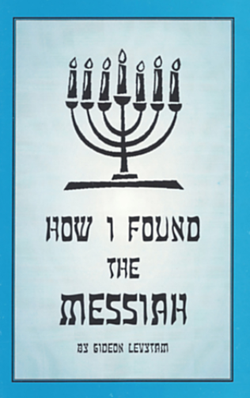
Follow Gideon Levytam's journey and discover how he was led by God, through a series of exciting circumstances, to find the One his people are still waiting for.
Past Episodes

Featured Offer
Follow Gideon Levytam's journey and discover how he was led by God, through a series of exciting circumstances, to find the One his people are still waiting for.
About Holy Scriptures and Israel
As time passed by, the Lord Yeshua took dear brother John Van Stormbroek to himself. The ministry of Holy Scriptures and Israel continued with additional development. In the early 1990’s, a weekly morning Bible class began which brother Gideon Levytam led regularly in the City of Toronto. This weekly open Bible class was held in the Willowdale assembly meeting hall. Eventually, a second mid-week evening Bible class was added. In April 2002, the need for an additional outreach Bible teaching meeting arose. We begun a Saturday (Shabbat) ministry meeting in which a systematic teaching of God’s word is presented to all who attend. Together we learn God’s Word, pray for each need and the salvation of Israel, and sing songs of worship unto our God, praising Him and our Lord Yeshua the Messiah.
In Mid 2004 we started to air on Joy 1250 Radio station a 15 minute Bible teaching program called "The Holy Scriptures and Israel" with Gideon Levytam. The broadcast teaches God’s word from a Hebrew Messianic perspective and has proved to be a blessing to many. It's now aired seven days a week. Our prayer is that many more of our Israeli people will have a clear understanding of who Yeshua is, why we all need him, and come to know him as their Lord and Messiah.
About Gideon Levytam
Contact Holy Scriptures and Israel with Gideon Levytam
426 Simcoe Street
Niagara-on-The-Lake
Ontario L0S 1J0
Canada
(905) 325-1234