
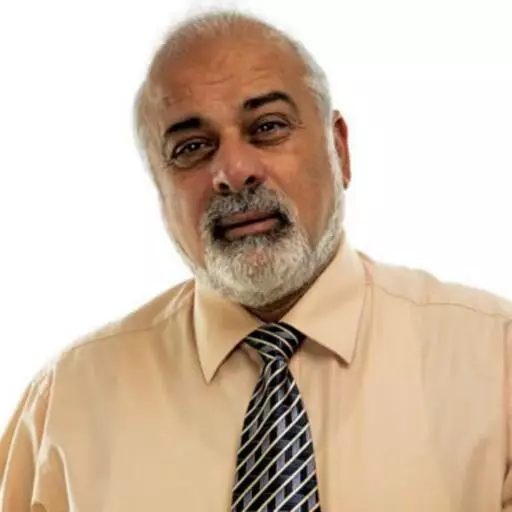
Acts 2:37-47, Part 3


The Result in Jerusalem from the Preaching of the Gospel Part 3
Guest (Male): Holy Scriptures and Israel is a ministry designed to share with the Jewish people the good news of the Lord Jesus Yeshua the Messiah and to instruct Christians on the Jewish roots of their faith. And now teaching God's word from a Hebrew Messianic perspective here is Gideon Levittan.
Gideon Levytam: The study of Acts chapter two you see what happened those the nation was going to experience the judgment of God in 70 AD when Titus going to come and destroy the temple in Jerusalem burned the city and destroy the temple in Jerusalem and many of the Jewish people would die. Over a million Jewish people died in 70 AD because of what the Romans have done to the Jewish people. It was predicted already by the Lord in the Gospels. And so what Peter is saying to them save yourselves come out from this generation that rejected the Messiah.
You come out of this generation that rejected the Messiah. She turned back for a moment. I want to to see how he called this generation in the Gospel of Matthew. In chapter 16 he called this generation those generation did did not accept the Messiah. He called them a wicked and adulterous generation. See this in Matthew 16 and verse four it says a wicked and an adulterous generation seeketh after a sign. See this was the generation this was specifically the leadership who should have led Israel to accept the Messiah. They led Israel away from the Messiah.
And so he called them a wicked and an adulterous generation in Matthew 16 and verse four. In chapter 17 of Matthew in verse 17 he called them a faithless and perverse generation. You notice that? In verse 17 of Matthew chapter 17 then Yeshua answered and says all faithless and perverse generation how long shall I be with you? How long shall I suffer you? Bring him hither to me. He called them a generation of people who are without faith and a perverse generation. And you know that it's not only applied to Israel is applied to the nations of the world in which we live in but specifically he was mentioning in the Gospel of Matthew to the nation of Israel.
You and I the Apostle Paul speak also of a generation in which we live in. In Philippians chapter two Paul says to the believers to whom he wrote in verse 15 he says that you may be blameless and harmless as sons of God without rebuke in the midst of a crooked and a perverse nation or generation. See we also the Philippian also live in the midst of a crooked and a perverse nation or generation. So he's telling now these Jewish people who ask what shall we do? He's telling them in Acts chapter two. He said to them that they are to be saved from this untoward generation.
And they can be saved from this untoward generation by accepting the Lord and avoiding the judgment that was going to come upon the nation in 70 AD and also have eternal relationship with Yeshua the Messiah. So after he told them this look at the response. And the response in verse 41 was simply this. They that gladly received his word they were baptized. And the same day they were added unto them about 3,000 souls. See they took it seriously. What did they do? They simply receive his word. You see the important of receiving the word applying it to our hearts and saying this is the word of the Lord.
So they received the word and then they were baptized. They literally were baptized in the city of Jerusalem. There are many special places especially in Temple Mount where people were baptized in the past. You can see it very much in the top of the Temple Mount there in this area. You can see an older what we call it mikvahs in Hebrew. At places where there will be baptism tvilot there and many were baptized there after they received the word that Peter proclaimed. And how many were added to the church at that time? About 3,000 souls.
One message, brothers and sisters, that Peter have preached one message. 3,000 souls. It had been said that today we can preach 3,000 messages. And I don't know how many souls would come to know Yeshua. There was the power of the spirit of God. There was a conviction that the spirit of God convicted souls and there was a change in their life and there was a testimony for the Lord and you can see that 3,000 of them. So now in Acts chapter one there were 120. By the time that Peter have finished to minister his word to those Jewish people who gathered together for the feast of Pentecost, the feast of Shavuot 3,000 souls were added.
3,000 souls were added to the existing 120. The church was founded and growing now and developing right now and already 3,000 souls came to faith in Yeshua the Messiah. And by the way all these 3,000 souls were Jewish souls. That's how the church began, Israelites. Some of them who came from afar some of them who were born in the land, live in the land 3,000 Hebrews became believers in Yeshua the Messiah. And these Hebrews if you just go on and you will see in chapter four there was an additional 5,000 in verse four. 5,000 only men in Acts chapter four and verse four.
More came to faith in Yeshua the Messiah. And this is the foundation of the assembly of the church. Jewish men and women who came to faith in Yeshua the Messiah and began to proclaim the Scriptures and the Gospel to the nations of the world. And so we can see that the result of the preaching of the Gospel by Peter brought about salvation to 3,000 Hebrew souls. Now what do you think that the Lord want them only to get saved? Just accept him and say you know Hallelujah we are saved. We are not going to go through the 70 AD judgment over the nation.
We are not going to be through the Great White Throne judgment. We are saved. We are going to be in heaven and we are forgiven and then they carry on without growth. That's not the way because now there was a necessity to develop and to establish believers in their faith so they can grow and they make disciples. It's like an ongoing continuing development and growth of the body of Messiah. And so in the next verses verse 42 to 47 we see how the first assembly, the first the first local church grew. And you can see the growth of the body of Messiah.
Now today, brothers and sisters things are different. The church is divided the church is scattered all sort of names above every building and there's so much confusion. We live as we know it from Revelation chapter three in the period of time of the Laodicean stage of the church. Every man does that which is right in his own eyes. There's so many views and teaching but it didn't begin like that. It began with unity and harmony and discipleship and growth among the people of God. It began in Jerusalem in the city of Jerusalem. And there were Jewish believers in this first century who were consistently developing themselves, developing disciples and then spreading us to the nations and others from among the nations who were growing and developing and the church grew.
We live in the other end of the church age where things are chaotic. The ship that we see Paul heading towards Rome. You remember it's a shipwreck. And everybody got safely to shore but there was a shipwreck. We live in that stage of the shipwreck. Destruction all over divisions all over views on teachings all over all kind of condition that existing today. That's why we cannot agree with everybody. That's why we cannot identify with everybody and others cannot identify with us either. You have to be so careful in many things. Who do you identify with?
About in the first century in the city of Jerusalem there was unity and harmony which began as the church was founded. And so notice that in verse 42 on to 47 you can see the development of the first assembly in the city of Jerusalem. It says in verse 42 they continued steadfastly. And we see here four things that were characterized the first century assembly in the city of Jerusalem. Number one there was the Apostle doctrines. Number two there was fellowship Number three there was the breaking of bread. In some suggest that that would have been meal together but led to the Lord stable as we know it today.
And the fourth thing is prayers. Those four elements that we see in first century in the assembly in the city of Jerusalem were evident in the lives of the local assembly in Jerusalem. The Apostles doctrine. You know I've heard somebody says ah we you know we don't need teaching and doctrine. Why do we need doctrine? What is so important about doctrine? And the Bible clearly teaches us the necessity of have sound doctrine, sound teaching. The Apostles were speaking the truth of the word of God but later on they put it for us with the help of the spirit of God in the canon of Scripture.
When you read the book of Romans when you read the book of Corinthians, the letters that were written by Paul, by Peter, by John, by Jude, by James, it is the Apostles doctrine, the teaching. It is so important the necessity for the teaching to be an ongoing thing as part of the assembly, part of the local fellowship, the local congregations. The Apostles teaching. Notice by the way that those who are Jewish people who came to faith in the Messiah they understood the teaching of the prophets, the Old Testament prophets but now because they were part of this new thing called the Ecclesia they needed additional teaching for this present day dispensation.
They didn't set aside the prophets they didn't set aside Isaiah or Jeremiah or Ezekiel or Daniel or Joel or Amos. No, they believed in the restoration of Israel. They believed what God gave to Israel but they understood the necessity of the Apostles teaching for the present day. How do the church gather? What is the fundamental truth of the word of God? How can they seek to practice this? They needed it and there you can see they continual steadfastly. It was not like something that they have done once in a blue moon. They continue steadfastly to listen to what the Apostles had to teach them.
And then secondly you have the word here fellowship. This is the koinonia in the Greek. This is the sharing of that which one possess apparently. They were fellowshipping with each other. It was not like parties. It was real fellowship with believers. You know sometimes somebody says well two fellows on a ship that is fellowship. Well it's not two fellows on a ship. You know you can be on a ship with another fellow but you don't agree with him. You don't have the same views on anything. But fellowship koinonia is sharing in common the things that they have possessed, that they have had.
They share the spiritual life together. They have shared the hospitalities and communication with each other and grace and learning to work with each other because they were constantly being under pressure. And the fellowship of believers is very important. And let me tell you when you and I going to stay away from fellowship with other believers you're going to see what's going to happen. Just a few of us a few minutes before the meeting started we say you know what happened when we are staying away from fellowship when we are cast down and discouraged you know what happened?
We end up to only get further and further from the things of the Lord. We can't do without each other. We are members of the body of Messiah. Every member is important in the body and we need each other. But we need to know how to relate to each other. Not only to need each other in body but we need to have grace and forgiveness and love and concern towards our brothers and sisters. That's part of fellowship. Thirdly we notice is the breaking of the bread. And oh boy since the time I came to faith in Yeshua the Messiah that there are issues that rising up is over the breaking of bread.
We have it everywhere we hear it where all the churches that I've seen that I've visited or I've spoken and every time this issue of the breaking of bread, who is associate with who and all these things but it was not happening in the first century. Today we live in a stage in the church age that even unbelievers coming to the Lord's table to break bread. Well everybody should break bread. But in the early church those who came to the breaking of bread you know some suggest that it's not merely the Lord's table because of the Jewish people always broke bread.
Shabbat we break the bread challah you know we give thanks over the bread. We give thanks over the wine that has nothing to do with the Lord's table. It has to do with the way that we give thanks to God for the bread that came out of the earth and for the wine that came out of the vine. It is done automatically specific on Friday night when the Shabbat enters in to give thanks to the God of Abraham, Isaac and Jacob for his provision. But I'm talking about beyond that. We also had the remembrance of what the Lord have done but at that time there was no division that existing today with all sort of teaching that existing the way we living today that they breakdown in the local churches the present day in which we are part of.
And that's why every local church have their own development, what they feel and what they view and we have to submit to it. But at that time it was different. The breaking of bread was part and parcel of the community when they gathered together. And fourthly notice that that is mentioned here is prayers. There were men and women who prayed. They were praying at home I'm sure. They were praying individually I'm sure but they were also having a collective time of prayer together. Prayer for the needs of the people of God, prayer for the needs of the family, prayer for the needs, the spiritual need, the physical need.
They continue steadfastly in the Apostle doctrine in fellowship, in the breaking of bread and in prayers. Steadfastly. The Apostle Paul wrote to the Corinthians in first Corinthians chapter 15 and in the last verse he says unto the brethren there in first Corinthians 15 verse 58 therefore my beloved brethren be ye steadfast immovable always abounding in the work of the Lord for as much as you know that your labor is not in vain in the Lord. He encouraged them to be steadfast, to continue. And you know brothers and sisters I don't have to tell you this.
There's so many discouragement enough to say to us who need that. There's so many things around us to discourage us to say I don't know what what's the point? Why should I continue steadfastly? And maybe we get discouraged at time and I'm speaking for myself. But thank God that there is encouragement from time to time the Lord bring situation into our life, individuals into our life that we can get some encouragement to continue steadfastly to continue to follow the Lord. Yes we don't practice everything that we would like to practice but the point is to continue to follow the Lord Yeshua the Messiah.
They continue in those four elements that we see here in these verse 42. And then verse 43 fear came upon every soul and many wonders and signs were done by the Apostles. You notice? It was done by the Apostles. Not everyone had the ability to do wonders and signs. It was done by the Apostles. The Apostles were immediate associate with the Lord Yeshua the Messiah. They received the gifts to be able to show and to minister to the people through signs and wonders but it was done by the Apostles. In verse 44 all that believed were together and they held all things in common.
Here you see it began with all and the unity that existed in that time among the believers were amazing. They all that believed were together. You see the word together? You cannot read that thing in today's situation together. I mean of course many of those 3,000 people probably went back later on to their own countries or their own cities and the community were smaller but they were together. They were together as it says here and they had all things in common. They sold their possessions and goods and they parted them to all men as every man had not want but needs.
They met needs of the people of God in the local assembly in the city of Jerusalem. And then as we had towards the end of the chapter notice that word daily. And they continued daily with one accord in the temple. They continued daily. It was not a weekly affair it was not a monthly affair it was a daily affair. You know I know of places today in certain countries that the buildings, the halls are open for daily activity. You don't have only Sunday meeting or Shabbat Saturday meeting or Friday meeting but every day of the week the hall is open for all sort of activities whether it is young people meeting, whether it is sisters meeting, whether it is it brothers meeting, whether it is the preaching of the Gospel, whether it is the Bible study, whether it is a teaching for edification but there is every day an activities of ministering to the people of God.
You know if you read the book of Acts you will find out how many times the word daily is mentioned. In Acts 2:46 there were daily meeting with each other. In Acts two verse 47 there were daily winning souls to the Lord. In Acts chapter six and verse one they daily cared for the needs of the people. In Acts chapter 16 and verse five there were daily increasing and growing. In Acts chapter 17 and verse 11 they searched the Scripture daily. You know it is amazing what a transformation happened in the lives of these individuals.
They met daily. They cared for each other daily. They won souls for the Lord daily. They were increasing daily. They were searching the Scripture day by day by day. How different it is in the life in which we live today. It is not accusing anybody. I mean we need to look in ourselves and we say Lord I don't have that zeal and desire like they must have had as we read it in the Scripture. It's almost like we should say we should ask the Lord Lord develop this in my heart that I will have this hunger and thirst for your word and for the Lord's people and for souls and for increase and growth and for caring.
Lord work this out in my life. Each and every one of us are to say and to pray to the Lord. And that's what happened there. They continued daily with one accord in the temple. By the way in the beginning they met in the temple in the city of Jerusalem. And the temple was you know at that place of activity but the believers met there. And as they were meeting in the temple apparently they needed to learn that it's now not necessary for them to go to the temple to worship the God of Abraham, Isaac and Jacob.
They could do it at any place from house to house. And that's why it says there in in breaking bread is having fellowship with each other from house to house. Again this breaking of bread may have been the Lord's supper if some would take it but it had been every day from house to house. And they did it, their meal or their meat with gladness and singleness of heart. Amazing. What a condition was here in the first century. And finally and I want to conclude with the last verse, verse 47. They were praising God and they having favor with all the people and the Lord listened to that.
The Lord added to the assembly, to the church daily. Here is that again the word daily such as should be saved. See we don't add to the Lord, we don't add to the church. It is the Lord who add to the body of Messiah. And it is the Lord who bring souls to come to the knowledge of Yeshua. We are members of the body but it is the Holy Spirit of God who places somebody in the body of Messiah. First Corinthians 12 verses 12 and 13. It is the Lord who adds to the assembly. And here we have the first time by the way in the book of Acts the word church.
In verse 47 of Acts chapter two. And again the word church is Ecclesia. He's not adding them to the buildings, to the cement and to the bricks. He's adding to the body of Messiah, the assembly, the church. Notice not those that I even say but those as should be saved. We don't know who is the one that the Lord leading and bringing to the body of Messiah. He is the one who is doing it, who is touching the heart, moving the souls and bringing people to know the Lord Yeshua as their Lord and as their Savior.
And so here brothers and sisters Acts chapter two those verses in this chapter are tremendous to show us how it all began, where it all began and with whom it all began. Those were Hebrew Israeli, Jewish people who came first to believe that Yeshua was their Lord and their promised Messiah. How different it is today. Today when we talk to the Jewish people, to our own families they most of our people, I'm not saying all but most of our people do not want to hear about Yeshua the Messiah. And of course there they didn't want either but what I'm saying that in the beginning it started there.
When I speak to my families about Yeshua they said well that's belong to the Gentiles, that belong to the world. That's not for us Jews. Are we a Jewish you know? But the truth of the matter that it's not so. It began there. It came from the nation of Israel. The Messiah came. He came unto his own. He formed the body of Messiah. Began it in the city of Jerusalem and from there it went all over to the rest of the nation of the world. So we ought to be thankful that we also have come to faith in the Lord Jesus today.
And may the Lord help us and encourage us to continue to follow him, to encourage each other so we can be a good testimony here in this world for Yeshua the Messiah. Can you say Amen to that? Amen.
Guest (Male): You have been listening to the Holy Scriptures and Israel with Gideon Levittan. Gideon teaches God word from a Hebrew Messianic perspective. For more information about this ministry write to Holy Scriptures and Israel box 1411 Niagara on the Lake Ontario L0S 1J0 or visit our website at holyscripturesandisrael.com. You are also invited to Gideon's weekly Bible teaching on Fridays at 11:00 a.m. and 7:00 p.m. and Saturdays at 1:00 p.m. at Willowdale Christian Assembly Hall 28 Martin Ross Avenue in Toronto. Holy Scriptures and Israel is made possible by your prayers and financial support. If you would like to support the program visit holyscripturesandisrael.com.
God bless you. Shalom Shalom.
Featured Offer
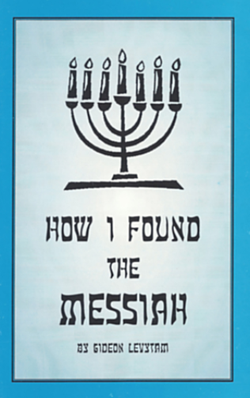
Follow Gideon Levytam's journey and discover how he was led by God, through a series of exciting circumstances, to find the One his people are still waiting for.
Past Episodes

Featured Offer
Follow Gideon Levytam's journey and discover how he was led by God, through a series of exciting circumstances, to find the One his people are still waiting for.
About Holy Scriptures and Israel
As time passed by, the Lord Yeshua took dear brother John Van Stormbroek to himself. The ministry of Holy Scriptures and Israel continued with additional development. In the early 1990’s, a weekly morning Bible class began which brother Gideon Levytam led regularly in the City of Toronto. This weekly open Bible class was held in the Willowdale assembly meeting hall. Eventually, a second mid-week evening Bible class was added. In April 2002, the need for an additional outreach Bible teaching meeting arose. We begun a Saturday (Shabbat) ministry meeting in which a systematic teaching of God’s word is presented to all who attend. Together we learn God’s Word, pray for each need and the salvation of Israel, and sing songs of worship unto our God, praising Him and our Lord Yeshua the Messiah.
In Mid 2004 we started to air on Joy 1250 Radio station a 15 minute Bible teaching program called "The Holy Scriptures and Israel" with Gideon Levytam. The broadcast teaches God’s word from a Hebrew Messianic perspective and has proved to be a blessing to many. It's now aired seven days a week. Our prayer is that many more of our Israeli people will have a clear understanding of who Yeshua is, why we all need him, and come to know him as their Lord and Messiah.
About Gideon Levytam
Contact Holy Scriptures and Israel with Gideon Levytam
426 Simcoe Street
Niagara-on-The-Lake
Ontario L0S 1J0
Canada
(905) 325-1234