
Acts 2:37-47, Part 2


The Result in Jerusalem from the Preaching of the Gospel Part 2
Guest (Male): Shalom. Holy Scriptures and Israel is a ministry designed to share with the Jewish people the good news of the Lord Jesus Yeshua the Messiah and to instruct Christians on the Jewish roots of their faith. And now teaching God's word from a Hebrew Messianic perspective here is Gideon Levitan.
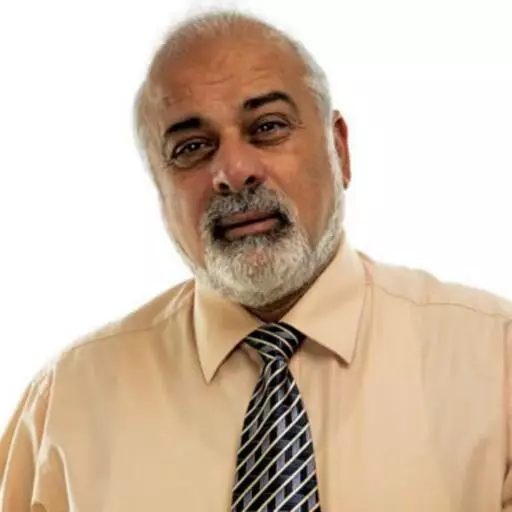
Gideon Levytam: The study of Acts chapter two and I would like to remind you brothers and sisters that these individuals that were here in Acts chapter two were part of the greater nation of Israel who did not acknowledge that Yeshua was the Messiah. The leadership did not recognize and accepted the fact that he was the promised Messiah in In fact, I would like you to turn for a moment to Matthew chapter 12. Look what it says there in Matthew chapter 12 when the the leadership of Israel accused Yeshua's doing healing instead of in the power of God in the power of which is the Lord of the fly.
In other words, they attributed his healing not to the power of God but to the power of Satan. You see it says here in chapter 12 in verse 22 there was brought unto him one that possessed with a demon. I'm reading verse 22 of Matthew 12. He was blind and he was dumb and he healed him. In as much that the blind and the dumb spake and he saw. And all the people were amazed and they said, Is not this the son of David? Ben David? Is not he Ben David, the son of David, the Messiah?
But look when the Pharisees heard it they said, this fellow does not cast out demons but he casts them out by the power of and notice what they call him, the prince of the demons. In other words, the leadership of the day accused Yeshua the Messiah that whatever he was doing, he was doing it in the power of Satan rather than in the power of God. And when the people who gathered there in the city of Jerusalem when they have seen what have happened, when the Holy Spirit of God came and formed the body of Messiah and the sound and the words of the proclamation in various languages, they were amazed.
And Peter began to preach to them that this is all about the Lord Yeshua, the Lord Jesus the Messiah who came from heaven, who died and he was rejected and he was resurrected as David had promised. And when they were convicted by the word of God, they asked, what shall we do? And Peter tell them, you need to have a change of mind concerning the person of Yeshua the Messiah. And that is important brothers and sisters it is important to have a change of mind about him but also an understanding and a change of mind about ourselves because we need to realize that we have sinned before God and we need to turn to him and to confess that that to repent and to tell him, Lord, I have sinned before you.
I'm a sinner. I need forgiveness. Let me show you another verse that Paul later on in Acts chapter 20 said to the Ephesian elders. Look at Acts chapter 20. Paul said he said to them in verse 21, we are testifying both to the Jewish people and also to the Greeks repentance towards God and faith in our Lord Jesus the Messiah. Repentance mean to change towards God and to believe in the Lord Yeshua the Messiah to change our ways, to change our hearts, to make a change in our life. If there is no repentance there is no forgiveness of sins.
See that's what God desire to see it in the human race today. To turn your heart many time when he spoke to Israel, he said, turn ye, turn ye from your wicked ways, he said to the nation. Turn around and come back towards me. I will accept you. I will embrace you. I will bring you unto myself. But one need to turn to repent. And that's what Peter said to them clearly. He doesn't tell them, you know, you are Jewish, you are the nation of Israel, you are the chosen nation. You see they were part of the chosen nation.
But even the chosen nation need to repent when they are going wrong. And here he told him repent, change your mind. By the way, in the Greek as I said is metanoia. In the Hebrew there is a different word in the Old Testament time. It's called the word It was Job. He says, I repent in dust and ashes. When Job recognize how wrong he was before the living God, he had to say, I repent in dust and ashes because of I confess what I am, all wretched men like Paul said it. I am simply falling before you God and telling you the truth about myself.
That is repentance. And by the way, if there is no repentance one can never be saved. God is expecting repentance for mankind. But you notice he added here the word be baptized. Now that's why I said earlier that many would say, while you see there is a necessity in order to have forgiveness of sins, one must also get baptized. But what happened if a person repented and they don't have the chance or the opportunity or the time to go through water baptism? Is he or she saved? Well, the thief on the cross never had a chance to go through water baptism.
But he repented. So the Lord remember me when you come in your kingdom. He recognized the Messiah Yeshua and he acknowledged that and he said, Lord, he called him Lord. So it is important to understand that baptism is important not for salvation but as a testimony of identification with the Lord Jesus the Messiah in his death, burial and resurrection. And so he used the word baptism. Now I want us to understand that it's not like today. When a Jewish man in first century had been baptized or we call it nitbal in Hebrew baptism or tfila was connected identifying with something that was going to happen or a certain leader or what he's teaching.
When they were called to baptize there, they were identifying publicly before their own nation with the rejected Messiah the Lord Jesus himself. For those early believers, it meant for them rejection by their people dispersion by the nation looked at them as those that we call them meshumad or destroyed being called today those that are not recognized among the nation because they believed that Yeshua was the Messiah. Baptism for first century believers were not like today. Today somebody accept the Lord, he was she was saved and you know, they can get baptized three months later, six months later, one year and so on.
and it's become like a nice celebration where we are enjoying to see a person get baptized and we are happy for him or for her. But it's different than what happened in first century in these days that we are reading about. When they were baptized, they were confessing identification with the rejected Messiah. And those early believers were immediately persecuted immediately being rejected immediately being despised by their own people and later on by others. And so baptism in connection with these individuals was a public acknowledgement that they identify with the one who was just earlier, 50 days earlier, died on the Roman cross.
And that's what they were saying, we identify with the death and burial and resurrection of this Yeshua from We identify with him. You know, I remember many times when we take groups to visit the land of the Bible, the land of Israel, we also have baptism. And usually after the baptism, the we sing a song. Some of the song that we sing is I have decided to follow Jesus. You know, this morning when I was preparing and reading some of the passage, I said to myself Lord, the song though none go with me still I will follow.
I am saying to myself boy, it's so easy to say words though none go with me still I will follow. You mean you're going to go if nobody going to go with you, you're going to continue to be faithful to the Lord and you continue and go on and go on. Even you're going to be rejected by others and nobody going to follow you. Are you going to do that? It's easy to say. We love to sing that. The world behind me the cross before me. We can sing it and I know we love that song.
But in reality, brothers and sisters, unless the Lord give us grace we would not follow though none go with me unless the Lord touch our hearts and show us the beauty of the Lord and draw us after him. When people are scattered, we scattered with them. Remember when we read in the prophet Zechariah, smite the shepherd and the sheep shall be scattered. This is exactly what happened when Yeshua was there on the tree dying for our sins. Everybody went away. When trouble coming, they are not around and we are not around. That's what happened. It's a human nature.
When trouble coming, everybody's out and gone. It's only when things are good and everything is fine then everybody's coming. When but there is a trouble, when there is a problem everybody disappear. What happened here when they did identify with the death and resurrection of the Messiah it meant business for them. They paid a price for that. The rejection by their own brethren. So he tell them that repent is essential. Repentance towards God and faith in our Lord Yeshua the Messiah. And then he said, everyone of you in verse 38 in the name of Yeshua the Messiah, you notice that it's not in the name of anybody else but it is in the name of Yeshua from They despise one, they rejected one.
And then he says, for the remissions of sins and ye shall receive the gifts of the Holy Spirit. So verse 38 is essential here in the result of the preaching of Peter. It is important when he tell them, repent, be baptized in the name of Yeshua the Messiah for the remissions of sins and he says, and ye shall receive the gift of the gift of the Holy Spirit. And so he says to them in verse 39 and I'm moving on right now. In verse 39 he said to them, there is a promise that was given to the nation.
He said to them, look he says, for the promise is unto you and to your children. You remember that Joel said in what they have already spoken about and quoted earlier that whosoever the Lord shall call in Joel chapter two and verse 32. He's saying to them, listen unto you and to all your children and to all that are far off, even as many as the Lord our God shall call. It says it is the promises to you and it is to your children. And those whom the Lord will call from among the nations of this world you notice that it says as many as the Lord shall call.
You know, the Lord calling the Lord speaking to individuals we do not know how and who but he does do the calling. He's the one who call, come unto me all you that labor and are heavy laden and I will give you rest. He's calling. He's saving people from the nation of Israel and the nations of the world and he's calling them to come to him. And so Peter is telling to them that the promises that have been given through the prophet Joel was given unto them, was given unto their children and unto those whom he shall call from among the nations of the world.
To them is that promise, the promise of the the Holy Spirit of God. In verse 40 he's standing to them, save yourself from this untoward generation. And with many other words he did testify and he exhort and he said to them, save yourself from this untoward generation. What does it mean when he's saying to them, save yourselves? You see what happened when Israel as a nation did not accept Yeshua the Messiah they came under the judgment of the 70 AD. You see what happened? Those the nation was going to experience the judgment of God in 70 AD when Titus going to come and destroy the temple in Jerusalem burned the city and destroy the temple in Jerusalem and many of the Jewish people would die.
Over a million Jewish people died in 70 AD because of what the Romans have done to the Jewish people. It was predicted already by the Lord in the Gospels. And so what Peter is saying to them, save yourselves, come out from this generation that rejected the Messiah. You come out of this generation that rejected the Messiah. She turned back for a moment. I want to to see how he called this generation in the Gospel of Matthew. In chapter 16 he called this generation those generation that did not accept the Messiah. He called them a wicked and adulterous generation.
See this in Matthew 16 and verse four he says, a wicked and an adulterous generation seeketh after a sign. See this was the generation this was specifically the leadership who should have led Israel to accept the Messiah. They led Israel away from the Messiah. And so he called them a wicked and an adulterous generation in Matthew 16 and verse four. In chapter 17 of Matthew and verse 17 he called them a faithless and perverse generation. You notice that? In verse 17 of Matthew chapter 17 then Yeshua answered and says, all faithless and perverse generation, how long shall I be with you?
How long shall I suffer you? Bring him hither to me. He called them a generation of people who are without faith and a perverse generation. And you know that it's not only apply to Israel is apply to the nations of the world in which we live in but specifically he was mentioning in the Gospel of Matthew to the nation of Israel. You and I the apostle Paul speak also of a generation in which we live in. In Philippians chapter two Paul says to the believers to whom he wrote in verse 15 he says that you may be blameless and harmless as sons of God without rebuke in the midst of a crooked and a perverse nation or generation.
See we also, the Philippian also live in the midst of a crooked and a perverse nation or generation. So he's telling now these Jewish people who ask, what shall we do? He's telling them in Acts chapter two. He said to them that they are to be saved from this untoward untoward generation. And they can be saved from this untoward generation by accepting the Lord and avoiding the judgment it was going to come upon the nation in 70 AD and also have eternal relationship with Yeshua the Messiah. So after he told them this look at the response.
And the response in verse 41 was simply this. They that gladly received his word they were baptized. And the same day they were added unto them about 3,000 souls. See they took it seriously. What did they do? They simply receive his word. See the important of receiving the word, applying it to our hearts and saying, this is the word of the Lord. So they received the word and then they were baptized. They literally were baptized. In the city of Jerusalem there are many special places especially in Temple Mount where people were baptized there in the past.
You can see it very much in the top of the Temple Mount there in this area. You can see an older what we call it mikvahs in Hebrew. A places where there will be baptism there. And many were baptized there after they received the word that Peter proclaimed. And how many were added to the church at that time? About 3,000 souls. One message brothers and sisters that Peter have preached, one message 3,000 souls. It had been said that today we can preach 3,000 messages. And I don't know how many souls would come to know Yeshua.
There was the power of the Spirit of God. There was a conviction that the Spirit of God convicted souls and there was a change in their life and there was a testimony for the Lord and you can see that 3,000 of them. So now in Acts chapter one there were 120. By the time that Peter have finished to minister his word to those Jewish people who gathered together for the feast of Pentecost, the feast of Shavuot 3,000 souls were added. 3,000 souls were added to the existing 120 the church was founded. And growing now and developing right now and already 3,000 souls came to faith in Yeshua the Messiah.
And by the way, all these 3,000 souls were Jewish souls. That's how the church began, Israelites. Some of them who came from afar some of them who were born in the land, live in the land 3,000 Hebrews became believers in Yeshua the Messiah. And these Hebrews if you just go on and you will see in chapter four there was an additional 5,000 in verse four, 5,000 only men in Acts chapter four in verse four. More came to faith in Yeshua the Messiah. And this is the foundation of the assembly of the church. Jewish men and women who came to faith in Yeshua the Messiah and began to proclaim the Scriptures and the Gospel to the nations of the world.
And so we can see that the result of the preaching of the Gospel by Peter brought about salvation to 3,000 Hebrew souls. Now what do you think that the Lord want them only to get saved just accept him and say, you know, hallelujah, we are saved. We are not going to go through the 70 AD judgment over the nation. We are not going to be through the great white throne judgment. We are saved. We are going to be in heaven and we are forgiven. And then they carry on without growth. That's not the way because now there was an necessity to develop and to establish believers in their faith so they can grow and they make disciples.
It's like an ongoing continuing development and growth of the body of Messiah. And so in the next verses verse 42 to 47 we see how the first assembly, the first the first local church grew. And you can see the growth of the body of Messiah. Now today brothers and sisters things are different. The church is divided. The church is scattered. All sort of names above every building and there's so much confusion. We live as we know it from Revelation chapter three in the period of time of the Laodicean stage of the church. Every man does that which is right in his own eyes.
There's so many views and teaching but it didn't begin like that. It began with unity and harmony and discipleship and growth among the people of God. It began in Jerusalem in the city of Jerusalem. And there were Jewish believers in this first century who were consistently developing themselves, developing disciples and then spreading us to the nations and others from among the nations who were growing and developing and the church grew. We live at the other end of the church age where things are chaotic. The ship that we see Paul heading towards Rome. You remember it's a shipwreck.
And everybody got safely to shore but there was a shipwreck. We live in that stage of the shipwreck. Destruction all over divisions all over views on teachings all over all kind of conditions that existing today. That's why we cannot agree with everybody. That's why we cannot identify with everybody and others cannot identify with us either. You have to be so careful in many things. Who do you identify with? But in the first century in the city of Jerusalem there was unity and harmony which began as the church was founded. And so notice that in verse 42 on to 47 you can see the development of the first assembly in the city of Jerusalem.
It says in verse 42 they continued steadfastly. And we see here four things that were characterized the first century assembly in the city of Jerusalem. Number one, there was the apostle doctrines. Number two, there was fellowship, koinonia. Number three, there was the breaking of bread in some suggest that that would have been meal together but led to the Lord's table as we know it today. And the fourth thing is prayers. Those four elements that we see in first century in the assembly in the city of Jerusalem were evident in the lives of the local assembly in Jerusalem.
The apostle's doctrine you know, I've heard somebody say, you know, we don't need teaching and doctrine. Why do we need doctrine? What is so important about doctrine? And the Bible clearly teaches us the necessity of have sound doctrine, sound teaching. The apostles were speaking the truth of the word of God but later on they put it for us with the help of the Spirit of God in the canon of Scripture. When you read the book of Romans when you read the book of Corinthians, the letters that were written by Paul, by Peter, by John, by Jude, by James, it is the apostle's doctrine, the teaching.
It is so important the necessity for the teaching to be an ongoing thing as part of the assembly, part of the local fellowship, the local congregations. The apostle's teaching. Notice by the way that those who are Jewish people who came to faith in the Messiah, they understood the teaching of the prophets, the Old Testament prophets but now because they were part of this new thing called the they needed additional teaching for this present day dispensation. They didn't set aside the prophets. They didn't set aside Isaiah or Jeremiah or Ezekiel or Daniel or Joel or Amos.
No, they believed in the restoration of Israel. They believed what God gave to Israel but they understood the necessity of the apostle's teaching for the present day.
Guest (Male): You have been listening to the Holy Scriptures and Israel with Gideon Levitan. Gideon teaches God 's word from a Hebrew Messianic perspective. For more information about this ministry write to Holy Scriptures and Israel box 1411 Niagara on the Lake, Ontario L0S 1J0 or visit our website at holyscripturesandisrael.com. You are also invited to Gideon's weekly Bible teaching on Fridays at 11 a.m. and 7 p.m. and Saturdays at 1 p.m. at Willowdale Christian Assembly Hall, 28 Martin Ross Avenue in Toronto. Holy Scriptures and Israel is made possible by your prayers and financial support. If you would like to support the program, visit holyscripturesandisrael.com.
God bless you. Shalom, shalom.
Featured Offer
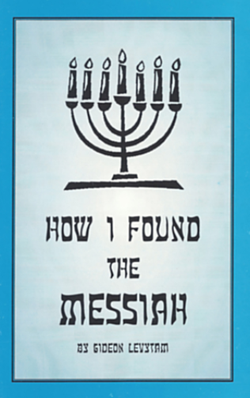
Follow Gideon Levytam's journey and discover how he was led by God, through a series of exciting circumstances, to find the One his people are still waiting for.
Past Episodes

Featured Offer
Follow Gideon Levytam's journey and discover how he was led by God, through a series of exciting circumstances, to find the One his people are still waiting for.
About Holy Scriptures and Israel
As time passed by, the Lord Yeshua took dear brother John Van Stormbroek to himself. The ministry of Holy Scriptures and Israel continued with additional development. In the early 1990’s, a weekly morning Bible class began which brother Gideon Levytam led regularly in the City of Toronto. This weekly open Bible class was held in the Willowdale assembly meeting hall. Eventually, a second mid-week evening Bible class was added. In April 2002, the need for an additional outreach Bible teaching meeting arose. We begun a Saturday (Shabbat) ministry meeting in which a systematic teaching of God’s word is presented to all who attend. Together we learn God’s Word, pray for each need and the salvation of Israel, and sing songs of worship unto our God, praising Him and our Lord Yeshua the Messiah.
In Mid 2004 we started to air on Joy 1250 Radio station a 15 minute Bible teaching program called "The Holy Scriptures and Israel" with Gideon Levytam. The broadcast teaches God’s word from a Hebrew Messianic perspective and has proved to be a blessing to many. It's now aired seven days a week. Our prayer is that many more of our Israeli people will have a clear understanding of who Yeshua is, why we all need him, and come to know him as their Lord and Messiah.
About Gideon Levytam
Contact Holy Scriptures and Israel with Gideon Levytam
426 Simcoe Street
Niagara-on-The-Lake
Ontario L0S 1J0
Canada
(905) 325-1234