
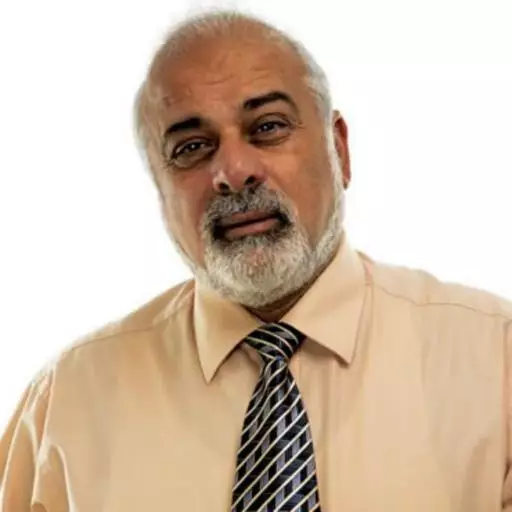
Acts 23:12-35, Part 3


The Conspiracy to Kill Paul Part 3
Guest (Female): Shalom. Holy Scriptures and Israel is a ministry designed to share with the Jewish people the good news of the Lord Jesus Yeshua the Messiah and to instruct Christians on the Jewish roots of their faith. And now teaching God's word from a Hebrew Messianic perspective, here is Gideon Levytam.
Gideon Levytam: The study of Acts chapter 23 really planned to deliver Paul from the hands of these individuals who have vowed to kill him. And so we find in verse 23 and verse 24 the plan. Now this time it's not the plan of those 40 Jewish people who wanted to kill Paul; here we find the plan of the commander, the chief captain, of delivering the Apostle Paul. It's found in verse 23 and verse 24.
The chief captain called unto him two centurions and he said, "Make ready 200 soldiers for to go to Caesarea." Caesarea is about 65 miles from Jerusalem, about 100 kilometers, a little bit over 100 kilometers from Jerusalem. And it is on a coast on the Mediterranean. It is an amazing place to see where Caesarea was a Roman city. At that time, it was a beautiful city.
Governor Felix was there, and that's the place where the Romans had their station in that city, one of the stations in the land of Israel. So it's about 65 miles from Jerusalem. And what is that chief captain saying? He says, "Take 200 soldiers to go to Caesarea," but he adds, "Take horsemen threescore and ten"—this is 70—"and spearmen 200." Now you take 470 soldiers to bring the Apostle Paul 65 miles from Jerusalem to Caesarea. 470.
This includes the 70 horsemen that were to go—70 horses and those that are horsemen sitting upon them. To bring one man from Jerusalem to Caesarea—can you imagine? 470. Now that shows to us how sincere was this chief captain and how he really wanted Paul to be delivered out of the hands of those who sought to kill him. And so now he is telling them when they are to do that, because in verse 23 he says at the third hour of the night.
The Bible gives us the third hour of the day, but also the third hour of the night. You remember that the Bible shows us that there were divisions of the day and the night. You remember when the Lord Jesus, when Yeshua the Messiah, died on the tree, we find out in Mark 15:25 that it was the third hour and they crucified him. Now this is the third hour of the day; it's 9:00 in the morning. They put the Lord on the tree at 9:00 in the morning.
And then when it was the sixth hour, there was darkness over the whole earth. This is verse 33 of Mark chapter 15. The sixth hour was 12 noon. And then it says until the ninth hour. And in the ninth hour of the day, Yeshua cried with a loud voice, "Eloi, Eloi, lama sabachthani?" My God, my God, why hast thou forsaken me? It was on the ninth hour; that was about 3:00 PM. By the time we get to the 12th hour, that will be 6:00 PM.
Now here we find out that when the Lord was on the cross, it was the third hour of the day. But in the case of the Apostle Paul to be driven and taken away to Caesarea, it was the third hour, but notice that the Bible adds the third hour of the night. So here we find out that it was about 9:00 PM. It was an evening session where he was going to get the Apostle Paul in a haste out of the city of Jerusalem, lest he be killed by those who made that vow.
This was the plan, and you notice what he did in verse 24: he provided them with beasts that they may set Paul on and bring him safe unto Felix the Governor. So what we have in those two verses is the plan of the chief captain to deliver the Apostle Paul from the hands of those who sought to kill him. Surely, it's going to happen. 470 soldiers to take care of this situation. There were a lot of soldiers covering him, protecting him, in order to bring him into the governor that is in Caesarea by the name of Felix.
This governor that he's going to be standing before him, Felix, was a cruel man. He was a wicked man. He was the one that became the governor and he ended up being that governor under which Paul had to stand and explain to him certain things: why he believed in what he believed and why he was accused. Paul was going to stand before him, but first of all, that chief captain had to write a letter for the reason why Paul had to stand before him.
He gives us the plan in verse 23 and 24. And then verse 25 to verse 30, he writes a letter to Felix the Governor. It was a nice letter, but he didn't tell him everything. Sometimes when we write a letter, we make it a little nicer. We change a few things just to make it appear a little nicer when we write something. Look what he's writing in verse 25 to 30: "And he wrote a letter after this manner."
In verse 26, we find out for the first time what is the name of this man who was the chief captain. His name was Claudius Lysias. When we write a letter, we usually write a letter and we sign our name at the end of the letter. We usually say "in Messiah" or "Shalom, Gideon Levytam." We today write and sign our name at the end, but in those days, the writer put his name first of all. He began, and so you can see, "Claudius Lysias unto the most excellent Governor Felix sendeth greeting."
"This man was taken of the Jews and should have been killed of them; then came I with an army and I rescue him, having understood that he was a Roman. And when I would have known the cause wherefore they accused him, I brought him forth into their council, whom I perceived to be accused of questions of their law, but to have nothing laid to his charge worthy of death or of bonds. And when it was told me how that the Jews laid wait for the man, I sent straightway to thee and gave commandment to his accusers also to say before thee what they had against him. Farewell" at the end of verse 30.
So here's that letter, verses 26 through 30. It's just a letter, a short letter. But if you notice at least one thing that he was not writing correctly, because it says in verse 27 pointing to the rescue of Paul, he says, "This man was taken of the Jews and should have been killed of them; then came I with an army and rescued him, having understood that he was a Roman." But if you remember, he only understood that he was a Roman after he brought him into the castle and after he bound him, and they were ready to hit him.
And then Paul said, "Are you going to hit a Roman citizen?" And it was then that he found out that he was a Roman. Just turn back for a moment to chapter 22 verse 25. "And as they bound him with thongs, Paul said unto the centurion that stood by, 'Is it lawful for you to scourge a man that is a Roman and uncondemned?'" When the centurion heard that, he went and he told it to the chief captain saying, "Take heed that thou what you doing because this man is a Roman."
And the chief captain came and he said to him, "Tell me, are you a Roman?" And he says, "Yeah." And the chief captain answered, "With a great sum obtained I this freedom." And Paul said, "But I was free born." So you see what he did in verse 27 of our chapter, Acts chapter 23, in the letter that he was writing to Felix the Governor. He was actually not telling the whole truth because he said, "I rescue him when I understood that he was a Roman."
But the truth of the matter, you didn't know that he was a Roman. You rescue him, yes. But you bound him, and you were ready to scourge him. And then Paul said to the centurion, "Are you going to scourge a man that is a Roman?" And he understood that they should not have bound him or accused him without anything that he was guilty of. And that's why he stopped doing all this to him. He painted the letter a little bit, makes it nicer for himself. You and I sometimes do this as well.
We write something, but we change the words a little bit, change certain things just to make us appear a little better. He knew very well that by doing what he did, he shouldn't have done what he had done, and he didn't want to endanger himself any further. So he said in verse 27 that I understood that he was a Roman because then I rescued him. Anyway, verses 25 to verse 30, we see that he's writing this letter to the Governor Felix in Caesarea.
Notice how he closed that letter: "When it was told me that the Jews laid wait for him, I straightway sent him to you. And I gave commandment to his accusers also to say before thee what they had against this man, against him. Farewell." That's how he closed the letter. In other words, what he did, he moved the responsibility of decision-making from himself in the castle, Antonia Fortress, to Felix the Governor who was situated in Caesarea.
Things have been shifting and moving now to Caesarea. And so the final verses here is verses 31 to 35. And here we find how Paul was delivered and how he arrived to Caesarea. And we read first of all in verse 31: "And the soldiers, as it was commanded them, they took Paul and they brought him"—and notice again—"it was by night." You remember we read earlier that it was the third hour of the night, verse 23. Here we find out that it was by night.
How many a time the Apostle Paul has been delivered by night? How many times he was delivered by his own brethren in a certain situation who took him by night and took him away for various occasions where he experienced persecution? Here they take him by night and they move him. They took him, they brought him by night to Antipatris. This is a city that is situated about 37 miles away from Jerusalem. The Hebrew name of this city is actually Aphek. And this city is situated just between Jaffa and Caesarea.
All this journey of 37 miles they have done that night. Can you imagine? 37 miles. And some of them were riding horses, some of them were walking. And they were walking for these long journey by night all the way to the place that is called Antipatris, Aphek, a city between Jaffa and Caesarea on the shore of the Mediterranean there in the land of Israel. Verse 32 says here: "On the morrow they left the horsemen to go with Paul, with him, and they returned to the castle."
You see, those that came returned, and the horsemen with the horses—I guess is the rest of the 70 soldiers that came on horses—they were the one that continue to follow to take Paul all the way to Caesarea, and the rest of them returned to the castle, to the city of Jerusalem. In verse 33, "When they came to Caesarea, they delivered the epistle"—this is the letter—"to the governor and presented Paul also before him." All that long journey that they have had overnight, the next day they continue, arrived to Caesarea.
And you remember that we said that Caesarea is about 65 miles. So they've took a 37 miles, they needed to have about 28 more miles the following day—long journey until they have arrived to the city of Caesarea. They gave the letter to this Governor Felix and they presented Paul before him. And then we find the closing remarks here: "When the governor had read the letter, he asked of what province he was. And when he understood that he was of Cilicia, he said, 'I will hear thee when thine accusers are also going to come.'"
And he commanded that he will be kept in Herod's judgment hall. In other words, Felix did not yet start the court session. He said, "I will wait until the accusers come." And if you remember, the accusers—this is those that have accused the Paul did something wrong—from the city of Jerusalem, they would come to Caesarea and they will stand before Felix accusing Paul of what they believe that he have done wrong. It's beautiful because when we take groups to visit the land of the Bible, one of the cities that we take them to see is Caesarea.
We can see much of the remains of the city of Caesarea. And it is extremely interesting to open those Bible passages and to read those events that occur in this area such as Caesarea. Now in closing, I just want to make a few remarks here concerning the Apostle Paul. And I think it's good for us to bear this in mind. Yeshua promised Paul suffering. Suffering is not something that the believers, anyone of us, like to experience in our life. We don't like suffering.
In fact, when God had placed Adam and Eve in the beginning of creation in Genesis we read, in chapter 2 and chapter 3, he placed them in the garden—we call it in Hebrew Gan Eden, the Garden of Delight—in a place where they had everything. They had so much blessings in this garden. All the fruit they could eat, all the vegetables they could eat. There were no suffering, no sin, no sorrow. They had all the blessings that man could ever wish.
But man decided to disobey the word of God and to plunge the human race into sin. And we find by disobeying, sin came. And when sin came, death came. And when death came, judgment came, and sorrow came upon this world and upon each and every one of us. The experience of sorrows and trials and suffering became part of the human race. Everywhere you look today, you look to the Middle East, you look to the Far East, you look everywhere, to Europe and North America, there are problems and all sort of trials that happen here in this world.
God wanted to end this and to bring us to a far higher place than even the Garden of Eden. And so he sent his Son, the Messiah. And the Messiah came to this world. You would think that the world will say, "Here is the Messiah. Here is Christos, Christ. We will accept him and we will invite him and we will have a change here in this world." But instead of accepting him, they rejected him. And they still reject him today.
2,000 years have passed by and Yeshua is still rejected by man and despised by the human race. And those who follow him throughout these 2,000 years of church history somehow have identified with his rejection here in this world. And so the Apostle Paul became an example of believers that if we follow the Lord, there will be a rejection here in this world. The world does not want to hear about the person of the Lord Jesus, the Messiah.
Throughout the history of the Apostle Paul, who became this great example, he have suffered so much because of his faith in the Lord Yeshua the Messiah. Just in closing, bear with me. Go back to a few verses and I'm just going to read them and move on. Turn to Acts chapter 9, first of all, and verse 22. We find how again and again the Apostle Paul have experienced persecution in his life as a follower of Yeshua the Messiah.
Verse 22 of Acts chapter 9: "But Saul increased the more in strength and confounded the Jews which dwelt at Damascus, proving that this is the very Messiah. And after many days were fulfilled, the Jews took counsel to kill him. But their laying in wait was known to Saul. And they watched the gates day and night to kill him. Then the disciples took him by night and let him down by the wall in a basket." This is the first experience that this man had experienced the very time that he became a believer.
Already he was misunderstood and rejected by the very own people whom he loved so much, his own brothers. Notice in verse 29 of this same chapter, Acts 9: "And he spake boldly in the name of the Lord Yeshua and he disputed against the Grecians, and they went about to slay him." Here's again the Apostle is experiencing persecution, those who seek to slay him. Look at chapter 13 of the book of Acts and verse 50 and 51, where we read this about the Apostle.
We read that again, it is his own brethren who misunderstood him. "But the Jews stirred up the devout and honorable women and the chief men of the city and they raised persecution against Paul and Barnabas and expelled them out of the coast. And they shook the dust of their feet against them and they came into Iconium." Again you notice there that the chief men of the city raised a persecution against Paul and Barnabas and expelled them out of their coast. This is in chapter 13.
Now notice in chapter 14, verses 19 and 20, where we read this: "And they came thither"—this is to Lystra—"certain Jews from Antioch and Iconium, and persuaded the people and having stoned Paul, they drew him out of the city supposed that he had been dead. Howbeit, the disciples stood round about him. He rose up and he came into the city. And the next day he departed with Barnabas to Derbe." Again you notice in Lystra also they stoned him, and they assumed that he was dead.
Turn to chapter 18 for a moment and look at verse 12 what we read. We have gone over that as well. In verse 12, it says: "When Gallio was a deputy of Achaia, the Jews made insurrection with one accord against Paul and brought him to the judgment seat, saying, 'This fellow persuadeth men to worship God contrary to the law.' And when Paul was now about to open his mouth, Gallio said unto the Jews, 'If it were a matter of wrong or wicked lewdness, oh ye Jews, reason would that I should bear with you.'"
"'But if it be a question of words and names of your law, look ye to it, for I will be no judge of such matters.' And he drave them from the judgment seat. Then all the Greeks took Sosthenes, the chief ruler of the synagogue, and beat him before the judgment seat. And Gallio cared for none of those things." You can see here they also were going against Paul because he preached the message of Yeshua the Messiah. Finally in chapter 20, verse 19.
We read that: "Serving the Lord with all humility of mind and with many tears and trials which befell me by the laying wait of the Jewish people." Again, brothers and sisters, I'm pointing this out to all of us because Paul suffered from his own brethren, like many Messianic around the world suffering from their own nations and own people in many countries, in many lands, in many portions of the world today. I conclude now with 1 Thessalonians chapter 2 and verse 14.
Paul writing to the Gentiles believers in Thessalonica. And he said to them: "Ye brethren became followers of the churches of God which are in Judea, which is in Judea are in the Messiah Yeshua. For ye also have suffered like things of your own countrymen, even as they have of the Jewish people." You believers in Thessalonica suffered from your own countrymen, just like the believers in Judea suffer from their own countrymen.
This is a real thing, beloved brothers and sisters, in the life of the believer. Our own people oftentimes misunderstand us. Our own families oftentimes do not understand us. Paul's own people do not understand him. The brethren in Thessalonica, the Gentile brethren, their own people and families did not understand him. Persecution became part of the life of the Apostle Paul, who was willing to continue to follow what he understood concerning the person of our Lord Yeshua the Messiah.
May the Lord just help us and preserve us because it is easy to read the text. It is easy to talk about this text, but it's another thing to identify like the Apostle Paul with a rejected Messiah in a world that do not want to hear that message concerning Yeshua the Messiah. May the Lord bless these thoughts to all of us and encourage us as we follow after him. God bless you. Shalom, shalom.
Featured Offer
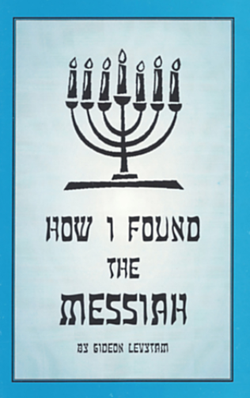
Follow Gideon Levytam's journey and discover how he was led by God, through a series of exciting circumstances, to find the One his people are still waiting for.
Past Episodes

Featured Offer
Follow Gideon Levytam's journey and discover how he was led by God, through a series of exciting circumstances, to find the One his people are still waiting for.
About Holy Scriptures and Israel
As time passed by, the Lord Yeshua took dear brother John Van Stormbroek to himself. The ministry of Holy Scriptures and Israel continued with additional development. In the early 1990’s, a weekly morning Bible class began which brother Gideon Levytam led regularly in the City of Toronto. This weekly open Bible class was held in the Willowdale assembly meeting hall. Eventually, a second mid-week evening Bible class was added. In April 2002, the need for an additional outreach Bible teaching meeting arose. We begun a Saturday (Shabbat) ministry meeting in which a systematic teaching of God’s word is presented to all who attend. Together we learn God’s Word, pray for each need and the salvation of Israel, and sing songs of worship unto our God, praising Him and our Lord Yeshua the Messiah.
In Mid 2004 we started to air on Joy 1250 Radio station a 15 minute Bible teaching program called "The Holy Scriptures and Israel" with Gideon Levytam. The broadcast teaches God’s word from a Hebrew Messianic perspective and has proved to be a blessing to many. It's now aired seven days a week. Our prayer is that many more of our Israeli people will have a clear understanding of who Yeshua is, why we all need him, and come to know him as their Lord and Messiah.
About Gideon Levytam
Contact Holy Scriptures and Israel with Gideon Levytam
426 Simcoe Street
Niagara-on-The-Lake
Ontario L0S 1J0
Canada
(905) 325-1234