
Acts 22:1-21, Part 2


Paul’s Testimony to his Jewish Brethren in Jerusalem Part 2
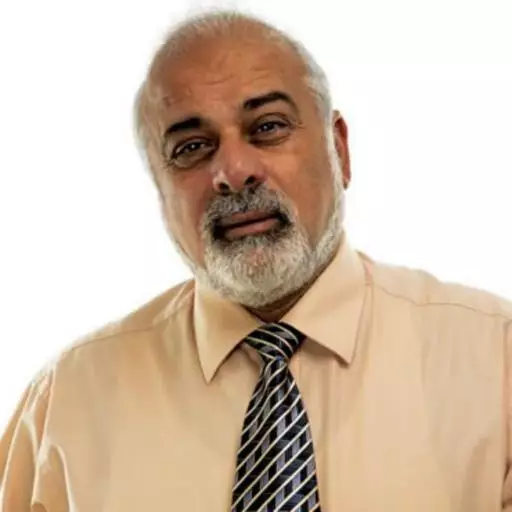
Announcer: Shalom. Holy Scriptures and Israel is a ministry designed to share with the Jewish people the good news of the Lord Jesus, Yeshua the Messiah, and to instruct Christians on the Jewish roots of their faith. And now, teaching God's word from a Hebrew Messianic perspective, here is Gideon Levytam.
Gideon Levytam: The study of Acts Chapter 22. The name Gamaliel is a very interesting name. The name simply means "my recompense is of God." Gamaliel means "my recompense is of God." Apparently, he was a respected man among the Jewish people in the city of Jerusalem. And then finally, notice that in the same verse, verse 3, and I'm back to chapter 22 and verse 3, the Apostle Paul pointed out that he was taught exactly in the perfect law that Israel, the Jewish people, were taught by the leaders of Israel. Because he said in verse 3, "I was taught according to the perfect manner of the law of the fathers."
Paul, Saul, wanted to show his Jewish brethren before he told them about his faith in the Messiah that he was born though a Jew of the diaspora. He was taught in the city of Jerusalem. He was taught by Rabban Gamaliel. He was taught according to the perfect manner of the law of our fathers. He wanted them to know who he was and what he had in the past history of his life. He also told them, finally, in verse 3, that he was zealous toward God as they were zealous.
You see, when Paul came into the temple in Jerusalem, he came and they knew that he was a believer in Yeshua the Messiah. They assumed that he was teaching against the law, against the temple, against the God of Israel, against the commandments of God, against Moses. So they wanted to capture him and actually to kill him because he violated, as far as they were concerned, that which God had given to Israel. And Paul is saying to them, "Listen, I had the same kind of zealousness towards the God of our fathers, just like you have today.
I was just like you because I myself was zealous towards God as you are today, zealous towards the God of Israel, and you want to capture me and to kill me." So in verse 3, beloved brothers and sisters, Paul pointed to his background and to what he had done before he became a believer in Yeshua the Messiah. And now notice that in verse 4, the Apostle Paul is saying to them also how he had persecuted the assembly, the church. And notice he says here, "I persecuted this way unto the death."
I think this thing haunted him all his life because he always felt guilt in the fact that before he became a believer in Yeshua, he was persecuting his Jewish brethren who believed in that way. It haunted him. And he's telling these Jewish brothers of his in the temple in Jerusalem, he said, "I persecuted this way unto the death. I bound them. I delivered them into prisons, both men and women." He's looking back at his history. He remembered that before he became a believer, he was persecuting his Jewish brethren.
By the way, when we say that he persecuted Christians, I want us to understand the Christians that he persecuted were not Gentile believers, but Jewish believers. Because he didn't care whether Gentile believers believe in Jesus the Messiah at that time. The importance for him was to persecute the Jewish people who came to faith in Yeshua the Messiah. That's why he took letters from the High Priest to go to the synagogue in Damascus in order to bring Jewish believers in Jesus and to imprison them and ultimately to cause them much harm.
I want you to turn with me for a moment to 1 Timothy Chapter 1. Paul said about himself when he spoke to younger Timothy. He spoke about himself. He was speaking concerning the glorious gospel that he was preaching. He says in verse 11, "According to the glorious gospel of the blessed God which was committed unto my trust." And then he says, "I am thankful to Christ Jesus, to Messiah Yeshua our Lord who has enabled me, for that he counted me faithful, putting me into the ministry." Listen, brothers and sisters, in verse 13, "Who was before a blasphemer and a persecutor and injurious, but I obtained mercy because I did it ignorantly and in unbelief."
See, Paul writes to Timothy and says, "Listen, God committed unto me this glorious message of the gospel, and who am I? I'm one that was a blasphemer. I'm one that persecuted the believers before I became a believer in Yeshua." And it must have hurt him all his life when he remembered what he had done to his Jewish brethren who became believers in Yeshua the Messiah. And that's why, brothers and sisters, in verse 4, the Apostle Paul was repeating this when he was standing there in the Antonia Fortress on the step there and speaking in the Hebrew language to his Jewish brethren who were in the court of the temple of the city of Jerusalem.
And so now in verse 5, as he continued to introduce himself to the multitude, he says in verse 5, "As also the High Priest does bear me witness, and all the estate of the elders, from whom I also received letters unto the brethren, and I went to Damascus to bring them which were there bound unto Jerusalem for to be punished." And so he's telling, can you imagine, he's standing before a multitude of his Hebrew brethren, confessing the fact that he himself was the one that persecuted the ones that believed in "this way."
Notice the expression here in verse 4, it's called "this way." In the first century, the word "this way" was really the name of those who follow this way. Yeshua said, "I am the way, the truth, and the life." The word Christianity or Christians was not as much known among the Jewish people. It was known as "this way," the way to follow Yeshua the Messiah. And so in verses 1 to 5, he is introducing himself before the multitude in the city of Jerusalem in the temple area when he was there, been caught and delivered by the chief captain of the Roman army.
So now we are moving on to the second section of this chapter. In verses 6 to 16, the Apostle Paul testified of his salvation experience on the Damascus Road. It is very important for us as believers to share with others how we became believers in Yeshua the Messiah. We might not remember theology, every passage in the Bible. We might not remember every verse in scripture. But one thing we have that no one can take away from us, and this is our personal experience. We can always tell others how we became believers and what happened to us when we have turned by faith and became believers in this rejected Messiah.
We don't need to be scholars. We don't need to be theologians. We don't need to know every verse. We should know verses from the Bible, but we don't need this in order to share our testimony with others. We can simply recollect the experience of how we became believers. Some of us got saved through our parents. Some of us got saved from a friend at school or at work. Others of us have accepted the Messiah because we have gone through emotional experience, or something happened in our lives that caused us to turn to the Lord Jesus the Messiah.
To Saul, Paul, it happened the same thing. We call it the Damascus experience. The Damascus experience. It is experiential, something that happened to him in his life that brought him to his knees to become a believer in Yeshua the Messiah. We don't read him reading a text in Romans Chapter 5 or Romans Chapter 3 or the Prophet Jeremiah as we have read earlier. He had the Damascus Road experience. Something happened to Saul in his life that brought him to believe that Yeshua was the Messiah.
And I want to point out here that this section is really divided into two points. First, verses 6 to 11, Paul tells what happened to him on the way to Damascus. And then from verse 12 to 16, Paul tells what happened to him in the city of Damascus. And let us look at this for a few minutes together. First of all, notice in verse 6, it says that Paul, as he was speaking in Hebrew, he says, "And it came to pass that as I made my journey and I was come nigh unto Damascus about noon, suddenly there shone from heaven a great light round about me."
Paul begins. He says, "Listen, I was going to Damascus." And we know very well why he was going to Damascus because there were Jewish believers in Damascus. He took letters from the leaders of Israel in order to go to capture those Jewish believers in the city of Damascus. And as he was traveling, he was getting closer and closer to Damascus. Suddenly, about noon time, there shone from heaven a great light round about me. That great light, often time in scripture, speaks to us about the Shekinah glory. The Shekhinah, we call it in Hebrew.
We find the Shekhinah, the glory of God manifest many times in biblical accounting. For example, when Yeshua was born, there was the star that was moving from one place to the other until it shone right above the babe or the child that was born in the city of Bethlehem. We find the Shekinah glory many times mentioned in scripture. When the temple was built, the Shekinah glory rested upon the temple. When Israel were walking from Egypt to the promised land to Canaan, it was the Lord manifesting himself in the cloud by day and with a fire by night.
This is the Shekhinah, the presence of God that going along and leading the people of Israel as they were moving into the promised land. Well, here we find that great light that was round about Saul as he was on a way to the city of Damascus. I want to point here something that I thought is very interesting because we have three times in the Book of Acts the Apostle sharing with men, or the Holy Spirit sharing with us, Paul's conversion, how he became a believer in the Messiah. We have his actual experience in Chapter 9 of Acts.
We have his sharing this with his Jewish brethren in Acts Chapter 22 where we are today. And we have it mentioned again in Acts Chapter 26 as he was defending himself before King Agrippa. But there is a growth, there is a process in which we see how Saul, Paul, sees that light. Go back for a moment to Chapter 9 and verse 3. We see the actual experience of Paul, and we read in verse 3, "As he journeyed, he came near Damascus, and suddenly there shined round about him a light from heaven."
Now back to Chapter 22 and verse 6, "And it came to pass that as I made my journey and I was come nigh unto Damascus about noon, suddenly there shone from heaven a great light round about me." Now turn to Chapter 26, and there read with me verse 13. It says, "At midday, O king, I saw in the way a light from heaven above the brightness of the sun." Now when I was reading this, I remember from years ago when we were studying this passage, how the Apostle seemed to add something to this light every time.
In other words, in Chapter 9, it was a light. In Chapter 22, it was a great light. In Chapter 26, it was a light from heaven above the brightness of the sun. Now do you think the Apostle Paul does not know what he has experienced? But what I would like to suggest is that his appreciation of the Lord Yeshua the Messiah grew as he was sharing with others what he really experienced when he became a believer in our Lord Jesus the Messiah. It was a light. It was a great light. But it was a light that is brighter than the shining of the sun.
In other words, he appreciated the person and the work of our Lord Yeshua the Messiah. And I wish this in my life and I wish this in your life, that as we walk with the Lord, that our spiritual growth will be in such a way that we will appreciate what the Lord is and what he has done for us as we walk with him here in this world. It was a light. It was a great light. It was a light that is brighter than the sun at noonday. This is amazing, beloved brothers and sisters, how precious to see what the Apostle Paul had appreciated what the Lord has done for him.
So I'm back in Chapter 22. Verse 6, he journeyed on the way to Damascus and he saw that light, he calls it here "great light" round about me, the Shekhinah, the Shekinah glory. Then in verse 7, what happened to him when he saw that great light? He fell unto the ground and he heard a voice saying unto him, "Saul, Saul, why persecutest thou me?" See, here he is recalling the Lord speaking to him and calling him "Saul, Saul." Twice he is calling "Saul, Saul" and he says, "Why do you persecute me?"
Now Paul did not persecute the Lord. The Lord was in heaven. He was at the right hand of the Father. But he persecuted the believers. And by persecuting the believers, the body of Christ, the body of Messiah, you are actually persecuting the Lord himself. And the Lord called him from heaven and he said, "Saul, Saul, lama tirdefeni? Why do you persecute me?" He heard the voice of Yeshua from heaven. And so as he was falling to the ground from seeing such a light, he heard this wonderful voice of the Lord mentioning this to him in verse 7, "Why do you persecute me?"
Brothers and sisters, whenever a believer is being persecuted by the world, by Satan, by the enemies of God, really that person has to answer to the Lord Jesus, to Yeshua the Messiah who is sitting at God's right hand. A persecution of the people of God is a persecution of the Lord Yeshua the Messiah himself as he mentioned it here in verse 7. And so what Saul is saying in verse 8, he responded to this voice of the Lord and he says, "Who art thou, Lord?" And he said unto him, "I am Yeshua of Nazareth, whom thou art persecuting."
He responded to the glorified Messiah and he said to him, "Who art thou, Lord?" Notice he calling him "Lord" here. In a sense, we can see here that he recognized the Lordship of the Lord Jesus, that he's Adon, that he's Lord, that he's master, that he's his servant. He recognized and he says, "Who art thou, Lord?" Even though he's saying "Who art thou?" but he calling him "Lord," recognizing uniqueness in that person. And look what the Lord Jesus answered him. He said to him, "I am Yeshua of Nazareth, whom you're persecuting."
Now here we see the humanity of the Lord Jesus. He's called Jesus, Yeshua from the city of Nazareth. Actually, I've been in Nazareth just three days ago. That's one of the last things we have done before we came to Canada. It was the city of Nazareth. And we sat down in a center of the city of Nazareth where Yeshua the man was living and serving and ministering in the city of Nazareth. And we can just imagine how he lived in that city. A city that was foreign, in a sense, it was oblivious city in the north of Israel, unimportant city of Nazareth.
The important people came from Judea. The important people came from the city of Jerusalem. But he says, "I am from Nazareth. I am from the city of Nazareth." You can see he's speaking about his humanity and his humility when he lived here on earth. The rejected one, the despised one. We call him Yeshua Ha-Notzri, the one that was rejected and despised by men. He's now seated at the right hand of God the Father, but he came once in humility and he was despised and rejected of men.
And Saul here was really persecuting him by persecuting his own people. So he's rehearsing before his Jewish brethren the fact that he responded to the Lord who told him, "I am Jesus, I'm Yeshua from the city of Nazareth and you, by persecuting the believers, actually persecute me." And so in verse 9, Paul's companion responds. It says here in verse 9, "And they that were with me saw indeed the light and they were afraid, but they heard not the voice of him that spake with me."
So those that have been with him, who traveled with him, they saw the light, they have been very much afraid, but they didn't hear what the Lord was telling Saul. And so finally, in verses 10 and 11, Paul's words to Yeshua and Yeshua's answer to him. He says, "What shall I do, Lord?" he says in verse 10. And the Lord said unto him, "Arise, go to Damascus and there it shall be told thee all things which are appointed for thee to do." You see, he asked him what do you want me to do?
I guess when the Lord spoke with him on the way to Damascus and he challenged him, "Why do you persecute me?" and he said, "Well, Lord, what should I do now?" And the Lord Jesus, the glorified Messiah, had given him instruction. He said to him, "You get up, you go to Damascus. There in the city of Damascus, you will be told what you are going to do." And then we find out what happened to Paul, to Saul, because when he got up, he discovered that he became blind. He couldn't see.
So he needed somebody to lead him by the hand all the way to the city of Damascus when he could not see for the glory of the light. Being led by the hand of them that were with him, he came and he arrived to the city of Damascus. He finally arrived to Damascus, but he needed to be led by men. You know, the brightness of the light that shone around him had literally blinded him and made him incapable to walk and he needed help of others to take him by the hand and to move him into the city of Damascus.
I found it kind of interesting that we never read of the others that they became blind, but we read that he became blind. And yet we see that they saw the light. In verse 9, those that were with him saw the very same light that he saw, and yet they did not become blind and he became blind. Well, there was a message for him from the glorified Messiah. The Lord, in a sense, struck him to show him that he is in total dependence upon him, that he cannot do anything against the Lord and against the Lord's people should the Lord want to stop him from doing it.
But yet in grace, he allowed him to be led by the very people who saw that light to be brought to the city of Damascus because there Yeshua had a message for Saul in order for him to be a servant of the Messiah. So here in verses 6 to 11, we find Paul sharing with his Jewish brethren in the temple in Jerusalem what happened to him as he was journeying from Jerusalem to the city of Damascus. Now, brothers and sisters, listen to the next verses, verses 12 to 16. Now he's telling them his experience in the city of Damascus.
A few points here. First of all, we hear about a man by the name of Ananias. In Hebrew we call him Hananiah, comes from the word grace, Hanan, mercy, grace. We find this man himself living in Damascus, one by the name of Hananiah, a devout man according to the law, having a good report of all the Jews which dwell in this city of Damascus. Apparently, this man by the name of Hananiah, a believer in the Lord Yeshua the Messiah, he apparently had a good report among all the Jewish community, both believers and unbelievers.
They looked at this man by the name of Hananiah, he had a good testimony. He had a good report. He had a good testimony among all the Jewish community even though he was a believer in Yeshua the Messiah. He had some respect, some acknowledgment by the Jewish community. Then we find out in verse 13 that he's the one who was used to give the sight to Saul. Because it says in verse 13, "He came unto me and stood and he said unto me, 'Brother Saul, receive thy sight.' And the same hour I looked up upon him."
Now notice he call him "Saul," he doesn't call him "Paul." You know, sometime people say, "You know, when he was a Jew, he was Saul. When he became a believer, he became Paul." That is not correct. He was always Saul before he became a believer and after he became a believer. His Jewish Hebrew name was Saul. His diaspora name was Paul. This is something that is still practiced today by the Jewish community. A Jewish person who live in the diaspora, live outside of the land, has two names: his Hebraic name to communicate with his Jewish brethren and his non-Hebreic name, a Gentile name in which he uses in his work or school or wherever he is among the non-Jewish community.
Apparently, he already became a believer. He call him "Brother Saul, receive thy sight." And at that moment, Saul, Paul, receive his sight and he could look at this man and he could see this man by the name of Hananiah looking upon him, seeing this man that was used by the Lord Yeshua to give him the sight. And now notice what the message that Hananiah gave him from the glorified Messiah. Look at the thing that Hananiah saying to Saul.
Announcer: You have been listening to the Holy Scriptures and Israel with Gideon Levytam. Gideon teaches God's word from a Hebrew Messianic perspective. For more information about this ministry, write to Holy Scriptures and Israel, Box 1411, Niagara-on-the-Lake, Ontario, L0S 1J0, or visit our website at holyscripturesandisrael.com.
You are also invited to Gideon's weekly Bible teaching on Fridays at 11:00 AM and 7:00 PM, and Saturdays at 1:00 PM at Willowdale Christian Assembly Hall, 28 Martin Ross Avenue in Toronto. Holy Scriptures and Israel is made possible by your prayers and financial support. If you would like to support the program, visit holyscripturesandisrael.com. God bless you. Shalom, shalom.
Featured Offer
Follow Gideon Levytam's journey and discover how he was led by God, through a series of exciting circumstances, to find the One his people are still waiting for.
Past Episodes

Featured Offer
Follow Gideon Levytam's journey and discover how he was led by God, through a series of exciting circumstances, to find the One his people are still waiting for.
About Holy Scriptures and Israel
As time passed by, the Lord Yeshua took dear brother John Van Stormbroek to himself. The ministry of Holy Scriptures and Israel continued with additional development. In the early 1990’s, a weekly morning Bible class began which brother Gideon Levytam led regularly in the City of Toronto. This weekly open Bible class was held in the Willowdale assembly meeting hall. Eventually, a second mid-week evening Bible class was added. In April 2002, the need for an additional outreach Bible teaching meeting arose. We begun a Saturday (Shabbat) ministry meeting in which a systematic teaching of God’s word is presented to all who attend. Together we learn God’s Word, pray for each need and the salvation of Israel, and sing songs of worship unto our God, praising Him and our Lord Yeshua the Messiah.
In Mid 2004 we started to air on Joy 1250 Radio station a 15 minute Bible teaching program called "The Holy Scriptures and Israel" with Gideon Levytam. The broadcast teaches God’s word from a Hebrew Messianic perspective and has proved to be a blessing to many. It's now aired seven days a week. Our prayer is that many more of our Israeli people will have a clear understanding of who Yeshua is, why we all need him, and come to know him as their Lord and Messiah.
About Gideon Levytam
Contact Holy Scriptures and Israel with Gideon Levytam
426 Simcoe Street
Niagara-on-The-Lake
Ontario L0S 1J0
Canada
(905) 325-1234