
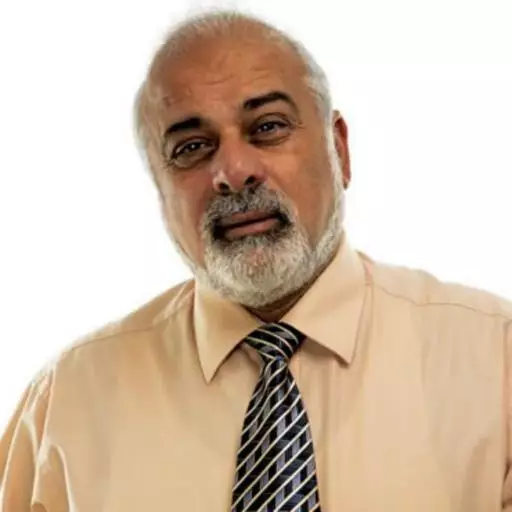
Acts 2:14-36, Part 3


The First Preaching of the Gospel by the Church Part 3
Guest (Male): Shalom. Holy Scriptures and Israel is a ministry designed to share with the Jewish people the good news of the Lord Jesus Yeshua the Messiah and to instruct Christians on the Jewish roots of their faith. And now teaching God's word from a Hebrew Messianic perspective here is Gideon Levitan.
Gideon Levytam: The study of Acts chapter two. You notice that by the way if you turn with me for a moment to 1st Peter chapter one, I want you to see that it was not accident that Yeshua the Messiah died. God knew that and planned it in eternity past that the Messiah will die in order to redeem people to himself. In 1st Peter chapter one, he said in verse 18, 19 and 20 for as much as you know that you were not redeemed with corruptible things as silver and gold from your vain conversation received by tradition from your fathers, but with the precious blood of Mashiach as of a lamb without blemish and without spot.
And then verse 20 who verily was foreordained before the foundation of the world, but was manifest in these last time for you. See Peter understood from God from the with the help of the Holy Spirit that Yeshua the Messiah was foreordained before the foundation of the world to be delivered unto death. Long before Adam and Eve were created, long before sin have entered into this world, long before Satan have tempted Eve and Adam disobeyed the word of God, long before the fall of man and the judgment of God in the flood, long before God have called Abraham, Isaac and Jacob to be his people in eternity past before creation, God determined because of his full knowledge, he knew that the Messiah will die in order to redeem a fallen creation.
We didn't catch him by surprise when sin came into this world. God did not all of a sudden say oh you know ay ay ay look what happened. Something have just happened and men fell into sin in the Garden of Eden. We didn't catch God by surprise according to Acts chapter two where Peter is speaking in verse 23 he says God him he being delivered by the determined counsel and foreknowledge of God. God knew that all along. You see he's telling he's appealing to his brother. He's telling them listen God knew that the Messiah will be delivered that he will die.
But he also wanted to feel it in their own hearts and where he told them you have by wicked hands have crucified and slain. Now you know brothers and sisters the Jewish people never crucified anyone. The means of crucifixion was a Roman means of death. Israel the Jewish people always stoned. If somebody was guilty they would stone him. But here you see that there is the accusation or the clear-cut saying that even though the Roman's soldiers, the Romans actually crucified the Messiah, but the guilt upon the nation came because they have rejected the Messiahship of Yeshua.
They rejected the man and when I say they, it's not all Israel, but the leadership, the religious leaders, many in an earlier part and you will see that later on have acknowledged that Yeshua was the Messiah and received him. But the leading element of the nation of Israel rejected the Messiahship of Yeshua. In this text as I mentioned before, it's the Jewish people. In other texts you will find out that the Gentiles are just as guilty in the crucifixion of Yeshua the Messiah. You and I are guilty in the death of the Messiah because of our sin and our sins.
And so he spoke about his life, the perfect life of the Messiah. He spoke about his death. The death of the Messiah in verse 23, but now he's speaking about his resurrection. You see we have a full gospel, the life, the death, the resurrection of the Messiah. And that's what he is speaking about in verse 24. And notice that in verse 24 whom God had raised up having loosed the pain of death because it was not possible that he should be holding off it. You notice that? It says here that he was approved of God verse 22, he was delivered by God verse 23, he was raised by God verse 24.
It is of God everything. God knew that, knew the death, the burial, the and the resurrection of Yeshua the Messiah. And so we read here in verse 24 that God had raised him up. Now if the Lord Jesus the Messiah was not raised up, there was no gospel to proclaim. If he was not raised from among the dead, there would not be any gospel to proclaim brothers and sisters. We have nothing to give to the world from God unless we have a presentation of the resurrected Messiah. He's no longer in the tomb. He's no longer on the tree.
He have been taken. He died. He was buried and God had raised him up having loosed the pains of death. In other words the tomb became a womb. The tomb is where he was held and the pain of death he was delivered like a woman who would bring forth a child into the new birth is a resurrection of the Messiah. And here he's telling us in verse 24 that he raised him from among the dead by loosing the pain of death because it was not possible that he should be holden of it. Why it was not possible that the Messiah would be holden of the grave?
Because it would not be just to put the Messiah and to leave him in the grave because he had no sin. The wages of sin is death, but there was no sin in Yeshua the Messiah. So it was not possible to hold him there. God have raised him up from among the dead because God was satisfied with the finished work of Yeshua the Messiah. Paul said this like this in Romans chapter four. The last verse of Romans chapter four he said he was delivered for our offenses, but he was raised for our justification. Romans chapter four and verse 25.
Their resurrection of the Messiah was necessary to give justification to everyone that have accepted him as his or her Lord and Savior. So here we see verse 22, 23 and 24 people tell the people of Israel Peter telling them of the life, death and resurrection of the Messiah. Now he doesn't stop there and now in the next verses brothers and sisters verse 25 to 28 he's quoting again a passage from the Bible. That's what I love to see that when the early believers in Yeshua they always went back to the Bible. They always went back to the Hebrew scripture.
And here he does the same thing in verses 25 to 28. What does he do? He's quoting the Psalm that we read today, Psalm 16. He's quoting Psalm 16 and he's specifically quoting the last portion of Psalm 16 verses 8 to 11 and let me read those verses to you. Verse 25 for David speaks concerning him, I foresaw the Lord always before my face, for he is on my right hand that I should not be moved. Therefore did my heart rejoice and my tongue was glad. Moreover also my flesh shall rest in hope because thou wilt not leave my soul in Sheol or in hell or in Hades.
Neither wilt thou suffer thine holy one to see corruption. Verse 28 thou hast made known to me the ways of life and shalt make me full of joy with thy countenance. He's quoting in those verses verses eight to 11 of Psalm 16. And he's mentioning David. See David, David the king of Israel was a very important figure in the history of our nation. David was the man that was after God's own heart. He was the sweet psalmist of Israel. He was the one that was the first king of Israel that was elected and chosen not by men, but by God himself.
And David he spoke concerning the Messiah in the Psalms. And he says here David and he's quoting these verses in verses 25 to 28 and he's quoting the last portion of Psalm 16. And really the words that David spoke in Psalm 16 actually are the words concerning the Messiah of Israel, Yeshua himself. And Peter take what David wrote, he applied to Yeshua the Messiah. And he said I foresaw the Lord always before my face. And then he said for he is on my right hand that I should not be moved. Notice he says I foresaw the Lord always before my face.
You know we cannot say that that's speaking of David because David could say I foresaw the Lord sometimes before my face. You and I can say you know I'm really looking to the Lord sometimes in my life, not all the time. Sometime I deviate, sometime I fail, sometime I'm not looking to the Lord, not they having him before my face. But there was only one man that it could be applied to. I foresaw the Lord all the time before my face. Yeshua said in John chapter four my meat is to do the will of him that sent me and to finish his work.
Everything in his life characterized the will of God. Everything he did in his life was totally in submissiveness to God. And so he was quoting this Psalm and now in the next verses he's explaining what he just read to them in Psalm 16. Remember they didn't have the book of Acts. They didn't even have the Gospels yet in their hand, but they had the Tanakh, the Old Testament. So he's taking and and reading to them from the Tanakh, from the Old Testament and he's expounding to them. He's explaining to them what the Holy Spirit of God meant when he used the words of David in Psalm 16.
And so he is explaining to them in the next verses, verses 29 to 33. And so he's quoting them again now the third time he's calling them brethren. See now men and brethren of verse 29 is not brethren in the faith as yet because they haven't yet come to acknowledge Yeshua as their Lord and Savior yet. They will many of them later on, but here he's calling them men and brethren they were they were his brethren in the flesh. They were Jewish people, they were Hebrews, they were Israelis to whom he proclaimed the message of the gospel.
And he's telling the men and brethren my brethren he's saying to them let me freely speak in verse 29 of Acts chapter two unto you of the patriarch David that he is both dead and buried and his sepulcher is still with us to this day. You know the tomb of David actually existing even after this day. If the Lord will enable you to come with us on one of the visits to Israel, you're going to see that up until today you have the tomb of David there in the city of Jerusalem. When Peter was speaking David was still dead and he was buried and his sepulcher was still with them unto this day that Peter was preaching.
David did not speak of himself, but David spoke of another. In verse 30 he's saying therefore being a prophet knowing that God had sworn with an oath to him that of the fruit of his loins according to the flesh he would raise up the Messiah to sit on his throne. Now you know why David could speak about the Messiah? Because David was not only a king. We often think of David being the king of Israel and it's true. He was the king of Israel, but according to Peter David was also a prophet. He received a prophetic word from the Lord to proclaim to the nation.
And one of the prophetic words that he proclaimed concerning the Messiah was Psalm 16. And in this Psalm he was not speaking of himself, but he was speaking about the one that was going to come to become the Mashiach, the Messiah of the nation of Israel and the redeemer, the savior of this world, the deliverer that will pay the penalty for sin, that he will deal with the problem that the human race have. And so David, listen as he says in in verse 30 being a prophet and knowing notice that it says knowing that God had sworn with an oath unto him.
You know David knew that God promise him a promise. He sworn to David that of the fruit of David's loins according to the flesh that he would raise up the Messiah to sit on David's throne. And so the promises of God. See God promise Abraham, God promise Isaac, God promise Jacob, God promise Moses, but God also promised David that the Messiah will come one day. That he will bear the sin of the nation of Israel and the sin of this world. God made an oath unto David that out of his loins, out of his physical seed, out of his seed will come the Messiah who will reign, who will rule and will sit on the throne of David.
And when God make a promise he keeps his promises all the way to the end. I want you to see where he promised to David. I'm not going to read all the passages, but if you turn with me for a moment to Psalm 89, just turn to Psalm 89. And I want to read the verses there. Psalm 89 beginning from verse 20. And so we read in verse 20 of Psalm 89 I have found David my servant with my holy oil I have anointed him, God is saying. With whom my hand shall be established mine arm also shall be strengthened him.
The enemy shall not exact upon him, nor the son of the wicked afflict him. And I will beat down his foes before his face and plague them that hate him. But my faithfulness and my mercy shall be with him and in my name shall his horn be exalted. I will set his hand also in the sea and his right hand in the rivers. He shall cry unto me, thou art my father, my God and the rock of my salvation. Also I will make him my firstborn higher than the kings of the earth. My mercy will I keep for him forever more and my covenant shall stand fast with him.
His seed also will I make to endure forever and his throne as the days of heaven. If his children forsake my law and walk not in my judgments, if they break my statutes and keep not my covenants, then will I visit their transgression with the rod and their iniquity with stripes. Nevertheless my loving kindness will I not utterly take from him, nor suffer my faithfulness to fail. My covenant will I not break, nor alter the things that is gone out of my lips. And now notice verse 35 and 36. Once I have sworn by my holiness that I will not lie unto David.
His seed shall endure forever and his throne is the son before me. See God made an oath. God made a promise. I have once have sworn in my holiness that I will not lie unto David. His seed shall endure forever. David knew that because God had made an oath with him. He promised him. And so when he was writing Psalm 16 he was actually applying it to the Messiah that out of the fruit of his loins the Messiah will come and will reign and rule and will sit upon his throne. And so he's saying my brethren he's speaking to the people of Israel.
He's saying about David he says I want you to know that David he's the patriarch he's dead, he's buried, that his sepulcher is with us unto this day, but he being a prophet and he know God sworn him with an oath that of the fruit of his loins according to the flesh he would raise up the Messiah to sit upon his throne. And so he's telling them here in this verse he's seen this beforehand. He spoke of the resurrection of the Messiah that his soul was not left in Sheol, neither his flesh did see corruption.
Now you notice the two aspects. We see the soul and the body. The soul in Sheol, in Hades, in the place of the departed spirit. The flesh is in the tomb and now his soul was not left in Sheol and his body was not left in the grave. He was raised from among the dead and as men, totally men, he lived in his resurrection here. And he gave instruction to the early Hebrew believers before he was ascended and have gone unto heaven. So he's speaking of the prophet David, of the king of Israel David who prophesied concerning Yeshua the Messiah.
And let me give you the conclusion here to the first preaching of the church, of the assembly, of the Kehila, to the Hebrew people, to the nation of Israel in the city of Jerusalem. He concluded here in verses 32 all the way to 36 when he was speaking that this is Yeshua. What David was speaking about it is this Yeshua that was raised from the dead who was the one that is the promise and Messiah. In the next verse, verse 32 he's saying this Yeshua has God raised up whereof we are witnesses. Verse 33 therefore being at the right hand of God exalted and having received of the father the promise of the Holy Spirit he has shed forth this which you see now and here.
See he was just telling them look all what I have told you up to now, what you have seen here when you came and to see these individuals there speaking in various languages, proclaiming the greatness of God. It is really a fulfillment of the coming of the Holy Spirit because Yeshua the Messiah rose and being ascended there unto heaven. What have happened? The spirit of God came. How did it happen that the spirit of God came? The Messiah finished the work and he was ascended and he was taken to heaven. That's how the Holy Spirit of God could come down to this world and to form the body of Messiah.
And I conclude with these verses. It says in verse 34, 35 and 36 for David is not ascended unto heaven, but he said of himself, the Lord said unto my Lord, sit thou on my right hand until I make thine enemies thy footstool. See David could not speak of himself. He did not go to heaven. He's still in the tomb. He's still in in the grave. He's still in the midst of the nation of Israel in the grave. He did not speak of himself. He was not raised from among the dead, but he's speaking of Yeshua Mashiach, Jesus our Lord and our Messiah who rose from among the dead and was seated at the right hand of the majesty on high.
David of course, David wrote Psalm 110 also which Peter quoting here. The Lord said unto my Lord, sit down on my right hand until I make thine enemies thy footstool. David is writing. He says the Lord said unto my Lord, Jehovah said unto Adonai, my Lord, my master, sit down on my right hand. David was writing of the fact that Jehovah said to Yeshua, sit on my right hand until I'm going to make your enemies your footstool. And so truly the Lord have not only raised Yeshua from among the dead, but he placed him at the pinnacle of the universe and he told him to sit down there until he's going to make his enemies his footstool.
And then he conclude now in the last verse, verse 36 Peter is calling to the house of Israel to repent. And that's what you and I need to do when we proclaim the message of the gospel. We need to tell people listen you need to repent. You need to turn your heart to the Lord. You need a savior, you need a redeemer. And so he says in verse 36 therefore let all the house of Israel know assuredly that God has made this same Jesus whom ye have crucified both Lord and Messiah. Let you all house of Israel know assuredly that this same Jesus and then again notice he mentioned which you have crucified.
Now we know they didn't crucify the Lord. It is the Roman soldiers who crucified the Lord. But the guilt, the responsibility of accepting the Messiah lie in the hand of all Israel just as much as in the hand of all the Gentile world. We are all guilty in the death of the Messiah. And he challenged them. He says let all the house of Israel know that this same Jesus whom ye have crucified God had made him both Lord and Messiah. Lord mean Adonai and Christ Christos, Mashiach, Messiah. He's your Lord, he should be your Lord and he's also the anointed one, the Mashiach, the Messiah of Israel and the Savior of this world.
So brothers and sisters we talked about today what happened? The Spirit came. How it happened? Because Yeshua finished the work. Yeshua died, buried, raised and ascended and now the spirit of God came to form the body of Messiah, to enable Jew and Gentile to be part of this assembly of this Ekklesia. The only thing one need to do in order to be part of this assembly is to acknowledge the Lord Jesus the Messiah as his or her Lord and Savior. May we do so and I trust all of us here in this room have done so, but many more from our own families and our own friends and others should accept the Lord Jesus as their Lord and Messiah and be part of this family which we call today the family of God, Ekklesia, the church.
Can you say amen to that?
Guest (Male): Amen.
Guest (Male): You have been listening to the Holy Scriptures and Israel with Gideon Levitan. Gideon teaches God's word from a Hebrew Messianic perspective. For more information about this ministry, write to Holy Scriptures and Israel box 1411 Niagara on the Lake Ontario L0S 1J0 or visit our website at holyscripturesandisrael.com. You are also invited to Gideon's weekly Bible teaching on Fridays at 11:00 a.m. and 7:00 p.m. and Saturdays at 1:00 p.m. at Willowdale Christian Assembly Hall 28 Martin Ross Avenue in Toronto. Holy Scriptures and Israel is made possible by your prayers and financial support. If you would like to support the program, visit holyscripturesandisrael.com.
God bless you. Shalom. Shalom.
Featured Offer
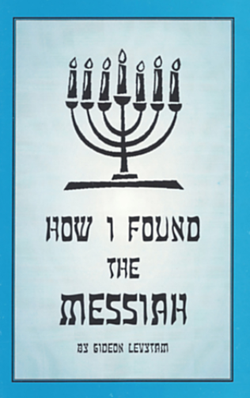
Follow Gideon Levytam's journey and discover how he was led by God, through a series of exciting circumstances, to find the One his people are still waiting for.
Past Episodes

Featured Offer
Follow Gideon Levytam's journey and discover how he was led by God, through a series of exciting circumstances, to find the One his people are still waiting for.
About Holy Scriptures and Israel
As time passed by, the Lord Yeshua took dear brother John Van Stormbroek to himself. The ministry of Holy Scriptures and Israel continued with additional development. In the early 1990’s, a weekly morning Bible class began which brother Gideon Levytam led regularly in the City of Toronto. This weekly open Bible class was held in the Willowdale assembly meeting hall. Eventually, a second mid-week evening Bible class was added. In April 2002, the need for an additional outreach Bible teaching meeting arose. We begun a Saturday (Shabbat) ministry meeting in which a systematic teaching of God’s word is presented to all who attend. Together we learn God’s Word, pray for each need and the salvation of Israel, and sing songs of worship unto our God, praising Him and our Lord Yeshua the Messiah.
In Mid 2004 we started to air on Joy 1250 Radio station a 15 minute Bible teaching program called "The Holy Scriptures and Israel" with Gideon Levytam. The broadcast teaches God’s word from a Hebrew Messianic perspective and has proved to be a blessing to many. It's now aired seven days a week. Our prayer is that many more of our Israeli people will have a clear understanding of who Yeshua is, why we all need him, and come to know him as their Lord and Messiah.
About Gideon Levytam
Contact Holy Scriptures and Israel with Gideon Levytam
426 Simcoe Street
Niagara-on-The-Lake
Ontario L0S 1J0
Canada
(905) 325-1234