

Acts 21:1-26, Part 2


Paul’s Arrival to Jerusalem Part 2
Voiceover: Shalom! Holy Scriptures and Israel is a ministry designed to share with the Jewish people the good news of the Lord Jesus, Yeshua the Messiah, and to instruct Christians on the Jewish roots of their faith. And now, teaching God's word from a Hebrew Messianic perspective, here is Gideon Levytam.
Gideon Levytam: The study of Acts chapter 21. An evangelist, his call from the Lord is to preach a clear message of the gospel of our Lord Yeshua the Messiah, to evangelize, to share with people the message of the gospel. In Ephesians chapter four, we learn that the Lord Jesus the Messiah gave gifts to the assembly. One of the gifts was not only Bible teachers, not only apostles, but also evangelists, those that were gifted with the gift of evangelization.
Now every believer is to evangelize. We are all to speak to people about the Lord Yeshua the Messiah, but there are those that have the gift of evangelization, the gift of evangelists. And here we have Philip. He was the same one, beloved brothers and sisters, that we read of him also in Acts chapter eight, the one who preached the message of the messiahship of Yeshua to the Ethiopian eunuch.
You remember the Ethiopian eunuch was on the way back from Jerusalem after he spent some time there, and he was reading the prophet Isaiah as he sits on the chariot returning from Yerushalayim. And the Spirit of God told Philip, "You go and you speak to this man." And Philip ran up to the chariot and he asked this Ethiopian eunuch, "Do you understand what you read?"
And the Ethiopian eunuch said to him, "How can I understand except somebody would explain this to me?" And Philip took Isaiah chapter 53, the very passage that the Ethiopian eunuch was reading, and he was preaching unto him Jesus. He shared with him Yeshua the Messiah. And the Ethiopian eunuch had accepted the Messiah right there and then on the way back from Yerushalayim.
He stopped the chariot, he went down to the water, and Philip baptized him right there and then. What a glorious salvation this man had experienced, this Ethiopian eunuch. So Philip was known to be an evangelist. In fact, beloved brothers and sisters, he remained in the city there in Samaria and he became one of those leaders in the local church of Samaria. If you just please turn back to Acts eight, I want to show you this verse. I want you to notice verse 38 at the end. He baptized him, this is the Ethiopian eunuch.
And then when they were come out of the water, the Spirit of the Lord caught Philip. Notice that: the Spirit of the Lord caught Philip, and the eunuch saw him no more. And he went on his way rejoicing. And then we read about Philip: "But Philip was found in Azotus." This is Ashdod today in Israel. And passing through, he preached in all the cities till he came to Caesarea.
And here we find Philip ending up in Caesarea. And by the time Paul, on the conclusion of his third missionary journey, on the way to the city of Jerusalem, he stopped in Caesarea where Philip was there. And Philip apparently was preaching in Caesarea and leading many people to know the Lord Jesus the Messiah, and apparently he had a house there. He was known to be the evangelist. And Paul arrived to Caesarea, went to his very own house.
I think it is very precious to see in the first century how the believers were hosting each other. I think it's so precious. Many times for me too, by experience over the years, so many brothers and sisters have hosted me in homes as a guest and provided and took care of me. And I know it by experience, I've been so blessed by so many. Here you see the Apostle Paul is being hosted by the brethren. He is coming straight to the house of Philip and he entered into a house and he says, "and we abode with him."
They stayed with Philip in his home, this evangelist, well-known evangelist by the name of Philip. Now this expression "the gift of evangelist" mentioned a few times. I want you to just look with me at two verses please. Turn with me to Ephesians first of all. I already pointed out to it, but I want to read the verse. Ephesians chapter four and verse 11, reading about the Lord Yeshua the Messiah, who was raised and ascended up to heaven.
And now from heaven we read verse 11: "And he gave some apostles, and some prophets, and some evangelists, and some pastors and teachers." Those are gifts that the glorified Messiah had given to the believers. And some of those, as it says, were apostles and prophets and evangelists and pastors and teachers. Every gift is different. And Philip received the gift of an evangelist. A beautiful gift that he had received. Another verse please, turn to Second Timothy chapter four and verse five.
You can see the exhortation that Paul gave to Timothy, a younger believer. In verse five, Timothy was told by Paul, "Watch thou in all things, endure afflictions, do the work of an evangelist, make full proof of your ministry." Timothy, Paul was saying to Timothy, "You do the work of an evangelist." Share the message of the gospel. Share the love of God through the Lord Jesus, Yeshua the Messiah. And that is exactly what Philip was doing.
He was an evangelist who was preaching the message of the gospel. He did it in Caesarea, he did it earlier in Jerusalem, he faithfully had presented the message of the gospel wherever he have been. So the Apostle Paul have arrived in verse eight to the house of Philip the evangelist and he stayed with him. He stayed in his home for a little while. Now a few things we find out about Philip here in the next verse, verse nine.
We find out that he had four daughters. It says here: "And the same man," this is Philip, "had four daughters." They were all virgins; apparently they didn't get married as yet. They were young daughters. And then it says, "which did prophesy." Now apparently, beloved brothers and sisters, here when it said they prophesied, really prophecy does not necessarily mean that you're going to tell somebody about the future events that are going to happen.
Prophecy in scripture also has a reference that simply speaking forth the word of God. They were godly daughters in the home of Philip, their father. Apparently they were subject to him. They were godly young ladies. They were not married, they were virgins, we read of them here in verse nine. And they prophesy. Apparently when people came to their home and they were sitting together to speak with them, they were sharing the message of the word of God.
They were telling them about the Messiah. They were devoting themselves in sharing the message of the gospel. Now I think it is amazing to see at a young age these young ladies were sharing the message of the word of God. If you remember there was a young Jewish maid that was taken captive by the Syrian. If you remember, we read of her in Second Kings. And she was taken by the Syrian, and her master was Naaman, the captain of the army of the Syrian.
And this young little girl said to the wife of Naaman, to the family there, "I wish that Naaman, who was a leper, could go to the city to Israel because there is a prophet in Israel who could heal him from his disease." Now this young girl shared the message with the wife of Naaman, and Naaman took the step and he went to Israel. And there in Israel he was told by the prophet of Israel what to do in order to be cleansed from leprosy.
And leprosy in the Bible is a picture of sin. We all have the disease called leprosy. Leprosy keeps us as unclean, away from the presence of the Lord. And this young Jewish maiden shared concerning the God of Israel and the prophet of Israel who would be used by the Lord to restore this captain by the name of Naaman, which was a leper. And when he went to Israel, if you remember, and he washed in obedience to the prophet of Israel seven times in the Jordan, humility subjecting himself to obedience to the word of God, then God removed the leprosy from him.
And God used a little maiden, a little Jewish girl to share the message of the God of Israel with Naaman and his people. Well here, beloved brothers and sisters, four young girls, daughters of Philip. And we read of them that they did prophesy. They did spoke forth the word of God, shared the message of the gospel. And remember where they have done it: they have done it at home.
They were not publicly taking a place in the local church of Caesarea. In fact, First Corinthians chapter 14 does teaches us that the women not to take a public place in a local church, in a local assembly. But here we can see that in their home they were speaking and sharing the message, perhaps in conversation with guests who came and so on, but they were telling the people concerning the person of Yeshua the Messiah. They were really doing something that they have learned from their father.
Wherever you go, share the message, talk to people. You know we meet people on the street, we meet people at work, and you know we have all kind of subjects that we can talk about. We can talk about our job, we can talk about the weather, we can talk about many, many things, but we should share the message of the gospel with every person that we come in contact with in a wise way and in a godly way, that which will be honoring to the Lord.
So they spoke to others of God's word. They were speaking forth the word of God. They were prophesying at home, sharing the message of God's word with those that were coming to their home. They were young girls, but they were sharing the message of the word of God. And now look at this: in the next verses what happened in the house of Philip the evangelist. In verses 10 and 11, here's another man that is coming now and giving warning to the Apostle Paul of that which will happen to him in the city of Jerusalem.
It says in verse 10: "As we tarried there for many days," apparently Paul and his company stayed for many, many days in the house of Philip. It says, "there came down from Judea a certain prophet by the name of Agabus." We heard already of Agabus previously in Acts chapter 11. Now we hear of him again. This Agabus came from Judea, Jerusalem area, came down and went to the area of Caesarea, and in Caesarea he came to the house of Philip the evangelist.
And he prophesy of what was going to happen to the Apostle Paul. It says in verse 11: "When he was come unto us, he took Paul's girdle." He took the clothes of the Apostle Paul. "And he bound his own hands and his feet." So what did he do? He took the garment, the girdle, and he tied himself as we read here in verse 11, his own hands and his own feet. He did a visual prophecy. He tied his hands, he ties his feet, and then he spoke forth a prophecy concerning what was going to happen to the Apostle Paul.
In verse 11 we read, "Thus says the Holy Spirit: so shall the Jews at Jerusalem bind the man that owneth this girdle and shall deliver him into the hands of the Gentiles." Agabus was really telling prophetically what is going to happen to Paul when he is going to go to the city of Jerusalem. And notice he says, "The Holy Spirit says." He was really not speaking his words. He was really telling what will happen to the Apostle Paul when he's going to go to Jerusalem.
Now remember he doesn't say to Paul here, "Don't go to Jerusalem." No, but he is saying to the Apostle Paul what will happen to you in the city of Jerusalem. The Jewish people at Jerusalem, this is the unbelieving Jewish people, Paul's brethren in the city of Jerusalem who are not believers in Yeshua the Messiah, they're going to bind this man whose girdle is this girdle, and they will deliver him unto the hands of the Gentiles.
You know it is exactly what happened to Yeshua the Messiah. You remember what he prophesied himself? He says, "Listen, there's going to come a time," this is Matthew chapter 20, "that I'm going to be captured by the Jewish people, and they will hand me to the Romans, and then ultimately the Romans have crucified Yeshua the Messiah." That's exactly what's going to happen to the Apostle Paul. His Jewish brethren who have not yet accepted the Messiah, out of envy and jealousy over what he believe and the position that he took concerning Yeshua Jesus the Messiah, they will capture him.
And they will hand him over to the Gentiles, to the Romans. And the Romans ultimately will take him and they will imprison the Apostle Paul. And he will be taken all the way to the city of Rome, and ultimately at the end he will be killed in the city of Rome. And that is exactly what this man by the name of Agabus have prophesied. Now I said to you that he already spoke earlier. He was actually serving with the Apostle Paul in earlier times. If you turn back to Acts chapter 11 for a moment.
This person by the name of Agabus already was with Paul some about 15 years before this present occasion. And he had already spoken in verse 27 of Acts chapter 11, where we read: "And in these days came prophets from Jerusalem unto Antioch. And there stood up one of them by the name of Agabus, and he signified by the spirit," notice this man, "that there should be a great dearth throughout all the world, which came to pass in the days of Claudius Caesar."
Then the disciples, every man according to his ability, determined to send relief unto the brethren which dwell in Judea. Which also they did, and they sent it to the elders by the hands of Barnabas and Saul. So you see he was already long time ago, 15 years earlier, he was already with Barnabas and with Shaul Paul in the city of Antioch. He did prophesy already and it did come to pass.
That's why the believers there have determined to bring to the Jewish believers in Jerusalem the gifts because of the drought that was going to happen there. There will be a famine that will occur, the whole world including in the city of Jerusalem. Well Agabus had prophesied in the power of the Spirit and it did come to pass. And here we find him prophesying and to be assured that it will also come to pass.
Now again, brothers and sisters, many times those who believe that the Apostle Paul was wrong in going to Jerusalem, they really use these verses. They say Paul loved the Jewish people too much, he was out of the will of the Lord, he should have not gone to Jerusalem. They gave him warning after warning after warning: "Don't go, don't go, don't go." And yet Paul determined to go to Jerusalem.
And that's why some say that that was one of the mistakes that are written in the scriptures, that Paul was out of the will of the Lord. Now others feel exactly the opposite. They say no, this does not mean that Paul was out of the will of the Lord. This was the exact will of the Lord for him, because the Lord already encouraged him later on. And I want you to just turn to the next chapter for a moment, chapter 23 and verse 11.
When he was in Jerusalem, we read that the Lord stood by him. Notice in verse 11 of Acts chapter 23: "And the night following the Lord stood by him," this is Paul. "And he said, Be of good cheer, Paul: for thou hast testified of me in Jerusalem, so must thou bear witness also of me at Rome." You see, some say that he was out of the will of the Lord. If he was out of the will of the Lord by going to Jerusalem, why is it that the Lord is giving him this encouragement and standing by him at Jerusalem after he was captured and telling him, "You have given a testimony for me here in Jerusalem, you will also give a testimony for me at Rome"?
And so it seems to be, beloved brothers and sisters, that the Lord had chosen Paul, Shaul, to be a vessel that through this vessel he will bring the message to the nations of the world and also to his own Jewish brethren. And he will experience persecution and rejection, and ultimately he will suffer death when he will ultimately be captured and be taken to the city of Rome. And so personally myself and I'm sure others as well take the position and the understanding that Paul was in the will of the Lord.
It's only his willingness to go through it, because if you go back now to our chapter, you notice what Paul saying to the brothers and sisters after the prophet Agabus had given him this message. In verse 12 we read that when we heard these things, this is the believers there at Caesarea, it says both we and they of that place we besought him not to go up to Jerusalem. You can see now that Agabus was preaching, that the brethren in Caesarea including apparently because the word "we" is there, including Luke the doctor, the physician, everyone saying to Paul, "Please don't go to Jerusalem. Look what is going to happen to you in the city of Yerushalayim. Don't go to Jerusalem."
Stay here, don't go because that's what's going to happen to you. You're going to be bound by the unbelieving Jewish people, you're going to be taken to the Romans, and the Romans are going to take you and ultimately you're going to die. Paul don't go, Paul don't go. But Paul was determined to go and to follow through with what the Lord had called him for. And so we read in the next verses, verse 13, look at the response of the Apostle Paul.
Look what he says in Acts 21 and verse 13. Paul answered, "What mean ye to weep and to break my heart? For I am ready not to be bound only, but also to die at Jerusalem for the name of the Lord Yeshua." Here is a man, when you think of this man Paul, Shaul, he was willing to lay down his life. He was willing to suffer and to die for the name of his master, the Lord Yeshua the Messiah.
You know I often think of our lives too. We love the Lord and we are happy that we are saved. We are happy that our sins are forgiven to us and we always rejoice in the fact that because of our sins that have been forgiven through the precious blood of the Messiah we are going to heaven and we're going to be eternally in heaven. But we are often not willing to suffer for the name of the Lord here in this world because it is painful to experience suffering, to experience hatred and rejection and misunderstanding.
Some have lost their family, some have lost their friends, some have lost their job, some have lost their relationship. We know from the stories that we hear of so many men and women who loved Yeshua the Messiah who have lost relationships here in this world for the name of Yeshua. And the example that we have here is in the Apostle Paul. When everybody told him Shaul Paul don't go to Yerushalayim, you're going to be bound, you're going to be captured, you're going to die, Paul don't go.
He says no. He says to them in verse 13, "What do you mean when you weep and you cry? Do you want to break my heart?" he said to them. "Why are you doing this? Listen," he's telling them, "I am ready." Notice that expression "ready". A few times he's using the word ready. Are we ready to follow the Lord in difficult time? Are we ready to carry on in the difficult path? I'm not sure we are always ready to do so.
Oh yeah, we are ready to go to heaven. Oh yeah, we are ready to receive blessings from the Lord. But are we ready to experience sometimes difficult time as we affiliate and associate our name with the name of Yeshua the Messiah? Paul was ready. He said it to the Romans in Romans chapter one. When the Romans thought that he didn't want to come to them, he said to the Romans, "I am not ashamed of the gospel of the Messiah, for it is the power of God unto salvation to everyone that believe."
He also said to them, "I am ready." Chapter one of Romans, verse 15: "to preach the gospel to you that are at Rome also." I'm ready. I'm willing. That was a man that was sold for God, totally sold for the Lord Yeshua the Messiah. You notice that if you also please turn with me to the book of Timothy, to Second Timothy, just for a verse there. Second Timothy chapter four. Here he said that again, just before he died.
The Apostle Paul said to Timothy in chapter four and verse six: "For I am now ready to be offered, and the time of my departure is at hand. I have fought a good fight, I have finished my course, I have kept the faith. Henceforth there is laid up for me a crown of righteousness, which the Lord, the righteous judge, shall give me at that day: and not to me only, but unto all them that love his appearing."
Three times he used the word "I am ready". He said it to the disciples in the city of Caesarea, "I am ready." He said it to the Romans believers at the city of Rome who thought he doesn't want to come to them because he was a Jewish person. He says, "I'm ready to come to you at Rome." He said it to Timothy, his younger brother before he was ending his ministry here on earth. He says, "I am ready to be offered at the time because the time is at hand and my departure out of this scene is coming ahead." He was ready in his ministry to give his life for Yeshua the Messiah.
And so beloved brothers and sisters, we find here the Apostle Paul is really comforting the disciples who were telling him, "Please Paul don't go to Jerusalem." And I'm reading this verse again, verse 13: "Then Paul answered, What mean ye to weep and to break my heart?"
Voiceover: You have been listening to Holy Scriptures and Israel with Gideon Levytam. Gideon teaches God's word from a Hebrew Messianic perspective. For more information about this ministry, write to Holy Scriptures and Israel, Box 1411, Niagara-on-the-Lake, Ontario, L0S 1J0, or visit our website at holyscripturesandisrael.com. You are also invited to Gideon's weekly Bible teaching on Fridays at 11 a.m. and 7 p.m. and Saturdays at 1 p.m. at Willowdale Christian Assembly Hall, 28 Martin Ross Avenue in Toronto. Holy Scriptures and Israel is made possible by your prayers and financial support. If you would like to support the program, visit holyscripturesandisrael.com. God bless you. Shalom shalom!
Featured Offer
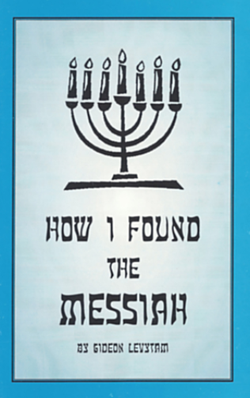
Follow Gideon Levytam's journey and discover how he was led by God, through a series of exciting circumstances, to find the One his people are still waiting for.
Past Episodes

Featured Offer
Follow Gideon Levytam's journey and discover how he was led by God, through a series of exciting circumstances, to find the One his people are still waiting for.
About Holy Scriptures and Israel
As time passed by, the Lord Yeshua took dear brother John Van Stormbroek to himself. The ministry of Holy Scriptures and Israel continued with additional development. In the early 1990’s, a weekly morning Bible class began which brother Gideon Levytam led regularly in the City of Toronto. This weekly open Bible class was held in the Willowdale assembly meeting hall. Eventually, a second mid-week evening Bible class was added. In April 2002, the need for an additional outreach Bible teaching meeting arose. We begun a Saturday (Shabbat) ministry meeting in which a systematic teaching of God’s word is presented to all who attend. Together we learn God’s Word, pray for each need and the salvation of Israel, and sing songs of worship unto our God, praising Him and our Lord Yeshua the Messiah.
In Mid 2004 we started to air on Joy 1250 Radio station a 15 minute Bible teaching program called "The Holy Scriptures and Israel" with Gideon Levytam. The broadcast teaches God’s word from a Hebrew Messianic perspective and has proved to be a blessing to many. It's now aired seven days a week. Our prayer is that many more of our Israeli people will have a clear understanding of who Yeshua is, why we all need him, and come to know him as their Lord and Messiah.
About Gideon Levytam
Contact Holy Scriptures and Israel with Gideon Levytam
426 Simcoe Street
Niagara-on-The-Lake
Ontario L0S 1J0
Canada
(905) 325-1234