
Acts 20:17-38, Part 3


Paul’s Appeal to the Elders of Ephesus Part 3
Guest (Female): Shalom. Holy Scriptures and Israel is a ministry designed to share with the Jewish people the good news of the Lord Jesus, Yeshua the Messiah, and to instruct Christians on the Jewish roots of their faith.
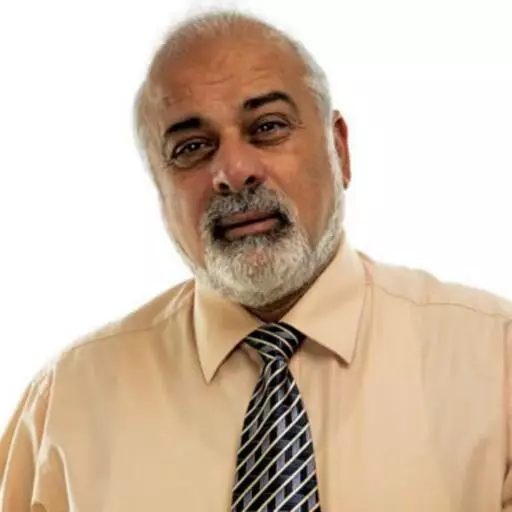
Guest (Male): And now, teaching God's word from a Hebrew Messianic perspective, here is Gideon Levytam.
Gideon Levytam: This study of Acts chapter 20, the day will know that he is free from responsibility. He shared the message of the God of Israel with the people of Israel. We read about it in Ezekiel chapter 3. Allow me to read that. In verse 17, we read, "Son of man, I have made you a watchman unto the house of Israel. Therefore, hear the word at my mouth and give them warning for me.
When I say unto the wicked, you shall surely die, and you give him not warning nor speak to warn the wicked from his wicked way to save his life, the same wicked man shall die in his iniquity, but his blood will I require at thy hand." God is saying if you don't share the message with a person that needs to know about Yeshua the Messiah, you become in a sense responsible when you don't give him that warning.
But when you gave him the warning and he rejected that message, I'm not going to hold you accountable, but he is going to be the one that I will judge. He is accountable for his own life. The same expression, "His blood will I require at thy hand," was known to Paul. He was a Hebrew, an Israeli, a Jewish man who knew his history, and therefore he was telling them that he was innocent and pure of the blood of all men because he shared and gave the warning that men needed to receive concerning the gospel message.
In verse 27, he declared to them all the counsel of God. Notice, "I have not shunned to declare unto you all the counsel of God." Brothers and sisters, I want to tell you this. Since I became a believer in Yeshua the Messiah, I noticed that in many local churches and local groups of believers, we don't hear all the counsel of God. That means we hear so much about God's promise to the church and God's promise to those who believe in Yeshua the Messiah today.
We read a lot of New Testament teaching, but very little of the Tanakh, the Old Testament teaching and God's promises to Israel. In other words, we hear a lot of partial counsel of God and not all the counsel of God. Now, all the counsel of God is including not only what God promised to the church, the body of Messiah, but also what God promised to Israel the nation and also what God promised to the whole world.
We have to realize that. We cannot only teach church truth and not Israel truth and not world future truth that God has concerning the whole world. We have to give a message that is encompassing everything, all the counsel of God, not to be only teaching about Israel and not the church, and not only to teach about the church and not Israel. We need the whole counsel of God to teach.
That is the beautiful thing about the Apostle Paul. He says, "Listen, I did not shun. I was not ashamed or afraid to declare unto you all the counsel of God. I told you the promises that God has for you, the church. I told you the promises that God had for Israel, the nation. I told you all the promises that God had for this world, both judgment and blessings." That is all the counsel of God.
We need to be faithful in preaching all the counsel of God. That is why when we gather together, we will talk about the promises of Israel that are sure, that God is going to restore his people Israel to himself. God has not done with the nation of Israel. He is yet to restore them and to establish the Messianic kingdom in a coming day. But he is building the body of Messiah, the church, the ecclesia.
We are going to speak about the promises to the church, the body of Messiah. We are also going to talk about God's dealing with the world, both present as well as in the future day. Paul was faithful in preaching and declaring all the counsel of God, which is found in verse 27. So, verses 17 to 21, he reminded the elders about his past ministry with them.
Verses 22 to 27, he opened his heart and shared with the Ephesian elders about his present feelings and what is going to happen to him as he's heading on towards the city of Jerusalem. Now, finally, listen to this, beloved brothers and sisters. In verses 28 to 38, Paul warns the elders of the Ephesians of future dangers. Here, listen to what he is saying.
In verse 28, he is saying to them you better be careful, elders. Take heed to feed the church of God. Notice verse 28. "Take heed therefore unto yourselves, and to all the flock over the which the Holy Spirit has made you overseers, to feed the church of God which he has purchased with his own blood." That word here, "take heed," is like the word for watch. Be careful.
Leaders and elders, watch it. Take heed to feed the flock which belongs to God, or the church of God. Feed the church of God which he purchased with his own blood. Every elder and every spiritual leader has the responsibility to feed. Earlier we were talking about food, but spiritual food is needed among the people of God. That's why when we meet brothers and sisters, we are always feeding on the word of God.
If we are going to grow, mature, and develop in a world such as this with Satan attacking us, the world tempting us, and the flesh hindering us, if we are to be able to fight the good fight and be growing and serving the Lord here, we need to feed on the person of the Lord. You notice here in this verse we have the whole three persons of the Godhead.
It says here in verse 28, "take heed unto yourself and to all the flock which the Holy Spirit," notice, first of all, it is the Holy Spirit who has made you overseers. They didn't go to a course to become an overseer. This is why it is very important. A person who will oversee the local assembly, it's not by people voting for him. It's not by people going to a course in a school, in a Bible school.
It is the Holy Spirit of God who places an overseer, and it is evident by his life. You don't buy it, you don't go to school for that, and you don't get voted for that. In the world you vote, but biblically speaking, it is the Holy Spirit that guides, leads, and raises the men to lead over the local churches and the local assembly. So, the first thing we find out is that the Holy Spirit is the one that put them to oversee the local assembly.
Secondly, it is called the church of God, not the church of Paul, not the church that belonged to the elders at Ephesus, and not the church that belonged to anybody else. It is the church that belonged to God. Every believer who has come to faith in Yeshua the Messiah belongs to God. You remember again when we studied 1 Corinthians chapter 1 and the first verses, the Apostle Paul says, "unto the church of God," in verse 2 of 1 Corinthians chapter 1.
It is the assembly, the believers, the called-out ones that belong to God, not even to the elders or to any name, but they belong to God. Thirdly, it is not only the Holy Spirit of God who put them overseeing, it is the church and assembly that belongs to God, but it says, "which he had purchased with his own blood." God had purchased this with his own blood.
How did he purchase this with his own blood? This is where God the Son, Yeshua Hamashiach, Jesus the Messiah, God became man. As man, he went to the altar, to the cross, and with his precious blood as man, by suffering on the tree, by losing his life, by dying on the cross, he purchased us. You remember what Peter said in 1 Peter chapter 1 and verse 18.
He says, "you were not redeemed or bought with corruptible things, as silver or gold from your vain conversation received by tradition, but you have been redeemed by the precious blood of the lamb, of the Messiah, as of a lamb without blemish." The price, beloved brothers and sisters, that we have been purchased with was the blood of the Messiah.
That's what he's saying to them. Listen, you be careful, elders of the Ephesians. You make sure that you are feeding the assembly of God, which God had purchased through the person of the Son, who became a man through blood. It was the life that had been taken away from Yeshua the Messiah when he died for us on the tree. And then he's telling them now the warning.
I want you to notice this, beloved brothers and sisters. There is always a problem that the church is experiencing by those who desire to hinder the spiritual growth of the people of God. In verse 29, he says there will be grievous wolves that will come from without. "For I know," Paul knows. He knows what's going to happen. He says, "I know that after my departing shall grievous wolves enter in among you, not sparing the flock."
I know, Paul is saying, that I'm leaving you now, Ephesian elders. I'm going back. You're going to the city of Ephesus, but I can tell you, elders of the Ephesians, that I know that grievous wolves will come and they will enter in among you. In other words, what he's saying is those from without will come to be within and will infiltrate and ultimately, as it says here, they will not spare the flock.
He's warning them of those that are coming. You know Yeshua had mentioned that already earlier in Matthew chapter 7. Let me just read that one verse here in Matthew 7 where Yeshua already warned the earlier Jewish believers even before the church was born. In verse 15 of chapter 7, "Beware of false prophets which shall come to you in sheep's clothing, but inwardly they are ravening wolves."
They're going to come with an appearance as they are sheep. Oh, they are very humble, but in reality, behind there, they are wolves that are ready to not spare the flock. We know that by experience over the years. There are many who have come among us in many of our meetings and so on, and I can tell you stories of things that we have experienced, that people who came with the assumption that they are going to help us, but they came within and ultimately caused a lot of friction among the people of God.
And as he said here, not sparing the flock. These are from without. These are those that will come from without. There's many verses that we can quote here in this verse as well. For example, in 2 Peter 2 where Peter gave warning of false prophets. In 2 Peter chapter 2 and verse 1 where Peter was saying as well, "but there were false prophets also among the people, even there shall be false teachers among you, who privately shall bring in damnable heresies, even denying the Lord that bought them and bring upon themselves swift destruction, and many shall follow their pernicious ways by reason of whom the way of the truth shall be evil spoken of."
Peter also gave this warning to the early believers, just like Paul and just like John. Yochanan, Shaul, Petros, Shimon, all those earlier Jewish believers, leaders above whom the Lord had placed them to oversee and to lead them. So, those warnings we need to take to heart and to recognize that this is a reality. But listen to this, brothers and sisters. In Acts chapter 20, not only those that are from without are wolves, but look what he says in verse 30.
He says there will be men who will speak falsely from within. Look at this, verse 30. "Also," in addition to that, "of your own selves shall men arise speaking perverse things to draw away disciples after them." Now Paul is saying, listen, not only from without, but also from within. There will be those that will rise up and will speak things that are not honoring unto the Lord.
There's also a verse that can be read but in the epistle of John. There was a man in the third epistle of John by the name of Diotrephes. He was within. He was a believer. He was a part of the local assembly, but John wrote in 3 John verse 9, "I wrote unto the church, but Diotrephes, who loved to have the preeminence among them, receiveth us not. Wherefore if I come, I will remember his deeds which he does," and so on, "prating against us with malicious words and not content therewith, neither does he himself receive the brethren, and forbiddeth them that would and casteth them out of the church."
In other words, there was a man like Diotrephes who was an inside man, and because of pride and arrogance, his behavior was wrong before the Lord. The Apostle Paul gives them here this warning in verse 30. So, those without, verse 29, those within, verse 30. And now quickly, verse 31. There is a need to watch. "Therefore," he says, "watch and remember that by the space of three years I ceased not to warn everyone night and day with tears."
In other words, the Apostle Paul is saying to them, listen, I want you to watch, to be careful. Brothers and sisters, I'm challenging us all that we all today need to also be careful. We need to watch for each other. We need to be discerning of things and those that may come from without, and we need to watch for ourselves not to be elevating ourselves in pride and arrogancy and start to speak against each other and to cause things that will bring friction among the people of God.
It is so important. The Apostle Paul gave these warnings to the elders in those verses. In verse 32, he says that you really need the grace of God. "Now brethren, I commend you to God," number one, "and to the word of his grace, which is able to build you up and to give you an inheritance among all them which are sanctified." You notice one thing, he commended them to God.
Number two, he commended them to the word. This is the word, the Scripture, to the word of his grace. You know when we have the word of God search us, speak to us, reach us, it cleanses us. It speaks to us, it convicts us, and it changes us, molds us, and changes us. That's why we need the word of God in the power of the Spirit of God.
The word of God will direct us to the person of our Lord, Yeshua the Messiah, and will cleanse us and will make us different in our behavior. We need the word of God. So, he commended them to God and to the word of God, to his grace. Then quickly to the end, verse 33 to 35, Paul did not covet the things that belong to other people. You know when he served, he says, "listen, I have coveted no man's silver or gold or apparel.
Yea, ye yourselves know that these hands have ministered unto my own necessities and to them that were with me. I have showed you all things, how that so laboring, ought ye to support the weak and to remember the words of our Lord Yeshua, how he said, it is more blessed to give than to receive." You know the Apostle Paul never usurped that which does not belong to him.
Now, people supported him. The Philippians were sending him gifts and supported him and others. But he says, listen, I didn't covet it. In other words, the ministry was not because I wanted to grab and to take from you no man's silver, no man's gold, no man's apparel, the clothing or anything. I did not covet this. Even with my own hands I worked.
These hands ministered unto mine necessity as well as to others. He was an amazing man. And then he said, I have showed you in the conduct by labor, he says how we're supposed to support the weak and to remember the words of our Lord, which he said. Now, we do not know when the Lord Jesus the Messiah said, "it is more blessed to give than to receive."
We do not know, we don't have a record of that, but he may have referred to the Gospel of Luke where in chapter 14 Yeshua said, and I want to read that, Luke chapter 14 verse 12. He said unto him, "When you make a dinner or supper, call not your friends nor your brethren, neither your kinsmen," in other words, don't think of your family only, "nor of your rich neighbors, lest they also bid thee again and give you back.
But," he says, "when you make a feast, call to the poor, the maimed, the lame, the blind, and you shall be blessed for they cannot recompense thee, for thou shalt be recompensed at the resurrection of the just." You see, we do not know when the Lord said those statements, "it is better to give than to receive," but he may have had a reference to this time where Yeshua said in this parable.
He says when you make a celebration, a party, don't only invite your friends and your families and your brothers and your sisters and your uncles and your cousins, but invite those that don't have anything, those that are maimed and poor and lame and blind. Invite them, that you will be blessed. And that's where we get this expression, "it is more blessed to give than to receive."
And that's perhaps the reference that the Apostle Paul had when he pointed out in verse 35 of our chapter. It is more blessed to give than to receive, something that Yeshua had said earlier. Now to conclude, beloved brothers and sisters, here in verse 36 to verse 38, Paul is praying with the elders and for the elders. It is so nice to see in verse 36, "When he had thus spoken, he knelt down and he prayed with them all."
Notice that he's kneeling. Kneeling is falling on our face. It is an expression of total dependence upon the Lord. It was Abraham in chapter 17 who fell on his face before the Lord and verse 3. It was Joshua in chapter 5 in the book of Joshua and verse 14 that also fell before the Lord in prayer and in worship, fell on his knees, fell on his face.
It was King Solomon when he's ready to build the temple in Jerusalem in 2 Chronicles chapter 6 and verse 13. He himself went on his knees and worshiped the Lord in prayer. It was Yeshua the Messiah himself in Luke chapter 22 in the Garden of Gethsemane that he himself fell on his knees. He kneeled down and he prayed unto the Lord as a man, Yeshua the Messiah himself.
It was also the Apostle Peter in Acts chapter 9 who also kneeled down and prayed and worshiped the Lord. And here also we have the Apostle Paul in this chapter going on his knees and praying for the people of God. I always appreciate in our local assembly meeting when we have a prayer meeting, we go on our knees. On our knees, I know we all cannot go because of our age and so on, but it is an expression of dependent upon the Lord, saying to the Lord, "Lord, I need your grace."
So falling on our faces and kneeling down, it is the expression of dependence. And so he fell down on his knees and he prayed with them and for them. Notice that here is the third time that we find the word weeping in this chapter. They all wept sore. They fell on Paul's neck and they kissed him. You know why?
Because it says in verse 38, specially because he said unto them that they should see his face no more. When he told them that they're not going to see him, they all began to weep together because it may have been the last time that they would see each other here on earth. And they were sorrowing, they were sad, they wept sore and they fell on his neck.
It must have been such a beautiful relationship between Paul and the elders of the assembly at Ephesus that they could weep with each other, they could embrace each other and were wishing to be able to see each other again. You know by the way they will see each other and that is a sure thing, because Paul elsewhere said in 1 Thessalonians chapter 4, we do not sorrow as others sorrow which have no hope.
But they had hope, and the hope was the resurrection and the rapture of the body of Messiah of the church to be with the Lord to meet him in the air. They will see each other. They already see each other since almost 2,000 years have gone by. Brothers and sisters, we also will see each other again, even if here we might need to separate from each other for a little while, but we are going to see each other because of the fact that we are saved.
We are part of the redeemed company which belong to our Lord Yeshua the Messiah. With this, beloved brothers and sisters, the Apostle Paul has concluded his appeal to the elders of the church of the Ephesians. He told them of his past ministry. He shared with them his present situation of his heart, and he warned them of the future trials and dangers that will come their way.
You and I also need to recognize this. We are to watch, we are to wait, we are to be faithful, and we are to seek to minister to the people of God for his glory as well as for the blessing of the people of God. Can we say amen to that? May the Lord bless this word to all of us. Shalom, shalom.
Featured Offer
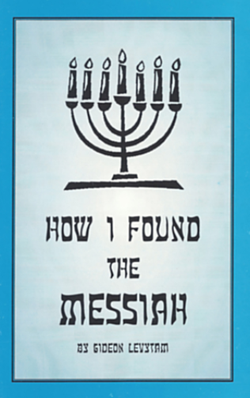
Follow Gideon Levytam's journey and discover how he was led by God, through a series of exciting circumstances, to find the One his people are still waiting for.
Past Episodes

Featured Offer
Follow Gideon Levytam's journey and discover how he was led by God, through a series of exciting circumstances, to find the One his people are still waiting for.
About Holy Scriptures and Israel
As time passed by, the Lord Yeshua took dear brother John Van Stormbroek to himself. The ministry of Holy Scriptures and Israel continued with additional development. In the early 1990’s, a weekly morning Bible class began which brother Gideon Levytam led regularly in the City of Toronto. This weekly open Bible class was held in the Willowdale assembly meeting hall. Eventually, a second mid-week evening Bible class was added. In April 2002, the need for an additional outreach Bible teaching meeting arose. We begun a Saturday (Shabbat) ministry meeting in which a systematic teaching of God’s word is presented to all who attend. Together we learn God’s Word, pray for each need and the salvation of Israel, and sing songs of worship unto our God, praising Him and our Lord Yeshua the Messiah.
In Mid 2004 we started to air on Joy 1250 Radio station a 15 minute Bible teaching program called "The Holy Scriptures and Israel" with Gideon Levytam. The broadcast teaches God’s word from a Hebrew Messianic perspective and has proved to be a blessing to many. It's now aired seven days a week. Our prayer is that many more of our Israeli people will have a clear understanding of who Yeshua is, why we all need him, and come to know him as their Lord and Messiah.
About Gideon Levytam
Contact Holy Scriptures and Israel with Gideon Levytam
426 Simcoe Street
Niagara-on-The-Lake
Ontario L0S 1J0
Canada
(905) 325-1234