

Acts 20:17-38, Part 2


Paul’s Appeal to the Elders of Ephesus Part 2
Narrator: Shalom. Holy Scriptures and Israel is a ministry designed to share with the Jewish people the good news of the Lord Jesus Yeshua the Messiah and to instruct Christians on the Jewish roots of their faith. And now, teaching God's word from a Hebrew Messianic perspective. Here is Gideon Levytam.
Gideon Levytam: The study of Acts chapter 20. And I can tell you, beloved brothers and sisters, in the ministry of the work of the Lord, many servants, many times spending in weeping before the Lord because of the condition of the believers, because of the friction among the believers, because of the needs of the people of God.
And I have seen it many years ago. I went to a meeting, our own meeting, of Holy Scriptures and Israel meeting, and I came a little bit earlier to the meeting, and there's another group that was meeting in the same hall, but they were meeting earlier than us. And I went to the hall and I was alone in that hall, I thought I was alone.
And then I was going further down to the basement, and I was watching another brother who is on his knees, weeping before the Lord. And I heard him, he's praying aloud. He was praying for the people of God, for those to whom he was ministering. He was on his knees, alone, he thought he was alone, just like I thought that I was alone.
But he was weeping. Nobody knew that he was weeping. Nobody knew that he was cared so much for his people. Maybe he did show it in his life, and I'm sure he did. But when he was alone, he went in the presence of the Lord and he was weeping on behalf of the local assembly upon whom the Lord gave him the responsibility to minister the word of God.
The care for the flock of the people of God bring those leaders into the time when they have to weep before the Lord for the sake of the flock. So you can see the mannerism in which the Apostle Paul, Shaul was serving. And notice, thirdly, brothers and sisters, in the very same verse 19, we see the third thing that the Apostle Paul had to experience in his manner and his behavior.
Notice, it says in temptations. This word for temptation is really need to be the word for trials. How many trials this man have experienced. On the way to Damascus, when Yeshua have called him to serve him, and then later on, he told Hananiah that he will go and he will touch his eyes and he will give him sight.
He said to Hananiah, "You go, for he is a chosen vessel unto me." This is Shaul Paul, "to bear my name before the Gentiles and the kings and the children of Israel, for I will show him how great things he must suffer for my name's sake." Shaul, Paul, have suffered for the name of the Lord so many things in his life.
He have experienced a lot of suffering in his life. He have experienced suffering by his own Jewish brethren. He had experienced suffering by their own gentile brethren. He have experienced by the unbelieving world, by the Romans, by strangers. He have experienced all sort of persecutions and suffering that we can read that in many passages in the scriptures, in the word of God.
And so the Apostle Paul reminding the believers of the fact that he was faithful in the manner in which he behaved when he served the Ephesians, and he reminding this to the elders in verses 17, 18 and 19. And now, let's move on in verse 20 and 21, Paul pointing out to the message that he presented the Ephesians with.
Look at the message when he ever arrived to the city of Ephesus. It says here in verse 20 and verse 21, "and how I kept back nothing that was profitable unto you, but I have showed you and I have taught you publicly and from house to house, testifying both to the Jews and to the Greeks, repentance towards God and faith towards our Lord Yeshua Jesus the Messiah."
Notice the message now, he's pointing out to the message. When it's come to the message, I want you to notice a few things. First of all, Paul taught publicly and from house to house. He was speaking and preaching publicly to the multitude, but he also went from house to house as we read here in verse 20.
He was preaching publicly and privately, publicly and from house to house. Interesting to see at the manner in which he was presenting the message. And then in verse 21, he was not only preaching to the Jewish people, but he was also preaching to the Greeks. In other words, his message was not limited to one group or to another.
It was both to his own brothers in the synagogue wherever he went, and then to the Greeks or to the Gentile. You remember, this was his practice. Whenever he arrived to any city, the first thing that Shaul Paul have done, he have gone to his own brethren, the Jewish people to the synagogue. And he presented Yeshua the Messiah in the synagogue to the Jewish people.
But when they have rejected him, then he moved on and he also went and he presented the message to the Gentiles as well. So you can see beautifully here, door-to-door, house-to-house and publicly, Jewish people and Gentiles alike. Everyone need to hear the message of the gospel.
And thirdly, we find here in verse 21, that notice the message itself: repentance towards God and faith towards our Lord Yeshua Jesus the Messiah. Repentance was important. You know, people think that they can just say, "Jesus, Yeshua, I believe in you," and they are going to be saved just by saying that they believe.
Well, if faith in the Messiah does not proceed with repentance, what is repentance? Repentance is turning away 180 degrees and saying to God, "God, I'm turning away from that which I have lived like, and I'm turning away towards You, towards God, and then I confess before the Lord, when I say, 'Lord, I believe that it is You, Yeshua, You Jesus our Messiah, the one that have paid the price for my sin.'"
So repentance was very important because without repentance there is no remission of sins. In Athens, in the previous chapters, in chapter 17, he said to the people in Athens in verse 30, "The time of this ignorant God winked at, but now he commending all men everywhere to repent."
Repentance is very important. To identify with God and to confess our sins before the Lord. To take the side of God against ourselves. That's what repentance mean. "God, I admit that what You say about me is 100% correct." When you say that I have fallen short of the glory of God, that I have sinned, "God, I agree with You, and I repent, I confess this before You."
So the message of the Apostle Paul, when he was in the presence of the Ephesians, his message was repentance towards God and faith in our Lord Yeshua the Messiah. This is so beautiful, brothers and sisters. So verses 17, 18, 19, 20, 21, the Apostle Paul remind the elders of the Ephesians of his past ministry among them in the city of Ephesus.
So he's now moving in the next verses, verse 22, to verse 27, he's moving from the past to the present. And you can see that he's moving by twice the word that is mentioned in verse 22. Notice, "and now," verse 22. Notice also verse 25, "and now." He's just moving now from the past to the present.
And when he speaks about the present, he shared with the elders of the Ephesians his inner being, his innermost feeling. What is really going on now in his own heart and what is going to happen to him now as he's now going towards the city of Yerushalayim? He opened his heart with the elders of the Ephesians.
And this is also very important, brothers and sisters, that we need to share our hearts with each other. Unfortunately, even in local assemblies and local churches, sometimes we don't tell our brothers and sisters what's going on in our own hearts because we are afraid that they will condemn us or we are afraid that they will judge us, or we are afraid that they will look down upon us.
But this is not what the Bible really teaches us. The Bible does teach us that we should share with each other our hearts and our yearning and our burdens, not that we will be judged by the others, but that the other believers will encourage us and build us up and support us in prayer and encourage us.
But because we are often time so carnal, we don't share things with each other because we are worried of how the believers will look at us and they will find fault in us and later on hold it against us. This is not the way of the Lord, even though we fail in those things in our practice, and this is to our own shame.
But here the Apostle Paul sharing with the elders of the Ephesians the things that are going to happen now presently to the Apostle Paul. And so I want you to notice, first of all, that Paul was compelled by his own spirit to go to the city of Yerushalayim, to the city of Jerusalem. This is verse 22. "And now, behold, I go bound," this word for the word bound, "I am compelled by the spirit unto Jerusalem, not knowing the things that shall befall me there."
Now, you see he was going to go to Jerusalem. And you know, many, many Bible teachers believe that he made a mistake, that actually he was not guided by the spirit of God when he went to the city of Jerusalem. And they often time said that this is one of the things that the Apostle Paul have done that it was wrong by going to Jerusalem.
Because if you remember, it was in Jerusalem that he was taken and delivered unto the Romans. It was taken to the city of Rome, and it was in the city of Rome that he ultimately died. So some suggest, I don't agree with that, that Shaul Paul, out of love for his brethren, the Jewish people was desiring to go to Yerushalayim, to Jerusalem for the feast, and to be with his people, and to share with his people.
And some suggest that he was wrong in doing so. Well, personally, I don't see that this way. In fact, the opposite. I believe that the Apostle Paul, Shaul was in the spirit by doing so. He was in a right condition spiritually to go to the city of Jerusalem. But that means that through going to Jerusalem, the experience of sufferings and persecution he will have to go through because he has follow a divine order.
And so, here we see that he was compelled. He used the word in the spirit. This is his human spirit. He was compelled by his own spirit to go to Jerusalem, and he said, "I do not know the things that will befall me there." I just want to point earlier, if you go back to verse 16 of the same chapter, notice he says in verse 16 B, "He hasted if it were possible for him to be at Jerusalem for the day of Pentecost."
The word Pentecost means Shavuot, the Feast of Weeks. He wanted to go to the city of Jerusalem to celebrate the feasts of Shavuot, the Feast of Weeks. He have actually earlier even wanted to go to the city of Jerusalem, but he hasn't arrived there even earlier. Now he also mentioned that he wanted to go to Jerusalem for the Feast of Shavuot.
And again, now from Miletus, as he speaks to the elders, he is saying to them, "I am going to go to Jerusalem and I do not know the things that shall befall me there." So he did not know what was going to happen to him in Jerusalem. And so in verse 23, we can find out that it's not only his human spirit that made him compelled to go to Jerusalem.
In verse 23, we find out that it was the Holy Spirit himself that witnessed this in his own heart, that he was going to get affliction and he's going to be in bonds. Look at this, verse 23. It says, "except save that the Holy Spirit witnesses in every city, saying that bonds and affliction abide me."
You know, wherever you've gone, wherever he ministered the word of God, the Holy Spirit of God have really witnessed to him that there will be an affliction, that there will be a bonding that he will end up to be captured ultimately and be afflicted. So it was not only his own personal compelling, but it was the guidance of the Holy Spirit of God that we have here in verse 23.
But then Paul said to us in verse 24 that he's really willing to be subject to what the Lord has for him. In verse 24, he said, "But none of these things move me, neither count I my life dear unto myself, so that I might finish my course with joy and the ministry which I have received of the Lord Yeshua to testify the gospel of the grace of God."
You see, beloved brothers and sisters, what a man this man have been. He said, "None of these things have moved me." You know, many times and I think you would agree with me, many times we did not speak for the name of the Lord Yeshua the Messiah because we were worried of the consequences. You were worried, and I was worried that there will be persecution maybe a little bit.
And maybe somebody will reject us, maybe our friends, maybe our family, maybe our neighbors. We were afraid to speak of our Lord Yeshua the Messiah because we knew the result, the consequences, and we did not speak. And we closed our mouth and we did not testify of our Lord Yeshua. But Paul said, "None of these things move me."
"Whatever is going to happen, I will take it from the Lord." He says, "Neither count I my life dear unto myself." In other words, "Whatever is going to happen, I am giving over my life for my Messiah, for Yeshua the Messiah." He says, "Nothing moves me, I don't count my life as dear to myself, so I will finish my course with joy."
In other words, he wanted to finish his ministry. When he will die and he will leave this ministry and go to be with the Lord, he wanted to finish his ministry with joy, that to know that he had pleased the Lord fully. Can you please turn to Second Timothy for a moment in the Brit Hadashah, in the New Testament.
Second Timothy chapter 4. I want you to see what he wrote to Timothy at the end of his life. Second Timothy chapter 4, verses 7 and 8. Paul said this when he wrote to this younger brother by the name of Timothy. He says in verse 7, "I have fought a good fight. I have finished my course. I have kept the faith. Henceforth there is laid up for me a crown of righteousness, which the Lord, the righteous judge shall give me at that day, and not to me only, but unto all them that love His appearing."
Here Shaul Paul said to Timothy later on, when he was writing those two letters to Timothy, he says, "Timothy, listen, I have fought a good fight, Timothy. I have finished my course, Timothy. I have kept the faith, Timothy. I have been faithful to the end." And you see, this comes from the very verse that we are reading here in Acts chapter 20.
He wanted to finish his course with joy. And that's why he says, "Listen, beloved elders of Ephesus, none of these things move me." "I don't count my life dear unto me because I want to finish my course with joy." "I want to carry on all the way until the Lord will take me. I want to finish the ministry with joy."
And you notice he says also in verse 24 of Acts 20, he says, "And the ministry which I have received of the Lord Jesus, and look at the ministry," and I love this expression here, "the gospel of the grace of God." Now that is important, beloved brothers and sisters, this expression, the gospel of the grace of God is a very important expression.
Why it is important? Because the gospel of the grace of God is the gospel that we preach today. In the tribulation period, the 144,000 Hebrews will preach the gospel of the kingdom. We find that in Matthew 24 verse 14. But we today preach the gospel of the grace of God. It is the same message, it's not a different message.
But the only difference between these two words, the gospel of the grace of God and the gospel of the kingdom, is the gospel of the grace of God takes us now into the time where we the church is going to be with our Lord Yeshua in glory. We are in the church age preaching the gospel of the grace of God.
In the tribulation period, the 144,000 Hebrews going to preach the gospel of the kingdom because the kingdom, the Messianic kingdom is going to come. So during the tribulation, they're going to preach the gospel that will bring people into the kingdom. We preach the gospel of the grace of God, which will introduce people to be part of the body of Messiah and to bring us into what is called today the church, the assembly, the ecclesia.
It is the same message. Jesus the Messiah died for our sins and was raised for our justification. The same message. But the focus is one on the body of Messiah, the church, and the other is the coming kingdom, where Israel is going to be restored and the nations are going to be blessed when the Messiah will rule and reign as a king.
So, verse 22, verse 23, verse 24, Paul is compelled to go to the city of Yerushalayim. He wanted to finish his course with joy. Now, verse 25, 26 and 27, Paul saying, "Listen, I am pure from the blood of all men." In other words, "I'm innocent, because I faithfully preach the message of the gospel faithfully to all men."
That's why he says in verse 25. Again, this is the second time that he's speaking about the word now. "And now behold, I know that ye all, among whom I have gone preaching the kingdom of God, shall see my face no more." "They are not going to see him anymore," he's telling them in verse 25. "Wherefore," he says, "I take you to record this day, that I am pure from the blood of all men."
In other words, he says, "I am pure from the blood of all men. I have shared the message. I've been faithful in giving the message of the gospel. I have a clean hands. I'm innocent. I'm not guilty in not sharing that message." And he does something very similar to what Ezekiel was called by God to share the message with the nation of Israel, in chapter 3.
You know, the prophet Ezekiel was told by God to share the message that the people will hear the truth concerning that God will judge sin. And Ezekiel felt before the Lord that he needed to stand and be a witness to the nation of Israel, that they will know that he is free from responsibility. He shared the message of the God of Israel with the people of Israel.
We read about it in Ezekiel chapter 3. Allow me to read that. In verse 17, we read, "Son of man, I have made you a watchman unto the house of Israel. Therefore, hear the word at my mouth and give them warning for me. When I say unto the wicked, you shall surely die, and you give him not warning, no speaks to warn the wicked from his wicked way to save his life, the same wicked men shall die in his iniquity.
"But his blood will I require at thy hand." You see, God is really saying, "If you don't share the message with the person that need to know about Yeshua the Messiah, you become in a sense responsible when you don't give him that warning. But when you gave him the warning and he rejected that message, I'm not going to hold you accountable, but he is going to be the one that I will judge and he is accountable for his own life."
And the same expression, "His blood will I require at thy hand." You see, Paul knew, he was a Hebrew. He was an Israeli, he was a Jewish man who knew his history. And therefore, he was telling concerning the fact that I'm innocent, I'm pure of the blood of all men because I shared and I gave the warning that men needed to receive concerning the gospel message.
In verse 27, he declared to them all the counsel of God. Notice, "I have not shunned to declare unto you all the counsel of God." Now, brothers and sisters, I want to tell you this. Since I became a believer in Yeshua the Messiah, I noticed that in many local churches, in many local groups of believers, we don't hear all the counsel of God.
That means, we hear so much about God's promise to the church and God's promise to those who believe in Yeshua the Messiah today. And we really read a lot of New Testament teaching, but very little of the Tanakh, the Old Testament teaching and God promises to Israel. In other words, we hear a lot of partial counsel of God and not all the counsel of God.
Now, all the counsel of God is including not only what God promised to the church, to the body of Messiah, but also what God promised to Israel the nation, and also what God promised to the whole world. We have to realize that. We cannot only teach church truth and not Israel truth and not world future truth that God has concerning the whole world.
We have to give a message that is incompass everything, all the counsel of God. Not to be only teaching about Israel and not the church, and not only to teach about the church and not Israel. No, we need the whole counsel of God to teach, and that is the beautiful thing about the Apostle Paul. He says, "Listen, I did not shun. I was not ashamed or afraid to declare unto you all the counsel of God."
Narrator: You have been listening to the Holy Scriptures and Israel with Gideon Levytam. Gideon teaches God's word from a Hebrew Messianic perspective. For more information about this ministry, write to Holy Scriptures and Israel, Box 1411, Niagara on the Lake, Ontario, L0S 1J0. Or visit our website at holyscripturesandisrael.com.
You are also invited to Gideon's weekly Bible teaching on Fridays at 11:00 AM and 7:00 PM, and Saturdays at 1:00 PM at Willowdale Christian Assembly Hall, 28 Martin Ross Avenue in Toronto. Holy Scriptures and Israel is made possible by your prayers and financial support. If you would like to support the program, visit holyscripturesandisrael.com. God bless you. Shalom, shalom.
Featured Offer
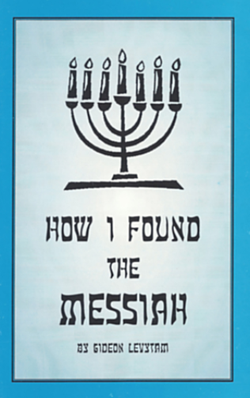
Follow Gideon Levytam's journey and discover how he was led by God, through a series of exciting circumstances, to find the One his people are still waiting for.
Past Episodes

Featured Offer
Follow Gideon Levytam's journey and discover how he was led by God, through a series of exciting circumstances, to find the One his people are still waiting for.
About Holy Scriptures and Israel
As time passed by, the Lord Yeshua took dear brother John Van Stormbroek to himself. The ministry of Holy Scriptures and Israel continued with additional development. In the early 1990’s, a weekly morning Bible class began which brother Gideon Levytam led regularly in the City of Toronto. This weekly open Bible class was held in the Willowdale assembly meeting hall. Eventually, a second mid-week evening Bible class was added. In April 2002, the need for an additional outreach Bible teaching meeting arose. We begun a Saturday (Shabbat) ministry meeting in which a systematic teaching of God’s word is presented to all who attend. Together we learn God’s Word, pray for each need and the salvation of Israel, and sing songs of worship unto our God, praising Him and our Lord Yeshua the Messiah.
In Mid 2004 we started to air on Joy 1250 Radio station a 15 minute Bible teaching program called "The Holy Scriptures and Israel" with Gideon Levytam. The broadcast teaches God’s word from a Hebrew Messianic perspective and has proved to be a blessing to many. It's now aired seven days a week. Our prayer is that many more of our Israeli people will have a clear understanding of who Yeshua is, why we all need him, and come to know him as their Lord and Messiah.
About Gideon Levytam
Contact Holy Scriptures and Israel with Gideon Levytam
426 Simcoe Street
Niagara-on-The-Lake
Ontario L0S 1J0
Canada
(905) 325-1234