
Acts 20:1-16, Part 3


Paul’s Ministry on the Way to Jerusalem Part 3
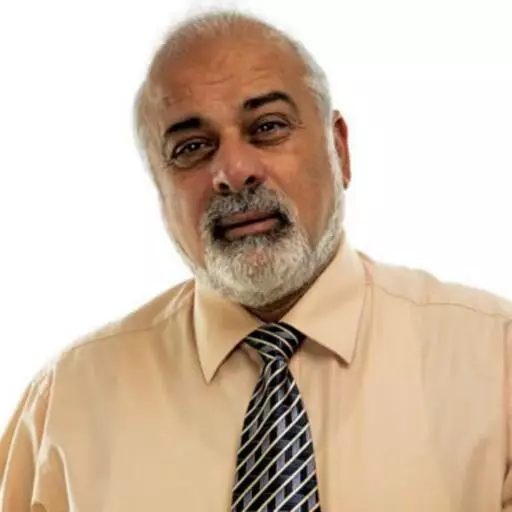
Gideon Levytam: Shalom. Holy Scriptures and Israel is a ministry designed to share with the Jewish people the good news of the Lord Jesus, Yeshua the Messiah, and to instruct Christians on the Jewish roots of their faith. And now, teaching God's word from a Hebrew Messianic perspective, here is Gideon Levytam.
In this study of Acts chapter 20, you will never dare to put meat inside there because we are to keep kosher, separate dishes, separate sinks. You are separating; you never dare to eat pork. You will never even mention the name pork or chazir. You can't do that because God had given instruction to our people not to eat certain things and to keep the Sabbath day.
But under the present day dispensation of the ecclesia, the church age, where Jewish people and Gentiles who believe in the Messiah are united in the body of Messiah, these obligations no longer apply to the believers because we are in this present day dispensation of the church age of grace. This is important to understand.
And the meeting of the saints on the first day of the week is not because there is something wrong with the Sabbath. But it is because it is representing to us a new beginning, the resurrection of Yeshua the Messiah. But it was in an evening meeting. It was immediately after the Sabbath day over. Let's go for one more last verse in connection with this to Colossians chapter 2.
The Apostle Paul is saying to the believers at Colossae. There he is telling to them, notice in verse 16. This was very hard for me. I remember when I first read these verses by people who are not Jewish. For them, it's very easy to read those verses. And they say in verse 16, let no man therefore judge you in meat—this is food—or in drink, or in respect of an holiday, or of the new moon, or of the Sabbath days.
And then he said in verse 17, which are a shadow of things to come. You see, even the things which God had given our people Israel to maintain and to keep faithfully, they were a shadow of things to come. And that's why he said in verse 17b, but the essence, the reality is the Messiah, is Christ.
If I am going to show you a picture of mine, and you are going to say, boy, this is Brother Gideon. Here is a picture of Gideon. What are you going to do? Are you going to take the picture and talk to the picture and speak to the picture? But if I am here, wouldn't you want to speak with me? Wouldn't you want to have fellowship with me?
Well, that's the truth that we learn about the things that God has given our forefathers. Everything is culminated in the person of Yeshua the Messiah. He is the object. He is the purpose. He is the goal. He is the center. He is the Messiah of Israel and the Savior of this world.
So all our sacrifices, the feasts, the Sabbaths of all, all are pointing to the person of our Lord Yeshua Jesus the Messiah. When he came, we have the real gem. We do not need to be occupied with that which is shadow. But you want to be occupied with that which is real.
And I can tell you from what I can see, we can be occupied with religion and keep days and eat this way and keep all kind of things. If the heart is not focused on the person of Yeshua the Messiah, it becomes empty and shallow. And all the mundane of keeping things without the beauty of the person of Yeshua the Messiah do not avail us at all. It becomes a religion without reality.
And that's why, beloved brothers and sisters, the Lord and all the early Hebrew apostles have emphasized on the person of Yeshua the Messiah. So when the saints come together on the first day of the week, Acts chapter 20 and verse 7, that is where we see that they have gathered together as an evening meeting. It was not Sunday evening; it was already Saturday evening after sundown. They were gathering together in the beginning of the week, the resurrection day.
And so in chapter 20 of the book of Acts and verse 7, the saints gather together on the first day of the week. And notice they were breaking bread. Now, again, this is another issue that our hearts are grieved over. If there is anything that the church has been so divided over, it is the issue of the breaking of the bread.
In the beginning, in the first century, the breaking of the bread, the remembrance of the Lord in the eating of the bread and the drinking of the cup, which speaks to us of the body of the Messiah and the blood of the Messiah, it was celebrated by the believers. The church was united. They had one purpose. They were in harmony. They were in one goal. There was unity. There was sound doctrine.
There was sound teaching. In fact, if you remember when we studied the book of Acts and we began in chapter 2, and we said in chapter 2 and verse 42, they continued steadfastly in the apostles' doctrine and fellowship, and in the breaking of bread, and in prayer. So they were continuing, the believers in Jerusalem.
And you know what happened? There were only a few. They were persecuted. They trusted that Yeshua was the Messiah, and they remembered him in his death. But as time passes by, and the church has grown and more people came in, at the same time, when people got saved, when God was working, also the enemy was working.
And then you start to have false teaching creep in. And then when false teaching came in, you had to separate from false teaching. And when those who sought to maintain the truth of the word of God had to separate, of course they themselves had their own weakness. And that's how the church, the assembly, started to separate.
You have one group here and another group there. And all of a sudden, everybody is a church. Everybody is claiming to be, oh yeah, we belong to the Lord Jesus the Messiah. And no wonder, brothers and sisters, you just drive around here and you see how many groups are here. And everyone is part of the body of the Messiah, but they cannot be together.
Sometimes they are not together because of pride. But other times, they are not together because of teaching and doctrine. You have some that don't believe that Jesus is God. They are all Christians, at least they claim. And you have many other groups, and I don't need to mention. And everybody belongs to the Lord. So who are you going to break bread with?
We are ready to blame, but at the same time, we see the failure in us, in the body of Christ, in the believers. And so at that time, there was a small group, the church at Corinth. There was one church; there were not 200 groups in the same little town. You just drive around the city here and you will see how many. It is amazing, and it is so confusing.
And so you need wisdom. And you sometimes need to bear with things and just wait on the Lord and trust the Lord that the Lord will help. There are certain things we cannot change. We are already in the late period of time in the church age. But in the beginning, it was so precious. They gathered together and they were breaking bread together. They were remembering the Lord together, having enjoyable time together in a remembrance of what Yeshua the Messiah had done.
And what we mention here in verse 7, beloved brothers and sisters, it is a lesson or a principle that had been practiced in early church age. And it should be practiced in our life too as well in this present day. But the condition is so much of the Laodicean age in which we find ourselves failing, and we are all part of it. We don't point to somebody else and say they are bad and I am good, and they are wrong and I am right. No, we are part of a failing, professing church of our Lord Yeshua the Messiah.
And so look at this now. Here are some things that we can learn that happened here at Troas. We find out first of all in verse 7a that it was a principle that the believers gathered on the first day of the week to remember the Lord in his death in a breaking of the bread. But then notice in verse 7b that it was an evening meeting.
And the preaching of the word of God was there along with the breaking of bread. It says in verse 7b, Paul preached unto them, ready to depart on tomorrow. Now, remember he was not preaching from 9:00 like what we would call today first day of the week 9:00 in the morning all the way 9, 10, 11, 12, all the way until midnight like 15, 16 hours. No, it was an evening meeting when Shabbat after sundown, which is the first of day of the week biblical.
And there was an evening meeting. They were gathering together, and the Apostle Paul in addition to the remembrance of the Messiah, he was preaching the word of God. Edification. He was teaching the Scripture. And notice it said that he preached unto them. He was ready to depart tomorrow, on the next day in the morning. And he continued his speech until midnight.
So we learn that it was an evening meeting. He continued to speak. And apparently, if they met after sundown after 6:00, let's say 7:00 meeting on Saturday evening, which is the first day of the week Sunday, so maybe he spoke for about two or three or four hours. You know, sometimes I am long-winded, and I apologize for that. But can you imagine if you would have to stay here until midnight for a person like Apostle Paul to stand here and speak the word and teach the word?
And you know, it tells us the very fact that he was teaching and preaching that people at that time, at this local assembly at Troas, had an exercise of heart to learn from the word of God. And it is really commendable to see that they really had a desire to learn the word of God. Then you notice, brothers and sisters, in verse 8 we also find out—it gives us an additional reason to see that this is an evening meeting—because in verse 8 it says that there were many lights in the upper chamber where they were gathered together.
Notice twice the word "gathered together." It said in verse 7, "they came together." In verse 8, "they gathered together." That was an assembly meeting, a church meeting, a congregational meeting. So they were gathering together. It was an evening meeting. They needed to have many lights there to be able to see what they read and to see each other. They were not like we have today, a lot of electricity; there they had torches. And they had many lights because the saints came together to meet around the Lord Yeshua the Messiah.
But now, we find out something in verses 9 to 12. Something very interesting that we can make an application to us today. There was a man by the name of Eutychus, a young man that fell asleep. I don't know if you feel like this sometimes. I go to meeting, I am so tired that the preacher speaks and I nod my head that I am actually really dozing slowly, slowly and closing my eyes because I am very tired and I am falling asleep.
It happened to me many times. It's not the excuse. I mean, we better come to the meeting awake and ready to listen the word of God. But that's how we feel sometimes. So it says here, and I'm reading now from verse 9 to 12. First of all in verse 9, this young man was sitting on the window. It says in verse 9, "there sat in a window," on the window sill perhaps, "a certain young man by the name of Eutychus, been fallen into a deep sleep: as Paul was long preaching, he sunk down with sleep, and fell down from the third loft, and was taken up dead."
Now, apparently, you might ask, well, Eutychus, what in the world are you sitting by the window? Now, one might say, you know what, there were so many people who came together to hear the Apostle Paul preaching, there was no room. So I sat on the window. But you know, brothers and sisters, this is a great lesson for us. Sometimes if we can learn a lesson from Eutychus, sometimes we can be like Eutychus. We are in the body here, but our mind and our hearts are somewhere far away. Don't you feel like that sometimes?
I can come to a meeting and I can listen to the preacher, but I am figuring out, wait a minute, what do I have to do tomorrow? And I have to do this, and I got to go there. And my mind and my heart are really not there. It can also apply to a person that merely keeps religion and saying, you know what, to be a good churchman or churchwoman, I go to church meeting. But really my heart is not there. I am not really interested. I am just going to sit in the pew, give the half an hour to the person who preached his time, and then I am gone. I have my whole week for myself. I got to do my duty.
In Eutychus we may learn various things. We need to have our heart not outside, but inside. We don't do God a favor when our body is at a meeting hall. Believe me, God can do without us. We don't do God a favor when we go to a church meeting. It's only we benefit. When we go where the saints are gathered together, we are blessed. Because the Spirit of God is there. Because the Lord Yeshua is there. Because the Bible is being read. Because we are learning and growing in a grace of our Lord Yeshua the Messiah.
God does not want us to have a seat under the window sill and our attention is really probably mostly out and in. We need to pay attention. I'm not saying it to criticize; I'm saying it for all of us. I'm speaking for myself. God wants our hearts in when the word is being opened and the Lord is being present.
Then notice, brothers and sisters, we find out about Eutychus. By the way, his name means fortunate. We find that this young man was sitting on the window sill, but then you see notice what happened: that he fell into deep sleep. In other words, he's sitting there—I don't know if those can sleep with the eyes open, but most of us sleep with our eyes shut. And he's sitting on the window and his eyes are closing and he's falling into sleep.
And this is also maybe would represent to us sometimes in our lives as believers we are not spiritually awakened. Yes, we are saved. But we are not awakened. Our hearts are not connected with the Lord in our day-by-day life. We are like dead men. You know, before we became believers, we are called in Ephesians 2: we were dead in trespasses and sins.
But also Ephesians teaches the importance that believers will be awakened from sleep. Even believers, the Apostle Paul said this in Ephesians. He challenged those Ephesians in chapter 5, if you please for a moment turn to Ephesians chapter 5, where he said to them in verse 14, "Awake thou that sleepest, and arise from the dead, and the Messiah shall give thee light."
Now, he doesn't speak to unbelievers here. He speaks to believers such as you and I, who have a time in our life when we are kind of sleepy in our spiritual growth. We don't mature and grow and we don't serve the Lord and live for him. Didn't it happen to us? We know that. And the Lord stirs us up. And Eutychus sitting on a window sill, the body is in, the mind perhaps is out, the heart is out. He ends up falling asleep.
And then because Paul was ending up long preaching, verse 9 of Acts chapter 20, he sunk down with sleep, and he fell from the third loft. Now, they were meeting apparently on the third loft, and Eutychus sitting on the window there and he ends up slowly, slowly falling asleep and end up falling down from the third floor. And again, here we also learn: when we are not awakened, when we are not on guard in our lives as believers, we end up to stumble and to fall.
Isn't it true? We know it from experience. How many a mistakes we have done because we were not alert and awakened. We end up falling in our walk with the Lord. Remember what the Apostle said to our Hebrew brethren of old? He says, "and the sin which doth so easily beset us." Because we have sin nature, sin creeps into our life so easy. You don't have to strive to look for sin; it comes your way. It comes from within you because of your sin nature, our sin nature.
The sin which doth so easily beset us. Eutychus not only that he was sitting on the window, not only that he fell asleep, he end up sinking and fallen down like we fall when we are away from the Lord. And then look at fourthly in that same verse: he was taken up dead. And again, the lesson for us is that we might be believers and we never going to lose our eternal salvation because of the finished work of the Messiah. But we can be without any life in a sense of fruit for the Lord Yeshua the Messiah. Only the flesh and its activity instead of the Spirit of God guiding us in our life.
So verse 9 is a very interesting verse that we can make many applications. I don't want to blame Eutychus. Maybe he was sincerely tired young man. And he was really tired and Paul carry on, carry on. No wonder some of you are sleeping when I speak because you are tired. As we are all tired and I was sleeping when others are speaking. We are getting tired. So not to blame somebody, but there is a spiritual lesson, beloved brothers and sisters.
So here we have in verse 10 now, look what happened to Eutychus. Paul went down. Apparently, Paul stopped his preaching. In the middle of the meeting, he went down and he fell on him. Now, where did Paul learn that falling on him? Well, this is something that have already occurred more than once in the history of our people Israel in both experiences of Eliyahu and Elisha. First Kings, Elijah, and second Kings, Elisha.
These two men of God have also been used by God to resurrect those boys whom they actually laid on them, prayed to God, and God raised them from among the dead. Really, God used the early apostles for these great miracles to raise the dead. He gave it to many others. You remember like Peter whom the Lord used as well, and others that the Lord used in the history of the first century of the church age.
And then what happened in verse 11? He took him up, they both came up again. They had broken bread. Now this time the breaking of bread does not speak about the Lord's table. This time the word apply to eating food because, again, in the first century they were eating bread from house to house, Acts chapter 2. And therefore now they were eating food. They gave him food to eat. After they have eaten and talked for a long time even until the break of the day, then he, this is the Apostle Paul, departed.
And you know by the resurrection of this young man by the name of Eutychus, we read that everybody else was really comforted. It says in verse 12, they brought the young man alive and they were not a little comforted. One brother said this like this. He said, "you know the resurrection to bring back to life the young man was not for the benefit of the young man necessarily. But it was for the benefit of his family and his brothers and sisters."
Now, believe me, if we believe and we know according to the Bible that absent from the body is present with our Lord Yeshua, which is far better, it would have been far better for Eutychus if he died—and he did—to remain in a presence of the Lord. But apparently it was for the benefit of the believers. And that's why it says, "and they brought the young man alive and were"—this is "they," the believers—"they were not a little comforted."
In other words, they were comforted very much because they loved him and they wanted him to be still with them. So for them it was a benefit. But for the believer who dies, to be absent from the body and present with the Lord according to the word of God, it is far better. No more sorrows, no more trials, no more suffering here in this world.
Now, let me conclude with the last verses 13, 14, 15, and 16 that we read as well. Those verses 13 to 16 shows us Paul's trip from Troas to Miletus, Paul's journey from Troas to Miletus. And you notice that in verse 13, "we went before to ship and sailed unto Assos, there intending to take in Paul: for so had he appointed, minding himself to go afoot."
Now he now decided to get to Assos; instead of taking a ship, he would go by foot. So there is about a 20-mile journey from Troas to Assos, and Paul decided to take it by foot instead of taking a ship. But he sent the others to go with the ship. Then it says in verse 14, from Assos they went to Mitylene. It says here, "and when he met us at Assos, we took him"—here in a ship now—"and we came to Mitylene."
Then from verse 15, we continue from Mitylene on now all the way to Miletus because it says, "we sailed thence, and came the next day"—one-day journey—"over against Chios; and the next day we arrived at Samos, and tarried at Trogyllium; and the next day we came to Miletus." Now Miletus was about 28 miles from Ephesus, from which the Apostle Paul wanted to speak to the elders of the Ephesian church, from Ephesus.
And so we read in verse 16, "for Paul had determined to sail by Ephesus, because he would not spend time in Asia: for he hasted, if it were possible for him, to be at Jerusalem for the day of Pentecost." So Paul had in mind again to continue to Yerushalayim, to Jerusalem. He did not make it for Pesach, but he wanted to make it for Shavuot. You know that the word "Shavuot" means "weeks," and it's 50 days from the Passover time.
And so the Apostle Paul wanted to continue to Jerusalem to go for the feast of Pentecost, for the feast of Shavuot. So he did not go to Ephesus, and then we find out that he called the elders of the city of Ephesus to come to him, to Miletus, from where he would share with them his own heart before he will depart to the city of Yerushalayim.
And with this we are going to conclude, and we're going to speak about his appeal, his speech, his concern for the believers at Ephesus from verse 17 to the end of the chapter verse 38. And in the will of the Lord, we are going to share this in our next ministry meeting. May the Lord bless us. May the Lord help us to learn from this passage and not to be like Eutychus. Don't sit on the window; that's why we closed it. And keep your heart and mind inside, focused on the Lord. Lord, help us to stay close to you, that our hearts and our mind will enjoy fellowship with the Lord and fellowship with one another.
You have been listening to Holy Scriptures and Israel with Gideon Levytam. Gideon teaches God's word from a Hebrew Messianic perspective. For more information about this ministry, write to Holy Scriptures and Israel, Box 1411, Niagara on the Lake, Ontario, L0S 1J0. Or visit our website at holyscripturesandisrael.com. You are also invited to Gideon's weekly Bible teaching on Fridays at 11:00 a.m. and 7:00 p.m. and Saturdays at 1:00 p.m. at Willowdale Christian Assembly Hall, 28 Martin Ross Avenue in Toronto. Holy Scriptures and Israel is made possible by your prayers and financial support. If you would like to support the program, visit holyscripturesandisrael.com. God bless you. Shalom. Shalom.
Featured Offer
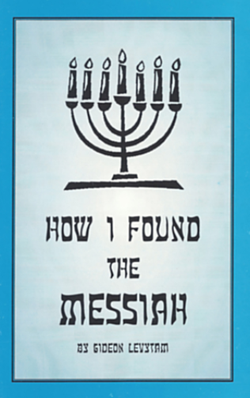
Follow Gideon Levytam's journey and discover how he was led by God, through a series of exciting circumstances, to find the One his people are still waiting for.
Past Episodes

Featured Offer
Follow Gideon Levytam's journey and discover how he was led by God, through a series of exciting circumstances, to find the One his people are still waiting for.
About Holy Scriptures and Israel
As time passed by, the Lord Yeshua took dear brother John Van Stormbroek to himself. The ministry of Holy Scriptures and Israel continued with additional development. In the early 1990’s, a weekly morning Bible class began which brother Gideon Levytam led regularly in the City of Toronto. This weekly open Bible class was held in the Willowdale assembly meeting hall. Eventually, a second mid-week evening Bible class was added. In April 2002, the need for an additional outreach Bible teaching meeting arose. We begun a Saturday (Shabbat) ministry meeting in which a systematic teaching of God’s word is presented to all who attend. Together we learn God’s Word, pray for each need and the salvation of Israel, and sing songs of worship unto our God, praising Him and our Lord Yeshua the Messiah.
In Mid 2004 we started to air on Joy 1250 Radio station a 15 minute Bible teaching program called "The Holy Scriptures and Israel" with Gideon Levytam. The broadcast teaches God’s word from a Hebrew Messianic perspective and has proved to be a blessing to many. It's now aired seven days a week. Our prayer is that many more of our Israeli people will have a clear understanding of who Yeshua is, why we all need him, and come to know him as their Lord and Messiah.
About Gideon Levytam
Contact Holy Scriptures and Israel with Gideon Levytam
426 Simcoe Street
Niagara-on-The-Lake
Ontario L0S 1J0
Canada
(905) 325-1234