
Acts 20:1-16, Part 1


Paul’s Ministry on the Way to Jerusalem Part 1
Guest (Male): Shalom! Holy Scriptures and Israel is a ministry designed to share with the Jewish people the good news of the Lord Jesus, Yeshua the Messiah, and to instruct Christians on the Jewish roots of their faith. And now, teaching God's word from a Hebrew Messianic perspective, here is Gideon Levytam.
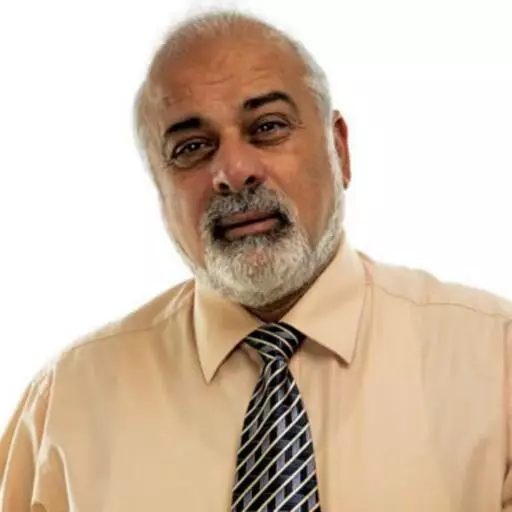
Gideon Levytam: Let's please open our Bibles this meeting to the book of Acts, and this time we are going to read Acts chapter 20. In Hebrew, we call it Ma'asei Shlichim, the acts of the Holy Spirit of God through the apostles. Acts chapter 20, and let me read for this session at least, to see how the Lord will lead us, the first 16 verses of this chapter. Paul is on his third missionary journey, and we are reading right now from verse one in Acts chapter 20.
And we read, "And after the uproar was ceased, Paul called unto him the disciples and embraced them and departed for to go into Macedonia. And when he had gone over those parts and had given them much exhortation, he came into Greece and there abode three months. And when the Jews laid wait for him, as he was about to sail into Syria, he purposed to return through Macedonia. And there accompanied him into Asia Sopater of Berea, and of the Thessalonians, Aristarchus and Secundus, and Gaius of Derbe and Timothy, and of Asia, Tychicus and Trophimus. These going before tarried for us at Troas.
And we sailed away from Philippi after the days of unleavened bread and came unto them to Troas in five days where we abode seven days. And upon the first day of the week, when the disciples came together to break bread, Paul preached unto them, ready to depart on the morrow, and continued his speech until midnight. And there were many lights in the upper chamber where they were gathered together. And there sat in a window a certain young man named Eutychus, being fallen into a deep sleep.
And as Paul was long preaching, he sunk down with sleep and fell down from the third loft and was taken up dead. And Paul went down and fell on him and embracing him said, 'Trouble not yourselves, for his life is in him.' When he therefore was come up again and had broken bread and eaten and talked a long while, even till break of day, so he departed. And they brought the young man alive and were not a little comforted.
And we went before to ship and sailed unto Assos, there intending to take in Paul, for so had he appointed, minding himself to go afoot. And when he met with us at Assos, we took him in and came to Mitylene. And we sailed thence and came the next day over against Chios, and the next day we arrived at Samos and tarried at Trogyllium, and the next day we came to Miletus. For Paul had determined to sail by Ephesus, because he would not spend the time in Asia, for he hasted, if it were possible for him to be at Jerusalem the day of Pentecost," or the day of Shavuot.
I'll stop here with verse 16. There are so many names here of the cities that he was traveling through that were very difficult names to pronounce, as well as many of the names of his companions that traveled with Sha'ul, with Paul, as he was traveling on his third missionary journey. Now, as we are studying the book of Acts, beloved brothers and sisters, we learn that the progress in which the apostle Paul was being led by the Spirit of God in serving and ministering among the local assemblies that the Lord used him to establish in many towns, in many cities, in various areas around Europe and in Asia Minor, has the Lord used this amazing man of God, Sha'ul the apostle Paul.
Now, in our last ministry meeting, we just finished in chapter 19 the whole ministry of the apostle Paul at Ephesus. It was amazing how much he had served the people, the Ephesians. He was there two years and three months and even longer, up to three years in the city of Ephesus. And he, number one, preached to our own brethren, the Jewish people, in a synagogue and told them concerning the Messiah. But in addition to that, he spoke to the Greeks, to the Gentiles, and led them to the knowledge of our Lord Jesus the Messiah, and every day he was teaching and he was ministering the word of God.
And if you remember, there was this man who was making idols at Ephesus, and he was not appreciative of the fact that the apostle Paul was ministering that there are no idols and that there is only one and living God, and the person of Yeshua the Messiah is the answer for sins. So there was this man who was a maker of all sorts of idols, he opposed the apostle Paul, he spoke against him, and if you remember he says, "This Paul," chapter 19 and verse 26, "has persuaded and turned away much people saying that there be no gods which are made with hands."
And he was so offended because Paul preached the message of the messiahship of Yeshua and the resurrection of the Messiah that he had stirred up all the craftsmen, those who were building little gods, making idols, and they all had a riot in the city of Ephesus. And we read about this in the last verses of the book of Acts chapter 19. The man's name was Demetrius, and he was the one that was a craftsman, he was the one that was making little idols for the people of Ephesus.
Well, look how we begin now in chapter 20, and remember we are on the third missionary journey of the apostle Paul. He is now going to finalize his third missionary journey before he is going to be captured, and then he is going to be taken to Rome and ultimately he will lose his life for the name of Yeshua the Messiah. And look and see now verse one, that Paul now is departing from Ephesus. We are told in verse one, "After the uproar was ceased of chapter 19 verse 23, Paul called unto him the disciples and embraced them and departed for to go into Macedonia."
Look at the beautiful attitude of this man. He has to leave. He did not enter into the theater because he would have lost his life there in Ephesus, but he had to leave. But when he leaves, he leaves with his heart yearning for his brethren. So he gathers them together, and we find that he called unto him the disciples. Apparently, there was now a growing assembly, congregation, church in the local city of Ephesus. There were disciples there. He gathered them all together and look at the affection that he had. And he began to embrace them. He hugged them.
And I'm sure he has been so heavy because he was going to leave the believers at Ephesus where he spent such a long time in ministering the word of God. And so he is embracing them, and then he departed to go to Macedonia. Now you remember Macedonia is where we have the city of Philippi. And actually we read of Macedonia in chapter 16 where the apostle Paul already had the Macedonian call. It says in verse nine and Paul saw a vision about a man in Macedonia that prayed and says, "Come over to Macedonia and help us." And you remember the first city in Macedonia was the city of Philippi, the city of the Roman colony there.
And so we now see that the apostle Paul is intending in his third missionary journey to continue to come to Macedonia to visit again Philippi, and then continuing on because after Philippi we have chapter 17, we have Corinth, and those are cities that he has already ministered the word and established the local assembly there. So he is intending to go to Macedonia. And notice that the second thing that we find out as he's traveling now in verse two, Paul exhorting the believers in Macedonia.
"When he had gone over those parts and had given them much exhortation, he came into the country of Greece." So as he was traveling, he was exhorting the believers. And exhorting does not mean always telling people how wrong they are, but exhortation speaks of the necessity of building the believers up, helping them in their most holy faith, establishing them in the truth of the word of God. So exhortation is, "Brothers and sisters," as he was probably speaking to them, "listen, you have to be focused on the person of the Lord. You carry on in your walk with Yeshua the Messiah."
He was exhorting them to continue on in their faith and a walk with the Lord because there is many pitfalls and there is much opposition, those who reject the Messiah who seek to oppose our walk with our Lord Yeshua the Messiah. So exhortation was very important. So as the apostle Paul was going through these Macedonia, he exhorted the brothers and sisters in Macedonia until finally he arrived into Greece. At the end of verse two we find the apostle now arriving to Greece.
And we remember Greece because in Greece he was already there when he went to Athens. If you remember he was already had a visit to Greece in Acts chapter 17 and Acts chapter 18, Athens and Corinth. This was in Greece. So here we find him now arriving to Greece in the end of verse two, and apparently, brothers and sisters, he remained there for three whole months. Most likely he was in the city of Corinth for three months, again ministering the word of God.
And I want you to notice something that he had experienced as a Hebrew man, as a Jewish man, as an Israeli man. He wanted to go to the city of Yerushalayim for the Passover, but apparently he experienced danger on the way. And so in verse three we read that he abode there for three months, and when the Jews laid wait for him, as he was about to sail into Syria, he purposed to return through Macedonia. Now apparently, his Jewish brethren, those who have not yet accepted the Messiah, they were already planning to oppose him. They were plotting against him.
And remember, he was the very same one who was plotting against other Jewish believers who have come to trust in a Messiah long before he became a believer in Yeshua the Messiah. You remember he took from the priest's letters and he went to Damascus and he brought those from the synagogue to Jerusalem because he wanted to oppose the people who follow that way of Yeshua the Messiah. Now he himself experiencing the very same thing that he had imposed upon others before he became a believer in Yeshua the Messiah.
So you can see, brothers and sisters, in verse three that for three months he ministered in Corinth, we find out there was a plot to kill him. Imagine that people were going to such length, as it says here, they laid wait for him as he was about to sail to Syria. What do you mean to sail? Because there were many of our Jewish people who were taking ships and sailing to Israel in order to celebrate the feasts. And they knew that he would be there, and they were plotting, who knows, maybe right when he is at sea to throw him overseas because he had faith in Yeshua the Messiah and proclaimed that he was Israel's Messiah, and many of our own people rejected that message and they began to oppose even their own Jewish people such as the apostle Paul.
And so we can see that he experiencing what he himself prior to his faith in the Messiah have done by rejecting those that believed that Yeshua was the Messiah. Well, he now changed his plan. He planned to go to Jerusalem to celebrate Pesach, but he changed his plan because he heard of the plot that was against him. So what does he do? He purposed to return through Macedonia. So he was now going back through Macedonia instead of going to the city of Jerusalem.
In verse four and five, brothers and sisters, we learn about the companions of the apostle Paul in the ministry. Beautiful to see a person become part of the body of Christ, the body of Messiah, and here you see a companion that had fellowship with Sha'ul, with Paul. They ministered with him. Notice that we read about them in verse four, "There accompanied him into Asia Sopater from Berea, and there was Aristarchus and Secundus, two other individuals from the city of Thessalonica. Then we have Gaius that came from Derbe, and then we have Timothy as well."
And you remember Timothy was Jewish, he had to be circumcised. So you can see Jews and Gentiles part of the body of Messiah united together in a ministry of the Lord. And then we find out of Asia, we have Tychicus and Trophimus, another two who came. So you have various individuals and Sha'ul, Paul, all together serving our Lord Yeshua the Messiah. And the reason, beloved brothers and sisters, that they accompanied him is because many of the Gentile believers in Asia Minor have seen the Jewish believers in Jerusalem that they became poor because of their faith in the Messiah, they have lost so much and they were providing perhaps money and ministry for the saints in the city of Jerusalem.
I want you to go to Romans chapter 15 for a moment to read verse 25. The apostle Paul writing to the Romans and he said to them, "But now I go to Jerusalem to minister unto the saints. For it has pleased them of Macedonia and Achaia to make a certain contribution for the poor saints which are at Jerusalem." You see, they were going together to bring with them the provision or the contribution for the poor saints which were in Jerusalem. So it's so nice to see that the Gentile believers saw the need of the Jewish believers and they have collected the contribution for the saints, and together they were traveling to bring these funds in the city of Yerushalayim.
It says in verse 27 of Romans chapter 15, "And it has pleased them verily and their debtors they are. For if the Gentiles have been made partakers of their spiritual things, their duty is also to minister unto them in carnal things." In other words, the apostle Paul had taught the Gentile saints to recognize that they have a responsibility towards the nation of Israel and the Jewish saints, and they really fulfilled the responsibility when they were bringing the ministry to the Jewish believers in the city of Jerusalem. And so here we have the names of all of those who were intending to travel with him to the city of Yerushalayim.
And then notice now verse five, "These going before tarried for us at Troas." Now I want you to notice the word 'us' here in verse five. We read again the word 'us' here, why? Because Luke the doctor—some believe that he was not Hebrew, others believe that he was a Hebrew, was a Jewish believer—but now the word 'us' is mentioned again because Luke the doctor, the physician, is joining the believers in their traveling towards the city of Jerusalem.
And now he is no longer writing 'they', 'he', he is writing 'us' and 'we'. From here on you will notice the word 'us' and 'we' mentioned quite a lot because now Luke the doctor, the physician, is joining Paul, Sha'ul and the rest of those companions of his for the ministry. And so you notice, and I think the next verses are extremely interesting verses, in verses six to 12. After we see Paul visit Macedonia and Greece, verses one to five, now verses six to 12 Paul is visiting in Troas.
And now, brothers and sisters, listen to what we learn here in these verses. First of all, in verse six we see Paul's arrival to Troas. Again, we read the word 'we'. "And we sailed away from Philippi after the days of unleavened bread." This is Chag HaMatzot, this is the feast of Passover because Paul did not arrive to Jerusalem to celebrate the Passover, so he had to forbear to wait a bit longer. He is going to get there a little bit later.
So we read that after the days of unleavened bread, he came unto them to Troas in five days where we abode for seven days. So now he left Philippi and now he arrived to the place that is called Troas. And there something very interesting has happened. The story about Troas is very intriguing because we learn a few lessons here about the events that happened in the local assembly, the local church in the city that is called Troas.
First of all, you notice now in the first part of verse seven, there was the local gathering of the assembly at Troas. It says, "And upon the first day of the week, when the disciples came together to break bread." Now I want to pause here for a moment. Over the church age, we are now 2,000 years of church history since the Messiah died, was buried, rose again, and the Holy Spirit came in Acts chapter two to establish what is known to be the ecclesia, the church. In the earlier part of the church age, we are talking about 57, 58 AD, this is very early in the church history.
We notice the time in which the assembly, the believers, were gathering together. Notice that this is the first time that we find it in the book of Acts, when the believers were gathered together upon the first day of the week when the disciples came together to break bread. We learn here a very important principle. Here when the church, the body of Messiah was built, we learn from the early apostles that now the believers would gather together on what is known to be the resurrection day.
Why the first day of the week? Because the first day of the week is the day in which Yeshua, Jesus, our Lord and our Messiah, rose from among the dead. You remember he was placed in the tomb, he was for three days and three nights in the grave, and on the third day he rose from among the dead. And this suggests a new beginning, a new start. Now, why it is so important to understand that? Because the years in which we are part of the church for a little time, some of us are saved five years, 10 years, 20 years, 30 years, 40 years, if you notice, believers over the years are maybe arguing or debate or don't have necessarily the same view about when the church, the assembly, the congregation, the body of Messiah, as a collective gathering, should gather together.
And some say we should meet on Shabbat on Saturday, others say we should meet on Sunday, and all these things, and there's conflicts over the years and really that brought a lot of divisions among the people of God. Now, right or wrong or how one feel or other feel is one thing, but it's always, beloved brothers and sisters, good to be basing what we do on the principle that are taught for us in the word of God. We don't want to have our feeling placed into it, even not our desire placed into it, but we want to always take the principle that we have in the word of God.
And this is important because you remember, and I want you for a moment to turn with me to Exodus chapter 31 please. I want you to notice about the Shabbat day that God had given our people Israel, and I want you to see that when God gave our forefathers and the nation of Israel the seventh day to keep as a day that belong to God and that they are to live and to use the day to rest.
Featured Offer
Follow Gideon Levytam's journey and discover how he was led by God, through a series of exciting circumstances, to find the One his people are still waiting for.
Past Episodes

Featured Offer
Follow Gideon Levytam's journey and discover how he was led by God, through a series of exciting circumstances, to find the One his people are still waiting for.
About Holy Scriptures and Israel
As time passed by, the Lord Yeshua took dear brother John Van Stormbroek to himself. The ministry of Holy Scriptures and Israel continued with additional development. In the early 1990’s, a weekly morning Bible class began which brother Gideon Levytam led regularly in the City of Toronto. This weekly open Bible class was held in the Willowdale assembly meeting hall. Eventually, a second mid-week evening Bible class was added. In April 2002, the need for an additional outreach Bible teaching meeting arose. We begun a Saturday (Shabbat) ministry meeting in which a systematic teaching of God’s word is presented to all who attend. Together we learn God’s Word, pray for each need and the salvation of Israel, and sing songs of worship unto our God, praising Him and our Lord Yeshua the Messiah.
In Mid 2004 we started to air on Joy 1250 Radio station a 15 minute Bible teaching program called "The Holy Scriptures and Israel" with Gideon Levytam. The broadcast teaches God’s word from a Hebrew Messianic perspective and has proved to be a blessing to many. It's now aired seven days a week. Our prayer is that many more of our Israeli people will have a clear understanding of who Yeshua is, why we all need him, and come to know him as their Lord and Messiah.
About Gideon Levytam
Contact Holy Scriptures and Israel with Gideon Levytam
426 Simcoe Street
Niagara-on-The-Lake
Ontario L0S 1J0
Canada
(905) 325-1234