

Acts 18:23 to 19:7, Part 3


The Preaching of Paul in Ephesus Part 3
Narrator: Shalom. Holy Scriptures and Israel is a ministry designed to share with the Jewish people the good news of the Lord Jesus Yeshua the Messiah and to instruct Christians on the Jewish roots of their faith. And now, teaching God's word from a Hebrew Messianic perspective, here is Gideon Levytam.
Gideon Levytam: The study of Acts chapter 18. But secondly, in verse 28, he mightily convinced the Jewish people in the synagogue, and he publicly showed by the scripture that Yeshua was the Messiah.
You see what he did a twofold ministry in a sense. He, first of all, had ministered to the brethren, the believers through grace, and secondly, he must have gone to the synagogue to his own brethren in the flesh, the Jewish non-believers yet, and to them he told them every Shabbat and maybe from door to door, maybe in personal contact. He told them, showing to them by the word of God, by the scripture that Yeshua was the Anointed, the Messiah, that he was the Christ, the Mashiach.
And so we see how this interesting man by the name of Apollos came to faith in the Messiah, became part of the body of Christ, and then went to Corinth, and was used mightily in the city of Corinth. You know, later on, when the Apostle Paul wrote the letters to Corinth, I want you to notice what he wrote to the Corinthian. Could you please turn to 1 Corinthians chapter 1.
The Apostle Paul wrote to the Corinthians. You can see that Apollos had a great ministry in Corinth because in 1 Corinthians chapter 1 and verse 12 we read, it says, "Now this I say, that every one of you say, 'I am of Paul, or I am of Apollos, or I am of Cephas,' this is Peter, 'or I am of the Messiah.'"
You see there was a division at Corinth apparently, and every one of them apparently they appreciated Paul, but they also appreciated Apollos. And Paul is saying, "Why is it that you are so divided? One say I am of Paul, another one I am of Apollos, another one says I am of Peter, and then another one says, 'I am of the Messiah.'"
By the way, all four of them were Jewish men, whether Paul, whether Apollos, whether Peter, or whether Yeshua the Messiah. All came from among the nation of Israel. And the assembly there was so divided in that time because of the friction they had had. Some says, "I belong to Paul. I belong to Apollos. I belong to Peter." "Oh, no, I belong to Christ. I belong to the Messiah." And there was a division among the believers there, and Paul was writing to them because he understood that some of them were following this man by the name of Apollos.
Look at 1 Corinthians chapter 3, another verse that you need to be read here. 1 Corinthians chapter 3 and verse 5. Paul said to them, "Who is Paul? Or who is Apollos? But servants by whom you believe, even as the Lord gave to every man." Verse 6, "I have planted, Apollos has watered, but God gave the increase."
You see, Paul was used among the Corinthian, but apparently Apollos as well was used in the city of Corinth. And so some of them looked so highly to him that they, in the divisions, there some say I'm following Paul, or I'm following Apollos, or I'm following Peter. And Paul warned them. He says, "Who is Apollos? Who is Paul? I saw Apollos watered, but God gave us the increase."
So, the thing that we learn here that Apollos was used by our Lord Yeshua the Messiah in the city of Corinth, and he was very much apparently appreciated. So, verses 24 to 28, concluding Acts chapter 18, we see the ministry of Apollos, and this interesting man, a Jewish man by the name of Apollos, who ultimately became a servant of Yeshua the Messiah.
Well, let's move on to the first seven verses of Acts chapter 19 now, and here's another interesting situation that need to be talked about. And next we find here in verses 1 to 7, that we have some disciples of John the Baptist that Paul himself now found at the city of Ephesus.
Because it says in verse 1, "And it came to pass that while Apollos was at Corinth," you see, so Apollos went to Corinth, "Paul now having passed through the upper coasts, came to Ephesus and finding certain disciples." You notice what happened here? Apollos went to Corinth, and Paul came to Ephesus. Apollos went to minister at Corinth, and Paul now went to minister at Ephesus.
And it was at Ephesus that Apollos needed to learn more perfectly things concerning our Lord Jesus Yeshua the Messiah. And so Paul had arrived to Ephesus, and what does he see? He see a disciples, we find a certain disciples. You know, disciples in Hebrew mean Talmid. Talmid is like a student or a follower of the things of the Lord.
In this case, those were disciples that we will find out a little bit later in the next verses, that those were actually disciples of John the Baptist, very similar to Apollos. So now when Paul arrived to Ephesus he found those disciples, and he immediately approached them, and he began to speak with them, and Paul asked them a very interesting question.
And he said to them, "Have you received the Holy Spirit when you have believed?" Apparently, they believed the message of John as well. And they even heard somewhat certain things concerning the coming Messiah. Here are those disciples at Ephesus, and Paul asking them, "Have you received the Holy Spirit when you believed?" The King James used the word since here, instead of when, which is really not the right word to use here. It actually should say, "Have you received the Holy Spirit when you believed, not since you believe."
And I tell you why it is important because many people because of this word since you believe, they suggest that you can receive the Holy Spirit of God again later on, and again later on, and again later on. In other words, the Spirit of God can come upon you again and again. And really, the Apostle Paul is really teaching us here something very important. When a person has accepted the Lord Jesus the Messiah, at that same time, a person received the Holy Spirit of God. There is no delay. And if a person has not received the Holy Spirit of God, that person really does not belong to the Lord. He's not saved. She's not saved.
And so he's asking those disciples, "Have you received the Ruach HaKodesh, the Holy Spirit, when you believed?" And you notice what they said to him in verse 2? They said unto him, "We have not so much as even heard whether there be the Holy Spirit." Now, what do they mean by that? If remember, they were Jewish. They were followers of Yochanan HaMatbil, John the Baptist. And their understanding was again limited, just the same like Apollos understanding was limited.
So what John the Baptist was preaching, they understood with his preaching, but they didn't quite, maybe they didn't even hear him speaking concerning the coming of the Holy Spirit of God. Now mind you, if you remember in Matthew chapter 3, he was speaking about the Messiah, and he said that he will baptize you with the Holy Spirit. He was speaking about that. But apparently, these disciples did not even, according to what they say, "We have not even heard that there was any Holy Spirit."
Now, it doesn't mean that they didn't know from an Old Testament scripture that the Holy Spirit was existing, that the Holy Spirit of God existing, because you read it in Genesis chapter 1 already speaking about that the Holy Spirit was hovering over the land, over the whole earth. But they didn't understand what you and I understand today from the complete canon of scripture, that when a person become a believer in Yeshua the Messiah, the Holy Spirit of God come to indwell a believer in Yeshua the Messiah, to take residence in her or in him. But they didn't understand that. They didn't even hear that.
But they were disciples of John the Baptist, and they did actually not receive yet the Holy Spirit of God. So you might be a disciple who are following a certain school of teaching, which was really of God, John the Baptist was really of God, but they were not yet in the full knowledge of the gospel, the way you and I today know it in this time today, because we have the complete canon of scripture.
So, they say, "We didn't even hear about the Holy Spirit of God." And so the Apostle Paul asked them a second question in verse 3. He said to them, "Unto what then were you baptized?" And they said unto him, "Unto John's baptism." You see, that's how we know that they were the disciples of John because they were baptized. He's speaking about water baptism.
So they have gone to the Jordan River. They were baptized unto his baptism, meaning that they have been confessing their sins as we read in the third chapter of the Gospel of Matthew. They confess the need of the Messiah. They confess the fact that John's message was from God. But the water baptism that they had was not unto the Messiah, in the name of the Father and the Son and the Holy Spirit, but it was unto the presentation of John as he was preparing the way of the coming of the Messiah.
So, they were baptized. And by the way, there are many people who were baptized in that time to various presentations of certain individuals. You know, a gentile who want to become part of the nation of Israel had to be baptized as well. The proselyte baptism at that time. Another baptism is simply mean identifying with a message, identifying with a person, identifying with a call. That's what it means. It is an external action to say, "I identify with a certain message."
And so they have been identified with the message that John the Baptist presented. But they were not believers yet. They were not saved as yet. They were not part of the body of the Messiah because they were not at that time yet full, if you want to call it, fully with the understanding what Yeshua had done, that he became the redeemer. And so they were only having the knowledge of John's baptism. That's the answer that they gave him in verse 3.
So the Apostle Paul now instructs them, and he tells them in verse 4. Paul really explained to them what was the baptism of Yochanan. He said, it then said Paul, "John verily baptized with the baptism of repentance." You see, when John called the Hebrews to come to the Jordan River, he was telling them, "Repent! The Messiah is coming. Get ready for the coming of the Messiah."
By the way, John was the last prophet of the Old Testament. John the Baptist is not part of the church of the assembly. He was the last prophet of Israel to present the Messiah in his first coming. But he never became part of the body of Messiah because he died before the finished work of the Messiah. He died before the church was formed. John is a friend of the bridegroom, but he's not part of the church.
Though he was a great man from among our Jewish people. He was a man that was honored by Yeshua the Messiah. He presented the Messiah in his first coming. And so in a sense, brothers and sisters, you know John, Yochanan is a representative of the Messiah in his first coming, when Elijah gonna present to Israel the Messiah in his second coming. And you can see in both of them, they were an announcers, announcing the coming of the Messiah. Yochanan, the first coming. Eliyahu, the second coming.
But both of them were not part of the assembly of the church, of the heavenly company. And so, you see, Paul needed to explain to those disciples. He says, "John, he baptized the baptism of repentance." And he was saying to the people that they should believe on him which should come after John, that is on the Messiah Yeshua.
He says, "So in other words, it's fine that you have been baptized with John baptism, but John baptism is not yet the full information that you need to know. There is the baptism unto the Lord Yeshua the Messiah in the name of the Father and the Son and the Holy Spirit." This is what is known today as Christian baptism. We would call it in Hebrew as Messiah baptism, baptizing unto the name of Yeshua the Messiah in the name of the Father and the Son and the Holy Spirit of God.
So, Paul needed to explain this to them. Brothers and sisters, so remember, they did not have the Spirit of God indwelling them as yet. They were not part of the body of Messiah as yet, even though they were disciples of John. They have heard a lot about the coming Messiah. They have been baptized unto repentance, unto John, but they were not yet part of the what you call the body of Messiah.
There is a verse in Romans 8 and verse 9 that says this, and I want to read this to you. Romans 8 and verse 9 says, "You are not in the flesh, but in the spirit. Since so be that the Spirit of God dwells in you. Now if any man have not the Spirit of God, he is none of his." And let me repeat it, if any man have not the Spirit of Christ, the Spirit of the Messiah, he does not belong to him.
So even though they were baptized unto John's baptism, they were still not part of the company that is called the church. In fact, if we would call it the New Testament way, they were not yet saved through the work of the Messiah for them on the tree. So now let me conclude here in the last verses here that we have read, verses 5, 6, and 7.
And so in verse 5, look at the response of the disciples to Shaul, to Paul's testimony. They said unto him, "When they heard that," in verse 5, "they were baptized in the name of the Lord Yeshua." Now that they have heard the message from Shaul Paul concerning the person of the Lord Jesus the Messiah, they understood it, and they submitted to it.
Then now not only that they were baptized unto repentance in John's baptism, now they have been baptized, if you call it again, but this time in the name of our Lord Yeshua the Messiah. By the way, somebody pointed it out and I thought it was very interesting that all the Apostles, who were the one who gave us the truth concerning the church age, even the Apostles had been baptized unto John baptism first.
Remember all those Hebrew Apostles, they were living in the land of Israel, and they were part of the Jewish nation, and then they became followers of Yeshua, but they, in the beginning, they also identified with the message of John the Baptist. Because we read there in Acts chapter 1, we read concerning those that will be Apostles, it's really tells us, it does tell us that they had beginning from the baptism of John. Those that will become an Apostle, he had to had, the start of it was the beginning of the baptism of John.
One must be part of the Apostles. Notice verse 22, "beginning from the baptism of John unto that same day that he," this is Yeshua, "was taken up from us, must one be ordained to be a witness with us of the resurrection of the Messiah." So, even the Apostles who follow the Messiah and became the foundation of the church, they have been baptized by John's baptism, but that was not enough. Because John's baptism was not what is known to be Messiah baptism, Christian baptism. This is identifying with the finished work of our Lord Yeshua the Messiah.
So finally, brothers and sisters, they were baptized in the name of the Lord Jesus. You know, some people now, there are various groups that have evolved over this verse 5, that they say, "Well, you have to be only baptized in the name of the Lord Jesus." So when they do baptism, they say, "I baptize you in the name of the Lord Jesus." And they say, "You cannot be baptized with any other words, you cannot use, only I baptize you in the name of the Lord Jesus."
But they forget that at the end of the Gospel of Matthew, when Yeshua gave instruction to the Apostles, the disciples, he told them at the end of Matthew chapter 28, he says to them, "When you go," he says, "Go ye therefore and teach all nations, baptizing them in the name," singular, "of the Father, Abba, of the Son, Ben, and of the Holy Spirit, Ruach HaKodesh." In other words, "You baptize them in the name of the Father and the Son and the Holy Spirit."
And so many of the leaders who are doing baptism today really use both of these statements. They say, "I baptize you unto the name of our Lord Jesus the Messiah, in the name of the Father, and the Son, and the Holy Spirit." And I think this is a much healthier formula, rather than to just say, "No, we cannot do it through any other name, just to the name of the Lord Jesus," but we really have to take the instruction that Yeshua taught us in Matthew chapter 28 and the last few verses of that Gospel.
Well, to conclude here, brothers and sisters, we find out in verse 6 that now they can receive the Holy Spirit of God. Now that they have accepted Yeshua, and they understood what he did, and now they became believers in Yeshua the Messiah, notice verse 6. "When Paul laid his hands upon them, the Holy Spirit came on them. And they spoke with tongues and they prophesied."
Notice that, brothers and sisters. Now that they became believers, now the Holy Spirit of God came and took them and placed them into the body of Messiah. Took residence in them. And not only that, but also put them into the body of Messiah. And like we read in 1 Corinthians 12 verse 13, "By one Spirit we have all been baptized into one body," this is the body of Messiah. And this is important, beloved brothers and sisters. No one who has not the Holy Spirit of God in him or her can be called a child of God.
Without the Holy Spirit of God, we are not part of the family of God. We are not saved because the Holy Spirit of God, the divine person, gives us a new life, a new nature when we have accepted the person and the work of our Lord Jesus, who died for us on the tree and made us a redeemed people, a forgiven people. And so you can see, now Paul laying the hands speaks of identification.
Now there was nothing special with the hand of the Apostle Paul, just the same there was nothing special with the hand of the Apostle Peter. It's not the hand. It is the identification with what they believed. And so Paul now could identify with them and as an Apostle of the Lord now by laying the hand and identify with their belief in the Lord Jesus the Messiah, the Holy Spirit of God came and took residence in those people that were Jewish people who now believe in our Lord Yeshua the Messiah.
By the way, you notice here that they began to speak with tongues and to prophesy. Now let's remember, brothers and sisters, that speaking in tongues, and I hope I'm not hurting anybody here. Speaking in tongues, it's speaking in a language that is known to men today. It's not gibberish, it's not nonsense. It is a real language that a person will recognize the message that the believers have proclaimed.
So in Acts chapter 2, the Jewish believers have spoken languages that their brethren heard the wonderful works of God. In Acts chapter 8, even though we don't read of the speaking in tongues, but the Samaritans accepted the Messiah and they received the Holy Spirit of God. And one of the evidence of the fact that they became part of the body of Messiah, we don't read it there, but they also, we believe and understand, spoke in tongues.
In Acts chapter 10, in the house of Cornelius, when the Gentiles became part of the assembly, when Peter was speaking, the Holy Spirit of God came and they also spoke in languages, in tongues, in languages that was understood by the hearers. And here in chapter 19, we find out that those individuals, disciples of John, have also received the Holy Spirit of God after they believed, and they spoke in tongues. Not only that, they prophesied. They spoke forth the word of God. So people can benefit from the message that they were proclaiming.
And finally, the verse 7, how many of them were? They were not hundreds and thousands. What the Bible tells us, how many of them were here? Only about 12 of them. Those 12 were disciples of John the Baptist, who had needed to learn the truth concerning the person of the Lord Jesus the Messiah, and once they acknowledge him, they have been baptized. They receive the Spirit of God, and now they are part of the body of Messiah.
And so, with this, we conclude today in our ministry today, chapter 19 of Acts in verse 7. And Lord willing, as we move on to the rest of the chapter, we will find Paul's ministry in the city of Ephesus and the conflict that he had in the city of Ephesus. We'll leave this Lord willing to the next ministry meeting. Can we say amen to that?
Narrator: You have been listening to the Holy Scriptures and Israel with Gideon Levytam. Gideon teaches God's word from a Hebrew Messianic perspective. For more information about this ministry, write to Holy Scriptures and Israel, Box 1411, Niagara-on-the-Lake, Ontario, L0S 1J0, or visit our website at holyscripturesandisrael.com.
You are also invited to Gideon's weekly Bible teaching on Fridays at 11:00 AM and 7:00 PM, and Saturdays at 1:00 PM, at Willowdale Christian Assembly Hall, 28 Martin Ross Avenue in Toronto. Holy Scriptures and Israel is made possible by your prayers and financial support. If you would like to support the program, visit holyscripturesandisrael.com. God bless you. Shalom, Shalom.
Featured Offer
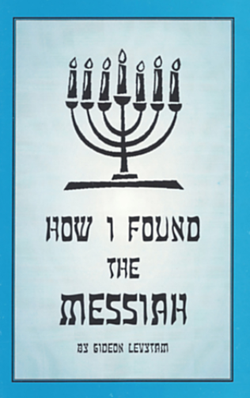
Follow Gideon Levytam's journey and discover how he was led by God, through a series of exciting circumstances, to find the One his people are still waiting for.
Past Episodes

Featured Offer
Follow Gideon Levytam's journey and discover how he was led by God, through a series of exciting circumstances, to find the One his people are still waiting for.
About Holy Scriptures and Israel
As time passed by, the Lord Yeshua took dear brother John Van Stormbroek to himself. The ministry of Holy Scriptures and Israel continued with additional development. In the early 1990’s, a weekly morning Bible class began which brother Gideon Levytam led regularly in the City of Toronto. This weekly open Bible class was held in the Willowdale assembly meeting hall. Eventually, a second mid-week evening Bible class was added. In April 2002, the need for an additional outreach Bible teaching meeting arose. We begun a Saturday (Shabbat) ministry meeting in which a systematic teaching of God’s word is presented to all who attend. Together we learn God’s Word, pray for each need and the salvation of Israel, and sing songs of worship unto our God, praising Him and our Lord Yeshua the Messiah.
In Mid 2004 we started to air on Joy 1250 Radio station a 15 minute Bible teaching program called "The Holy Scriptures and Israel" with Gideon Levytam. The broadcast teaches God’s word from a Hebrew Messianic perspective and has proved to be a blessing to many. It's now aired seven days a week. Our prayer is that many more of our Israeli people will have a clear understanding of who Yeshua is, why we all need him, and come to know him as their Lord and Messiah.
About Gideon Levytam
Contact Holy Scriptures and Israel with Gideon Levytam
426 Simcoe Street
Niagara-on-The-Lake
Ontario L0S 1J0
Canada
(905) 325-1234