

Acts 18:1-22, Part 2


Paul’s Preaching in Corinth Part 2
Guest (Male): Shalom! Holy Scriptures and Israel is a ministry designed to share with the Jewish people the good news of the Lord Jesus, Yeshua the Messiah, and to instruct Christians on the Jewish roots of their faith. And now, teaching God's word from a Hebrew Messianic perspective, here is Gideon Levytam.
Gideon Levytam: The study of Acts chapter 18. Now of course as time went on they couldn't continue to do their local regular job because they were commended to the Lord's work and therefore they needed to carry on in the Lord's work so they were supported by the saints. But here we can see the Apostle Paul with Aquila and Priscilla together building tents in order to provide for their livelihood but they continue on in the preaching of the message of the Gospel.
The Apostle Paul was this kind of a man. He took care of himself and we read in 1st Corinthians 4 and in 1st Thessalonians 2 that he didn't press himself on people on the Corinthians or the Thessalonians. He was working in order to be able to take care of himself. But later on he taught in 1st Corinthians chapter 9 and 2nd Corinthians chapter 11 that there was a responsibility of the saints to take care of the person who served the Lord.
So here you can see the two aspects of the Apostle Paul in his ministry. On the one hand he worked physically and took care of himself, on the other hand later on as he was going further in the ministry of the Lord, the assemblies, the church, the believers have taken care and provided for the Apostle Paul. So here the first three verses we find first of all he arrived to Corinth, secondly he met this interesting Jewish couple and he served with them there in the city of Corinth.
Then we find in verse 4 that the Apostle Paul did what he customarily did. The first thing when he arrived to a city he is going to the synagogue of his own people. He reasoned in the synagogue in Beit HaKnesset, the synagogue, every Shabbat. He was in the city of Corinth, he went to the synagogue. And what does he do in the synagogue? He's persuading through the word of God, as it says in verse 4, both Jewish people and the Greeks. These were proselytes or God-fearers, Greeks who came to the synagogue.
They believed in the God of Israel but they were sitting in a synagogue and they needed to hear the message of the word of God. And so can you imagine how wonderful to see that the Apostle Paul, that Sha'ul, is constantly going every Shabbat to the synagogue and he is discussing the scripture with them. You remember in Thessalonica three Shabbat days he told them that Yeshua was the Messiah, His death, His burial, His resurrection. He opened to them the scripture and he unfolded before them the truth concerning the person of the Messiah.
But I want you to notice that he was acting in accordance with the principle that he himself was taught by God in Romans 1 and verse 16. I am not ashamed of the Gospel of the Messiah, it is the power of God unto salvation to everyone that believe, to the Jew first and also to the Greek. And so you can see how the Apostle Paul going to the synagogue and ministering to the people to his own brethren concerning Yeshua the Messiah.
And we too have a responsibility. Oftentimes when we visit various church groups or local assemblies or congregations and you look at the bulletin board and you see missionaries to this country and another missionary to that country and you search a little bit deeper and you say is there any missionary to the Jewish people? And oftentimes, unfortunately, you don't see any missionary to the Jewish people and you ask yourself why? Why is it that there is no missionary to the Jewish people?
And the answer is, well, not always, but the answer is the Jews finished because God gave them the message, they rejected the Messiah and therefore now God is dealing with the nations of the world. And the Apostle Paul teaches us this principle, no, there is a necessity to share with the Jewish people that the Messiah is Yeshua and that he came. So he was persuading them. Now remember, brothers and sisters, Paul was not an apostle to the circumcision, he was an apostle to the uncircumcision, to the nations.
But in his heart every time he arrived to a town or a city he always went to the synagogue first to speak with his own brethren about Yeshua the Messiah. So look at this, verses 1 to 4, his arrival to Corinth and now his faithfulness in going to the synagogue, sharing the message of the Gospel with his own brothers and sisters. Well, in the next portion of Acts chapter 18, in verses 5 to 8, here the beginning of the opposition.
If you are going to share the Gospel, if you are going to talk about Yeshua in general with everyone but in particular with our own Jewish people, you will experience opposition, especially if you are Jewish and you believe in Yeshua the Messiah. We just recently talked about the fact that there is a ministry here that called Jews for Judaism and their ministry is to divert Jewish believers from following Yeshua the Messiah. And so here look at this, the Apostle Paul coming to the synagogue, ministering the message of the Gospel to his own brethren concerning the person of Yeshua the Messiah.
And so in verse 5 Silas and Timothy came from Macedonia and look at this, Paul was pressed in the spirit to testify to the Jewish people that Yeshua was the Messiah. Now again Silas and Timothy, you remember they were left, he left them earlier in Berea and now they came to him and apparently they came to him and they really encouraged him. They brought along with them, you read it elsewhere in 1st Thessalonians, some gifts from the brethren and then secondly they came and they encouraged him how they spoke about the situation in Thessalonica and they were encouraging him.
So when he was so encouraged by knowing that things are well where Silas and Timothy came from, he was pressed in the spirit to testify, and underline again he is speaking about the Jewish brethren of his. Because he was pressed to testify to the Jews that Yeshua is that Messiah. It's so difficult for our own people to accept the fact that he is the Messiah. There's no other Messiah, there will be no other Messiah. While our families and our people are waiting for the coming of the Messiah, Paul wanted for them to understand that that is the one that was the promised Messiah.
So in verse 5a you see that Paul enjoyed this coming of Silas and Timothy and then in verse 5b he was so much pressed in the spirit to testify. Do you feel sometime like this when you meet somebody on the street or when you sit with somebody in a coffee shop and you can talk about so many things and all of a sudden you feel like the pressure upon your soul to share the message? And you try to find out how to do that and you try to say the right words but you really pressed in the spirit to share concerning the person of the Messiah.
Now mind you you might lose that friend at that time, this friend might not want to talk with you anymore because of the fact that you present the message of the Gospel. But Paul in love for his brethren, his love for the Jewish people and later on to the Gentiles as well, he was so pressed in the necessity to preach the message to his own brethren that Jesus, that Yeshua is the Mashiach, the Messiah. And so as he was presenting this notice that in verse 6 it says that when they opposed themselves, here's the opposition.
He was preaching about Yeshua the Messiah but immediately there was a resistance. There was opposition to the person of the Messiah. So notice that they opposed him and then secondly it says they blasphemed him. In other words they didn't want to hear about the person of Yeshua of Jesus the Messiah. And so the Apostle Paul was really because of the fact that he was so much desiring for them to come to faith, he felt that he fulfilled his responsibility in the preaching of the message to his own brethren.
So when the rejection came, look what he does. He does something that in Jewish biblical history two events or things that he is doing here. Number one he is shaking his raiment, notice that in verse 6, and number two he is stating a statement. He is shaking his raiments and then he stating a statement and look at the statement that he said. He says your blood shall be upon your heads, I'm clean. From henceforth I'm going to go to the Gentiles.
See the Apostle Paul presenting the message every Shabbat to his own brethren and then after there was that rejection he could not force himself upon them. What does he do? Number one he shake his raiment and by shaking the raiment, or shaking the shoes elsewhere we find out in other passages in scripture, it's an expression that you are now responsible. I'm not anymore responsible with your decision concerning the things of God. I'm disassociating myself with your decision against Yeshua the Messiah.
And secondly he said your blood shall be upon your head. In other words I was desiring that you will come to faith in the truth of the word of God but you rejected the message of the Gospel. Therefore now you become responsible for your own decision when you rejected the message of the Gospel. Will you please turn to the Gospel of Mark and you see what Yeshua said already to the early Apostles when they were going to travel from place to place in presenting the Gospel?
Yeshua said in Mark chapter 6 and he said in verse 10 and 11: "Yeshua said unto them, in what place soever ye enter into a house and there abide till ye depart from that place. And whosoever shall not receive you and hear you, when ye depart shake off the dust under your feet for the testimony against them. Verily I say unto you, it shall be more tolerable for Sodom and Gomorrah in that day of judgment than for that city who rejected the message of the Gospel."
You see that was a Jewish custom or Hebraic custom that was done long time ago by the shaking of the feet and the shaking of the garment. What the person really say he is disassociating himself from the decision of the people who refuse to accept the message of the Gospel. We know that Nehemiah did it in chapter 5 when he was speaking to his own people Israel in Nehemiah chapter 5 and verse 13. He mentioned the very same expression of shaking the dust from off his feet from himself, disassociating with their decision against the person of the Messiah.
The second thing that he say here is that your blood shall be upon you, upon your head, I'm clean. He said in other words by sharing the message of the Gospel in love for his own brethren he fulfilled his responsibility in the sharing of the message. But he says now your blood shall be upon you and this exactly what Ezekiel was told to do in the earlier chapter 3. When you read the book of Ezekiel you notice that God was telling Ezekiel concerning the people of Israel when they rejected the message of God they're the one who are going to be facing the judgment of God.
They become responsible for the decision that they make. And you know, brothers and sisters, every person today who reject the offer of salvation through the work of Yeshua the Messiah have actually made a decision to reject the Gospel and by rejecting the Gospel he's responsibility is to deal with the question of his sin. How he gonna deal with it? Judgment will have to come upon a person if he has not a Savior.
And here is what the Apostle Paul say to his own people the brethren and you notice he says from henceforth I will go unto the Gentiles. Now it is interesting if you read the following chapter when he move on to another city the first place he go is to the synagogue again to the Jewish people. Really what he says concerning the city of Corinth, it is a local situation in Corinth he says you rejected the message of the Gospel you Corinthian Jewish people now I'm going to share the message of the Gospel with the Greeks with the non-Jewish people of the city of Corinth.
And so he is telling them now that he is moving on and he gonna share the message with the Gentiles in the city of Corinth. And so now he continue and now notice the effect of his ministry. In verses 7 and 8 we see that there were those who accepted the Lord. One of them was a man who was by the name of Justus in verse 7 and another man was by the name of Crispus. Both of them have accepted Yeshua because it says in verse 7: "He departed thence, he entered into a certain man's house by the name of Justus, one that worshiped God."
Apparently he was a God-fearer. His house apparently was joined unto the synagogue. You see those days when there was homes were built together they were really connected with each other and this man by the name of Justus lived next to the synagogue. And perhaps every Shabbat day he have enter into the synagogue listen to what the rabbis have to say. But when the Apostle Paul came, Sha'ul came, he listened to the voice of the Lord through the words of the Apostle Paul and he became a believer in Yeshua the Messiah.
So Paul apparently went into his house next to the synagogue. But not only Justus was saved, look of another man that God became a believer in Yeshua. This time it was a Jewish man who was the ruler of the synagogue in verse 8, a man by the name of Crispus, the chief ruler of the synagogue, he believed on the Lord with all his house and many of the Corinthians hearing the message and became believers and they were baptized.
You notice that even the ruler of the synagogue a man by the name of Crispus became a believer. You know it gives me such a joy just to read that because sometimes it seem to be in Jewish ministry that there is a hardcore that you seem to never be able to penetrate. But really it's not us who penetrate, it's the spirit of God using the word of God and penetrating the conscience and the hearts of individual. And here we see even a ruler in Hebrew it's called Rosh Beit HaKnesset, the head or the chief, the one who was responsible over the affairs of the synagogue.
He was responsible to make sure that things are being in order there. He heard the message and he became a believer in Yeshua the Messiah in the city of Corinth. So we see again a God-fearer Justus, we see a Jewish man, a leader, a ruler of the synagogue Crispus, both became believers in Yeshua the Messiah. But even more, brothers and sisters, it says in verse 8 that many of the Corinthians heard and believe. Hearing and believe, you know the Bible says in Romans 10 faith cometh by hearing, hearing by the word of God.
It is important when we share the message of the Gospel we gotta tell the Gospel as it is, that Yeshua came from heaven and that he lived the perfect life and that he died becoming a substitute the just for the unjust and that he was buried and placed in a tomb and that he was raised for our justification. That's the Gospel and those that hear it become believers in Yeshua the Messiah. Not all, but those that the Lord is working in their hearts.
So we see in verses 7 and 8 the salvation of Justus and Crispus and many of the Corinthians who believed and were baptized. You notice the order by the way? It's not getting baptized and then believing, but believing and getting baptized. You know so many babies got baptized without really to confess the Messiah. There are many who baptize children who haven't yet made a decision as believers to accept the Messiah. Now the parents love them and want them to be saved but baptism does not save.
What save is faith in the Messiah in his death, burial and resurrection. And then a person is responsible to be Lehitabel to be baptized to go through water baptism and to identify with Yeshua the Messiah. So verses 1 to 4 Paul arrives to Corinth and his ministry there. Verses 5 to 8 Paul experience rejection and opposition at Corinth but there were those who became believers as we have read Justus, Crispus, as well as many of the Corinthians who believed and were baptized.
Well let's move on in this chapter in the next verses, verses 9, 10 and 11. Paul receive some encouragement from the Lord. I don't know about you, brothers and sisters, but in the work of the Lord there is a lot of discouragements. And because there are so many discouragement the Lord from time to time kind of give us a little moment of encouragement, just to give us something to say go on, don't stop. Go for the Lord, carry on even though things are hard there is opposition, but the Lord does not leave us without encouragement.
I know I need that and I know you need that and we know from these verses 9, 10 and 11 that the Apostle Paul needed an encouragement from the Lord. And he knows when to do that, he knows how to do that and he knows who need that. You know we are talking so much about problems that believers experience in their lives but here and there we get glimpse of encouragement. The Lord knows how to do that and he is encouraging his own people.
So here, brothers and sisters, look at this, he tell something to the Apostle Paul in verse first of all 9 and 10 we see the words of comfort and encouragement from the risen Messiah. He say in verse 9: "Then spake the Lord to Paul in a night by a vision." Paul perhaps went to the house of Justus and lay down there at night. He think perhaps of his own people and he says why is it that my own people don't accept Yeshua the Messiah?
I don't understand I read to them the verses from the Bible, I show to them the promises that God had given our people but they reject the Messiah. Why is it God? I don't understand. Perhaps he said like this and he was laying there and then the Lord appears to him in a vision and he is saying to him: "Be not afraid," notice that verse 9, "but speak, hold not thy peace, for I am with thee and no man shall set on thee to hurt thee, for I have much people in this city."
The Apostle Paul is laying down at night and he has this vision and he tells him one of those precious words that many of our forefathers have heard from the God of Israel. The Hebrew word is Al-Tira, be not afraid. And how many times we find that in the word of God. Let me just point to some of them in the Tanakh in the Old Testament if you turn with me to Genesis chapter 15 and the first one that heard this word Al-Tira, be not afraid, was our forefather Abraham.
In Genesis chapter 15 we find out these precious word presented to Abraham our father when God said to him in verse 1: "Abraham, notice that Genesis chapter 15 and verse 1, after these things the word of the Lord came to Avram in a vision and God said to him fear not, Al-Tira, Avram, I am thy shield and thy exceeding great reward." Abraham must have been waiting for the promise of God for a son and then he waits and he waits and he doesn't get the promise.
And God then have to say to him: "Avram, Al-Tira, Abraham, be not afraid, I am gonna be the one that is going to be your exceeding great reward." See Abraham needed to hear that from the Lord like you and I need to hear that from the Lord, like the Apostle Paul need to hear that from the Lord and the Lord the glorified Messiah said to Abraham be not afraid. Now there is so much fear that we experience when we testify the message of the Gospel.
We also talked about this earlier, how many a time we don't share the message of the Gospel with people because we afraid. And because of the opposition we just simply shiver and shrink back because we know what opposition is like and we do not like to experience opposition. Well in this case we find out that the Apostle Paul needed that encouragement and the Lord Jesus gave him that the glorified Messiah gave this to him in verses 9 and 10 of Acts chapter 18.
Abraham have heard that word Al-Tira. Turn with me now to chapter 26 of Genesis and look who is next receive these words from God. Al-Tira, be not afraid. Genesis chapter 26 the second one is not only Abraham but this time we find a man by the name of Isaac, is Abraham's son Isaac. Look at this, verse 24 of Genesis 26: "The Lord appeared unto him, this is Isaac, the same night and he says I am the God of Abraham thy father. And then he said to him: fear not, Al-Tira, for I am with thee and I will bless thee and I will multiply thy seed for my servant Abraham's sake."
Here's another man who have experience this comforting words of be not afraid. Not only Avram but also his son Isaac. And again I would like to suggest brothers and sisters...
Guest (Male): You have been listening to the Holy Scriptures and Israel with Gideon Levytam. Gideon teaches God's word from a Hebrew Messianic perspective. For more information about this ministry, write to Holy Scriptures and Israel, Box 1411, Niagara-on-the-Lake, Ontario, L0S 1J0 or visit our website at holyscripturesandisrael.com.
You are also invited to Gideon's weekly Bible teaching on Fridays at 11 AM and 7 PM and Saturdays at 1 PM at Willowdale Christian Assembly Hall, 28 Martin Ross Avenue in Toronto. Holy Scriptures and Israel is made possible by your prayers and financial support. If you would like to support the program visit holyscripturesandisrael.com. God bless you. Shalom, shalom!
Featured Offer
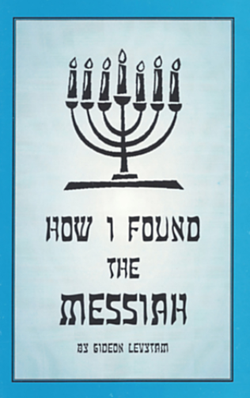
Follow Gideon Levytam's journey and discover how he was led by God, through a series of exciting circumstances, to find the One his people are still waiting for.
Past Episodes

Featured Offer
Follow Gideon Levytam's journey and discover how he was led by God, through a series of exciting circumstances, to find the One his people are still waiting for.
About Holy Scriptures and Israel
As time passed by, the Lord Yeshua took dear brother John Van Stormbroek to himself. The ministry of Holy Scriptures and Israel continued with additional development. In the early 1990’s, a weekly morning Bible class began which brother Gideon Levytam led regularly in the City of Toronto. This weekly open Bible class was held in the Willowdale assembly meeting hall. Eventually, a second mid-week evening Bible class was added. In April 2002, the need for an additional outreach Bible teaching meeting arose. We begun a Saturday (Shabbat) ministry meeting in which a systematic teaching of God’s word is presented to all who attend. Together we learn God’s Word, pray for each need and the salvation of Israel, and sing songs of worship unto our God, praising Him and our Lord Yeshua the Messiah.
In Mid 2004 we started to air on Joy 1250 Radio station a 15 minute Bible teaching program called "The Holy Scriptures and Israel" with Gideon Levytam. The broadcast teaches God’s word from a Hebrew Messianic perspective and has proved to be a blessing to many. It's now aired seven days a week. Our prayer is that many more of our Israeli people will have a clear understanding of who Yeshua is, why we all need him, and come to know him as their Lord and Messiah.
About Gideon Levytam
Contact Holy Scriptures and Israel with Gideon Levytam
426 Simcoe Street
Niagara-on-The-Lake
Ontario L0S 1J0
Canada
(905) 325-1234