
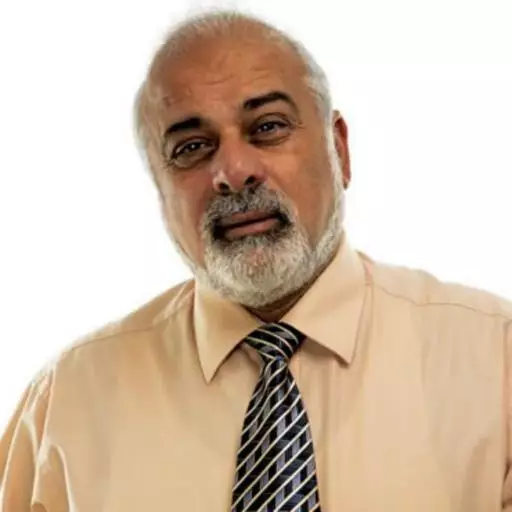
Acts 18:1-22, Part 1


Paul’s Preaching in Corinth Part 1
Intro (Female): Shalom. Holy Scriptures and Israel is a ministry designed to share with the Jewish people the good news of the Lord Jesus Yeshua the Messiah and to instruct Christians on the Jewish roots of their faith. And now, teaching God's word from a Hebrew Messianic perspective, here is Gideon Levytam.
Gideon Levytam: Shabbat Shalom everyone. Nice to be together today. It's good to be under the sound of the word. So today we are going to move along in our study of the book of Acts, and we're going to go into the 18th chapter of the book of Acts. Again, in Hebrew, we call it Ma'asei Shlichim, the Acts of the Apostles, or Ma'asei Ruach HaKodesh, the Acts of the Holy Spirit of God through the apostles.
And we are going to read today the first 22 verses of Acts chapter 18. And these verses lead us to the end of the second missionary journey of the Apostle Paul, of Shaul, who moved along in his life to share the message of the Gospel and to lead many to the knowledge of Yeshua, Jesus, our Messiah.
So, let me read those 22 verses please. And if you have your Bible, please open it to this 18th chapter. And I begin from verse 1. After these things, Paul departed from Athens, and came to Corinth. And found a certain Jew, named Aquila, born in Pontus, lately come from Italy with his wife Priscilla, because that Claudius had commanded all Jews to depart from Rome. And came unto them.
And because he was of the same craft, he abode with them and wrought. For by their occupation, they were tentmakers. And he reasoned in the synagogue every Shabbat, and persuaded the Jews and the Greeks. And when Silas and Timotheus were come from Macedonia, Paul was pressed in the spirit, and testified to the Jews that Yeshua was the Messiah.
And when they opposed themselves and blasphemed, he shook his raiment and said unto them, “Your blood be upon your own heads. I am clean. From henceforth I will go unto the Gentiles.” And he departed thence, and entered into a certain man's house named Justus, one that worshiped God, whose house joined hard to the synagogue. And Crispus, the chief ruler of the synagogue, believed on the Lord with all his house, and many of the Corinthians hearing, believed and were baptized.
Then spoke the Lord to Paul in a night by a vision. “Be not afraid, but speak, and hold not thy peace. For I am with thee, and no man shall set on thee to hurt thee. For I have much people in this city.” And he continued there a year and six months, teaching the word of God among them. And when Gallio was the deputy of Achaia, the Jews made insurrection with one accord against Paul, and brought him to the judgment seat, saying, “This fellow persuadeth men to worship God contrary to the law.”
And when Paul was now about to open his mouth, Gallio said unto the Jews, “If it were a matter of wrong or wicked lewdness, O ye Jews, reason would that I should bear with you. But if it be a question of words and names, and of your law, look ye to it, for I will be no judge of such matters.” And he drave them from the judgment seat.
Then all the Greeks took Sosthenes, the chief ruler of the synagogue, and beat him before the judgment seat. And Gallio cared for none of those things. And Paul, after this, tarried there yet a good while, and then took his leave of the brethren, and sailed thence into Syria. And with him Priscilla and Aquila, having shorn his head in Cenchrea, for he had a vow.
And he came to Ephesus, and left them there. But he himself entered into the synagogue, and reasoned with the Jews. When they desired him to tarry longer time with them, he consented not, but bade them farewell, saying, “I must by all means keep this feast that cometh in Jerusalem. But I will return again unto you, if God will.” And he sailed from Ephesus.
And when he had landed at Caesarea, and gone up and saluted the church, he went down to Antioch. And I'm going to stop here with verse 22, because Shaul, Paul, had finished his second missionary journey, and he finally returned back to Antioch in Syria, from which he began his first ministry or first missionary journey in Acts chapter 13, and his second missionary journey at the end of Acts chapter 15 and on up to this chapter where we are today.
But brothers and sisters, ladies and gentlemen, we are studying the book of Acts, and we are looking now in our study how the Apostle Paul had been used so much by the Spirit of God, by the Lord, in opening doors and opening various venues which the Gospel had entered in, and many became believers in Yeshua the Messiah, many Gentiles in this time where we read mostly of the Gentile, of the goyim who become believers in Yeshua the Messiah.
And by the time we get to chapter 18, Paul just finished his ministry in Athens. Remember in Athens, what he had experienced, we have covered that in our previous meetings. He had been in Athens, and there they accused him to be one who turned the world upside down. And why they're accusing him to be the one who turned the world upside down? Because he was preaching the message of the Gospel of our Lord Yeshua the Messiah.
And in Athens, there was a city that was filled with paganism and idolatry. And as far as they were concerned, he was causing them a lot of problems. And so they were accusing him both the Jewish people from the synagogue, and then of course, those who were in Athens, the Greeks who opposed the message of the Gospel. And the Apostle Paul ended up to leave Athens and to move now in his ministry to the next city, which we find here, the city of Corinth in chapter 18.
But I just want to highlight one thing before he left Athens. He warned the people of Athens. And he said to them in verse 30 concerning the coming judgment. And the times of this ignorant God winked it, but now he commandeth all men everywhere to repent. Why? Because verse 31 of chapter 17, he has appointed a day in the which he will judge the world in righteousness by that man whom he has ordained.
In other words, the apostle was saying to the people of Athens, there is coming a day when God is going to judge this world by that man, and he was pointing really and directly the attention of his hearer to this wonderful man by the name of Yeshua, Jesus, the Messiah. He is the man that was rejected once. He is the man that was despised once when he came at his first coming, but he is the very same man that was risen from among the dead, and he's placed at the pinnacle of the universe, and God is going to judge this world in righteousness by that man whom he has ordained.
And as he finished with the preaching there, some mocked him. And others said to him, “Paul, we will talk to you later, we don't have time for this right now.” And a third group cleaved to him and went with him and trusted the Lord Yeshua the Messiah. So, from here on now, beloved brothers and sisters, we find out that now, notice the first four verses of chapter 18, verses 1-4, Paul departed from Athens, and he arrived to another major city called Corinth, the city of the Corinthians.
And so, verse 1, we see the departure of the apostle and the arrival of the apostle to Corinth. We says, after these things, Paul departed from Athens, and he came to Corinth. By the way, in this second missionary journey, which will end really at the end with Ephesus and back to Antioch. We find Paul visiting Derby, Lystra, Philippi, Thessalonica, Berea, Athens, and then Corinth where he is now. And then later on for a short time at Ephesus, and then ultimately back to the city of Antioch.
He visited many cities in his second missionary journey. So now he finally arrived to the city of Corinth. And I want you to notice that Corinth was the capital city of Achaia. And apparently Corinth was a city that was filled as well with wickedness, with idolatry, and with immorality. Imagine, here is the Apostle Paul, arriving to a large city that was filled with much wickedness.
And there he's going to present the message of the Gospel of our Lord Yeshua the Messiah, of that living God, the God of Israel, who sent the Messiah Yeshua and have opened the door to the Gentile world and is building now the body of Messiah. So Corinth was a city that was filled with immorality, wickedness, and much idolatry. And the Apostle Paul is landing right in the center of the city of Corinth.
I want you for a moment to turn with me to First Corinthians, just for a point to make here in relation to that city. When Paul came to Corinth, First Corinthians chapter 2, he wrote them later on a letter. The Corinthian, the First Corinthian, the Second Corinthian, those two letters. And if you notice, there's so many problems that existed in this local church at Corinth. But look what he said in First Corinthians chapter 2.
He said to the brethren later on, when he wrote to them, he says, and I brethren, when I came to you, came not with excellency of speech, or of wisdom, declaring unto you the testimony of God. For I determined not to know anything among you save Jesus the Messiah and him crucified. In other words, he said when I came to you, beloved brothers and sisters at Corinth, I came to you and I did not want to know anything except to tell you about the death of the person of our Lord Yeshua the Messiah.
That's all what I wanted, he said to them. So he's reminding them later on when he writes to them that letter. So let's see what happened to the Apostle Paul in his ministry in the city that is called Corinth. The first thing we find out after his arrival, and I'm back in Acts chapter 18, and this time verses 2 and 3, he met other Jewish believers in Yeshua the Messiah. And we find their name, notice that, verse 2, he found a certain Jewish man by the name of Aquila.
He was born in Pontus. And then it says here, lately he came from Italy with his wife Priscilla. Apparently, he found a Jewish couple that came from Italy into the city of Corinth, and we find out the reason why they came from Italy to Corinth. Look what it says in verse 2. It says, because that Claudius had commanded all Jews to depart from Rome.
You see, brothers and sisters, Jewish persecution had existed throughout the history of our own people. In every generation in the history of our Jewish people, there were Jewish persecution. And they didn't only persecute the Jewish people who did not believe in Yeshua, but they also persecuted apparently and chased Aquila and Priscilla. From Rome, it was this person by the name of Claudius who commanded all the Jewish people to depart from the city of Rome.
Well, we know that from Jewish history, we know it from the time of Pharaoh in Egypt. This sought to throw all the Jewish boys into the river, and we saw it in the time when Yeshua the Messiah was born, at that time when Herod wanted to kill the Jewish boys as well from two years and under and so on. And it is a history, whether it is the Babylonian, or the Medo-Persians, or the Grecians, Antiochus Epiphanes, and in every generation we have the Jewish people being persecuted and running from place to place.
This time, apparently, it was Claudius who commanded that all the Jews will depart from Rome. So Aquila took his wife Priscilla, and they traveled all the way to Corinth. Now, apparently, they were believers. They had accepted Yeshua the Messiah. Now, we do not read when they came to faith in the Lord Jesus the Messiah, but they may have been some of those Jewish people who have come already in the beginning of the book of Acts, in Acts chapter 2, that they have came to the city of Jerusalem for the feast of Pentecost of Shavuot, from the diaspora, the dispersion, like we read in Acts chapter 2 that there were gathering all sort of Jewish people who came to Israel at the time of the feast of Pentecost.
Many Jewish people would come to the city of Jerusalem for the feast, and they may become believers in Yeshua through the preaching of Petros, Shimon Petros, who preached the Messiah in the city of Yerushalayim. And then they went back to their own country, because apparently, in Acts chapter 2, we read of various individuals that came from all over the world. In fact, if I read the names of the towns or the cities that those Jewish people came from, we have a list of them in Acts chapter 2.
For example, we read people who came from Parthians and Medes and Elamites and dwellers of Mesopotamia and Judea, Cappadocia, Pontus, Asia. We read of so many of the Jewish people who came to the land of Israel, to the city of Jerusalem, for the celebration of Shavuot of the Feast of Weeks. And he may became a believer, and he went back to his land, and he went to Rome in this case, and he was living in the city of Rome.
And now the movement again, chased from one city, now to another city. And now he was chased from Rome, and they arrive to the place that is called Corinth. And lo and behold, by divine design, Paul now met these husband and wife. And not only so, beloved, look at this. It says in verse 3, that apparently Paul and Aquila had the same kind of occupation.
It says in verse 3, because he was of the same craft, he abode with them, and he wrought, he worked. For by their occupation, they were tentmakers. So, here is this couple, they were building or making tents. Apparently, they were making tents out of leather, some of the suggestion that they were actually doing leather work, not only tents, but all sort of things that was made out of leather.
And the Apostle Paul, Shaul, as well, he had this trade. You see, the first century missionaries were in a sense self-supported. They had a job, a secular job that they took care in order to provide for their needs. But then they went out to preach the message of the Gospel. Now, of course, as time went on, they couldn't continue to do the local regular job because they were commanded to the Lord's work, and therefore they needed to carry on in the Lord's work, so they were supported by the saints.
But here we can see the Apostle Paul with Aquila and Priscilla, together building tents, in order to provide for their livelihood, but they continue on in the preaching of the message of the Gospel. The Apostle Paul was this kind of a man. He took care of himself, and we read in First Corinthians 4 and in First Thessalonians 2 that he didn't press himself on people, on the Corinthian or the Thessalonian. He was working in order to be able to take care of himself.
But later on, he taught in First Corinthians chapter 9 and Second Corinthians chapter 11 that there was a responsibility of the saints to take care of the person who served the Lord. So, here you can see the two aspects of the Apostle Paul in his ministry. On one hand he worked physically and took care of himself, on the other hand, later on as he was going further in the ministry of the Lord, the assemblies, the church, the believers have taken care and provided for the Apostle Paul.
So, here the first three verses, we find, first of all, he arrived to Corinth. Secondly, he met this interesting Jewish couple and he served with them there in the city of Corinth. So, we find now a few things in the next verses. Then we find in verse 4, that the Apostle Paul did what he customarily did. The first thing when he arrived to a city, he's going to the synagogue of his own people.
He reasoned in the synagogue, in Beit HaKneset, the synagogue, every Shabbat. He was in the city of Corinth. He went to the synagogue. And what does he do in the synagogue? He's persuading through the word of God, as it says in verse 4, both Jewish people and the Greeks. These were proselytes or God-fearers. Greeks who came to the synagogue. They believed in the God of Israel, but they were sitting in the synagogue and they needed to hear the message of the word of God.
And so, can you imagine how wonderful to see that the Apostle Paul, that Shaul is constantly going every Shabbat to the synagogue, and he's discussing the scripture with them. You remember in Thessalonica, three Shabbat days, he told them that Yeshua was the Messiah. He's death, his burial, his resurrection. He opened to them the scripture, and he unfolded before them the truth concerning the person of the Messiah.
But I want you to notice that he was acting in accordance with the principle that he himself was taught by God in Romans 1 and verse 16. I am not ashamed of the Gospel of the Messiah. It is the power of God unto salvation to everyone that believe, to the Jew first, and also to the Greek. And so you can see the Apostle Paul going to the synagogue and ministering to the people, to his own brethren concerning Yeshua the Messiah.
And we too have a responsibility. Often time when we visit various church groups or local assemblies or congregation, and you look at the bulletin board, and you see missionaries to this country and another missionary to that country, and you search a little bit deep and you say, is there any missionary to the Jewish people? And often time, unfortunately, you don't see any missionary to the Jewish people. And you ask yourself, why? Why is it that there is no missionary to the Jewish people?
And the answer is, well, you know, not always, but the answer is, you know, the Jews finished because God gave them the message, they rejected the Messiah, and therefore now God is dealing with the nations of the world. And the Apostle Paul teaches us this principle. No, there is a necessity to share with the Jewish people that the Messiah is Yeshua and that he came. So he was persuading them.
Now, remember, brothers and sisters, Paul was not an apostle to the circumcision, he was an apostle to the uncircumcision, to the nations. But in his heart, every time he arrived to a town or a city, he always went to the synagogue first to speak with his own brethren about Yeshua the Messiah. So, look at this, verses 1-4, his arrival to Corinth. And now his faithfulness in going to the synagogue, sharing the message of the Gospel with his own brothers and sisters.
Well, in the next portion of Acts chapter 18, in verses 5-8, here the beginning of the opposition. If you are going to share the Gospel, if you are going to talk about Yeshua, in general with everyone, but in particularly with our own Jewish people, you will experience opposition, especially if you're Jewish and you believe in Yeshua the Messiah. We just recently talked about the fact that there is a ministry here that called Jews for Judaism, and their ministry is to divert Jewish believers from following Yeshua the Messiah.
And so, here, look at this. The Apostle Paul coming to the synagogue, ministering the message of the Gospel to his own brethren concerning the person of Yeshua the Messiah. And so, in verse 5, Silas and Timothy came from Macedonia, and look at this, Paul was pressed in the spirit to testify. Notice that again, to the Jewish people that Yeshua was the Messiah. Now again, Silas and Timothy, you remember they were left.
He left them earlier in Berea, and now they came to him, and apparently they came to him, and they really encouraged him. They brought along with them, you read it elsewhere in First Thessalonian, some gifts from the brethren. And then secondly, they came and they encouraged him how they spoke about the situation in Thessalonica, and they were encouraging him. So when he was so encouraged by knowing that things are well where Silas and Timothy came from, he was pressed in the spirit to testify and underline again, he's speaking about the Jewish brethren of his.
Because he was pressed to testify to the Jews that Yeshua, that Jesus is that Messiah. It's so difficult for our own people to accept the fact that he is the Messiah. There's no other Messiah. There will be no other Messiah. While our families and our people are waiting for the coming of the Messiah.
Outro (Female): You've been listening to the Holy Scriptures and Israel with Gideon Levytam. Gideon teaches God's word from a Hebrew Messianic perspective. For more information about this ministry, write to Holy Scriptures and Israel, Box 1411, Niagara-on-the-Lake, Ontario, L0S 1J0. Or visit our website at holyscripturesandisrael.com.
You are also invited to Gideon's weekly Bible teaching on Fridays at 11:00 AM and 7:00 PM, and Saturdays at 1:00 PM, at Willowdale Christian Assembly Hall, 28 Martin Ross Avenue in Toronto. Holy Scriptures and Israel is made possible by your prayers and financial support. If you would like to support the program, visit holyscripturesandisrael.com. God bless you. Shalom, shalom.
Featured Offer
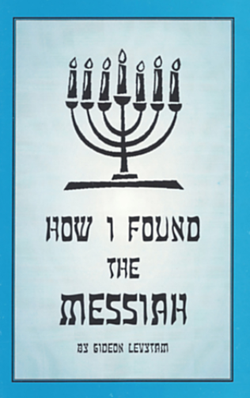
Follow Gideon Levytam's journey and discover how he was led by God, through a series of exciting circumstances, to find the One his people are still waiting for.
Past Episodes

Featured Offer
Follow Gideon Levytam's journey and discover how he was led by God, through a series of exciting circumstances, to find the One his people are still waiting for.
About Holy Scriptures and Israel
As time passed by, the Lord Yeshua took dear brother John Van Stormbroek to himself. The ministry of Holy Scriptures and Israel continued with additional development. In the early 1990’s, a weekly morning Bible class began which brother Gideon Levytam led regularly in the City of Toronto. This weekly open Bible class was held in the Willowdale assembly meeting hall. Eventually, a second mid-week evening Bible class was added. In April 2002, the need for an additional outreach Bible teaching meeting arose. We begun a Saturday (Shabbat) ministry meeting in which a systematic teaching of God’s word is presented to all who attend. Together we learn God’s Word, pray for each need and the salvation of Israel, and sing songs of worship unto our God, praising Him and our Lord Yeshua the Messiah.
In Mid 2004 we started to air on Joy 1250 Radio station a 15 minute Bible teaching program called "The Holy Scriptures and Israel" with Gideon Levytam. The broadcast teaches God’s word from a Hebrew Messianic perspective and has proved to be a blessing to many. It's now aired seven days a week. Our prayer is that many more of our Israeli people will have a clear understanding of who Yeshua is, why we all need him, and come to know him as their Lord and Messiah.
About Gideon Levytam
Contact Holy Scriptures and Israel with Gideon Levytam
426 Simcoe Street
Niagara-on-The-Lake
Ontario L0S 1J0
Canada
(905) 325-1234