
Acts 15:1-21, Part 3


The Council of Jerusalem Meet Together Part 3
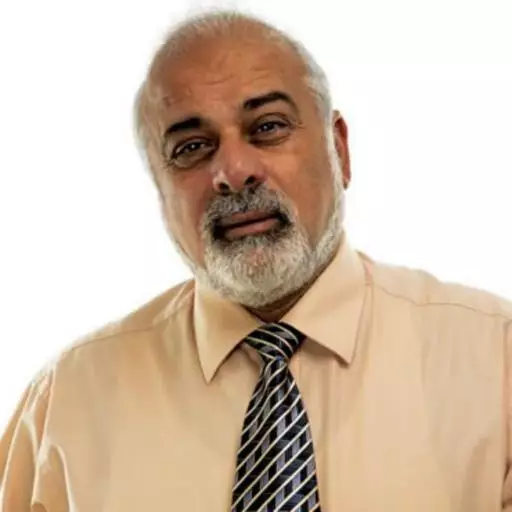
Narrator: Shalom. Holy Scriptures and Israel is a ministry designed to share with the Jewish people the good news of the Lord Jesus, Yeshua the Messiah, and to instruct Christians on the Jewish roots of their faith. And now, teaching God's word from a Hebrew Messianic perspective, here is Gideon Levytam.
Gideon Levytam: The study of Acts chapter 15 where the Apostle Paul said in verse 20, "Therefore by the deeds of the law there shall no flesh be justified, for by the law is the knowledge of sin. But now, the righteousness of God without the law is made manifest, being witnessed by the law and the prophets, even the righteousness of God which is by faith of Yeshua the Messiah unto all and upon all them that believe." Notice what he added: "For there is no difference, for all have sinned and come short of the glory of God."
Brothers and sisters, this is a fundamental truth to learn and to accept: All have sinned and come short of the glory of God. There is no difference because every one of us is born in sin, Jewish or non-Jewish, and we need forgiveness through the blood of Yeshua the Messiah.
So, he is continuing in this chapter 15, and now notice what he does in verse 10. This is also an important point. Look at what he is saying here in verse 10. This is Peter, this great Hebrew Apostle Peter. He says, "Now therefore," he asks the brethren, "Why do you tempt God to put a yoke upon the neck of the disciples," this is the Gentile disciples, "which neither our fathers nor we were able to bear?"
What he called the law, he calls it a yoke. He called it a load which he said neither we nor our fathers were able to bear. Now, let us understand. There is no problem with the law. The law is holy, pure, undefiled. The problem is not with the law. The problem is with men. The problem is with the human race. The problem is with the sin nature that cannot rise to the requirement of the law.
That is why we needed the sacrifices. When we failed to keep the law, we ran to the sacrifice, to the altar. When we failed to obey God, we ran to the altar where we brought the sacrifice which spoke about the Messiah, Yeshua, and then we received the cleansing.
Now the brethren, the Pharisees who believed, told the Gentiles who believed, "You have to be circumcised and keep the law of Moses in order to be saved." That was so dangerous and so wrong. Peter calls it a yoke that Paul mentioned later on in Galatians 5:1: "Stand fast therefore in the liberty wherewith the Messiah had made us free, and be not entangled again with the yoke of bondage."
He is telling them not to put a yoke, that load, upon the Gentile believers. You know what you are doing? He actually said to them, "You are tempting God." You are actually telling God that Yeshua's work is not quite sufficient. You are tempting God. You are testing God.
Again, brothers and sisters, there is no problem for one to keep a day unto the Lord. But don't say that if he is not going to keep that day, he is not saved. That is wrong. It is okay for one to circumcise his children. Well, all my children were circumcised. But they are not saved because they are circumcised. They need the Messiah to be saved. That is what is needed. Circumcision never saved anybody, but faith in the Lord Yeshua the Messiah is essential for salvation.
That is why it was so dangerous. He is telling them, "Number one, you tempt God. Number two, you are putting a yoke that neither you, brethren, nor your fathers could ever accomplish." This is dangerous, what we are doing. So he continues in verse 11 and he says, "Listen, we are all saved only on the basis of the grace of God." In verse 11 he says, "But we believe that through the grace of our Lord Yeshua the Messiah we shall be saved."
Notice that he reversed it. He could have said, "They are saved even as us," but he reversed it and said, "We are saved even as they." Why is he saying it this way? Because he is showing that here is pagans, here is idolaters, here is those who never knew the Bible, never knew the God of Abraham, Isaac, and Jacob. Here is those Goyim, those Gentiles, that were far from God.
In fact, they were hopeless and helpless, as Ephesians tells us, without God in this world. But they were saved, gloriously saved, when they confessed their sins and trusted in Yeshua the Messiah. So he says, "We will be saved on the basis of grace even as they become saved." It is truly on the basis of grace and grace alone.
Brothers and sisters, when Peter was speaking and giving his deliberation, sharing with the brethren in verses 7 to 11, then there was a time of quietness and pause. Look at this in verse 12. It says in verse 12, "Then all the multitude kept silence." Can you imagine what happened there? They were silent, quiet, and they were perhaps praying and thinking.
They were saying, "Lord, God of Israel, is it true? Is it right what Peter just shared with us?" They were quiet before the Lord, thinking biblically, logically, praying and asking the Lord to reveal to them. Of course, they knew that it is the truth. They knew it about themselves. The fact that it was evident when the message of the Messiahship was presented, and even the rest of the Pharisees and the Sadducees opposed the Messiahship of Yeshua, they were a minority, and it was totally the grace of God that saved them.
They were quiet. There was silence there. There is a verse in the book of the Revelation that there was silence in heaven for half an hour. Can you imagine that silence? You could probably hear a drop of a needle because of the seriousness of what Peter was sharing with his own brethren in the council of the city of Yerushalayim. Silence. Quiet. Everyone just absorbed what Shimon Petros was telling them.
But then in verse 12b, we have now the fact that Barnabas and Paul began to give their audience to the brethren there. Look at what they are saying in verse 12b. It says, "And they gave audience to Barnabas and Paul, declaring what miracles and wonders God had wrought among the Gentiles by them." Notice that here the name Barnabas comes before the name of Paul, while in verse 2, Paul's name comes before the name of Barnabas.
Apparently, Barnabas was Barnabba. He was very well known in the city of Yerushalayim and very well respected. In fact, he was the one that searched for Shaul and brought him earlier on to mingle with the believers. So he took the lead in the declaration to the brethren. Notice, of declaring the miracles and the wonders that God had made through them among the Gentiles.
Miracles and wonders. To authenticate the message of the gospel that Paul and Barnabas were preaching to the Gentiles, there was accompanying them signs and wonders, like we read in Mark chapter 16. That was the promise from the Lord: to prove that they were preaching the message of the word of God, miracles, signs, wonders accompanied their preaching.
It is not like today. Today, if somebody has a claim to be a miracle worker, well, he becomes a suspect. But at those days, when a person comes to say to a city, "Thus says the Lord," he didn't have a Bible in his hand. He didn't have Acts, he didn't have Matthew, Mark, Luke, and John, he didn't have Romans and so on. He said, "Thus says the Lord," and boom, something had happened.
"Thus says the Lord." Accompanying his preaching was miracles and signs and wonders. Today, when a person claims to do certain miracles, we have to ask him something: What does the Scripture say? Because we have the complete word of God in our hands. Now we don't limit God with limitation with miracles and signs, but we do see here that it was the apostles which were doing signs and wonders which accompanied their preaching.
Barnabas and Paul was declaring the wonders that God had made through them among the Gentiles, and many, many Gentiles became believers in Yeshua the Messiah. Now we are moving on towards the next part of the deliberation in the council in Jerusalem because from verse 13 to verse 21 where we read, we have another message, but this time is a message by James.
His Hebrew name is actually Ya'akov. Ya'akov here now rose up in verse 13 and he began to give his message to the brethren. Now I want you to notice here, this Ya'akov in verse 13 is not the Ya'akov of the one who was the apostle, the brother of John. No, because the brother of John already died.
This James, this Ya'akov, is the half-brother of Yeshua the Messiah, the one who wrote to us the book of James, the book of Ya'akov. The one whom we read was a pillar here in the city of Jerusalem. Just go, please, to chapter 12. There we read of the two Ya'akovs. Ya'akov number one is mentioned in verse 2, and Ya'akov number two is mentioned in verse 17.
Look at Ya'akov number one, James. It says, "And he," this is Herod, "he killed James, Ya'akov, the brother of John with a sword." So you can see that already this Ya'akov, this James, the brother of John, the sons of Zebedee which was chosen by Yeshua, he already died.
But the next Ya'akov is the Ya'akov that is the half-brother of Yeshua the Messiah. Don't forget that after Yeshua was born through the virgin Miriam, Joseph married Miriam. He was her husband. And they had sons and daughters. One of them was Ya'akov. One of them was Yosef. One of them was Yehudah. Actually four children Miriam had.
In chapter 13, it's mentioned of the book of Matthew in verse 55: "Is not this the carpenter's son? And is not his mother Miriam? And his brethren are Ya'akov, Yosef, Shimon, and Yehudah?" Four brethren. And he had sisters: "And his sisters, are they not all with us?" So apparently, Miriam had additional children after the virgin birth of Yeshua the Messiah, and she had at least six other children including Ya'akov, Yosef, and Yehudah and Shimon and the two sisters.
Here is now Ya'akov, James, is rising up in this verse 13. This is again, brothers and sisters, very important. Here is the brother of Yeshua is now asking the brethren to listen to him, to what he has to say. "And James," it says, "after they had held their peace, James, Ya'akov, answered and he said, 'Men and brethren, hearken unto me.'"
The word for men and brethren, which Peter mentioned earlier in verse 7, it is simply men, anashim, and brethren, achim, in the Hebrew. We always have the custom to call among the Jewish people, achim. We sometimes sing that song, Psalm 133: "Hinei ma tov u'manayim shevet achim gam yachad." Behold how good and how pleasant it is for brethren to dwell together in unity.
James rose up and he began to speak to the brethren and he asked them, "Please listen to what I have to say." So then in verse 14 he said about the declaration of Shimon. Shimon has declared how God at first did visit the Gentiles to take out of them a people for his name.
Dear brothers and sisters, listen to these words that James said that Peter have mentioned: how God at first did visit the Gentiles and look what he is using, the word "to take out of them a people for his name." Out of them. Not all the Gentiles, but out of the many, many nations in this world, God have selected and brought out from among them a people for his name.
That word "out" here is very similar to what we have in the word ekklesia, the church, called-out ones. There are those who are called out from among the Gentiles, whether it is any nation in the world, that God saves and brings out of those Gentile world people for his name. It is a remnant. It is a minority from among the nations of the world that God took out for himself through the person of the Lord Jesus the Messiah.
It's similar to what he have done with our Jewish people in Romans 11 and verse 5: "There is a remnant according to the election of grace in these days, in this time, from among the Jewish people." You and I are proof to that today. Even in our meeting together, some of us are Jewish and some of us are non-Jewish, and we are all have been picked out by the Lord and had been brought to him, and we become part of the ekklesia, part of the body of the Messiah.
Shimon declared how God in the beginning took from among the Gentile people out for himself. And then it says in verse 15, "This is exactly agreeable with what the word of God spoke to us through the Hebrew prophets." In verse 15, "And to this agree the words of the prophets, as it is written: After this I will return and will build again the tabernacle of David which is fallen down, and I will build again the ruins thereof, and I will set it up, that the residue of men might seek after the Lord, and all the Gentiles upon whom my name is called, says the Lord, who does all these things."
This, brothers and sisters, what James is saying here, that after God would call the Gentiles to himself, some out of the nations and some out of the Jewish people, he will build the body of the Messiah, and after this he is going to restore the people of Israel back to himself. That is what he is saying.
Notice he used the words, "This is agreeing with the words of the prophets." Notice he used the word prophets in plural. It is not only one prophet that spoke about that, but many prophets. Isaiah spoke about that, that in the future day there will be the gathering of the Gentiles to come to the nation of Israel. He is talking about the Kingdom Age, but he is applying this now to the Church Age.
It is true that one day many Gentiles will come and will accept the God of Abraham, Isaac, and Jacob. But in the meanwhile, the Apostle James here apply it to the Church Age. And he is saying that God has now visited the Gentiles to bring out, to take out of them a people for himself.
Notice he is quoting the prophet Amos, which we have read earlier. Amos chapter 9, God is speaking to Israel and he says in that day, verse 11, "I will raise up the tabernacle of David that is fallen, and I will close up the breaches thereof, and I will raise up his ruins, and I will build it as in the days of old, and the day may possess the remnant of Edom, and that all the heathen which are called by my name, says the Lord that doeth this."
He is speaking about the future restoration of the people of Israel, but he is now applying this, beloved brothers and sisters, to the time that the church is built. In a sense, what he is doing here, he is making an application with a prophetic passage from the prophet Amos.
So it truly is going to come time when Israel is going to be restored. Today people don't believe in the restoration of Israel. I have visited many believers in the Lord Yeshua the Messiah who believe that the church replaced Israel, that Israel have no longer a future, that God have done away with the Jewish people. Some of it call British Israelism, others call Covenant Theology, all kinds of things that are being taught: that Israel has done, finished, have no more hope for restoration.
But Amos didn't think so. Isaiah didn't think so. Jeremiah didn't think so. Ezekiel didn't think so. And all the Hebrew prophets never taught that. Here he said, "After this, I will return. I will build again the tent of David which is fallen down, and I will build the ruins thereof, and I will set it up." God is going to restore Israel in the future day.
But now, he is dealing with the Gentiles believers in the Church Age. He is concluding here and he is giving his final decision, James as the leader there, as a pillar there. Look what he said in verse 19. He says, "Wherefore," he says, "this is my sentence." Verse 19 to 21, he says that we are going to trouble not them which are from among the Gentiles that turn unto God. Don't cause them any trouble. Don't force on them circumcision. Don't force of them things that they should not be forced to do. If they accepted the Lord, they are saved just like us. Don't trouble them from among the Gentiles that turn unto the Lord.
Featured Offer
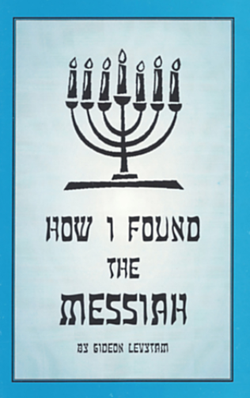
Follow Gideon Levytam's journey and discover how he was led by God, through a series of exciting circumstances, to find the One his people are still waiting for.
Past Episodes

Featured Offer
Follow Gideon Levytam's journey and discover how he was led by God, through a series of exciting circumstances, to find the One his people are still waiting for.
About Holy Scriptures and Israel
As time passed by, the Lord Yeshua took dear brother John Van Stormbroek to himself. The ministry of Holy Scriptures and Israel continued with additional development. In the early 1990’s, a weekly morning Bible class began which brother Gideon Levytam led regularly in the City of Toronto. This weekly open Bible class was held in the Willowdale assembly meeting hall. Eventually, a second mid-week evening Bible class was added. In April 2002, the need for an additional outreach Bible teaching meeting arose. We begun a Saturday (Shabbat) ministry meeting in which a systematic teaching of God’s word is presented to all who attend. Together we learn God’s Word, pray for each need and the salvation of Israel, and sing songs of worship unto our God, praising Him and our Lord Yeshua the Messiah.
In Mid 2004 we started to air on Joy 1250 Radio station a 15 minute Bible teaching program called "The Holy Scriptures and Israel" with Gideon Levytam. The broadcast teaches God’s word from a Hebrew Messianic perspective and has proved to be a blessing to many. It's now aired seven days a week. Our prayer is that many more of our Israeli people will have a clear understanding of who Yeshua is, why we all need him, and come to know him as their Lord and Messiah.
About Gideon Levytam
Contact Holy Scriptures and Israel with Gideon Levytam
426 Simcoe Street
Niagara-on-The-Lake
Ontario L0S 1J0
Canada
(905) 325-1234