

Acts 15:1-21, Part 2


The Council of Jerusalem Meet Together Part 2
Guest (Female): Shalom. Holy Scriptures and Israel is a ministry designed to share with the Jewish people the good news of the Lord Jesus Yeshua the Messiah and to instruct Christians on the Jewish roots of their faith. And now, teaching God's word from a Hebrew Messianic perspective, here is Gideon Levytam.
Gideon Levytam: The study of Acts chapter 15. Apparently, there was an argument. It was, in a sense, a Jewish argument. The Jewish people who came from Judea and the Jewish believers who were in Antioch, like Paul and Barnabas, they were disputing with them and said, "Listen, what are you saying? You mean all this time that we have spent in preaching the message of the grace of God through Yeshua the Messiah is in vain? You mean now these Gentiles who became believers now have to be circumcised in order to be saved?" In fact, they probably told them, "Show me the scripture that the Gentiles have been commanded to be circumcised in order to be saved. Show me the scripture," they would tell them. And they have no scripture for that. It’s applied to the Jewish people, but it is not applied to the Gentiles.
They had dissension and disputation, and then it says that they, this is the church, this is the believers at Antioch, they determined that Paul and Barnabas and certain others of them would go up to Jerusalem to the apostles and the elders about this question. They had to deal with it because it is the foundation in the earlier stage of the church age. Do Gentiles who become believers need to be circumcised in order to be saved? And so they sent them.
In verse three, actually, it says if you notice verse three, they began to go on their way. And it says in verse three, it’s interesting here just to make a note here, it says that they had been brought on their way by the church. You see, if the church is a building, the church could not move. The building could not move. But it is the believers. You see, brothers and sisters, how the Bible is so clear? The believers are the church, the ekklesia. They were brought on their way, not by the building, but by the believers. They sent them away as they were moving to Jerusalem.
And guess what? As they are traveling towards the city of Jerusalem, they passed through Phoenicia, this is a Gentile city. They passed through Samaria. This is where the Samaritans were. And they declared to them all whatever had happened to them. And they gave a lot of joy unto the brethren in Phoenicia and Samaria. And now we are moving on, and finally in verse four, they have been received by the church in the city of Jerusalem, by the congregation there.
When they were come to Jerusalem, they were received of the church. Notice again, I would like to emphasize, notice, not received of the building, because the church is not the building. They were received of the believers in Jerusalem. They have been received of the church and of the apostles and the elders, and they declared to them all the things that God had done with them.
So those brethren, Paul, Barnabas, and other brethren that are mentioned, Titus is mentioned in the book of Galatians, they came to the city of Jerusalem. They told them what the Lord had done. And it must have been, I would suggest, a joy to the apostles to tell them, "Can you imagine, brethren? We've already finished a whole journey in Asia Minor, and so many of the nations of the Gentiles have come to faith in our Messiah, in the Messiah that had been promised to our own forefathers." Can you imagine? They were saying and they were rejoicing to tell them the truth of the salvation of the Gentiles.
But here it is verse five. Here is where the issue had begun. Here is where we have those that are called here in verse five, there arose certain of the sect of the Pharisees. And notice how the Bible says, "the sect of the Pharisees which believed." They believed in Yeshua the Messiah. They believed that He was the one that came from heaven. They believed that He was the promised Messiah. But look what they are saying: "that it was needful to circumcise them and to command them to keep the law of Moses."
Now brothers and sisters, again I would like to move back 2,000 years and place ourselves all in the city of Jerusalem. I would have loved to be in those days among my brethren there in the city of Jerusalem, where it was my home where I was born and grew up, and my father was born. I would have delighted to be in this setting where there is the discussion among these early believers in the city of Jerusalem.
There were some of them who were actually Pharisees who got saved. They have believed. They became believers in Yeshua the Messiah, but they wanted to continue Pharisaism. In fact, at that time, there was no command by the rabbis that you could not believe in Jesus. In fact, today you cannot be part of the Pharisees if you believe in Yeshua the Messiah, you're going to be thrown out. But at that time, you could have accepted Him because there was the sect of the Pharisees, there were the Sadducees, there were the Herodians. And in a sense, you had the sect that is called at that time the Meshichiyim, the Messiah followers, those who follow the way that are called in an earlier part of the book of Acts.
Now, if you just turn back with me for a moment to chapter six of the book of Acts, you notice that in verse seven it says, "And the word of God increased, and the number of the disciples multiplied in Jerusalem greatly; and listen to this: and a great company of the priests were obedient to the faith." There were priests from among our people who were part of Pharisaism. They became believers in Yeshua the Messiah. They were as it says here in Acts chapter six and verse seven, they were priests.
Now turn for a moment to Acts chapter 21, just to the other side of the scripture, and you notice this as well, brothers and sisters, in Acts chapter 21 and verse 20. Just to have this before us to see that there were Pharisees who became believers in Yeshua and sought to hold on to be still Pharisees. In Acts 21 and verse 20 we read: "And when they heard it, they glorified the Lord, and said unto him, 'Thou seest, brother, how many thousands of Jewish people there are which believe, and they are zealous of the law.'"
Thousands of Jewish people there are which believe in Yeshua the Messiah, but they are zealous for the law. This was something embedded in our nation, in our people Israel. It is embedded in the Jewish people: the Torah, the law, the law of Moses. And it was so hard to grasp this new building, the new ekklesia, the body of Messiah, the church of our Lord Yeshua the Messiah, that they were insisting that now the Gentiles who become believers in Yeshua the Messiah, number one, they need to be circumcised, number two, they have to keep the law of Moses. That was the real issue in the early century of the church age.
And it is still today. I've just been recently in a meeting where we could have some of our own Jewish brethren who have different views than we are. Some of them have tzitzit, and some of them wear tallit, and some of them wear kippah, and some of them practice certain things and yet they believe in Yeshua. They love Yeshua the Messiah. But the issue here is not whether you have tzitzit and kippah and tallit and keep Shabbat and keep kosher and celebrate the feast. The issue here that they said that in order for those Gentiles to be saved, they have to be circumcised, they have to keep those things.
Now, it's one thing for a person to seek to keep Shabbat or not. You are free as before the Lord. The book of Romans teaches this to us. One keeps a day unto the Lord and another doesn't. To another man every day is alike. There's another thing if one wants to keep kosher and not eat pork and not eat fish that they're not supposed to eat. And they have liberty not to eat, and they have liberty to eat. But it is another thing, and that is where the danger is, when we say to somebody, "You better be circumcised and keep the law of Moses, otherwise you are not saved." This is a violation of the gospel.
This is where God will have to deal with it drastically because this is exactly for which the price that Yeshua the Messiah had to pay when He died for us on the cross. And it is important to understand that salvation is by grace alone through faith in the Lord Yeshua the Messiah, nothing to add and nothing to subtract. This is simply what salvation is all about, through the grace that is found in the person and the work of Yeshua the Messiah.
Now look with me for a moment to Romans chapter four and verse five. The apostle says: "to him that worketh not, but believeth on him that justifieth the ungodly, his faith is counted for righteousness." Notice: not to the one that work and earn it and does something, but to him that believes on Yeshua the Messiah, on the one that justifies him from all ungodliness is the one that it is counted for him for righteousness. This is Romans chapter four and verse five. And we all know the verse in Ephesians 2 verses 8 and 9: "By grace are ye saved through faith; and that not of yourselves: it is the gift of God: not of works, lest any man should boast." Salvation is totally by grace and it is totally on a basis of faith in Yeshua the Messiah.
And I'm just going to read one more verse, Galatians chapter two and verse 16. The apostle says: "knowing that a man is not justified by the works of the law, but by the faith of Yeshua the Messiah, even we have believed in Yeshua the Messiah, that we might be justified by faith in the Messiah and not by the works of the law; for by the works of the law shall no flesh be justified." That's what the apostle Paul has taught, that's what Peter has taught as well. We're going to read in a moment what Peter had to say about this.
So brothers and sisters, here's the first five verses. It is the reason of the gathering of the council in Jerusalem. And I hope that you get hold of this because this is something that we hear quite a lot today around us where people come and say that no, it's not enough to believe in Yeshua the Messiah, but if you want to be saved, you have to keep certain rules, you have to join this group of people, you have to celebrate certain things, and you have to keep certain days. But the Bible teaches us that this is not right. The gospel is the only way of salvation. Wherever you are, if you only believe that Yeshua had died and rose again and confess your sins before Him and accept Him as your Savior, you are saved for time and for eternity. It's not because of what we have done.
So now in the next verses, verses six to 21, there is the discussion of the council of Jerusalem. And it's so beautiful to see how they discuss this in the first century. Notice that first of all, when Paul and Barnabas have arrived there, in verse six it says that the apostles and the elders came together to consider this matter. So you have here the apostles, these are the first early apostles, those are the ones that have seen the Lord in His life, have seen Him after His resurrection. And then you have the elders. These are the elders, the ones who follow Yeshua the Messiah and were leaders among the believers in the city of Jerusalem.
So they gathered together and they were discussing this matter. They were considering this matter together. And here is where Peter comes into the picture. In verses seven to 11, here's a message that Peter gave to the brethren, to the believers there in the council. And look what Peter says. First of all in verses seven to 11, he began to speak and he says: "And when there had been much disputing, Peter rose up, and said unto them, 'Men and brethren, ye know how that a good while ago God made choice among us, that the Gentiles by my mouth should hear the word of the gospel and believe. And God, which knoweth the hearts, bare them witness, giving them the Holy Spirit, even as he did give it unto us; and he put no difference between us and them, purifying their hearts by faith. Now therefore why tempt ye God, to put a yoke upon the neck of the disciples, which neither our fathers nor we were able to bear? But we believe that through the grace of the Lord Yeshua the Messiah we shall be saved, even as they.'"
Now Peter rose up. And Peter reminded the brethren that it was him that God had chosen in the first century to open the doors to the Gentiles long before many of those even understood and walked with the Lord. He says, "Listen." And if you remember, it was in Matthew chapter 16 where the Lord asked the disciples, "Who do men say that I the son of man am?" And some of the disciples thought that He was John or Jeremiah, one of the prophets. But He says, "Whom do you say that I the son of man am?" And Peter said to Him, "You are the Messiah, the son of the living God."
Then the Lord Yeshua the Messiah said to Peter, "Blessed art thou, Simon Bar-jona: for flesh and blood hath not revealed it unto thee, but my Father which is in heaven." Then He said to him, "But I tell you that you are Peter, and upon this rock I will build my assembly, my church, my ekklesia, and the gates of Hades shall not prevail against it." Then He said to Peter, "I will give you the keys of the kingdom of heaven: and whatsoever thou shalt bind on earth shall be bound, and whatsoever thou shalt loose on earth shall be loosed in heaven."
So Peter received the keys. This is verse 19 of Matthew chapter 16. And Peter was used by the Lord to open the door, first of all to the Jewish people, Acts chapter two, then to the Samaritans, Acts chapter eight, and ultimately to the Gentiles in Acts chapter 10 as he went to the house of Cornelius. So Peter said to the brethren, "Do you remember, brothers and sisters, men and brethren? Do you remember how it was long while ago that God made a choice among us and that He used me that by my mouth the Gentiles will hear the word of the gospel?"
And Peter himself kind of looked back. When he went earlier, in the beginning, he didn't even want to go because he was going to a Gentile home and he could not even enter into a Gentile home because it was forbidden to go into a pagan house by the law to the Jewish people. It was forbidden because of the association with idolatries and with paganism, with the Gentile world. But Peter went in obedience to the Lord and he went to Cornelius and he went to his home. And how the message of the gospel was received by the family and the gathered people in the house of Cornelius.
So he says, "By my mouth God has chosen that the word of the gospel will be preached to the Gentiles and that they will believe." This is verse seven. And then in verse eight, he said that the Gentiles believers also received the Holy Spirit. "And God, which knoweth the hearts, he bare them witness, and he gave them the Holy Spirit, even as he did give it unto us." See what he is showing to the brethren in the council: "Listen, they have the Holy Spirit just the same like we have the Holy Spirit. The Gentiles believers have accepted Yeshua and received the Holy Spirit. We have received the Holy Spirit." There is no limitation because they have believed in Yeshua the Messiah.
In verse nine he showed them that there is no difference now between Jewish believers and Gentile believers. "And he put no difference between us and them, purifying their hearts by faith." This was extremely difficult for early Jewish believers to understand that it was open now to the Gentile world and God made no difference now when it comes to salvation. A Jewish person is a sinner and a Gentile person is a sinner, and both need the Savior. They need a gospel. And in order to be saved they need to accept Yeshua the Messiah. And when the Spirit of God came upon them, they become part of the body of Messiah. You know, for Peter it was a joy to see this because he understood in some measure that God now had brought men together from all nations of this world.
And then notice he used the word "put no difference." This expression is later on mentioned by the apostle Paul in Romans chapter three where the apostle Paul said in verse 20: "Therefore by the deeds of the law there shall no flesh be justified: for by the law is the knowledge of sin. But now the righteousness of God without the law is made manifest, being witnessed by the law and the prophets; even the righteousness of God which is by faith of Yeshua the Messiah unto all and upon all them that believe: for there is no difference: for all have sinned, and come short of the glory of God."
And brothers and sisters, this is a fundamental truth to learn and to accept. All have sinned and come short of the glory of God. There is no difference because everyone of us is born in sin, Jewish or non-Jewish, and we need forgiveness through the blood of Yeshua the Messiah. And so he's continuing in this chapter 15 and now notice what he does in verse 10. This is also an important point. Look what he's saying here in verse 10. And this is Peter. This is this great Hebrew apostle, Peter. He says: "Now therefore," he asks the brethren, "Why do you tempt God, to put a yoke upon the neck of the disciples," this is the Gentile disciples, and notice what he says, "which neither our fathers nor we were able to bear?" What he called the law.
Featured Offer
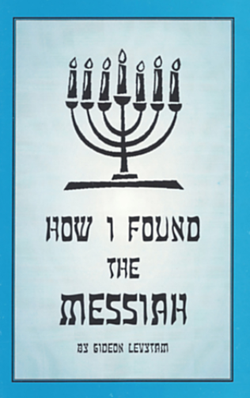
Follow Gideon Levytam's journey and discover how he was led by God, through a series of exciting circumstances, to find the One his people are still waiting for.
Past Episodes

Featured Offer
Follow Gideon Levytam's journey and discover how he was led by God, through a series of exciting circumstances, to find the One his people are still waiting for.
About Holy Scriptures and Israel
As time passed by, the Lord Yeshua took dear brother John Van Stormbroek to himself. The ministry of Holy Scriptures and Israel continued with additional development. In the early 1990’s, a weekly morning Bible class began which brother Gideon Levytam led regularly in the City of Toronto. This weekly open Bible class was held in the Willowdale assembly meeting hall. Eventually, a second mid-week evening Bible class was added. In April 2002, the need for an additional outreach Bible teaching meeting arose. We begun a Saturday (Shabbat) ministry meeting in which a systematic teaching of God’s word is presented to all who attend. Together we learn God’s Word, pray for each need and the salvation of Israel, and sing songs of worship unto our God, praising Him and our Lord Yeshua the Messiah.
In Mid 2004 we started to air on Joy 1250 Radio station a 15 minute Bible teaching program called "The Holy Scriptures and Israel" with Gideon Levytam. The broadcast teaches God’s word from a Hebrew Messianic perspective and has proved to be a blessing to many. It's now aired seven days a week. Our prayer is that many more of our Israeli people will have a clear understanding of who Yeshua is, why we all need him, and come to know him as their Lord and Messiah.
About Gideon Levytam
Contact Holy Scriptures and Israel with Gideon Levytam
426 Simcoe Street
Niagara-on-The-Lake
Ontario L0S 1J0
Canada
(905) 325-1234